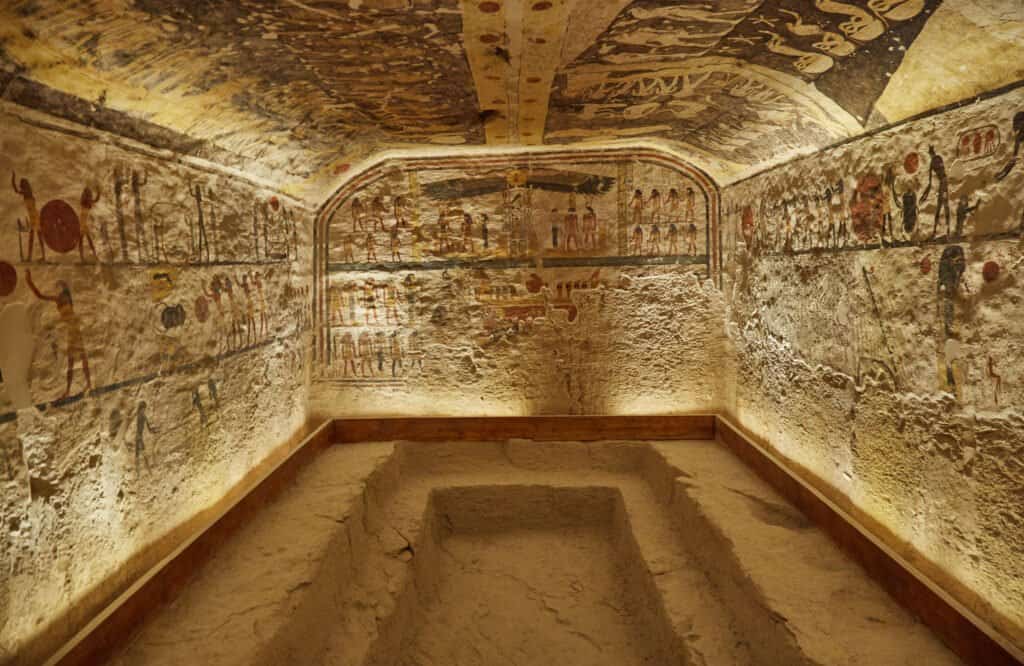
Tomb of King Tutankhamun (Tut)
Valley of the Kings, Luxor Egypt Posted by Brandon B.Admin
Overview
The Tomb of King Tutankhamun sits in the Valley of the Kings near Luxor, Egypt. It is one of the most significant archaeological discoveries of the twentieth century. When British archaeologist Howard Carter opened the tomb in 1922, he found the burial chamber of the young pharaoh largely intact, with thousands of artifacts still inside. The tomb itself is modest in size compared to other royal tombs in the valley, but its contents transformed modern understanding of ancient Egyptian burial practices and royal life.
Today, visitors descend into the underground chamber to see the mummy of Tutankhamun and the nested coffins that held him. The walls are decorated with painted scenes depicting the pharaoh's journey to the afterlife. While much of the treasure has been moved to museums, standing in the actual burial chamber where these objects were found connects you directly to one of archaeology's greatest moments.
Why this place matters
Tutankhamun died around age eighteen and ruled Egypt for roughly nine years during the eighteenth dynasty. His reign was historically brief and politically unremarkable, yet his tomb became famous precisely because it was overlooked for centuries. Most royal tombs in the valley were robbed in antiquity, but Tut's remained hidden under debris until Carter's team found it.
The discovery was extraordinary not because of the tomb's architecture or size, but because of what lay inside. Thousands of objects, from furniture to chariots to cosmetic vessels, survived nearly intact. This single tomb gave archaeologists a window into royal burial customs that had been lost or fragmented in other sites. The scientific and public interest was immense, and it remains so today.
Quick facts
- Located in the Valley of the Kings, approximately 15 kilometers west of Luxor city center
- Discovered by Howard Carter on November 4, 1922
- The tomb is numbered KV62 in the valley's official catalog
- Tutankhamun ascended to the throne around age eight and died at approximately eighteen
- The burial chamber is accessed by a steep stone staircase descending about 7 meters underground
- The mummy remains in the tomb, displayed in a climate-controlled glass case
- Entrance is controlled by ticket and timed entry during peak seasons
Getting there
The Valley of the Kings is on the west bank of the Nile River. From central Luxor, you can reach it by taxi, organized tour, or rental car in roughly 20 to 30 minutes depending on traffic and your starting point. Most visitors arrive in the early morning to beat crowds and heat.
Once you enter the valley, you'll need to walk from the main parking area. The path to Tut's tomb is moderate and takes about 10 to 15 minutes on foot. The route is paved and relatively flat, though the valley itself is open desert with little shade. Wear comfortable walking shoes and bring water.
Many hotels and tour operators in Luxor offer guided visits to the valley that include transportation and entry. These tours often start before dawn and include visits to other tombs as well. If you prefer to go independently, arrange your own transport and purchase tickets at the valley entrance.
The layout and experience
You descend a stone staircase into the tomb. The passage is narrow and slopes downward. The walls are painted but modest compared to the grand, sprawling tombs of later pharaohs. As you go deeper, the air becomes cooler and more humid due to modern climate control systems installed to preserve the tomb.
The antechamber, your first room, contains replicas of some objects found here (originals are in museums). You then move into the burial chamber itself. This is the room where Tutankhamun lies in his coffin, visible through protective glass. The walls show painted scenes of the pharaoh with various gods, rendered in the style of the eighteenth dynasty. The atmosphere is quiet and solemn, and you are usually allowed only a few minutes inside.
Photography inside the burial chamber is restricted. Camera flash and extended photography damage the painted walls. Many visitors find this frustrating, but it exists to protect what remains.
Main highlights
The mummy of Tutankhamun is the primary draw. Seeing the actual remains of a pharaoh who lived over three thousand years ago is a profound experience for most visitors. The young king's face is visible, wrapped in linen and linen strips, with a golden death mask (now in the Egyptian Museum in Cairo) no longer present. What you see is the human reality beneath the mythology.
The painted walls of the burial chamber show scenes of Tutankhamun with Osiris, Anubis, and other deities. The artwork is well preserved, and the colors remain vivid. These scenes were meant to guide and protect the pharaoh in the afterlife according to Egyptian belief.
The nested coffins, though the innermost one is no longer present, demonstrate the layered approach to royal burial. Multiple coffins, each inscribed and decorated, nested inside one another like boxes within boxes. This construction was both practical and symbolic.
History and background
Tutankhamun was born during the reign of Akhenaten, the pharaoh who tried to overturn Egypt's polytheistic tradition in favor of monotheistic sun worship. After Akhenaten's death, the young Tutankhamun (originally named Tutankhaten) took the throne and reversed many of his predecessor's reforms, restoring the traditional priesthood and gods. His reign was politically conservative and brief. He died around 1323 BCE under circumstances that remain debated by scholars.
Howard Carter spent years searching the valley before finding the tomb. His patron was Lord Carnarvon, a British nobleman funding the excavation. The discovery made international headlines. Carter spent a decade carefully documenting and removing objects from the tomb, a meticulous process that set new standards for archaeological excavation.
For nearly a century, the tomb remained largely closed to the public or accessible only by special permission. In 2019, the Egyptian government opened the burial chamber to regular tourist visits on a limited basis, making this one of the most closely controlled and carefully preserved tombs in the valley.
Tickets and entry
Entry to the Valley of the Kings requires a ticket purchased at the visitor center near the valley entrance. Visiting the Tomb of Tutankhamun typically requires an additional ticket beyond the general valley admission. The cost structure places both tickets in the mid-range category for Egyptian attractions.
During peak seasons, the tomb operates on timed entry to limit visitor numbers and protect the paintings. You may need to reserve a specific time slot or wait for the next available slot if you arrive without booking. Off-season visits tend to have more flexible access.
Children, students with valid ID, and residents of certain countries sometimes qualify for reduced rates. Ask at the ticket window what discounts apply to your situation.
Best time to visit
The Valley of the Kings is open year-round, but October through March offers the most comfortable conditions. Daytime temperatures range from mild to warm, and humidity is lower. December through February is peak season, so expect larger crowds, especially in the early morning hours.
Summer months (June through August) are extremely hot, often exceeding 40 degrees Celsius. Many visitors find these months uncomfortable for extended walking in the open desert. The tomb itself stays cool due to its underground location, but reaching it means exposure to intense heat.
Visiting in the early morning, before 8 AM, significantly reduces crowds. You'll have more time in the burial chamber and a quieter experience. Bring water and sun protection regardless of season.
Photography tips
Photography is prohibited inside the burial chamber of Tutankhamun. This rule is strictly enforced. You can photograph the painted walls and passages leading to the chamber, but not the mummy itself or the burial chamber interior.
Take photos of the valley landscape, the tomb entrance, and the antechamber before descending. The painted scenes in other tombs nearby are also worth photographing. The valley's desert light in early morning creates striking shadows and contrast for landscape shots.
If you want detailed images of the tomb's contents, refer to the museum catalogs and high-quality archaeological publications available online. These provide better detail than tourist photographs could capture anyway.
Facilities and preparation
The Valley of the Kings has a visitor center with basic facilities. There are restrooms, a cafe, and a small gift shop. The center is about a 10-minute walk from the main parking area. Beyond this, facilities are minimal. The valley itself has almost no shade, no water sources, and no rest areas once you leave the visitor center.
Wear sturdy, closed-toe walking shoes. The ground is rocky and uneven in places. Bring at least one liter of water per person. Sun protection is essential: a hat, sunglasses, and sunscreen. Light, breathable clothing that covers your shoulders and knees is advisable both for sun protection and out of respect for the sacred site.
The tomb entrance is not wheelchair accessible. The steep stone staircase and narrow passages make mobility difficult for anyone with limited mobility or breathing difficulties. Discuss any physical limitations with your guide or hotel staff before planning your visit.
Combining with nearby attractions
The Valley of the Kings is one of several major sites on Luxor's west bank. Most visitors spend a full day exploring multiple tombs. The Temple of Hatshepsut, one of Egypt's most impressive temples, is roughly 10 kilometers away and easily combined with a valley visit. The Valley of the Queens, burial site of royal wives and children, is also nearby.
Many organized tours combine the valley with visits to the Colossi of Memnon, two massive stone statues standing in a field south of the temple. A typical west-bank day includes three to four sites depending on your pace and interest.
If you have time on the east bank, the Luxor Temple and Karnak Temple Complex are across the river and worth visiting. Most visitors spend two to three days in Luxor to see the major sites without rushing.
Sample visit plan
Start before dawn with hotel pickup around 5 AM. Arrive at the valley by 6 to 6:30 AM, purchase tickets, and enter while crowds are still light. Visit one or two additional tombs in the valley for context and to understand the range of royal burials. The tomb of Ramesses VI and the tomb of Seti I are popular choices.
By 8 to 9 AM, head to the Tomb of Tutankhamun for your timed entry slot. Spend 15 to 20 minutes in the burial chamber and antechamber. Exit and rest at the visitor center cafe for water and a light snack.
In late morning, visit the Temple of Hatshepsut or explore other west-bank sites depending on your interests. Return to your hotel by early afternoon to rest during the hottest hours. A sunset visit to a viewpoint overlooking the valley or the Nile can cap the day nicely.
Practical tips
- Hire a licensed guide at the valley entrance. They provide context about the tombs and ancient Egyptian burial practices that enhance your visit significantly.
- Arrive very early if visiting during December through February. Lines form by 7 AM on popular days.
- The air inside the tomb can feel thick and humid. People with respiratory conditions should consider this before descending.
- Most visitors spend 15 to 30 minutes total in Tutankhamun's tomb and antechamber. Plan accordingly if you want to see other tombs that day.
- Keep valuables secure. While the valley is generally safe and well-patrolled, pickpocketing can occur in crowded areas.
- Respect the site as a sacred burial place. Speak quietly in the tomb and follow all posted rules without exception.
- If you struggle with the staircase, ask staff if assistance is available. Some sites provide canes or support on request.
- Bring more water than you think you'll need. The desert heat is deceptive, and dehydration happens quickly.
FAQ
Can you touch the mummy? No. The mummy is enclosed in a protective glass case and separated from visitors by barriers. Physical contact is not permitted.
Is the tomb climate-controlled? Yes. Modern climate control systems regulate temperature and humidity to protect the painted walls and the mummy. The tomb stays cool year-round.
How long does a visit take? Most people spend 15 to 30 minutes in Tutankhamun's tomb itself. A full day visiting multiple tombs in the valley takes five to seven hours, including travel time and breaks.
Are children allowed? Yes, but the narrow staircase and confined spaces can be challenging for very young children. Children under five may struggle with the descent and the confined burial chamber. Discuss your child's comfort level with stairs and enclosed spaces before committing.
Is a guide necessary? A guide is not required, but strongly recommended. Guides provide historical context and can answer questions that enhance your understanding of what you're seeing. The tomb itself has minimal labeling.
Reviews
Sign in and mark this place visited to leave a review.
No reviews yet.
Free Trip Planner
Plan your Egypt trip with our free planner
Build a day-by-day itinerary with AI suggestions, hand-picked places, and friends. Free forever — no credit card.