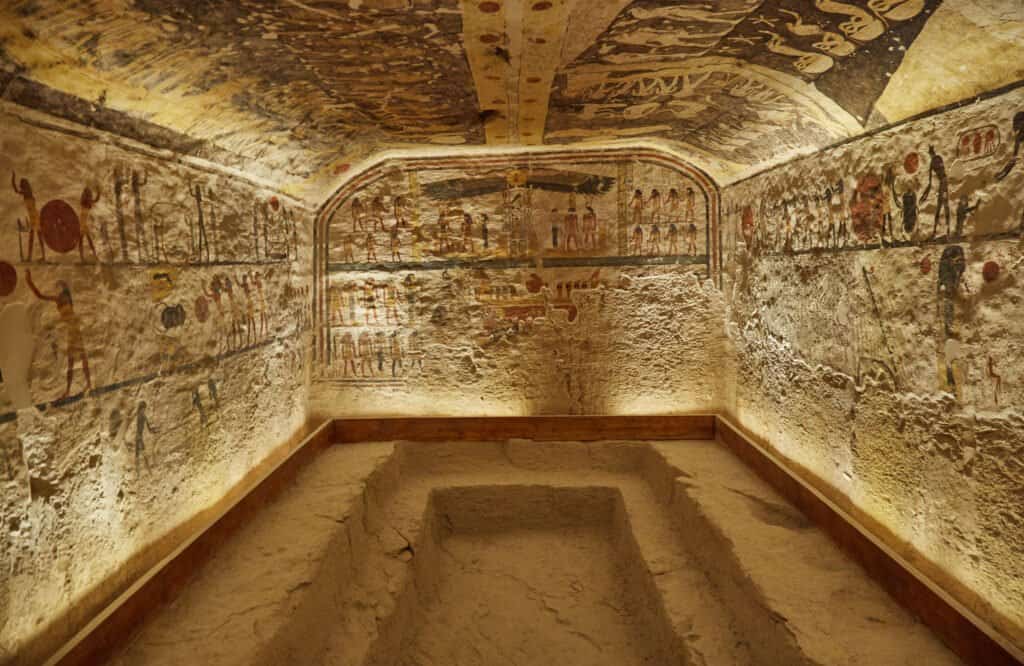
Howard Carter House
Valley Of The Kings, Luxor Egypt Posted by bazartravelsAdmin
Overview
The Howard Carter House sits on the edge of the Valley of the Kings in Luxor, Egypt, a modest structure that served as the headquarters for one of archaeology's most transformative discoveries. Built in the early 1900s, this limestone dwelling became the base of operations for British Egyptologist Howard Carter during his decades of work in the Valley. Most visitors to Luxor know Carter's name from the tomb of Tutankhamun, which he excavated in 1922, but few realize you can still walk through the actual house where he lived and worked while pursuing his life's passion.
The house itself is unpretentious. It lacks the grandeur you might expect from someone who made one of history's greatest archaeological finds. Instead, it offers something more valuable: an intimate window into how Carter operated, thought, and lived during the golden age of Egyptology. The rooms contain original furnishings, personal artifacts, and documentation that reveal the meticulous, sometimes obsessive nature of his work.
Why this place matters
Howard Carter House matters because it anchors the human story behind the Tutankhamun discovery. The tomb itself lies sealed across the Valley, but here you stand where Carter examined artifacts, sketched findings, and corresponded with colleagues and sponsors. His work fundamentally changed how archaeologists approach excavation and preservation.
The house also reveals the colonial archaeological landscape of early 20th-century Egypt. Carter navigated complex relationships with Egyptian authorities, wealthy patrons, and rival archaeologists. This space documents those tensions and triumphs in ways that no textbook can replicate.
Quick facts
- Located in the Valley of the Kings archaeological zone, about 12 kilometers west of Luxor city center
- Built in the early 1900s as Carter's base during his Valley excavations
- The famous Tutankhamun tomb was discovered in 1922, while Carter lived and worked here
- Now operates as a museum under the control of the Egyptian government
- Typically open to visitors daily, though hours vary seasonally
- General admission is charged; tickets are usually purchased at the Valley of the Kings entrance
Getting there
The house is situated within the Valley of the Kings archaeological zone, so you must enter through the main Valley entrance. Most visitors arrive by taxi or organized tour from Luxor's east bank. The drive takes roughly 20 to 30 minutes depending on traffic and your starting point.
If you're driving independently, head west from Luxor across the Nile, then follow signs toward the Valley of the Kings. Once you pay admission at the main gate, you'll need to navigate the Valley's internal roads. The house is not immediately obvious from the main pathway, so asking at the entrance booth or hiring a local guide helps you locate it without unnecessary backtracking.
Many organized tours include the Howard Carter House as part of a full Valley of the Kings itinerary. This approach means you don't worry about navigation and often gain access to a guide who can explain the house's significance in context. However, visiting independently gives you flexibility to spend as much time here as you wish without adhering to a group schedule.
The layout and experience
The house is a compact, single-story structure built in a functional colonial style. You enter through a modest front entrance that opens into a central living area. The rooms flow logically: living quarters, work spaces, storage areas for excavation finds and documentation.
Unlike grand museums with soaring halls, this place feels like stepping into someone's actual home and workplace. The ceilings are low, the walls are plain, and the furnishings are sparse. This simplicity is the appeal. Carter wasn't wealthy by inheritance; his comfort came from work and intellectual engagement, not material luxury.
Display cases contain original items: pottery fragments, photographs from excavations, correspondence, sketches of tomb layouts. You'll see Carter's own notes and drawings, some in his handwriting. The visual documentation of the Tutankhamun excavation is particularly compelling, showing the methodical process of uncovering and recording the tomb's contents layer by layer.
Walls are labeled in English and Arabic, though the English text tends to be more detailed. The house rewards slow exploration. Spend time with individual items and you'll absorb the rhythm of Carter's work: careful observation, meticulous recording, patient problem-solving across decades.
Main highlights
Carter's work desk and personal quarters show how he organized his daily life around excavation. His desk still holds writing implements and a lamp, suggesting he spent long evenings reviewing the day's findings and planning the next phase of work.
The collection of archaeological drawings is exceptional. Carter was a skilled artist, and his tomb sketches are both beautiful and scientifically precise. These drawings served as primary documentation before digital photography existed, making them irreplaceable records of what was found and where.
Photographs from the Tutankhamun excavation line the walls. Seeing these images in the space where Carter first studied them creates a powerful sense of historical proximity. You're looking at the same photographs he examined after they were developed, in some cases decades ago.
Personal correspondence and administrative documents reveal the political and financial complexities of mounting a major excavation. Carter had to manage sponsors' expectations, negotiate with Egyptian officials, and defend his methods against critics. These letters show a man under constant pressure to justify his work and secure funding.
History and background
Howard Carter was born in 1874 in Norfolk, England. He trained as an artist and initially came to Egypt in 1891 as a draftsman for the Egyptian Exploration Fund. His early work involved copying tomb paintings and creating archaeological illustrations.
Carter's breakthrough came when he began excavating in the Valley of the Kings in the early 1900s under the patronage of Lord Carnarvon, a wealthy British nobleman. The partnership was productive but difficult, marked by Carter's fierce independence and Carnarvon's desire to control the project and its discoveries.
The discovery of Tutankhamun's tomb on November 4, 1922, transformed Carter from a respected but relatively unknown archaeologist into a global figure. The tomb's nearly intact state made it the most significant Egyptian royal discovery of the modern era. However, the excavation process was slow and contentious. Carter spent the next decade carefully extracting and documenting the tomb's contents, often in conflict with Egyptian authorities and the international press.
Carter lived in the Valley house throughout this period and for years afterward, continuing his work and writing until his death in 1939. The house became his sanctuary during a career that demanded enormous patience, diplomatic skill, and unwavering commitment to proper archaeological method.
Tickets and entry
The Howard Carter House is included within the Valley of the Kings archaeological zone ticket system. You purchase a general admission ticket at the main Valley entrance, and this grants access to multiple sites including the house. Some tickets offer timed entry to specific tombs, while others are general admission valid throughout the day.
Ticket prices are mid-range for a major Egyptian attraction. Discounts are typically available for students with valid identification and for children. Guides can be hired at the entrance if you want detailed interpretation of the house and its contents.
Hours of operation generally follow the Valley of the Kings schedule, typically opening in early morning and closing by late afternoon. During the hottest months, opening hours may shift earlier to accommodate the heat.
Best time to visit
October through March offers the most comfortable conditions for exploring the Valley and the Howard Carter House. Temperatures are mild, humidity is lower, and the intense sun of summer months doesn't dominate your experience. December and January are peak tourist season, so expect larger crowds if you visit then.
April through September brings extreme heat, particularly at midday. If you must visit during these months, arrive very early, ideally by 6 or 7 a.m., and plan to finish your Valley exploration by mid-morning. The house itself offers some shade and is smaller than many tombs, so it's slightly more bearable in heat than other Valley sites.
Weekdays tend to be quieter than weekends. Friday and Saturday mornings often see larger groups, particularly during school holidays.
Photography tips
The interior of the house is dimly lit by necessity; bright light can damage artifacts and original materials. This means photography is challenging. Interior shots often come out underexposed or blurry, especially if you're using a smartphone.
Focus on the exterior and the Valley landscape surrounding the house. The building's simple limestone structure photographs well in morning or late afternoon light. The surrounding landscape, with the Valley's cliff faces visible in the distance, provides excellent context for understanding Carter's remote work environment.
Check the house's current photography policy when you arrive. Rules regarding interior photography can change, and some areas may be off-limits for image capture.
Facilities and preparation
The house itself has no shops, restaurants, or facilities. The Valley of the Kings entrance area has a visitor center with basic amenities, restaurants, and shops, but once you're in the archaeological zone, you're largely on your own.
Bring plenty of water. The Valley is exposed, and even in cooler months, the sun is intense. Wear a hat and sunscreen. Comfortable walking shoes are essential, as the ground is uneven.
The house has limited seating. If you're elderly or have mobility concerns, visiting early in the day when you're least fatigued makes sense. There's no wheelchair access within the house itself, as it was built as a residential structure with steps and narrow doorways.
How it compares to similar places
The Howard Carter House differs significantly from other Valley of the Kings sites. The tombs themselves are monumental and decorated, designed to house royalty in the afterlife. The Carter House is intimate and functional, designed for a single archaeologist and his small team to conduct fieldwork.
Compared to larger Egyptian museums like the Egyptian Museum in Cairo or the newer Grand Egyptian Museum, the Carter House is modest in scale and scope. But that modesty is its strength. You're not viewing artifacts in a grand institutional setting; you're in the actual place where discovery happened.
Similar archaeological house museums exist elsewhere in Egypt and worldwide, but few have the direct connection to such a famous discovery or offer such detailed documentation of the excavation process itself.
Combining with nearby attractions
The Howard Carter House is one of several sites in the Valley of the Kings archaeological zone. You can combine a visit here with tombs of major pharaohs, including those of Ramesses and Seti I. Many visitors spend a full day in the Valley, moving between multiple tombs and sites.
The Temple of Hatshepsut lies nearby on the Valley's west bank, about 15 kilometers from the Carter House. This mortuary temple is one of Egypt's most visually stunning monuments and pairs well with a Valley visit.
The Valley of the Queens, burial site of royal wives and children, is accessible via a separate ticket and lies south of the main Valley area. Some organized tours combine both valleys in a single day, though this requires considerable walking and heat exposure.
Sample visit plan
If you're visiting the Valley of the Kings as a day trip from Luxor, allocate 45 minutes to 1.5 hours for the Howard Carter House depending on your interest level and whether you hire a guide. This should be part of a larger Valley itinerary rather than a standalone visit.
A practical full-day plan: arrive at the Valley entrance by 6:30 a.m., start with the Carter House for context and freshness, then move to one or two major tombs, break for late morning rest and food at the entrance facilities, return for an afternoon tomb visit if energy permits. Finish by 2 p.m. to avoid the hottest hours.
Practical tips
- Hire a guide if you want detailed interpretation of Carter's work and the excavation process. Local guides often have fascinating stories and context not found in printed materials.
- Bring a small notebook if you enjoy transcribing or sketching. The documentary materials are visually rich and inspire closer study.
- Visit the Carter House early in your Valley visit. It provides context that enhances understanding of the tombs and the broader archaeological landscape.
- Ask staff at the entrance about the current condition and access to different Valley sites. Some tombs are periodically closed for conservation or maintenance.
- If visiting in summer, start your day at 6 a.m. or earlier. By 10 a.m., the heat becomes overwhelming for most visitors.
- Respect barriers and signs. Some areas are off-limits to protect artifacts and original materials from light and wear.
FAQ
How long does it take to visit the Howard Carter House? Most visitors spend 30 to 60 minutes here. If you read all the displays and take notes, you might spend 90 minutes. The size is modest, but the density of historical material rewards slower exploration.
Is the Howard Carter House accessible for people with mobility issues? The house has steps at the entrance and narrow doorways. It's not wheelchair accessible. Visitors with difficulty walking or climbing stairs should consider the accessibility limitations before planning a visit.
Can I see Tutankhamun's tomb from the Carter House? No. The tomb itself is across the Valley and not visible from the house. However, the house contains extensive documentation and photographs of the tomb and its excavation.
Do I need a separate ticket for the Carter House? No. It's included in the general admission ticket for the Valley of the Kings archaeological zone. You purchase one ticket at the main entrance, and it grants access to the house and other sites within the zone.
Is there a guide or audio tour available? Guides can be hired at the Valley entrance and will accompany you to the Carter House. Audio guides and apps may also be available, though availability varies seasonally.
Reviews
Sign in and mark this place visited to leave a review.
No reviews yet.
Free Trip Planner
Plan your Egypt trip with our free planner
Build a day-by-day itinerary with AI suggestions, hand-picked places, and friends. Free forever — no credit card.