Tuol Sleng Genocide Museum
Open now
Tuol Sleng Genocide Museum
Corner of Street 113 & St 350 History Museum, Phnom Penh 12304 Cambodia Posted by Brandon B.Admin
Tuol Sleng Genocide Museum: What to Know Before You Go
Tuol Sleng Genocide Museum stands on one of the most sobering pieces of ground in Southeast Asia. Located in the Boeung Keng Kang neighborhood of Phnom Penh, this former high school was converted by the Khmer Rouge into a secret detention and interrogation center known as Security Prison 21, or S-21, in 1975. Today it operates as a museum and memorial, drawing visitors from around the world who come to understand what happened here between 1975 and 1979. If you are traveling to Cambodia, this is not a site you skip. It is difficult, necessary, and unlike anywhere else you will visit.
Why Tuol Sleng Matters
The Khmer Rouge regime, under Pol Pot, emptied Phnom Penh within days of seizing power in April 1975. Over the following four years, an estimated 1.7 million Cambodians died from execution, forced labor, starvation, and disease. S-21 was the regime's primary urban prison. An estimated 17,000 people were detained here. Fewer than a dozen survived.
What makes the museum so striking is how much evidence survived. The Khmer Rouge kept meticulous records. Thousands of prisoner photographs, confession documents, and administrative files were left behind when the regime fled in January 1979. Vietnamese forces entered the facility and found it largely intact. Those records now form the core of what you see inside.
This is not a reconstructed or dramatized history. The classrooms that served as mass cells still have the iron bed frames bolted to the floors. The exterior buildings still show the wire mesh that was stretched across the upper-floor balconies to prevent prisoners from jumping. The evidence is structural, photographic, and overwhelming.
Quick Facts
- Located at the corner of Street 113 and Street 350 in Phnom Penh
- The site operated as S-21 from 1975 to 1979, roughly four years under Khmer Rouge control
- The original building was Tuol Svay Prey High School before its conversion
- General admission tickets are available at the entrance; audio guides can be hired separately
- Open most days of the year, including public holidays, though hours can vary
- Allow at least two hours; many visitors spend three or more
- Photography is permitted throughout most of the grounds
Getting There
The museum sits roughly 15 to 20 minutes by tuk-tuk from the Riverside area of central Phnom Penh, depending on traffic. Most guesthouses and hotels in the city can point you toward a reliable driver, and the address is well known. Tuk-tuks and ride-hailing apps like PassApp and Grab both work well here. If you prefer to cycle, the streets around Boeung Keng Kang are manageable, and several guesthouses rent bikes.
Street parking exists around the perimeter for those arriving by motorbike or car. The main entrance faces Street 113.
The Layout and Experience
The compound consists of four main buildings labeled A through D, arranged around a central courtyard. Building A contains the individual interrogation rooms, many still holding the iron beds and a single black-and-white photograph of the last prisoner found in each room when Vietnamese soldiers arrived. These images are among the most confronting in the entire site.
Buildings B and C housed the mass cells, where hundreds of prisoners were held in cramped conditions with minimal food or water. The walls in some areas still bear the original paint and markings from that period. Building D contains the bulk of the photographic archive, rows upon rows of prisoner mug shots organized on large display panels. Men, women, children, and foreign nationals are all represented. Looking at those faces for any length of time is its own kind of education.
The courtyard holds a series of outdoor display areas including wooden gallows structures that were used for physical conditioning exercises, though their purpose under S-21 was far darker. Interpretive signage in both Khmer and English explains the context throughout the grounds.
Main Highlights
The Prisoner Photograph Archive
The photographs are what most visitors remember longest. The Khmer Rouge documented every prisoner on arrival, and thousands of those images survived. Seeing them arranged in grids across entire walls of Building D puts a human face on statistics that can otherwise feel abstract. Some of the subjects are very young. Some look directly into the camera with an expression that is hard to interpret, even now.
Survivor Testimonies
On most days, one or two survivors of S-21 are present at the museum, seated at tables near the entrance or in the courtyard, willing to speak with visitors and sign copies of their memoirs. This is an extraordinary and fragile opportunity. Treat it accordingly. These individuals are elderly, and their willingness to return to this place and speak about what they endured is remarkable.
The Audio Guide
Hiring an audio guide or engaging a local guide at the entrance is genuinely worth it. The physical evidence alone can leave gaps in context, and a well-narrated tour fills those in considerably. Several guided tour companies in Phnom Penh also offer combined trips to Tuol Sleng and the Choeung Ek Genocidal Center, which is located about 15 kilometers south of the city.
Best Time to Visit
Arrive early, ideally when the museum opens in the morning. The site can become crowded by mid-morning, particularly when large tour groups arrive. Early visiting also means cooler temperatures, which matters if you are spending time in the outdoor areas of the compound.
Avoid visiting if you are already emotionally depleted or unwell. This sounds obvious, but the cumulative weight of the site affects people differently, and it is not unusual to see visitors who underestimated that. Go when you have time to decompress afterward, not right before a flight or a long bus journey.
Photography Tips
Photography is generally permitted, but approach it thoughtfully. The prisoner photographs on display should be treated with the same respect you would give any memorial portrait. If a survivor is present and you wish to photograph them, ask first. Many are accustomed to the request, but the courtesy still matters.
The interior rooms of Building A are dim, so if you shoot without flash, be prepared for lower exposure. The courtyard offers good natural light in the morning hours. Avoid staging posed photographs anywhere on the grounds. It reads as disrespectful, and other visitors will notice.
Combining with Nearby Attractions
Most visitors combine Tuol Sleng with a trip to Choeung Ek, the primary execution site used by S-21, located about 30 minutes south of the city by tuk-tuk. The two sites are historically connected, and understanding one deepens the other. That said, doing both in a single morning is emotionally demanding. Consider splitting them across two days if your schedule allows.
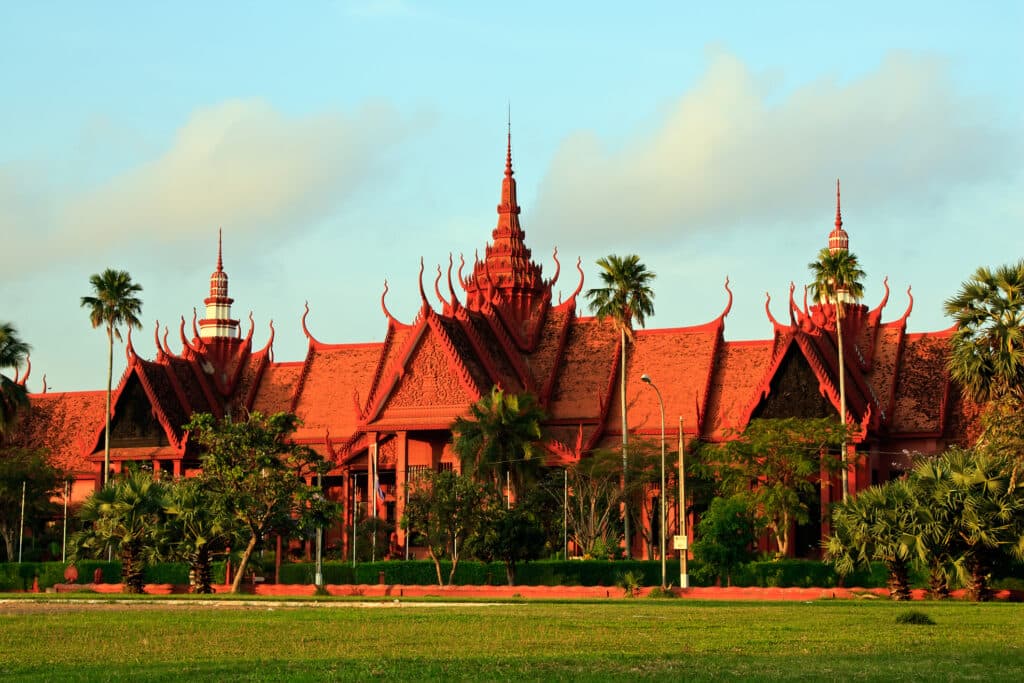
The Boeung Keng Kang neighborhood around the museum has a number of cafes and restaurants where you can sit quietly afterward. The National Museum of Cambodia, near the Riverside, is a gentler follow-up if you want to balance the day with something that speaks to Cambodian culture before the Khmer Rouge period.
Practical Tips
- Dress modestly. Shorts and sleeveless tops are not prohibited, but the setting calls for more considered dress.
- Bring water. The compound involves a fair amount of outdoor walking, and Phnom Penh is hot most of the year.
- The museum has a small bookshop near the entrance that stocks credible histories and survivor accounts. These make for better souvenirs than most.
- If you are traveling with children, consider the age carefully. The content is graphic in parts, and many parents choose to visit without young children.
- Audio guides are available in several languages. Confirm availability of your preferred language at the entrance.
- There is no strict dress code enforced, but loud or disruptive behavior is genuinely inappropriate here and other visitors will make that clear.
- Tuk-tuk drivers often wait outside; agree on a return pickup time before you enter so you are not rushed.
FAQ
Is Tuol Sleng Genocide Museum suitable for all ages?
The content is graphic and emotionally heavy. Teenagers who are studying this period of history often visit as part of school groups, but it is not well-suited for young children. Use your judgment based on your child's maturity and what they have already been taught about this history.
How long does a visit typically take?
Plan for at least two hours to move through the site thoughtfully. If you hire a guide or engage with the audio tour in full, three hours is more realistic. Rushing through Tuol Sleng misses the point.
Do I need to book tickets in advance?
Tickets are generally available at the entrance without pre-booking. During peak tourist season, the site can be busy, but it rarely turns visitors away. Arriving early remains the best strategy for a quieter experience.
Can I visit independently without a guide?
Yes, and many people do. Signage throughout the site is bilingual and informative. However, a guide or audio tour adds significant depth, particularly around the administrative history of S-21 and the individual stories behind some of the photographs.
Is there anywhere to sit and collect yourself during the visit?
There are benches in the courtyard area. Many visitors find they need to pause at some point, and there is no expectation to move at a particular pace. Take the time you need.
Opening hours
Reviews
Sign in and mark this place visited to leave a review.
No reviews yet.
Free Trip Planner
Plan your Cambodia trip with our free planner
Build a day-by-day itinerary with AI suggestions, hand-picked places, and friends. Free forever — no credit card.