War Museum Cambodia
Kaksekam Village Sra Nge Commune, Siem Reap Cambodia Posted by Brandon B.Admin
What the War Museum Cambodia Actually Shows You
The War Museum Cambodia sits on the northwestern edge of Siem Reap, a short tuk-tuk ride from the tourist center, and it holds one of the most sobering open-air collections in Southeast Asia. Unlike the polished war memorials you might visit in other countries, this place feels raw and immediate. Rusted tanks sit in the open air. Rocket launchers lean against wooden racks. And if you arrive on the right day, a landmine survivor will walk you through the exhibits personally, telling you exactly what it was like to live through the decades of conflict that produced all of this hardware.
That last part matters. The museum was founded with the specific aim of employing Cambodian veterans and landmine survivors as guides. You are not getting a rehearsed audio tour here. You are getting a conversation.
Why the War Museum Cambodia Matters
Cambodia's civil war, the Khmer Rouge era, and the Vietnamese occupation between the 1960s and 1990s left the country with one of the highest concentrations of unexploded ordnance anywhere on earth. The museum exists partly to document that history through the physical objects it left behind, and partly to generate income and dignity for the people who survived it.
Most visitors come to Siem Reap for Angkor Wat, and rightly so. But the temples are a thousand years old. The war ended within living memory. For many of the people you will meet in markets, guesthouses, and restaurants around town, this is not distant history. The museum makes that proximity impossible to ignore.
Quick Facts
- Location: Kaksekam Village, Sra Nge Commune, northwest Siem Reap
- About 10 to 15 minutes by tuk-tuk from the Old Market area
- Open-air layout spread across a large outdoor compound
- Entry fee required; general admission, guides included in or available alongside the ticket
- Guides are often landmine survivors or Cambodian veterans
- Photography is generally permitted throughout the site
- Suitable for older children and adults; some exhibits are graphic in description if not in image
Getting There
Tuk-tuk is the most practical option. Most drivers in central Siem Reap know the museum by name, and the ride from Pub Street or the Old Market takes roughly 10 to 15 minutes depending on traffic. If you are already planning a morning at Angkor Wat, the museum sits in a broadly similar direction out of town, so combining the two in a single day is logistically straightforward.
There is no reliable local bus route that stops here, so independent travelers arriving without a pre-arranged ride should confirm the return trip with their driver before they get out. The road into the compound can be rough depending on the season.
The Layout and Experience
The compound is primarily outdoors. Tanks, artillery pieces, armored personnel carriers, and other heavy military vehicles are arranged across a large open field, with many of the pieces original to the Cambodian conflict rather than replicas or imports from other wars. Some pieces date to the American involvement in the region during the Vietnam War era, others to the Khmer Rouge period, and others to the 1980s and 1990s.
There are also indoor or covered sections containing smaller artifacts: rifles, mines, helmets, uniforms, and photographs. These sections tend to be quieter and more concentrated. The photographs in particular are worth slowing down for.
What makes the experience genuinely different from a typical museum is the guide. If a survivor-guide is available when you arrive, take the offer. These guides do not read from a script. They point to a piece of hardware and tell you what it does, sometimes from personal experience. One guide might show you the type of mine that took his leg. Another might describe being conscripted as a child soldier. These conversations are offered willingly and without pressure, but they change the visit entirely.
Main Highlights
The tank collection is visually striking and spans several models used by different factions over the decades of conflict. Walking among them gives you a sense of scale that photographs don't capture.
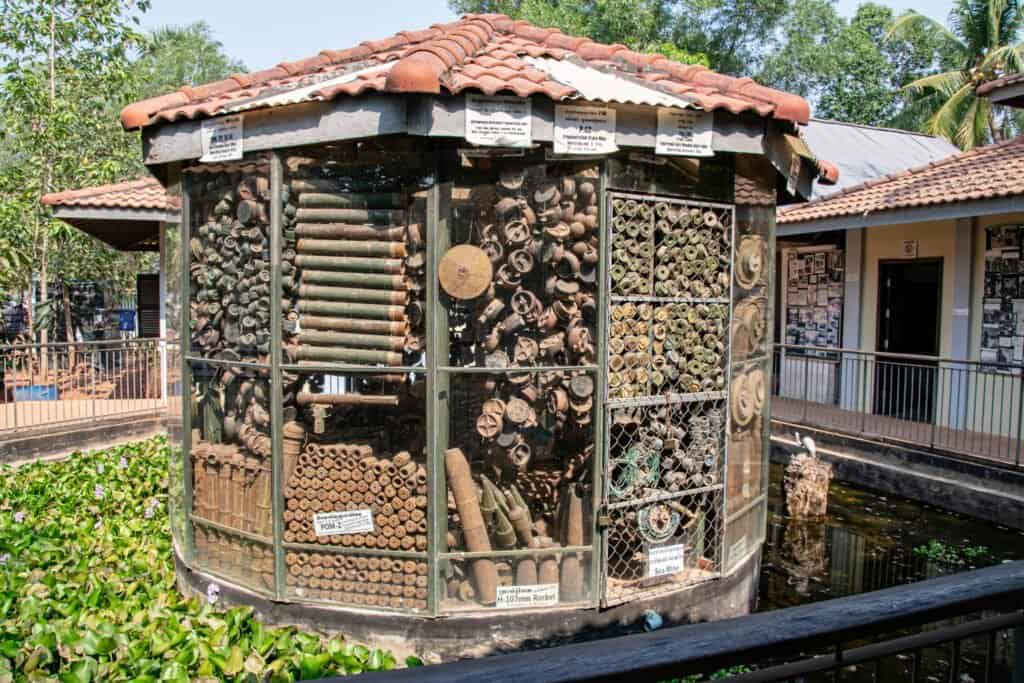
The landmine and unexploded ordnance display is one of the most educational parts of the museum. Cambodia is still being cleared of mines today, and understanding what the clearance teams are dealing with, the variety of devices, the difficulty of detection, makes the ongoing work more concrete.
The personal stories shared by guides are the real centerpiece, even if they don't show up in any brochure. Budget at least 45 minutes to an hour if a guide is walking you around. Rushing this visit misses the point.
History and Background
Cambodia experienced almost continuous armed conflict from the late 1960s through the 1990s. The American bombing campaigns of the early 1970s, the Khmer Rouge takeover in 1975 and the genocide that followed, the Vietnamese invasion in 1979, and the subsequent decade of guerrilla warfare all left physical and human damage that the country is still working through. An estimated four to six million landmines and pieces of unexploded ordnance remained in Cambodian soil after the fighting ended, and demining organizations have been working to clear them ever since.
The War Museum Cambodia was established to preserve the physical artifacts of these conflicts and, critically, to provide employment to survivors. The model of hiring guides who lived through the events they describe is not universal among Cambodian cultural sites, which makes this place unusual and worth supporting directly through your visit.
Best Time to Visit
The dry season, roughly November through April, makes the outdoor portions of the museum more comfortable to walk. During the wet season the ground can become muddy and some areas harder to navigate, though the museum remains open. Morning visits tend to be cooler and the light is better for photography of the outdoor hardware.
Weekday mornings are generally quieter than weekend afternoons, which can see larger tour groups moving through. If you want a more personal conversation with a guide rather than a group walkthrough, arriving early on a weekday tends to work in your favor.
Photography Tips
The outdoor tanks and artillery make for dramatic wide shots, particularly in the golden hour before midday when shadows are still long. Rust textures and painted serial numbers photograph well up close. The scale of some pieces is hard to convey without a person in frame for reference, so if you are traveling with someone, use them.
Inside the covered sections, light is lower and flash may be necessary for detail shots of smaller artifacts. Always ask before photographing a guide or any staff member. Most are happy to be included, but asking first is basic courtesy and especially important here given the personal nature of some of the stories being shared.
Combining with Nearby Attractions
The Angkor Archaeological Park is the obvious pairing, and many visitors fold the War Museum into a half-day that also includes one or two of the outer Angkor temples. The museum itself takes between one and two hours depending on whether you take a guided tour.
Landmine Museum Relief Fund, another Siem Reap institution focused on landmine education and supporting affected children, covers related ground from a different angle. The two visits complement each other if you want a deeper understanding of the ordnance issue specifically.
Back in town, the Old Market area and the Night Market are both easy tuk-tuk rides away for an evening after your visit.
Practical Tips
- Wear closed shoes. The ground is uneven and some areas have debris or rough surfaces.
- Bring water, especially in the dry season. There is limited shade in the outdoor sections.
- Sunscreen and a hat are worth it for a morning spent largely outside.
- Confirm your return tuk-tuk before your driver leaves, or arrange a pickup time.
- Tip your guide. The employment model is part of the museum's mission, and guides work for gratuities in addition to any base arrangement.
- Give yourself more time than you think you need. The tendency is to underestimate how much there is to take in.
- The museum is not recommended for very young children, not because of graphic imagery but because the emotional weight of the guided narratives is difficult to contextualize for small kids.
FAQ
Is a guide included with entry?
Guides are often available on-site and are typically survivor-guides, meaning landmine victims or veterans. Whether the guide cost is bundled with admission or offered separately can vary, so ask when you arrive. Either way, taking a guide is strongly recommended over walking the grounds alone.
How long does a visit take?
Most visitors spend between one and two hours. If you get a thorough guided tour and take time with the smaller exhibits, two hours goes quickly.
Is it appropriate for teenagers?
Generally yes. The museum is not gratuitously graphic, but the guided narratives are honest and sometimes difficult. Teenagers who have some context for the history of the region tend to find it one of the more memorable experiences of a Cambodia trip.
Can I visit without a tuk-tuk driver?
You can arrange your own transport, but given the location outside central Siem Reap, having a driver who can wait or return for you makes the logistics much simpler. Many guesthouses can help arrange this.
Does the museum contribute to local communities?
Yes, directly. The employment of survivors as guides is central to the museum's operating model. Purchasing entry tickets and tipping guides puts money into the hands of people directly affected by the conflicts the museum documents.
Opening hours
Reviews
Sign in and mark this place visited to leave a review.
No reviews yet.
Free Trip Planner
Plan your Cambodia trip with our free planner
Build a day-by-day itinerary with AI suggestions, hand-picked places, and friends. Free forever — no credit card.
Things to see near War Museum Cambodia


Places to eat or drink near War Museum Cambodia

Cuisine Wat Damnak Siem Reap

Khmer Grill Restaurant

WILD – Creative Bar & Eatery