Zaouia of Moulay Idriss II
Fes 30030 Morocco Posted by Brandon B.Admin
The Zaouia of Moulay Idriss II in Fes
Few places in Fes stop you in your tracks the way the Zaouia of Moulay Idriss II does. This is the most venerated Islamic shrine in Morocco, built around the tomb of the city's founder, and it sits at the geographic and spiritual center of the Fes el-Bali medina. The lanes around it narrow, the crowds thicken, and somewhere between the smell of incense and the sound of Quranic recitation, you realize you are standing next to something genuinely old and genuinely important.
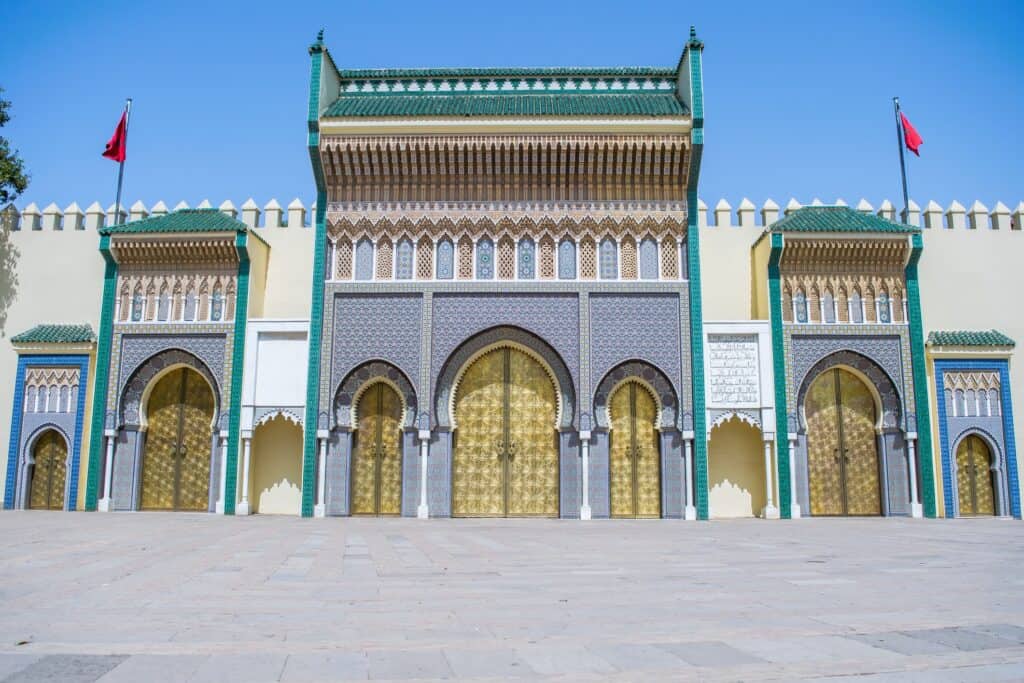
Non-Muslims cannot enter the shrine itself, but the exterior is openly accessible and worth an unhurried hour on its own. The ornate bronze doors, the hand-carved cedar canopy above the entrance, and the constant stream of pilgrims making their way through Rue Tala'a Kebira all tell their own story.
Why the Zaouia of Moulay Idriss II Matters
Moulay Idriss II was the son of the prophet Muhammad's descendant Moulay Idriss I, who founded the Idrisid dynasty and established Fes as a city around 789 CE. The son, Moulay Idriss II, is credited with expanding the city into what became one of the medieval world's great urban centers. When he died in 828 CE, he was buried here, and the site has drawn pilgrims ever since.
For centuries, the zaouia functioned as a place of asylum. Anyone who reached the wooden barrier that once marked the sanctuary boundary was considered under protection. That boundary, called the horm, extended well into the surrounding streets. Today wooden beams still cross several of the nearby alleyways at head height, a physical marker of where the sanctuary zone begins, and a practical reason why mules and donkeys are redirected around those lanes.
The current structure dates largely from the 18th century, though it has been rebuilt and embellished repeatedly. The green-tiled roof, visible from several rooftop cafes nearby, has become one of the most photographed details in all of Fes.
Quick Facts
- Location: Fes el-Bali (the old medina), near the intersection of Rue Tala'a Kebira and Rue Cherabliyine
- Founded: Site dates to the burial of Moulay Idriss II in 828 CE
- Entry for non-Muslims: Exterior only
- Admission: Free to walk through the surrounding area
- Dress code: Modest dress expected; shoulders and knees covered
- Best approached on foot: The medina is pedestrian-only
- Photography: Permitted outside; do not photograph worshippers without permission
Getting There
The zaouia is inside Fes el-Bali, which means you are walking. There is no other way. The closest gate for most visitors arriving by taxi is Bab Bou Jeloud, the famous blue-tiled arch on the western edge of the medina. From there, follow Rue Tala'a Kebira downhill and you will reach the zaouia in roughly 10 to 15 minutes on foot, depending on how many times you stop to look at something along the way.
If you are coming from the Andalusian Quarter on the eastern side of the medina, approach via the Rue Cherabliyine side. The alleyways in this direction are narrower and less trafficked by tourists, which gives the approach a different character entirely.
Parking outside the medina walls is available near Bab Bou Jeloud and near Place R'cif. From Place R'cif the zaouia is about a 5-minute walk northwest.
The Layout and Experience
The zaouia sits within a dense cluster of lanes, and you often sense it before you see it. The wooden bars crossing the alley at shoulder height are your first signal. Then comes the shift in atmosphere: vendors give way to pilgrims, the lane widens slightly into a kind of informal forecourt, and the tilework on the exterior walls becomes more elaborate.
The main facade faces onto a small open area that fills with people throughout the day. Women tend to use a separate entrance on one side. You will see locals pressing close to the outer walls, some placing their hands on the brass-studded doors, some simply pausing in quiet reflection. The activity is continuous from early morning to late evening.
As a non-Muslim visitor, you can walk the perimeter, observe the exterior decoration up close, and absorb the atmosphere of the surrounding lanes. The tilework on the lower walls, the carved plasterwork above it, and the cedarwood details at the entrance are all worth examining slowly. This is not a place to rush through.
History and Background
The Idrisid dynasty that Moulay Idriss II led was the first Arab Muslim dynasty to rule Morocco, and Fes under his reign became a center of Islamic scholarship. He invited Andalusian refugees and families from Kairouan to settle in the city, which is why Fes el-Bali still has distinct Andalusian and Kairouanese quarters. That population growth turned Fes into a cosmopolitan medieval city and helped establish the University of al-Qarawiyyin, founded in 859 CE and considered by many scholars to be the oldest continuously operating university in the world.
The zaouia's role as a sanctuary was formally recognized under various sultans over the centuries. The Marinid dynasty, which ruled from the 13th to 15th centuries, was particularly active in restoring and embellishing shrines across Fes, though the current structure owes more to 18th-century Alaoui-era reconstruction. The green-glazed roof tiles are a feature associated with royal and religious buildings across Morocco, and seeing them gleam from a nearby rooftop gives a sense of the shrine's status within the city's hierarchy of sacred space.
Best Time to Visit
The area around the zaouia is busy most days, but the energy shifts depending on the hour. Early morning, before 9am, the lanes are quieter and the light is softer. Friday midday is the most intense period, when the surrounding streets fill after the main weekly prayer. If you want to observe the pilgrimage activity at its most vivid, a Friday afternoon visit is genuinely striking, though the crowds are dense.
During Mawlid, the celebration of the Prophet's birthday, the zaouia becomes a major focal point for the entire city. The scale of the gathering is something most visitors have never witnessed before. If your trip coincides with Mawlid, plan to spend more time in this part of the medina.
Spring and autumn offer the most comfortable temperatures for walking the medina. Summer afternoons in Fes can be genuinely punishing, and the narrow lanes around the zaouia offer little shade after midday.
Photography Tips
The green roof tiles photograph best from the rooftop terraces of cafes on Rue Tala'a Kebira, several of which have a clear sightline across the medina. The Café Clock area and a handful of unnamed terraces closer to the zaouia itself offer good angles. Go up in the hour before sunset when the tiles catch warm light.
At street level, the brass doors and carved plasterwork above the entrance reward close-up work. The wooden sanctuary beams crossing the alleyways, with the medina life flowing underneath them, make a strong compositional detail that most visitors miss.
Ask before pointing a camera at anyone praying or in obvious devotion. Most locals are relaxed about photography of the building itself, but the people there are not simply subjects for your travel album.
Combining with Nearby Attractions
The zaouia sits at the heart of the most historically dense part of Fes el-Bali, so combining it with nearby sites is straightforward. The Medersa Bou Inania is a few minutes up Rue Tala'a Kebira toward Bab Bou Jeloud and is one of the few religious buildings in Fes that non-Muslims can enter. The University of al-Qarawiyyin and its associated mosque are a short walk east, though non-Muslims cannot enter the mosque itself. The Attarine Medersa, directly adjacent to the al-Qarawiyyin complex, is accessible and has some of the finest Marinid tilework and plasterwork in the city.
The Chouara tanneries, one of the oldest leather-dyeing operations in the world, are roughly 10 minutes on foot to the northeast. Most visitors combine the zaouia with both medersas and the tannery view in a single half-day loop.
Practical Tips
- Wear shoes you can slip off easily if you enter any adjacent spaces where this is expected
- Dress modestly regardless of the season; a light scarf is useful for women and can double as sun protection
- The wooden beams crossing the alleys near the sanctuary are low; watch your head
- Touts and unofficial guides operate in this part of the medina; a polite but firm "no thank you" tends to work
- Keep your bag in front of you in the busier lanes, particularly on Fridays
- There are several small cafes within a few minutes' walk where you can sit, regroup, and plan the next stop
- Water and snacks are available from small shops throughout the medina; prices are reasonable
FAQ
Can non-Muslims enter the Zaouia of Moulay Idriss II?
No. The interior of the zaouia is reserved for Muslims. Non-Muslim visitors can walk the exterior, observe the facade and surrounding lanes, and spend time in the area around the entrance.
Is there an admission fee?
There is no fee to walk through the streets around the zaouia or to observe the exterior. Some nearby medersas charge a general admission fee for entry.
How long should I plan to spend here?
An unhurried visit to the exterior and surrounding lanes takes about 30 to 45 minutes. Most people combine it with nearby sites and spend a half-day in this section of the medina overall.
Is it appropriate to visit during prayer times?
The area remains accessible during prayer times, but be especially mindful of noise levels and photography near the entrance when worshippers are arriving or departing.
Do I need a guide to find it?
Not necessarily. From Bab Bou Jeloud, following Rue Tala'a Kebira downhill will bring you close. That said, the medina's layout is genuinely labyrinthine, and a knowledgeable local guide adds significant context to the history of the site and the neighborhood around it.
Reviews
Sign in and mark this place visited to leave a review.
No reviews yet.
Free Trip Planner
Plan your Fes trip with our free planner
Build a day-by-day itinerary with AI suggestions, hand-picked places, and friends. Free forever — no credit card.