
Northern Ireland on the map
17 places from this guide. Tap a pin to open the listing.
Overview
Northern Ireland spent decades known mostly for the Troubles and for the ship that sank on its maiden voyage. Neither story tells you much about visiting today. This Northern Ireland travel guide is for people who want the real picture: a compact corner of the United Kingdom with a basalt coastline, Norman castles, and a capital city that has rebuilt itself around its shipbuilding past rather than around its conflict. Belfast is small enough to walk across in an afternoon. The Antrim coast is close enough to Belfast that you can see the Giant's Causeway and be back in time for dinner.
What makes the region worth the extra flight connection is the density of sights packed into a short drive. You can stand on 40,000 hexagonal basalt columns at the Giant's Causeway in the morning, walk a rope bridge strung between cliffs by lunchtime, and be drinking in a Belfast pub by evening. Add in the fact that a large share of the country's dramatic scenery doubled as Westeros for eight seasons of Game of Thrones, and you get a landscape that photographs like it was built for television, because in some cases it was.
When to Visit
June through September brings the mildest weather and the longest daylight, with temperatures in July and August running as high as Northern Ireland gets, which is still modest by most standards. Those two months also bring the heaviest crowds to spots like the Causeway Coast, so parking and tour buses can be an issue at midday. June itself tends to be the sweet spot: daylight stretches past 10pm, rainfall is usually lower than later summer, and the tourist numbers haven't peaked yet.
Shoulder months like May and September are worth considering if you want quieter roads and still-decent weather. Winter (November to February) is cold, wet, and dark by mid-afternoon, but it's also when Belfast's Christmas markets run and when you'll have places like Tollymore Forest Park almost to yourself. Whatever month you choose, pack for all four seasons in one day. That's not an exaggeration here.
How to reach the destination
Most visitors fly into one of two Belfast airports. Belfast International Airport sits about 30 minutes northwest of the city and handles most of the long-haul and budget carrier traffic. George Best Belfast City Airport is closer in, right on the harbour, and better for short-hop flights from Britain. A third option, used by plenty of road-trippers, is to fly into Dublin Airport in the Republic of Ireland and drive north. The coastal route up from Dublin through County Louth and across the border is a genuinely scenic way to start a trip, and it skips the need to book a separate flight into the North.
Ferries are a solid option if you're bringing a car from Britain. Stena Line and P&O Irish Sea both run routes between Scotland and Northern Ireland, with the Cairnryan to Belfast crossing taking a little over two hours. The Enterprise train connects Dublin Connolly station to Belfast in around two hours, and it's a relaxed way to arrive if you'd rather pick up a rental car in Belfast than drive the whole way. Bus operators also run frequent coach services between Dublin and Belfast, and several Belfast-based companies, including Finn McCool Tours, run day trips that combine the drive north with a Game of Thrones-themed stop along the way.
Getting around the destination
Northern Ireland is small enough that you'll rarely need to fly between towns inside it. Translink runs both the NI Railways network and the Goldline coach services, and together they connect Belfast to larger towns like Bangor, Carrickfergus, and Derry/Londonderry reasonably well. Where public transport falls short is in the countryside. If your plan includes the Glens of Antrim, the Mourne Mountains, or anywhere off the main coastal road, a bus timetable that runs twice a day won't cut it.
That's why renting a car is the default move for most visitors. The roads are well maintained, distances are short, and the major rental firms all have counters at both Belfast airports. Remember that driving is on the left, and rural roads along the Antrim coast can be narrow with blind bends, so give yourself a little extra time to adjust before tackling anything twisty. As a rough benchmark, Belfast to the Giant's Causeway is about 90 minutes by car, and Belfast to Castle Ward in County Down is closer to an hour.
Top destination travel tips
- Don't try to cram Northern Ireland into one long weekend. The island rewards slower travel, and rushing between sites means you'll spend more time driving than looking at anything.
- Rent a car if you want to see anywhere beyond Belfast properly. Rural public transport is infrequent and not built around tourist schedules.
- If you're invited into a round at the pub, you don't have to buy for the whole group. Large groups often split into two or three smaller rounds anyway, so don't feel pressured.
- Pack a waterproof jacket no matter the season. A clear morning on the Antrim coast can turn to horizontal rain by lunchtime and back to sun an hour later.
- Bring comfortable, grippy footwear for coastal sites. The basalt rocks at the Giant's Causeway and the approach to Carrick-a-Rede can be slick even when it hasn't rained recently.
- Mobile signal gets patchy in the glens and along some stretches of the Causeway coast, so download offline maps before you set off for the day.
- Currency is pound sterling, not euro, even though you may be crossing from the Republic. Shops right at the border sometimes take euros, but don't count on it anywhere else.
Typical costs in the destination
Northern Ireland uses the British pound, and a rough daily budget for a traveler covering accommodation, food, and local transport lands around £107 ($137), based on general travel cost surveys. Food alone tends to run about £39 ($50) a day if you're eating a mix of pub meals and the odd sit-down dinner. A hotel room for a couple averages around £114 ($146) a night, though that varies a lot between a Belfast city-centre hotel and a guesthouse out near the coast.
Expect prices to sit closer to the budget-to-mid-range tier outside Belfast, where guesthouses and B&Bs are common and often cheaper than hotels. A pint in a pub is mid-range by UK standards, and a casual meal won't put much of a dent in your day's budget. Fine dining in Belfast has grown considerably in the last decade and will push costs into upscale territory if that's what you're after.
Must try food and drinks
- Ulster fry: a cooked breakfast with bacon, sausage, egg, soda bread, and potato bread, heavier and more bread-focused than the standard full English.
- Soda bread and wheaten bread: dense, slightly sweet breads that turn up at almost every breakfast table and farm shop.
- Irish stew: lamb or mutton simmered with potatoes and root vegetables, found on most traditional pub menus.
- Strangford Lough mussels and Portavogie prawns: local seafood that shows up on menus all along the County Down coast.
- Bushmills whiskey: distilled near the Giant's Causeway and worth a tasting if you're already out on the Antrim coast.
- Guinness and local craft beer: pubs across Belfast now pour a decent range of Northern Irish microbrews alongside the stout.
- Yellow Man toffee: a honeycomb-textured sweet traditionally associated with the Antrim coast and the Ould Lammas Fair in Ballycastle.
FAQ
How many days do you need in Northern Ireland?
Plan on more than a long weekend if you can. Northern Ireland is small and distances are short, so a road trip linking Belfast, the Antrim coast, and the Giant's Causeway is doable in a few days, but rushing leaves little time for the scenery or the countryside. Add extra days if you want Game of Thrones filming sites, the Glens of Antrim, or the coast of County Down around Castle Ward and Inch Abbey.
Do you need a car in Northern Ireland?
Yes, a car is the best option if you want to leave Belfast and see the countryside properly. Buses and trains connect the main towns efficiently, but rural public transport is slow, expensive, and infrequent. Major rental companies operate at both Belfast airports. Remember that traffic drives on the left, so allow time to adjust before tackling narrow coastal roads.
Is Belfast safe to visit?
Yes, Belfast is generally safe for visitors today despite its troubled past. The city has rebuilt its reputation around attractions like Titanic Belfast and its Game of Thrones connections. Use the same common sense you would in any city, keep an eye on your belongings at night, and check current local advice if you're visiting during a politically sensitive period.
Does Northern Ireland use euros or pounds?
Northern Ireland uses the pound sterling, not the euro, because it's part of the United Kingdom. If you're arriving from Dublin, you'll need pounds once you cross the border, so check your card's foreign transaction fees before you travel. Shops close to the border sometimes accept euros, but don't rely on it further north.
Is it easy to visit Northern Ireland from Dublin?
Yes, Dublin to Belfast is an easy trip by road, train, or bus. The Enterprise train and several coach companies run the route multiple times a day, and the drive up the coast is scenic in its own right. Belfast also has two airports, so you can fly in directly and pick up a rental car for the rest of the trip.
What should I pack for Northern Ireland?
Pack layers and a waterproof jacket regardless of the season. Weather can swing between sun, rain, and wind within a single afternoon, even in summer, so a small backpack with options is worth carrying. Comfortable, grippy shoes also help at coastal sites like the Giant's Causeway and the Carrick-a-Rede rope bridge, where you'll be on uneven ground outdoors.
Are the Game of Thrones filming locations worth visiting?
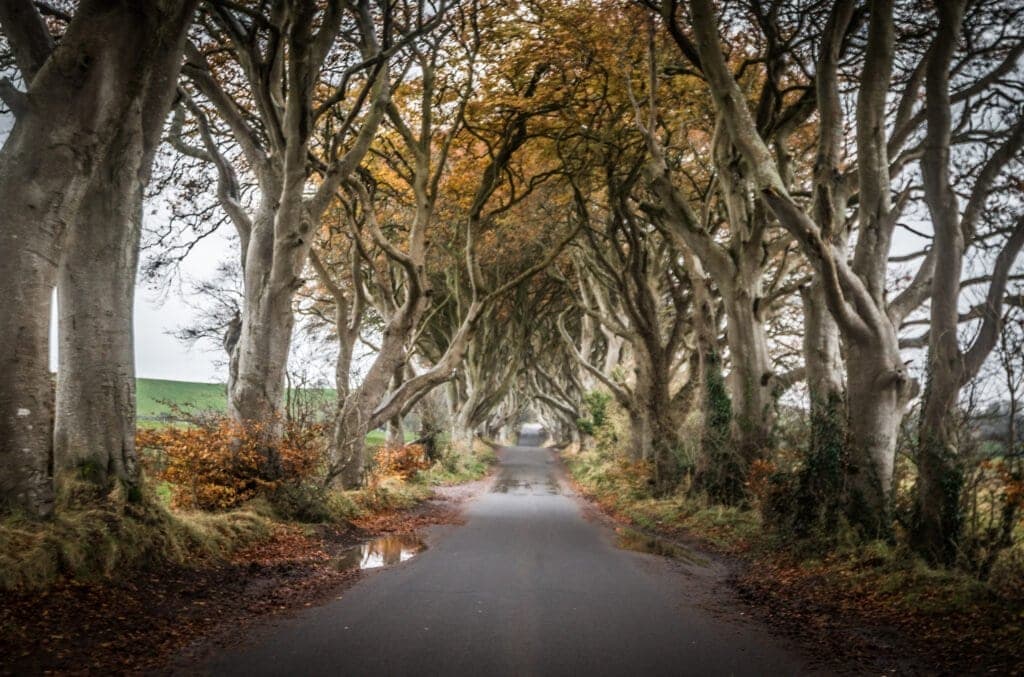
Yes, if you have any interest in the show or just want dramatic scenery. The Dark Hedges, Ballintoy Harbour, Larrybane Quarry, Murlough Bay, Cushendun Caves, and Pollnagollum Cave were all used as filming locations, and most sit along or near the Causeway Coastal Route, so you can work several into one day's drive without much detour.
Top Places to Visit in Northern Ireland
View all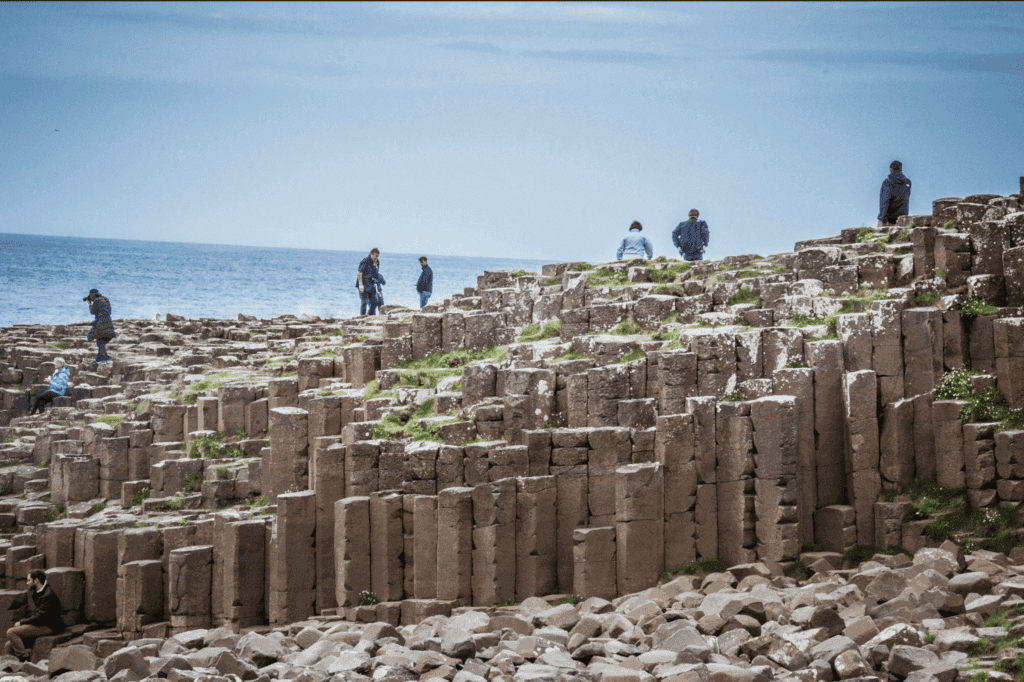 See & Do
 See & Do
 See & Do
The Dark Hedges
See & Do See & Do
The Causeway Coast And Carrick-A-Rede Rope Bridge
 See & Do
 See & Do
Larrybane Quarry
Renly Baratheon's camp, next to Carrick-a-Rede.
 See & Do
Binevenagh
The Dothraki Sea, on the basalt escarpment.