
Why Europe Is Better by Train: What Years of Travel Have Taught Me About Slowing Down
By
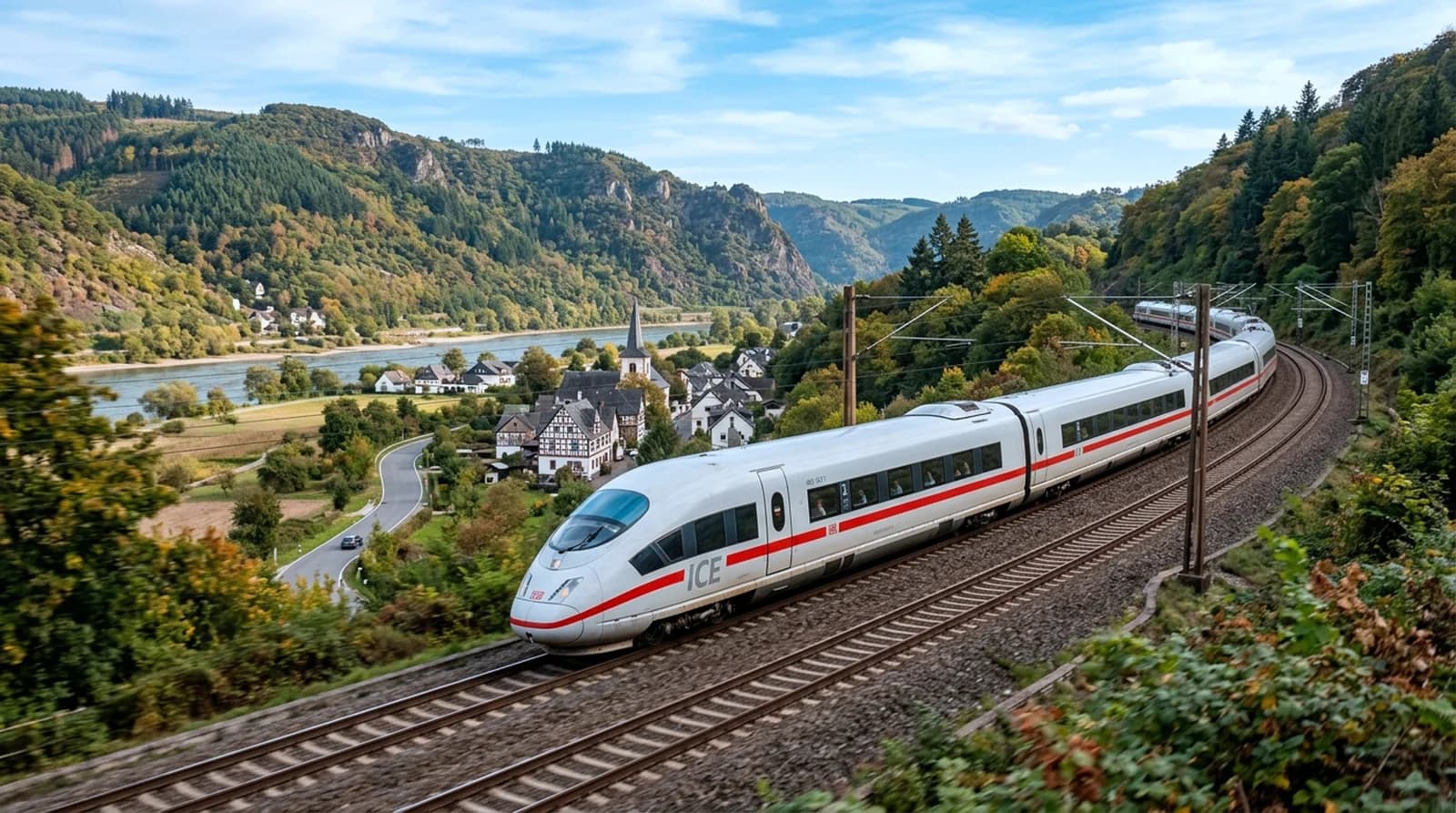
There is a moment on almost every European train trip when I wonder why anyone would choose to see the continent primarily through the windshield of a tour bus. Maybe it happens when the train leaves a major city and apartment buildings gradually give way to farms and villages. Maybe it is somewhere in the Scottish Highlands when a loch suddenly appears outside the window. Or perhaps it is in Norway, where the railway climbs into the mountains and waterfalls seem to appear around every bend.
After years of traveling throughout Europe, I have gradually changed the way I travel. I try to stay longer in fewer places, avoid long motorcoach journeys whenever there is a reasonable alternative, and take the train whenever possible. It isn't simply transportation. The journey becomes part of the trip.
Norway May Have Spoiled Me for Train Travel
I have traveled extensively throughout Europe by rail, but Norway remains one of my favorite places to experience from a train. I have ridden the Flåmsbana—the famous Flåm Railway—so many times that I can practically recite the station names from memory, yet I never get tired of it.
The journey between Myrdal and the tiny fjord village of Flåm takes about an hour, but it feels like a sightseeing excursion disguised as transportation. The train descends through the Flåm Valley, passing mountains, farms, tunnels and waterfalls before eventually arriving beside the Aurlandsfjord. One of the best-known stops is Kjosfossen, where passengers can step off the train for a few minutes beside the roaring waterfall. I've done it before, and I'll undoubtedly do it again.
That's one of the things I love about great train journeys. Even when you know what is coming, you still want to look out the window. And the Flåmsbana isn't even my only memorable Norwegian railway experience.
The Day I Rode Through a Mission: Impossible Movie Set
Not long after Mission: Impossible – Dead Reckoning Part One was released, I rode another spectacular Norwegian railway: the Rauma Line between Åndalsnes and Dombås. Movie fans may recognize the scenery because the Rauma Railway and surrounding Romsdalen Valley were used for the movie's spectacular train sequence.
In the film, Tom Cruise's Ethan Hunt battles Gabriel, played by Esai Morales, on top of a moving train supposedly traveling on the Orient Express. There was something wonderfully surreal about sitting comfortably inside the train, looking out at those mountains and thinking that Tom Cruise had recently been on top of a train in the same landscape fighting for his life—at least according to the screenplay.
Fortunately, my trip was considerably less eventful. The scenery, however, required no Hollywood special effects. The Rauma Line passes through a landscape of enormous mountains, the Rauma River, waterfalls and the dramatic Romsdalen Valley. The famous Kylling Bridge also appears in the film.
What stayed with me most wasn't the movie connection. It was the realization that the train ride itself was one of the highlights of the trip. I have written more about traveling through Ålesund and Åndalsnes and riding Norway's scenic railways, including how these destinations can fit together.
Experiences like these have changed the way I plan European trips. Sometimes choosing how you get somewhere is just as important as deciding where you are going.
The Problem With Trying to See Everything
One of the biggest mistakes I see travelers make in Europe is trying to do too much. Look at some itineraries and you might find six cities in eight days: Paris today, Brussels tomorrow, Amsterdam the next day, then Cologne and somewhere else after that.
On paper, it sounds impressive. In reality, much of the vacation can be spent checking out of hotels, waiting for luggage, loading vehicles, sitting in traffic, unloading luggage, checking into another hotel and trying to remember which room number you have tonight.
I call it hit-and-run sightseeing. You arrive, take the photograph and get back on the bus. Technically, you have been there, but did you really experience it?
Europe Rewards Travelers Who Slow Down
Some of my favorite memories from Europe have happened after the day's scheduled sightseeing was finished. Maybe it was finding a neighborhood restaurant, going back to something I wanted to see a second time, or simply sitting in a square and watching people go about their evening.
Those aren't necessarily the experiences that appear in a tour brochure, but years later, they are often the things I remember. That is why I increasingly prefer three or four nights in a destination instead of changing hotels every night. Seeing fewer places doesn't necessarily mean seeing less. In fact, it can mean seeing considerably more.
Stay in Oslo for several days and you can visit the major museums, walk along the waterfront, explore neighborhoods, take a ferry into the Oslofjord and still have time to sit down for dinner without watching the clock. Spend several nights in Edinburgh and you can see Edinburgh Castle and the Royal Mile while still having time to explore places that weren't on your original checklist.
Good travel requires something that many itineraries don't provide enough of: time.
Why Trains Work So Well in Europe
European trains have another major advantage: they frequently take you from the center of one city to the center of another. A one-hour flight isn't necessarily a one-hour journey when you factor in getting to the airport, arriving well before departure, going through security, boarding, retrieving luggage and then traveling from another airport into another city.
For many European routes, the train is not only more enjoyable; door-to-door, it can be surprisingly competitive. You walk into the station, board the train, put your luggage away and sit down while Europe passes outside your window.
There are certainly times when flying makes sense. Europe is far too large to claim that trains are always the best choice. But I have learned to compare the entire journey rather than simply comparing the scheduled flight time with the scheduled train time.
Small Groups Make Train Travel Easier
Group size matters too. There is nothing inherently wrong with traveling on a large motorcoach tour. For some people, having virtually every hour organized is exactly what they want. But logistics change dramatically as a group gets larger.
Moving 40 or 45 people through a railway station is very different from moving 12 or 16. Getting a large group checked into a hotel takes longer. Restaurant logistics become more complicated. Rest stops become scheduled events. Even something as simple as getting everyone together after visiting a museum can take time.
Smaller groups create flexibility, and that is particularly important when trains and ferries are part of the itinerary. In Norway, for example, it is possible to connect Oslo, Flåm and Bergen using some of the country's most spectacular rail and fjord routes instead of making a motorcoach the centerpiece of the vacation. Travelers who like this style of travel can see an example in this small-group Norway tour by scenic rail and fjord.
That is the kind of itinerary I have come to prefer. The transportation isn't something to endure between attractions; it is one of the attractions.
Pack for the Way You Want to Travel
There is one lesson train travel teaches very quickly: you probably brought too much luggage. That suitcase may roll effortlessly across an airport terminal, but it feels considerably different when you are lifting it onto a train, maneuvering through a busy station or pulling it down a cobblestone street.
I am not suggesting traveling through Europe with a toothbrush and two shirts. But almost everyone can pack a little lighter. The less luggage you have, the easier rail travel becomes. Hotel changes are easier, stations are easier, and moving around Europe becomes much less stressful.
It also reinforces one of my basic principles of travel: remove unnecessary complications.
Don't Schedule Every Minute
Another mistake travelers make is planning a European vacation as though they will never return. That thinking creates itineraries where something is scheduled almost every hour—breakfast at 7:00, bus at 8:00, museum at 9:15, lunch at 12:05, walking tour at 1:30, dinner at 6:00, and then do it all again tomorrow.
No thank you.
A good itinerary should have blank spaces. See the museum, take the walking tour and visit the castle, but then leave an afternoon open. One traveler may discover another museum. Someone else might shop. Another may find a café, take a walk or go back to the hotel and rest before dinner.
There is no prize for returning from Europe exhausted.
How I Plan European Trips Differently Now
After years of traveling, a few principles have become increasingly important to me. I start by choosing destinations that connect naturally rather than making a wish list of every city I want to see. I look at the rail routes before I finalize the hotels, try to stay longer in each destination, and consider whether the trip between two cities might itself be worth experiencing.
I also resist adding one more destination simply because Google Maps tells me it is possible. Possible and enjoyable are not the same thing. Most importantly, I no longer judge a trip by how many places I can say I visited.
Travel Better, Not Faster
I still love famous attractions. I am not going to Paris and refusing to visit the Louvre because a neighborhood café sounds more authentic. I'm not going to Scotland and skipping Edinburgh Castle because everyone else goes there. Famous places are often famous for a reason, but they shouldn't become a checklist that controls the entire trip.
The more I travel, the less interested I become in counting destinations. I'd rather remember riding the Flåmsbana yet again and still staring out the window, or sitting on the Rauma Line thinking about Tom Cruise fighting on top of a train in those same Norwegian mountains. I'd rather remember an unexpected afternoon, a long dinner, a spectacular train ride or the people I met along the way.
Sometimes the best way to see more of Europe is to stop trying to see all of it. Take the train, stay another night, leave an afternoon open, and give yourself enough time to actually be there.