
The Complete Connectivity Guide for U.S. Travelers Visiting Europe and Latin America
By
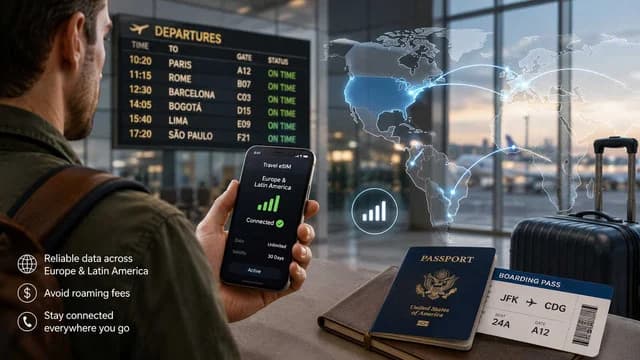
International travel is experiencing a massive resurgence, with U.S. travelers packing their bags in record numbers to explore the globe. Among the most sought-after destinations are the historic cities of Europe and the vibrant, diverse landscapes of Latin America. While planning these transatlantic or cross-hemisphere adventures, most travelers meticulously arrange their flights, curate their hotel stays, and build detailed itineraries. However, amidst the excitement, one critical logistical detail is frequently forgotten until the very last minute: mobile connectivity.
Assuming your domestic phone plan will seamlessly handle international data is a common pitfall. Exorbitant roaming charges can still surprise travelers, turning a simple map search or a quick text message into a financial headache upon returning home. In today’s hyper-connected world, having immediate internet access from the exact moment your plane touches down is no longer just a luxury; it is a fundamental necessity for a smooth, safe, and enjoyable trip. Understanding your digital options before you leave the United States ensures you can navigate foreign streets, communicate freely, and focus entirely on the travel experience.
Why Mobile Internet Matters When Traveling Abroad
When you are thousands of miles from home, your smartphone is your ultimate travel companion. Having a reliable, high-speed internet connection influences almost every aspect of the modern travel experience.
Navigation
Gone are the days of unfolding massive paper maps on a windy street corner. Whether you are wandering through the labyrinthine alleys of Venice or navigating the busy avenues of Bogotá, real-time GPS navigation through apps like Google Maps or Apple Maps is absolutely essential for finding your way efficiently.
Ride-sharing apps
Arriving at a foreign airport and trying to negotiate with local taxi drivers in a different language can be overwhelming. Access to ride-sharing apps like Uber or Cabify requires a stable internet connection but provides transparent pricing and safe transport directly to your accommodation.
Hotel reservations
Travel plans can change rapidly, and check-in instructions are often sent digitally. Having immediate access to your email or booking platforms ensures you can retrieve access codes for your rental property or communicate sudden flight delays to your hotel reception desk.
Airline notifications
Flight gates change, departures are delayed, and baggage carousels are frequently reassigned. Live mobile data allows airlines to push instant push notifications directly to your device, keeping you informed of any critical shifts in your itinerary.
Banking apps
International travel often triggers unexpected fraud alerts on credit cards. If your card is declined at a restaurant abroad, mobile data allows you to instantly access your banking app, verify the transaction, and quickly unlock your funds without making an expensive international phone call.
Emergency communication
Safety is paramount. A reliable internet connection ensures you can use WhatsApp, iMessage, or VoIP services to contact family back home, reach out to travel insurance providers, or locate the nearest embassy or medical facility without hesitation.
Staying Connected Across Europe
Europe is uniquely designed for multi-country exploration. It is incredibly common for U.S. travelers to land in London, take a train to Paris, and catch a quick regional flight to Rome—all within a single two-week vacation. This dense, interconnected geography makes travel exciting, but it has historically created a nightmare for mobile connectivity.
As you cross borders, your phone must disconnect from one national carrier and authenticate with another. In the past, this meant either paying exorbitant daily roaming passes to your U.S. carrier or stopping in every new country to locate a kiosk, hand over your passport, and purchase a new local physical SIM card.
With modern digital solutions, you can bypass this hassle entirely. By utilizing Europe eSIM plans, you gain access to a unified network profile that covers the entire continent seamlessly.
This means you install one digital profile before you leave the United States, and it intelligently switches to the strongest local network as you move from France to Germany, or from Spain to Italy. There are no physical SIM swaps on a moving train, no frustrating language barriers at local telecom kiosks, and no interruptions to your Spotify playlist or navigation app as you cross an international border. You enjoy uninterrupted, high-speed connectivity, allowing you to focus entirely on the architecture, the food, and the culture of your destination.
Staying Connected Across Latin America
Latin America offers an unparalleled variety of experiences, from the bustling metropolitan energy of Brazil and Argentina to the historical richness of Colombia, Peru, and Chile, alongside the pristine beaches of the Dominican Republic. However, the telecommunications infrastructure across these popular destinations can be highly variable.
Traveling through Latin America often involves navigating stark contrasts in network quality. A physical SIM card purchased in a capital city might offer excellent speeds downtown but struggle when you travel to a neighboring province or cross the border into another country. Furthermore, regional travel in South and Central America frequently involves long-haul bus rides or regional flights, making connectivity crucial for safety, translation, and coordination.
Purchasing local SIM cards in these countries can also be bureaucratically complex. Many Latin American nations require travelers to present their passports, fill out extensive registration paperwork, and wait in long lines at official telecom stores just to buy a basic prepaid data package.
You can bypass these bureaucratic hurdles by choosing Latin America eSIM plans. A regional digital profile provides broad coverage across multiple countries simultaneously. It is vastly easier than dealing with local currency exchanges and registration forms. For U.S. travelers embarking on multi-country trips, a regional digital plan ensures you remain online the moment you land in each new destination, providing peace of mind and reliable access to essential travel tools.
Why Travelers Are Choosing eSIM Instead of Physical SIM Cards
Instant Delivery
Unlike physical travel cards that you have to order weeks in advance and wait for the mail carrier to deliver, digital profiles are sent to your email inbox immediately after purchase. You simply scan a QR code, and the installation is complete in seconds, making it the most convenient option for modern travelers.
No SIM Card Swapping
Fumbling with a tiny metal ejector pin and a microscopic piece of plastic on a turbulent airplane or in a crowded airport terminal is frustrating. Digital profiles eliminate physical hardware entirely, removing the risk of dropping, damaging, or losing your primary domestic SIM card.
Keep Your Existing Number
Modern smartphones support Dual SIM functionality. This allows you to keep your primary U.S. physical SIM active solely for incoming voice calls and vital SMS messages (like two-factor authentication codes), while simultaneously assigning all your heavy mobile internet usage to your prepaid digital travel profile.
Activate Before Departure
You can complete the entire purchase and installation process from the comfort of your living room. The profile sits dormant on your phone until your plane touches down at your destination, automatically connecting to the local towers as you taxi to the gate.
Multiple Profiles on One Device
If you travel frequently, you can store multiple digital profiles on a single smartphone. You can easily toggle them on and off in your device settings as needed, making it the ultimate tool for international convenience and flexibility.
Common Connectivity Mistakes Travelers Make
Relying on Airport Wi-Fi
Public Wi-Fi networks at international airports are notoriously slow, require frustrating registration pages, and pose significant cybersecurity risks. Relying on them to download offline maps, access banking details, or contact your hotel leaves your personal data highly vulnerable to interception.
Buying a SIM After Landing
After a long transatlantic flight, the last thing you want to do is stand in a slow-moving line at an airport kiosk, trying to translate data limits and overpaying for a tourist-trap physical SIM card while jetlagged.
Ignoring Roaming Costs
Leaving your primary U.S. carrier’s data roaming switched on without an international plan can result in background apps consuming hundreds of dollars in data before you even reach baggage claim. Always verify your cellular settings before taking off.
Not Checking Phone Compatibility
While the vast majority of modern smartphones manufactured in recent years support digital profiles, older models may not. Furthermore, phones purchased on an installment plan through a U.S. carrier are often "locked" to that network. It is crucial to verify your device is unlocked and compatible before purchasing a travel plan.
Waiting Until Arrival to Set Everything Up
Telecommunications require stable connections for the initial setup. Attempting to download and configure a new network profile while walking through a busy customs line or waiting for luggage often leads to unnecessary stress and frustration.
Pre-Travel Connectivity Checklist
Before departure, run through this quick checklist to ensure a smooth trip:
Check passport validity: Ensure you have at least six months of validity beyond your planned return date.
Download offline maps: Save your specific destination areas in your map application just in case you wander into a dead zone.
Save hotel confirmations: Screenshot your booking references and addresses so they remain accessible completely offline.
Install travel apps: Download local transit apps, airline applications, and digital translation tools while connected to your fast home Wi-Fi.
Verify eSIM compatibility: Check your smartphone settings to ensure it supports digital profiles and is fully carrier-unlocked.
Install your eSIM before flying: Scan your QR code and complete the setup process before you even leave for the airport.
Pack a power bank: Navigation and heavy camera usage drain smartphone batteries quickly; always carry reliable backup power.
Conclusion
Europe and Latin America offer some of the most incredible, diverse, and culturally rich travel experiences on the planet. Whether you are tasting wine in the Tuscan countryside, exploring the historic streets of Cartagena, or trekking through the Andes, the overall quality of your trip is heavily influenced by how easily you can navigate your surroundings. Reliable internet makes travel significantly easier, safer, and much more spontaneous.
Preparing your digital connectivity before your departure saves valuable vacation time and helps you completely avoid the stress of unexpected roaming fees. A travel eSIM is undeniably one of the simplest, most effective preparations U.S. travelers can make before boarding their flight.
Explore Europe and Latin America connectivity options before your next trip and travel with absolute confidence.