
7 Corners of Washington DC Worth Walking To
By
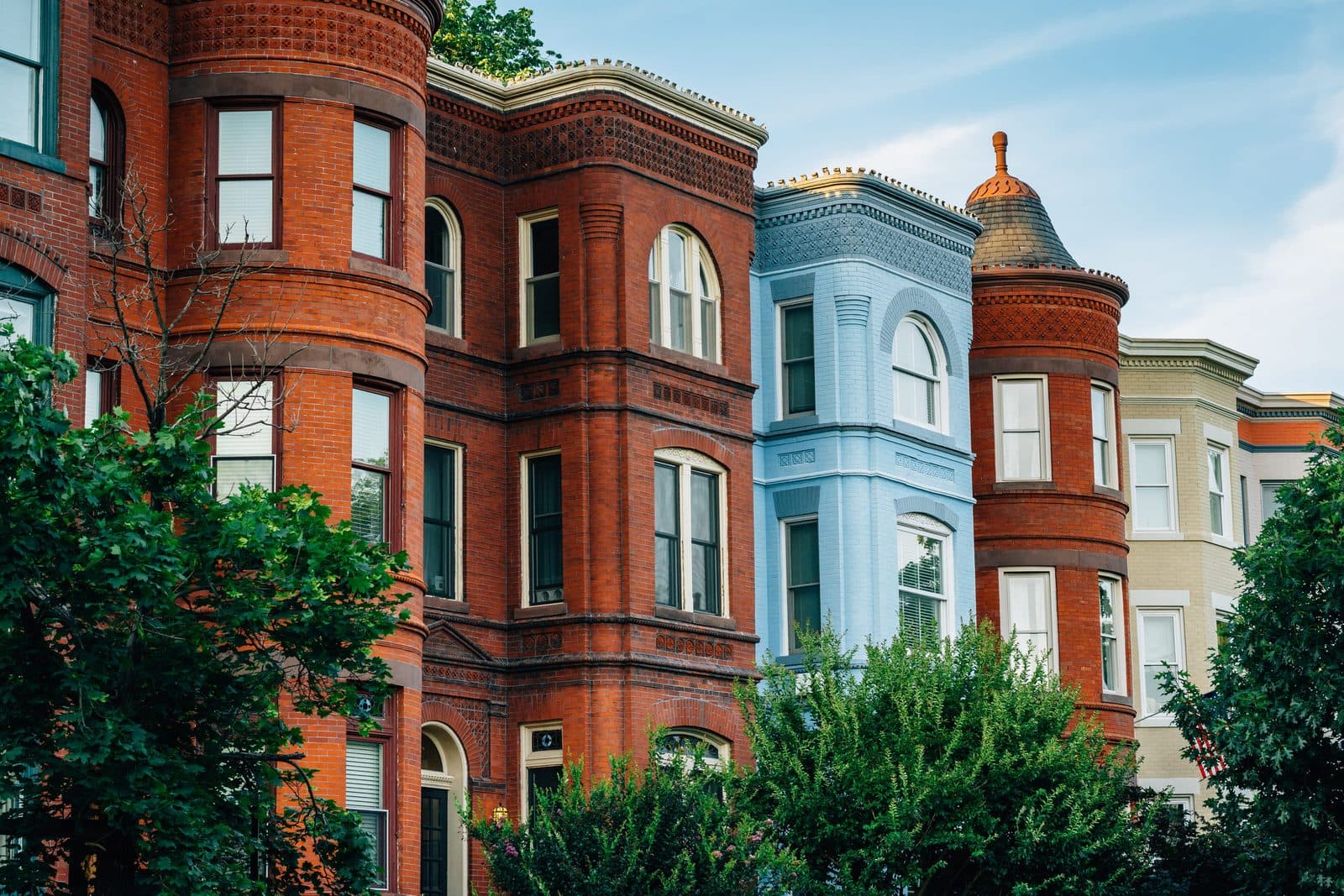
Washington DC isn't built on a simple grid, and that's exactly why its corners are worth seeking out. Where diagonal avenues slice through numbered and lettered streets, you get these odd, angular intersections that turn into plazas, pocket parks, and unexpected sightlines. Here are seven corners that reward a short detour on foot.
Dupont Circle
Dupont Circle sits where Massachusetts, Connecticut, and New Hampshire Avenues converge, and the fountain at its center has been a meeting spot since 1921. Chess players set up folding tables along the north side most afternoons, rain or shine. The surrounding streets fan out into some of the city's best-preserved Gilded Age mansions, many now housing embassies and think tanks. Walk the full loop around the circle before picking a direction, since each exit leads somewhere entirely different.
Thomas Circle
A few blocks northeast of the White House, Thomas Circle gets overlooked because traffic swirls around it fast and the pedestrian crossings take some patience. But the statue of Civil War general George Henry Thomas on horseback is worth the wait, and the circle marks a clean dividing line between the office towers of downtown and the rowhouse blocks of Logan Circle. Stand on the south side around sunset and you'll catch the dome of a nearby church framed against the skyline.
Logan Circle
Logan Circle itself is one of the most intact Victorian neighborhoods in the city, and the corner where Vermont Avenue and 13th Street meet the circle gives you the best view of the wraparound porches and turreted rooflines. This was a fashionable address for Washington's Black elite in the early 20th century, and several of the homes carry historical markers noting past residents. The park at the center has a quieter feel than Dupont, with fewer vendors and more neighborhood regulars walking dogs.
Eastern Market's Corner at 7th and North Carolina
Capitol Hill's Eastern Market isn't a traffic circle, but the corner where 7th Street meets North Carolina Avenue functions like one on weekends, when the sidewalk market spills out and vendors line up with produce, crafts, and baked goods. The brick market building itself dates to 1873 and survived a serious fire in 2007, reopening after a careful restoration. Arrive by mid-morning on a Saturday for the best selection before the crowds thicken. This is also a good starting point if you're joining one of the walking tours organized by Babylon Tours in Washington DC that often gather nearby before heading toward the Capitol grounds.
Washington Circle
Washington Circle, where Pennsylvania Avenue and 23rd Street cross near George Washington University, doesn't get the tourist traffic of the National Mall, but it has a bronze equestrian statue of its namesake dating to 1860, one of the oldest such monuments in the city. The circle sits right at the edge of Foggy Bottom, and walking a block or two west puts you near the Kennedy Center and the Potomac waterfront. It's a useful corner to know if you're trying to cut between the Mall and Georgetown without dealing with the busier commercial strips.
Chevy Chase Circle
Chevy Chase Circle marks the literal border between the District and Maryland, split down the middle by the DC-Maryland line. Unlike the circles downtown, this one is residential and leafy, ringed by large early-1900s houses built when the neighborhood was marketed as a streetcar suburb. The fountain at its center was added in 1932, funded by a women's civic group that lobbied for years to get it built. It's a quieter walk, better suited to an afternoon stroll than a quick photo stop.
Scott Circle
Scott Circle, at the intersection of Massachusetts and Rhode Island Avenues near 16th Street, is small but dense with history. General Winfield Scott's statue anchors the center, and the surrounding blocks include some of the city's older hotel buildings, several converted to offices or condos over the decades. Pedestrian access can be tricky since the circle is split by heavy traffic, so use the marked crosswalks rather than trying to cut across. The corner rewards patience more than speed.
Finding Your Own Route
None of these corners are far from a Metro stop, and most sit within walking distance of at least one other on this list, particularly the cluster around Dupont, Logan, and Thomas Circles. A map will show you the shortest path, but the real value comes from slowing down at each intersection and noticing what's different about it: the architecture, the statue, the way the streets meet at an angle instead of a right angle. That's the detail a grid city like most of America rarely offers, and it's reason enough to put the car away and walk.