
What Is Route 66? America's Most Iconic Road Explained
By
Explore on the map
58 places from the destinations in this story. Tap a pin to open the listing.
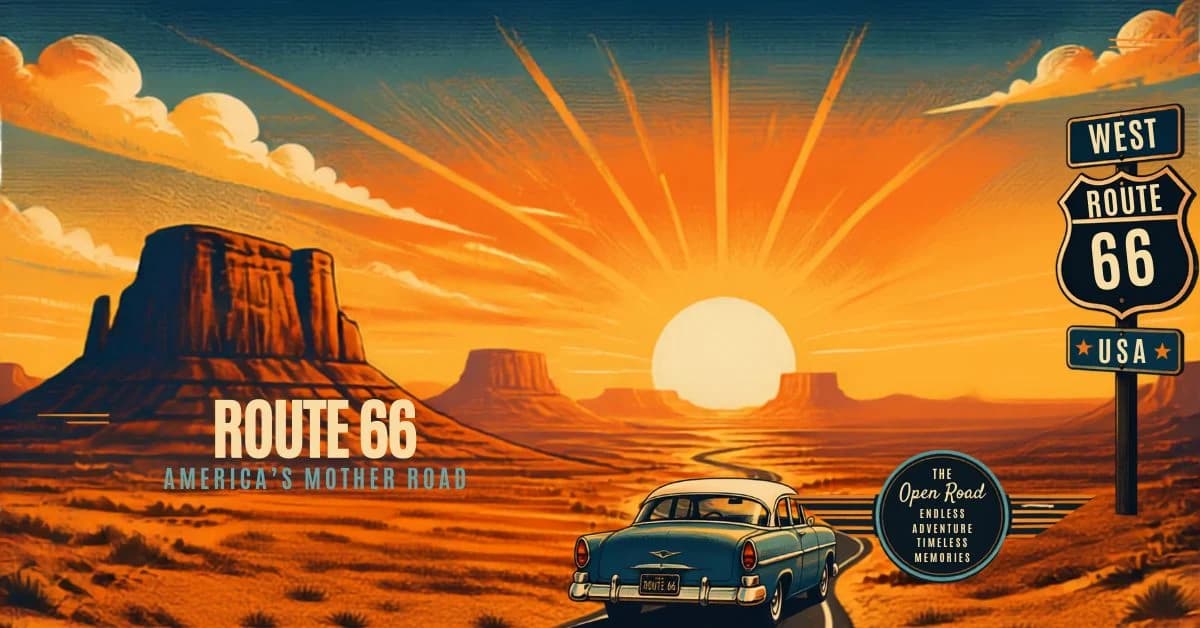
Route 66 is a historic highway that once stretched nearly 2,450 miles from Chicago, Illinois, to Santa Monica, California, cutting diagonally across the American heartland. Established in 1926, it became one of the country's most famous roads, symbolizing freedom, migration, and the golden age of the American road trip. Today, while it's no longer an official numbered highway, much of its original path can still be driven, dotted with vintage motels, diners, and quirky roadside attractions.
The Origins of Route 66
Route 66 was commissioned in 1926 as part of the U.S. Highway System, designed to connect rural and urban communities across the Midwest and Southwest. It ran through eight states: Illinois, Missouri, Kansas, Oklahoma, Texas, New Mexico, Arizona, and California. In its early decades, the highway served as a critical route for farmers, truckers, and families, most famously during the Dust Bowl migration of the 1930s, when thousands traveled west in search of work and a better life.
The road earned the nickname "the Mother Road" thanks to John Steinbeck's novel The Grapes of Wrath, which chronicled this very migration. That literary association cemented Route 66's place in American cultural history long before it became a nostalgic road trip icon.
Why Route 66 Became So Famous
After World War II, Route 66 transformed into a symbol of postwar prosperity and the open road. Families piled into station wagons, and a wave of new businesses sprang up along the route to serve them: neon-lit motels, drive-in theaters, curio shops, and diners advertising the best pie in town. A popular song, "(Get Your Kicks on) Route 66," further romanticized the highway in American pop culture, and later a television series of the same name cemented its legendary status.
The road wasn't just a way to get somewhere; it became a destination in itself. Even today, travelers from around the world come specifically to drive stretches of the old highway, chasing that same sense of adventure and Americana nostalgia.
What Happened to Route 66?
In 1956, the U.S. government passed the Federal Aid Highway Act, launching the construction of the interstate highway system. Faster, multi-lane interstates gradually bypassed the small towns that Route 66 once served, and by 1985 the road was officially decommissioned as a U.S. highway. Many towns along its path saw a decline in traffic and business almost overnight.
However, the story doesn't end there. Preservation efforts by local communities, historical societies, and travel enthusiasts have kept much of the route alive. Sections of the original road are now designated as "Historic Route 66," marked with brown highway signs, and many towns have leaned into their heritage, restoring vintage signage and reopening classic roadside stops for a new generation of travelers.
Where Does Route 66 Go?
Route 66 begins in Chicago and winds its way southwest through Missouri, dipping briefly into Kansas, then through Oklahoma, the Texas panhandle, New Mexico, and Arizona before ending on the California coast in Santa Monica. Along the way, it passes through or near several destinations popular with modern road trippers, including stops that make great additions to a Route 66-inspired itinerary, such as Austin, Texas for a detour south, or Hot Springs, Arkansas if you're exploring nearby regional attractions.
The western end of the route deposits travelers in California, where many extend their trip with time in Los Angeles before continuing up the coast or exploring further inland toward destinations like Aspen, Colorado for a mountain contrast to the desert highway miles.
Iconic Stops and Experiences Along the Way
Part of Route 66's charm lies in its unpredictable mix of kitsch, history, and genuinely delicious food. Vintage motor courts, giant roadside sculptures, and mom-and-pop diners are scattered generously along the route. If your journey takes you through Chicago, don't skip a deep-dish stop at Pequod's Pizza, a beloved local institution that's become something of a pilgrimage site for pizza lovers passing through.
As you plan detours off the main route, cities like Nashville offer a taste of Southern music and food culture that pairs well with a broader American road trip, even though it sits outside the traditional Route 66 corridor. The beauty of the Mother Road is that it invites these kinds of creative detours; it was never meant to be a rigid, single-lane experience.
For seafood lovers making their way toward the California coast, a stop at Swan Oyster Depot in San Francisco (a worthwhile northern detour) rounds out a cross-country trip with some of the freshest seafood on the West Coast.
Tips for Driving Route 66 Today
- Not all of the original road still exists as a continuous route, so plan using updated maps that mark the historic alignment versus modern interstate replacements.
- Pack a physical map or offline GPS backup, as cell service can be spotty in remote desert stretches through New Mexico and Arizona.
- Book accommodations in advance during peak summer travel months, since many of the vintage motels along the route have limited rooms.
- Budget extra time for photo stops. Part of the fun of Route 66 is the giant roadside oddities, retro signage, and small-town museums that beg for a slow pace.
- Fuel up regularly. Some stretches between towns can be long, especially through the high desert regions.
Is Route 66 Still Worth Driving?
Absolutely. While the interstate system may be faster, Route 66 offers something modern highways can't: a genuine slice of small-town America and a rolling history lesson through the 20th century. Whether you drive the entire stretch over a couple of weeks or tackle just one state's portion over a long weekend, the experience delivers a unique blend of nostalgia, scenic variety, and quirky roadside culture that's increasingly rare in an era of homogenized rest stops and chain restaurants.
Many travelers treat it as a bucket-list journey, pairing it with stops in major cities along or near the corridor, from the deep-dish pizza of Chicago to the beaches of Santa Monica, with plenty of desert landscapes and small-town diners in between.
FAQ
How long is Route 66?
The original route measured approximately 2,450 miles from Chicago to Santa Monica, though the exact mileage varies slightly depending on historical realignments of the road over the decades.
Is Route 66 still drivable today?
Yes, much of the original road still exists and is marked as "Historic Route 66." Some sections have been replaced by interstates, but dedicated maps and guides help travelers follow the historic alignment.
How long does it take to drive Route 66?
Most travelers spend one to two weeks driving the full route, allowing time for stops, detours, and overnight stays in towns along the way, though it's possible to drive shorter sections in just a few days.
What states does Route 66 pass through?
Route 66 passes through eight states: Illinois, Missouri, Kansas, Oklahoma, Texas, New Mexico, Arizona, and California.