
A 9-Day American Southwest Road Trip in a Luxury Sprinter Van
By
A 9-Day American Southwest Road Trip in a Luxury Sprinter Van
Few journeys showcase the freedom of the open road quite like the American Southwest. Towering canyon walls, red-rock arches and desert towns unfold across hundreds of unforgettable miles. Traveling in a Luxury Sprinter Van allows families and groups to experience this landscape together, with the space and comfort needed to make long stretches of highway part of the adventure.
This nine-day loop begins and ends in Las Vegas, passing through Zion National Park, Bryce Canyon, Page, the Grand Canyon and Sedona. It is designed for travelers using a passenger-focused Sprinter conversion and staying in hotels or lodges rather than camping inside the vehicle.
The route covers roughly 1,000 miles. That may sound ambitious, but the longest drive comes near the end, and most days leave plenty of time for hiking, photography and spontaneous stops.
The Route at a Glance
- Day 1: Las Vegas to Zion National Park
- Day 2: Zion National Park
- Day 3: Zion to Bryce Canyon National Park
- Day 4: Bryce Canyon to Page, Arizona
- Day 5: Page to Grand Canyon National Park
- Day 6: Grand Canyon South Rim
- Day 7: Grand Canyon to Sedona
- Day 8: Sedona
- Day 9: Sedona to Las Vegas
Spring and fall generally offer the most comfortable conditions, although elevation changes make packing complicated. Las Vegas and Page can feel warm while Bryce Canyon remains surprisingly cold. Bring layers, sun protection and more drinking water than the group expects to need.
Day 1: Las Vegas to Zion National Park
Approximate driving distance: 160 miles
Las Vegas makes a convenient starting point because it is well connected and gives travelers time to organize supplies before entering more remote areas.
Leave the city after breakfast and travel northeast through the Mojave Desert. The scenery gradually shifts from broad desert plains to the red cliffs surrounding southern Utah. Rather than treating the drive as a race, stop in St. George for lunch or take a short detour through one of the area’s state parks.
Spend the night in Springdale, the small town immediately outside Zion National Park. It has restaurants, galleries and accommodations within easy reach of the park entrance. Hotels have different parking arrangements, so travelers with longer or taller Sprinter conversions should confirm clearance and available spaces before booking.
Once settled, use the late afternoon to explore Springdale or take an easy walk near the park entrance. Save the major trails for the following morning.
Day 2: Explore Zion National Park
Zion is best known for the dramatic canyon carved by the Virgin River. Its most famous hikes receive plenty of attention, but a rewarding day does not have to involve steep drop-offs or technical terrain.
During much of the year, the Zion Canyon Scenic Drive is accessible primarily by the park shuttle. Leave the van at an approved parking area and use the shuttle to reach trailheads and viewpoints. This removes the stress of searching for spaces and lets everyone enjoy the canyon scenery.
The Riverside Walk is a relatively gentle option leading into the narrowing canyon. The Emerald Pools area offers several possible distances, while the Pa’rus Trail is well suited to a relaxed walk near sunset.
Groups should resist splitting the day into too many activities. Choose one significant walk, allow time for lunch and leave enough energy to enjoy the evening in Springdale.
Travelers planning to drive the Zion–Mount Carmel Highway should check their vehicle’s exact dimensions before departure. Restrictions can apply to wider, taller and longer vehicles, and aftermarket equipment such as roof racks may affect the total measurement. Park access rules can change, so review current information shortly before the trip.
Day 3: Zion to Bryce Canyon National Park
Approximate driving distance: 85 to 150 miles, depending on vehicle dimensions and routing
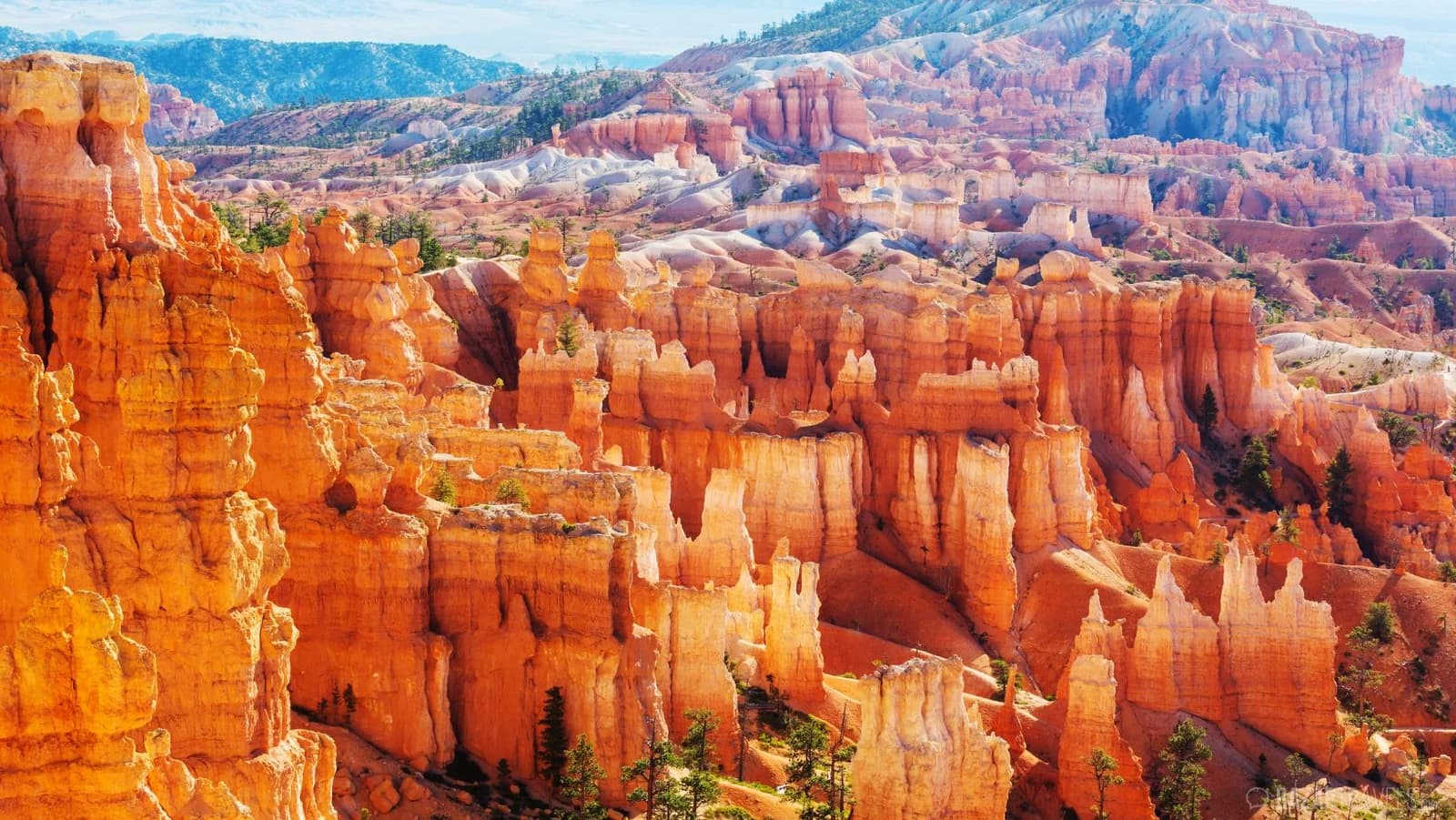
Bryce Canyon is geographically close to Zion, but the landscape feels entirely different. Instead of looking up from the floor of a deep canyon, visitors stand above an amphitheater filled with thousands of narrow rock formations known as hoodoos.
The most direct journey may use the Zion–Mount Carmel Highway. If the van exceeds current size limits, an alternate route around the park will be necessary. Build flexibility into the day rather than discovering the restriction at the entrance.
At Bryce, begin with the overlooks around the main amphitheater. Sunrise Point, Sunset Point, Inspiration Point and Bryce Point each reveal the hoodoos from a different angle. The park’s shuttle can be more convenient than moving a large vehicle between busy parking lots.
Travelers wanting a closer view can walk a portion of the Rim Trail or descend below the rim on an established route. Remember that every downhill step must eventually be climbed in thinner, high-elevation air.
Stay near Bryce Canyon City or in one of the surrounding communities. Temperatures often drop sharply after sunset, even when the day has been warm.
Day 4: Bryce Canyon to Page
Approximate driving distance: 150 miles
The journey from Bryce Canyon to Page passes through some of the Southwest’s most cinematic scenery. US Route 89 provides the main connection, with opportunities to stop in small Utah towns along the way.
Page sits near the Arizona-Utah border and makes a useful base for exploring Lake Powell, Glen Canyon and the surrounding sandstone landscape.
Visit Horseshoe Bend in the late afternoon, when lower light brings out the contours of the canyon. The walk from the parking area is relatively short but exposed, with limited shade. Bring water and avoid assuming that a quick walk is an effortless one in desert heat.
The Horseshoe Bend parking area is operated separately from the National Park Service, and federal recreation passes do not cover its parking fee. Larger vans should follow posted instructions and use the appropriate spaces.
Day 5: Page to the Grand Canyon
Approximate driving distance: 135 miles
Before leaving Page, travelers can join an authorized guided tour of Antelope Canyon. These narrow slot canyons lie on Navajo land and cannot be explored independently. Tours should be reserved ahead of time, especially during popular travel months.
Afterward, continue south toward the Grand Canyon’s South Rim. The drive approaches the park from the east, providing access to viewpoints along Desert View Drive when conditions allow.
Desert View is an excellent introduction to the canyon because the Colorado River is visible from several places. Continue west toward Grand Canyon Village, stopping selectively rather than trying to visit every overlook.
Check in near the South Rim and stay through sunset. Watching the canyon change color is one of the defining experiences of the route, but temperatures can fall quickly once the sun disappears.
Day 6: A Full Day at the Grand Canyon
The scale of the Grand Canyon is difficult to understand during a short visit. A full second day lets travelers experience it at a more measured pace.
Begin early, before the busiest part of the day. Walk a section of the Rim Trail, visit the geology exhibits or use the park shuttle to reach overlooks closed to ordinary private traffic during parts of the year.
Groups with different mobility levels can still enjoy the park together. Some travelers may choose a longer hike while others follow accessible sections of the rim or attend a ranger program. Establish a clear meeting place and time because mobile service can be unreliable.
Hiking into the canyon is significantly more demanding than walking along the rim. The return is uphill, temperatures increase with the descent and distances can be deceptive. Anyone attempting a below-rim hike should choose a route appropriate to their experience, carry sufficient water and turn around well before becoming tired.
A slower day also creates time to enjoy the historic buildings and viewpoints around Grand Canyon Village instead of treating the park as a single photo stop.
Day 7: Grand Canyon to Sedona
Approximate driving distance: 115 miles
The drive to Sedona is relatively short, which leaves time for an afternoon stop in Flagstaff. Its walkable downtown, independent restaurants and mountain-town atmosphere make a pleasant contrast to the national parks.
From Flagstaff, the road toward Sedona descends through Oak Creek Canyon. It is a beautiful drive, but it includes curves, changing grades and busy recreation areas. Drivers unfamiliar with a larger van should take their time and use designated pullouts rather than stopping along the roadway.
Sedona is surrounded by red-rock formations that appear to change throughout the day. After checking in, choose a nearby viewpoint or short trail for sunset.
Parking is limited at many popular trailheads. The local shuttle system can simplify access and reduce the need to maneuver a larger vehicle through crowded lots.
Day 8: Experience Sedona Beyond the Viewpoints
Sedona deserves more than a quick overnight stay. The landscape may be the initial attraction, but the town also offers galleries, wellness experiences and a strong food scene.
Active travelers can begin with an early hike before temperatures and trail traffic increase. Others may prefer a guided experience, a scenic drive or a leisurely morning exploring local shops and galleries.
Keep the afternoon flexible. After a week of changing accommodations and outdoor activities, some travelers may want spa time or a quiet lunch. Others may be ready for another trail. Building independent time into a group itinerary prevents the trip from becoming an exercise in constant compromise.
Gather again for dinner and a final desert sunset.
Day 9: Sedona to Las Vegas
Approximate driving distance: 280 miles
The return to Las Vegas is the longest driving day, but several stops can break up the journey.
Travelers interested in Route 66 history can pause in Seligman or Kingman. Another option is Hoover Dam, although security procedures, parking limitations and vehicle dimensions should be checked before arrival.
Leave Sedona early enough that the group does not feel pressured to rush. Arriving in Las Vegas before dark makes unloading and navigating hotel parking easier.
Those with additional time could add a final night in the city rather than scheduling a flight immediately after the drive.
Why a Sprinter Works Well for This Route
The distances of the Southwest become easier when passengers have room to settle in. A thoughtfully configured Sprinter can keep a group together while providing more luggage capacity and personal space than an ordinary car.
Different travelers will prioritize different layouts. Families may want flexible seating and convenient storage. Groups of friends may value a comfortable shared cabin, while travelers combining business with leisure might prioritize charging access and work surfaces.
Features vary between conversions, so buyers should evaluate the exact vehicle rather than relying on the general model name. Important questions include:
- Is there enough luggage space when every passenger seat is occupied?
- Can passengers enter and exit comfortably?
- Does the seating remain supportive during a long driving day?
- Are charging points accessible from the seats?
- What are the van’s precise height, width and length?
- Will the vehicle fit at home, in hotels and at planned attractions?
- How does the conversion affect maintenance and warranty coverage?
This itinerary assumes that one member of the group is driving a privately owned passenger van. Businesses selling packaged tours or transporting paying passengers may need commercial authorization to operate inside national parks.
Practical Tips for a Southwest Sprinter Trip
Know the vehicle’s dimensions
Record the van’s complete height, width and length, including racks, antennas and other accessories. Keep the measurements available on the driver’s phone and inside the vehicle.
Confirm parking before booking
Ask hotels whether they can accommodate a taller or longer vehicle. “On-site parking” does not necessarily mean that every space or garage entrance will fit a converted van.
Use park shuttles
A private vehicle provides freedom between destinations, but it is not always the best way to move within a busy national park. Shuttles reduce congestion and remove the frustration of repeatedly searching for parking.
Keep fuel above half a tank
Services become less frequent outside major towns. Refueling early gives the group flexibility when a gas station is closed or a detour adds unexpected mileage.
Carry water throughout the vehicle
Give each passenger an individual bottle and carry an additional supply. Desert air can disguise how quickly the body is losing moisture.
Protect time for unplanned stops
A road trip should not feel like a tightly scheduled tour. Leave room for scenic overlooks, local restaurants and the places discovered only after the journey begins.
Make the Drive Part of the Adventure
The Southwest rewards travelers who give it time. Its landscapes are too large and varied to be reduced to a collection of hurried photo stops.
A luxury Sprinter cannot replace thoughtful planning, but it can remove many of the compromises associated with group travel. Everyone shares the same journey, luggage remains organized and the time between destinations becomes part of the holiday.
On a route filled with remarkable national parks, it is tempting to focus only on arrival. Yet some of the best memories may come from the miles in between: a roadside lunch, an unexpected overlook or a conversation that continues as the desert changes outside the windows.