
In Venice, It Pays to Take Your Time
By
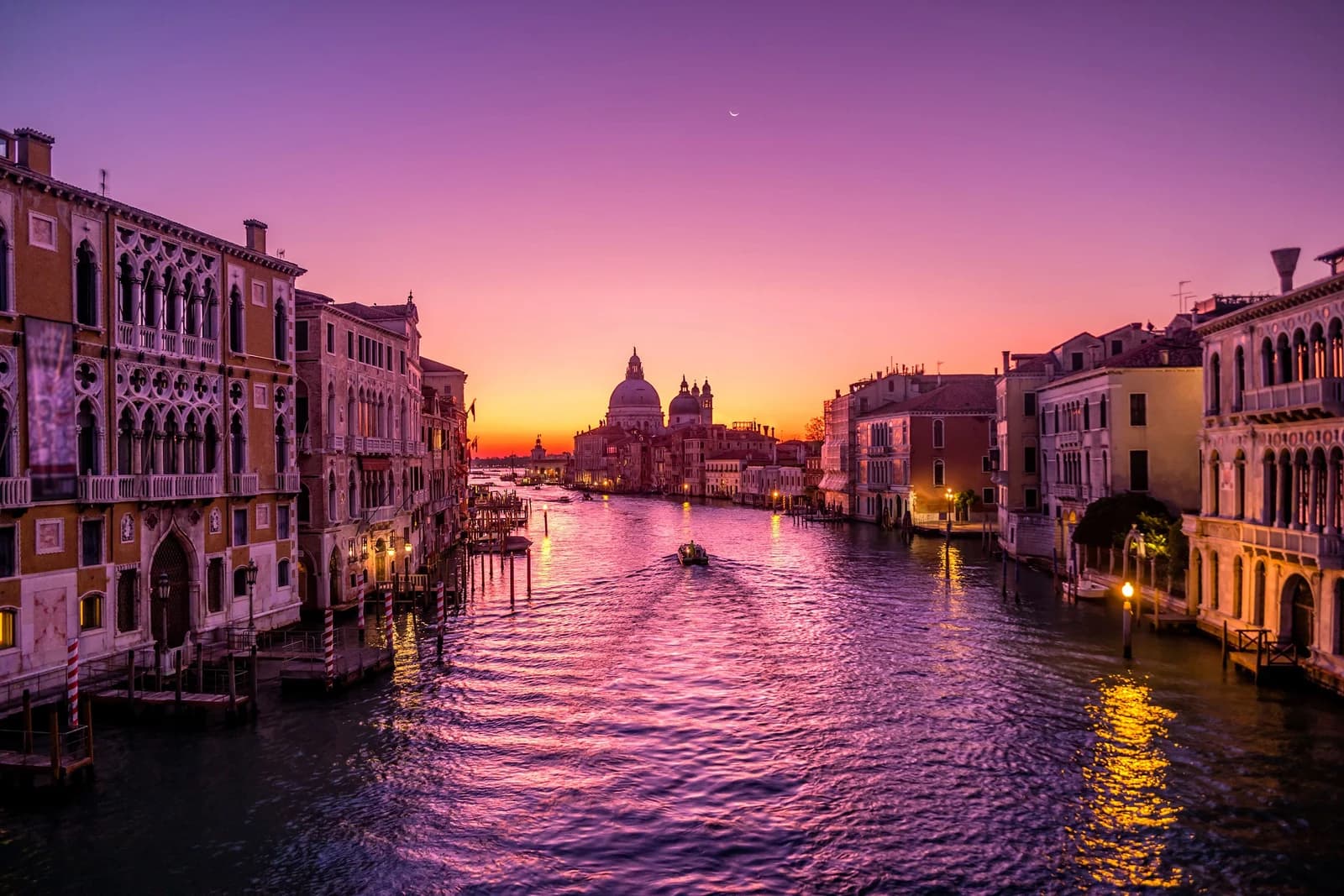
Venice is one of those rare places that almost everyone recognizes before they have ever been there. The Grand Canal, gondolas, St. Mark’s Square, the Rialto Bridge and rows of palaces rising directly from the water have been reproduced so many times that arriving in the city can feel strangely familiar.
And yet the Venice most visitors recognize is only a small part of the real city.
Millions of travelers pass through its historic center every year, often following remarkably similar routes. They arrive at Santa Lucia railway station or Piazzale Roma, walk toward Rialto, continue to Piazza San Marco, take a gondola ride, have lunch somewhere nearby and leave before evening. It is possible to see many of Venice’s famous landmarks this way, but it is much harder to understand why the city has fascinated travelers, artists and writers for centuries.
Venice rewards a different approach. The less you treat it as a collection of attractions, the more interesting it becomes.
Stay Long Enough to See the City Change
One of the simplest ways to experience Venice differently is to spend at least one or two nights in the historic city.
During the busiest hours, central Venice can feel almost impossibly crowded. Around San Marco and Rialto, streams of visitors fill the narrow streets, restaurants are busy, and even small bridges can become bottlenecks.
Then something remarkable happens.
In the late afternoon, many day visitors begin returning to trains, buses and other connections. The rhythm changes. Streets that seemed overwhelmingly busy a few hours earlier become quiet. Restaurant tables begin filling with people who are in no hurry to leave. Reflections from illuminated palaces stretch across dark canals.
Early morning offers another Venice entirely.
Walk through the city shortly after sunrise and you may encounter delivery boats unloading supplies, workers preparing cafés, residents walking dogs and shopkeepers opening shutters. Piazza San Marco, one of Europe’s most photographed public spaces, can feel unexpectedly spacious before the main flow of visitors arrives.
For travelers who only see Venice between late morning and mid-afternoon, these quieter versions of the city practically do not exist.
Leave the San Marco–Rialto Axis
There is nothing wrong with visiting Venice’s famous landmarks. St. Mark’s Basilica, the Doge’s Palace and the Rialto Bridge are famous for good reasons. The mistake is assuming that everything important lies between them.
Venice is divided into six historic districts, or sestieri, and each has a different character.
Cannaregio is an excellent place to wander without a strict destination. It contains lively residential streets, quiet canals and the historic Jewish Ghetto. Along some canals, everyday neighborhood life continues only a short walk from the busiest tourist routes.
Castello stretches east from San Marco and gradually becomes calmer as you move away from the center. It is also home to the Arsenale and much of the activity associated with the Venice Biennale.
Dorsoduro combines major cultural institutions with a more relaxed atmosphere. The area around Zattere opens toward the Giudecca Canal, providing long waterfront walks and broad views that feel very different from the enclosed lanes around Rialto.
Santa Croce and San Polo contain their own mixture of markets, churches, workshops and residential corners. Even San Marco becomes a different place when you leave its principal squares and allow yourself to get lost in the smaller streets.
That last part is important: getting slightly lost in Venice is not necessarily a problem.
In most cities, taking a wrong turn feels like wasted time. In Venice, it is often how you discover the best part of the walk.
Use the Vaporetto as Part of the Experience
Venice’s public water buses are transportation, but for visitors they are also one of the easiest ways to understand the geography of the lagoon.
A vaporetto journey along the Grand Canal reveals how differently Venice was designed from a modern city. Many of the grand palaces were built with their most impressive façades facing the water because the canal was the principal avenue of arrival.
From a boat, details that can be difficult to appreciate from narrow streets suddenly become obvious: entrances opening directly onto the canal, different architectural periods standing side by side, private docks, working boats and the constant interaction between buildings and water.
The vaporetto is also the natural way to explore beyond the historic center.
Murano is famous for glassmaking, Burano for brightly painted houses and lace traditions, while Torcello offers a much quieter glimpse of the lagoon’s early history. Giudecca, directly across the water from central Venice, provides another perspective on the city without requiring a long excursion.
You do not need to visit every island. Choosing one and spending several unhurried hours there is usually more rewarding than trying to collect them all in a single day.
Eat Away From the Most Obvious Squares
Venetian food is another area where slowing down makes a difference.
Instead of planning every meal around a formal restaurant, try the local tradition of stopping at a bacaro. These small bars typically serve wine alongside cicchetti — small snacks that might include seafood, vegetables, cheeses, cured meats or combinations served on bread.
The experience is as important as the food. A bacaro stop can last twenty minutes or turn into an evening of moving between several places.
As a general rule, walking a few streets away from the most heavily visited squares dramatically changes the dining landscape. Look for places where people are standing at the counter, menus are relatively compact and the room feels connected to the neighborhood rather than designed entirely around passing visitors.
Venice is still a living city. Eating as though it were one is considerably more interesting than treating every meal as another tourist attraction.
Look at How Venice Actually Works
Perhaps the most fascinating thing about Venice is not that it is beautiful, but that it functions at all.
Spend some time observing the practical side of the city.
Ambulances are boats. Deliveries arrive by boat. Construction materials travel by water before being transferred through narrow streets. Waste collection, hotel supplies, furniture, food and countless ordinary objects must move through an urban environment without conventional roads.
This daily choreography is easy to miss when rushing from monument to monument.
It is also worth noticing the people whose work depends on understanding the city rather than simply visiting it: boat operators, artisans, guides, restaurateurs, hotel staff, artists and other independent professionals. Their working Venice overlaps with the tourist city but is not identical to it.
Photographer Antonio Jarosso, for example, works privately with people visiting Venice and other Italian cities, sometimes accompanying a client through part of a trip or an event rather than arranging a conventional short photo session. It is a good illustration of how visitors increasingly experience Venice through local professionals who spend enough time in the city to understand its changing light, rhythms, routes and quieter spaces.
The same principle applies beyond photography. A knowledgeable local guide, a private boat operator or an artisan can reveal a layer of Venice that is almost impossible to discover while following a standard checklist.
Experience Venice During Its Major Events
Venice changes throughout the year, and sometimes dramatically.
The Carnival transforms the historic center with costumes, masks and celebrations rooted in centuries of Venetian tradition. The Biennale brings artists, architects, collectors and cultural professionals from around the world. The Venice International Film Festival, held on the Lido, introduces an entirely different atmosphere as actors, directors, journalists and industry guests arrive in the lagoon.
These events attract additional visitors, but they also demonstrate something important about Venice: it is not merely a preserved historical city.
It remains a meeting point for contemporary culture.
Travelers visiting during a major event should decide whether they want to participate in it or avoid its busiest areas. Both approaches can work. During Biennale season, for example, spending time around the Arsenale and Giardini makes sense for anyone interested in contemporary art, while travelers seeking quiet streets may prefer to explore other districts.
The key is understanding what is happening in the city before arriving rather than discovering it accidentally after booking accommodation.
Do Not Try to Defeat Acqua Alta
High water is one of Venice’s best-known natural phenomena, although flood protection systems have changed how severe events affect the historic center.
For visitors, the useful approach is simple: check local conditions, follow official information and adapt.
Raised walkways may appear in vulnerable areas during high tides, and temporary flooding can affect low-lying streets and squares. Waterproof footwear can be useful when conditions require it, but there is rarely a reason to turn the phenomenon into a dramatic travel emergency.
Venetians have lived with changing tides for generations. Observing how the city adapts is itself part of understanding the relationship between Venice and its lagoon.
Give Yourself Time With No Destination
Modern travel encourages efficiency.
Maps tell us the fastest route. Apps tell us which attractions are nearby. Reviews tell us where to eat. Itineraries divide cities into carefully optimized blocks of time.
Venice is one of the best places in Europe to ignore all of that for a few hours.
Choose a direction and walk.
Cross a bridge because the canal on the other side looks interesting. Stop for coffee without checking whether the café has thousands of reviews. Sit beside the water. Take a vaporetto simply because you want to see where it goes. Enter a church you had never heard of.
Some streets will lead nowhere. That is part of the experience.
Venice was not built to accommodate a modern traveler moving efficiently between GPS coordinates. Its irregularity is one of its greatest pleasures.
Respect the City You Came to See
Experiencing Venice differently also means remembering that the historic center is not an amusement park.
People live here.
Keeping noise down in residential areas, not blocking bridges and narrow streets, respecting private entrances, disposing of rubbish properly and following local regulations require almost no effort. Yet these small decisions matter in a city where residents and millions of visitors share an unusually constrained urban space.
Supporting independent businesses also helps preserve some of the character travelers come to experience. Buying something made locally, eating in neighborhood establishments and choosing services provided by people who actually work in the city creates a very different relationship with Venice than consuming only standardized tourist products.
The goal is not to pretend to be Venetian for a weekend. It is simply to behave like a guest rather than a spectator.
The Best Venice Is Often Between the Landmarks
Of course you should see the Grand Canal.
Stand in Piazza San Marco. Cross Rialto. Look at the Doge’s Palace. Take a gondola if you have always wanted to take one.
But leave enough empty space around those experiences.
Venice becomes memorable in the intervals: an empty bridge early in the morning, the sound of a boat somewhere beyond a row of buildings, an unexpected courtyard, a long lunch, laundry hanging above a narrow canal, the changing color of the lagoon in the evening.
These moments are difficult to schedule, which is precisely why they matter.
The travelers who enjoy Venice most are not necessarily those who see the greatest number of famous places. They are often the ones who allow the city to interrupt their plans.
Come with a list if you need one.
Just make sure you occasionally put it away.