
How to Plan a Trip to Rome in 2026 A Practical Guide Beyond the Standard Tourist Checklist
By
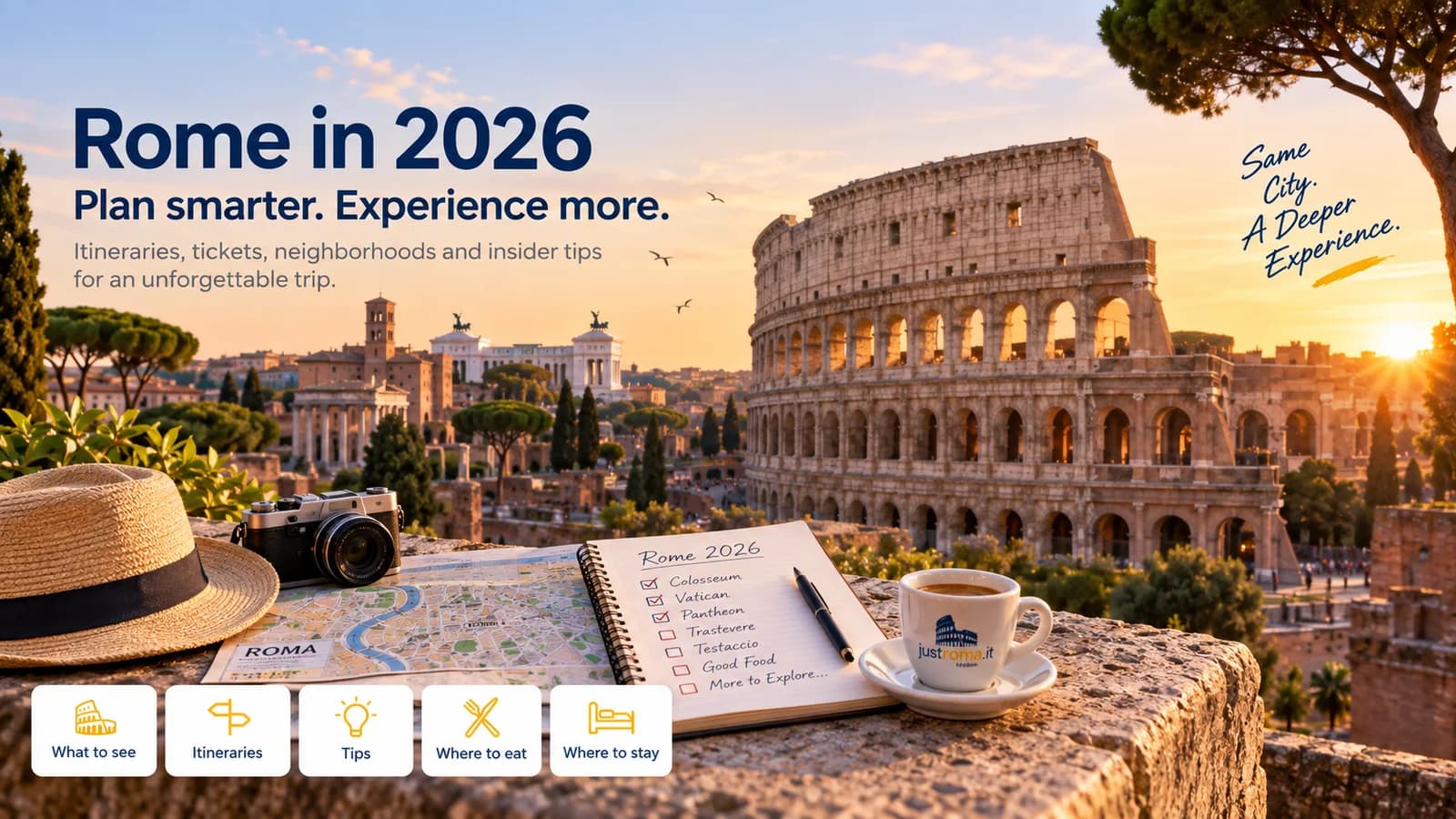
Rome is a city where planning too little can cost you hours, while planning too much can turn the trip into a race.
The classic checklist is familiar: the Colosseum, Vatican Museums, Trevi Fountain, Pantheon and Piazza Navona. All deserve a visit, but simply putting them on a list is not enough to create a good Rome itinerary.
The better question is: how do you organize Rome so that you spend less time crossing the city, waiting unnecessarily and checking maps — and more time experiencing it?
For a trip to Rome in 2026, think about geography, reservations, ticket rules, neighborhoods and timing before building your sightseeing list.
How Many Days Do You Need in Rome?
Three full days can cover many essential sights, but four or five days provide a much better first-time experience.
The key is to organize each day geographically rather than jumping between unrelated attractions.
A Practical 5-Day Rome Itinerary
Day | Area | Morning | Afternoon | Evening |
1 | Ancient Rome | Colosseum | Roman Forum & Palatine Hill | Monti |
2 | Vatican | Vatican Museums & Sistine Chapel | St. Peter's Basilica, Castel Sant'Angelo area | Prati |
3 | Historic Center | Pantheon & Piazza Navona | Trevi Fountain & Spanish Steps | Historic center |
4 | Trastevere | Local streets & slow morning | Trastevere & Gianicolo | Dinner in Trastevere |
5 | Beyond Classic Rome | Testaccio or Garbatella | Museum, archaeology or neighborhood walk | Aperitivo & dinner |
Travelers with three days can concentrate on Days 1–3. With four days, add Trastevere. A fifth day gives you time to discover a side of Rome beyond the essential landmarks.
The important principle is clustering places that naturally belong together.
Rome looks compact on a map, but repeatedly crossing the city consumes more time and energy than many first-time visitors expect.
Rome Attraction Tickets in 2026: Prices and Rules
Ticket price is not the only thing to check. Validity, entrance time and included areas can change how you should organize the day.
Colosseum
As of 2026, the standard 24-hour Colosseum, Roman Forum and Palatine ticket costs €18 at full price, with €2 reduced admission for eligible visitors.
Travelers interested in a deeper archaeological visit can consider Full Experience tickets. The Full Experience Arena ticket costs €24, is valid for two consecutive days and includes access to the Colosseum arena as well as the Roman Forum, Palatine and additional included sites.
There is an important planning advantage here: you do not necessarily need to turn Ancient Rome into one exhausting marathon. Depending on your ticket conditions, a two-day validity period can provide more flexibility.
For the Full Experience Arena ticket, the permitted stay inside the Colosseum itself is currently limited to 90 minutes. The Roman Forum and Palatine require additional time.
Special experiences can differ significantly from a standard ticket. Official night visits to the Colosseum are also available on selected dates in 2026. The official "A Night at the Colosseum" experience costs €50 at full price and includes a guided itinerary through areas such as the arena and underground levels.
Vatican Museums
The standard full ticket for the Vatican Museums is €20 without an online reservation.
Booking through the official Vatican Museums website adds a €5 reservation fee, making a standard reserved ticket €25.
For travelers with a fixed itinerary, that extra €5 can be worthwhile because it gives you a reserved entry rather than forcing you to build the day around same-day availability.
The Vatican Museums currently operate Monday through Saturday from 8:00 a.m. to 8:00 p.m., with final admission at 6:00 p.m.
On the last Sunday of most months, admission is free from 9:00 a.m. to 2:00 p.m., with final admission at 12:30 p.m., subject to calendar exceptions.
Free entry sounds attractive, but it does not automatically mean a better visit. Travelers who value predictable timing and lower crowd pressure may prefer a normal reserved day.
Always verify prices, opening hours and admission rules on the official attraction website before visiting, as conditions can change.
Treat the Colosseum as an Archaeological Area, Not One Attraction
A common mistake is planning the Colosseum as an isolated stop.
The Colosseum, Roman Forum and Palatine Hill form a natural historical sequence. Together they provide far more context about Ancient Rome than the amphitheater alone.
Travelers particularly interested in archaeology should also investigate the SUPER Sites around the Forum and Palatine, which can add locations overlooked by standard first-time itineraries.
This is where a specialist Rome resource such as JustRoma can be more useful than a generic list of attractions: its itineraries connect monuments with practical information about timing, tickets, transportation and nearby areas.
Expert Tip: Check Exactly Which Colosseum Ticket You Are Buying
"Colosseum ticket" does not describe one universal experience.
Standard admission, arena access, underground experiences, attic access and Full Experience products can provide different itineraries.
Choose the experience first and read exactly what the ticket includes before designing your archaeological day. Otherwise, you may arrive expecting access to an area that your ticket does not cover.
Don't Put the Vatican and Colosseum on the Same Day
It is technically possible. For most first-time visitors, it is not a good plan.
Both involve significant walking, security procedures, crowds and a large amount of information to absorb.
Instead, dedicate one day to Ancient Rome and another to the Vatican.
After the Vatican Museums and St. Peter's Basilica, continue toward Castel Sant'Angelo or spend time in Prati rather than immediately crossing Rome for another major attraction.
This keeps the day geographically coherent.
Expert Tip: The Vatican Museums Entrance Is Not in St. Peter's Square
This small geographical detail causes surprisingly inefficient itineraries.
The entrance to the Vatican Museums is on Viale Vaticano, not in St. Peter's Square.
If you have a timed museum reservation, navigate specifically to the Vatican Museums entrance rather than using St. Peter's Basilica as your destination.
On a map everything looks like "the Vatican," but on foot the distinction matters.
Reserve Difficult Attractions, Keep the Rest Flexible
Spontaneity works wonderfully when deciding where to drink coffee or which side street to explore.
It works less well with limited-capacity or timed attractions.
The principle is simple:
reserve the difficult things and leave the easy things flexible.
The Colosseum and Vatican Museums are obvious priorities. Depending on your interests, certain galleries, archaeological experiences and museums may also deserve advance reservations.
Once you have one fixed attraction, build the rest of the day around its neighborhood.
Do not reserve every hour. Rome is full of unexpected churches, courtyards, fountains, ruins and small piazzas worth discovering.
Use Museum Hours for Museums, Not Fountains
This simple rule can make a short Rome itinerary considerably more efficient.
Museums and archaeological sites close. Piazza Navona, streets and many outdoor landmarks offer far more flexibility.
So use valuable daytime admission hours for attractions that actually require them.
Trevi Fountain and the Spanish Steps, for example, can fit naturally into an early-morning or evening walk rather than consuming the middle of a sightseeing day.
Go Beyond the Tourist Checklist
The difference between seeing Rome and experiencing it often begins in its neighborhoods.
Monti is a natural continuation of an Ancient Rome day, with smaller streets, restaurants and cafés close to the Colosseum area.
Prati works particularly well with a Vatican day.
Trastevere is famous for its evening atmosphere, although exploring beyond its busiest restaurant streets is worthwhile.
Testaccio offers another perspective on Roman food culture, while Garbatella presents an urban landscape very different from the monumental center.
Travelers with more time can also investigate San Lorenzo or Coppedè.
Specialist guides such as JustRoma.it are particularly useful here because they organize Rome not only around attractions but also around neighborhoods, itineraries, transport, accommodation, food and different traveler profiles.
Choose Where to Stay Based on Your Itinerary
There is no universally "best" neighborhood in Rome.
Before booking accommodation, identify the three or four places most important to your trip and ask:
Can I walk to several of them?
Is useful public transportation nearby?
Will this neighborhood still be convenient in the evening?
For a short visit, paying slightly more for a strategically located hotel can be more valuable than saving money while adding lengthy journeys to every day.
Walk — But Don't Try to Walk Everywhere
Walking is one of the best ways to experience Rome. Some of its most memorable details appear between attractions: small churches, fountains, ancient fragments, courtyards and streets you never intended to visit.
But "Rome is walkable" does not mean "walk everywhere."
Distances accumulate quickly, especially after several hours inside the Vatican Museums or around the Forum and Palatine.
Walk between nearby attractions. Use public transport when the journey itself adds little to the experience.
And wear genuinely comfortable shoes. Ancient paving and long archaeological visits are unforgiving.
Don't Turn Every Meal Into a Research Project
Food is part of Rome, but searching for the "perfect authentic restaurant" three times a day can become another source of travel stress.
Instead, learn a few Roman classics: carbonara, amatriciana, cacio e pepe, gricia, supplì, saltimbocca and seasonal carciofi.
Location matters too.
You do not need to eat at the first restaurant outside a major attraction. Walking several streets away or planning a meal in Monti, Testaccio or Prati can produce a very different experience.
Reserve special dinners if necessary. Leave some everyday meals spontaneous.
Build the Trip Around the Traveler
Two people with five days in Rome should not necessarily follow identical itineraries.
Families may benefit from shorter sightseeing blocks and more breaks. Travelers fascinated by archaeology may want far more time around the Forum and Palatine. Couples may prioritize evening neighborhoods and restaurants. Older travelers may want to reduce unnecessary walking.
Visitors with accessibility requirements should check individual attractions and routes rather than assuming all historic sites offer the same access conditions.
This traveler-specific approach is also useful when researching through JustRoma, which separates information for different types of visitors instead of assuming one itinerary works for everyone.
Frequently Asked Questions About Rome in 2026
How many days do you need in Rome?
Four to five days is ideal for many first-time visitors. Three full days can cover Ancient Rome, the Vatican and the historic center, while additional days provide time for neighborhoods such as Trastevere, Testaccio or Garbatella.
Is three days enough for Rome?
Yes, if the itinerary is organized geographically. Use one day for Ancient Rome, one for the Vatican and one for the historic center. Expect a fairly busy schedule.
How much is a Colosseum ticket in 2026?
The standard 24-hour Colosseum, Roman Forum and Palatine ticket costs €18 at full price. The Full Experience Arena ticket currently costs €24 and provides broader access and two-day validity.
How much are Vatican Museums tickets in 2026?
Standard full admission is €20. An official online reservation adds €5, bringing a standard reserved ticket to €25.
Are the Vatican Museums free on Sundays?
They are normally closed on Sundays, except for the last Sunday of most months, when admission is generally free according to a shorter schedule and subject to calendar exceptions.
Should I book the Colosseum in advance?
It is strongly recommended when you need a particular entry time or want special access such as the arena, underground or another limited experience.
Can I visit the Vatican and Colosseum on the same day?
Yes, but it is usually inefficient. Separating them creates a more comfortable itinerary and lets you explore their surrounding neighborhoods.
What should I book before visiting Rome?
Prioritize attractions with timed or capacity-controlled admission, particularly the Colosseum and Vatican Museums. Leave fountains, piazzas, neighborhood walks and many churches flexible.
What is the biggest mistake first-time visitors make in Rome?
Planning individual attractions instead of geographic areas. Repeatedly crossing between the Vatican, Ancient Rome and historic center wastes both time and energy.
Do I need a car in Rome?
For a typical first trip focused on central Rome, generally no. Walking and public transportation are more practical for most sightseeing itineraries.
Leave Space for the Rome You Didn't Plan
Perhaps the most useful Rome planning advice is also the easiest to ignore:
do not plan everything.
Reserve attractions where reservations matter. Group sightseeing geographically. Understand your transportation options and choose accommodation strategically.
Then leave gaps.
An unplanned hour between the Pantheon and dinner might lead to a church you had never heard of. A walk intended simply to connect two attractions may become one of your favorite memories.
Rome has accumulated layers for more than two thousand years. Reducing all of that to a checklist of famous landmarks misses the point.
A Better Way to Plan Rome in 2026
Don't begin by asking, "How many attractions can I fit into one day?"
Ask:
Which parts of Rome belong together, what needs to be reserved, and where should I deliberately slow down?
Build each day around one main area. Combine major landmarks with surrounding neighborhoods. Book high-demand attractions while preserving flexibility elsewhere.
Most importantly, don't treat the Colosseum, Vatican, Pantheon and Trevi Fountain as isolated pins on a map.
They are entry points into a much larger city.
Resources dedicated specifically to Rome, including JustRoma.it, can help with the practical layer — itineraries, attractions, neighborhoods, transportation, accommodation and traveler-specific advice — while your own interests determine the final route.
The goal is not to see everything.
It is to make the days you have in Rome count.