
Beyond Burano: The Lagoon Islands Most Visitors Never Reach
By
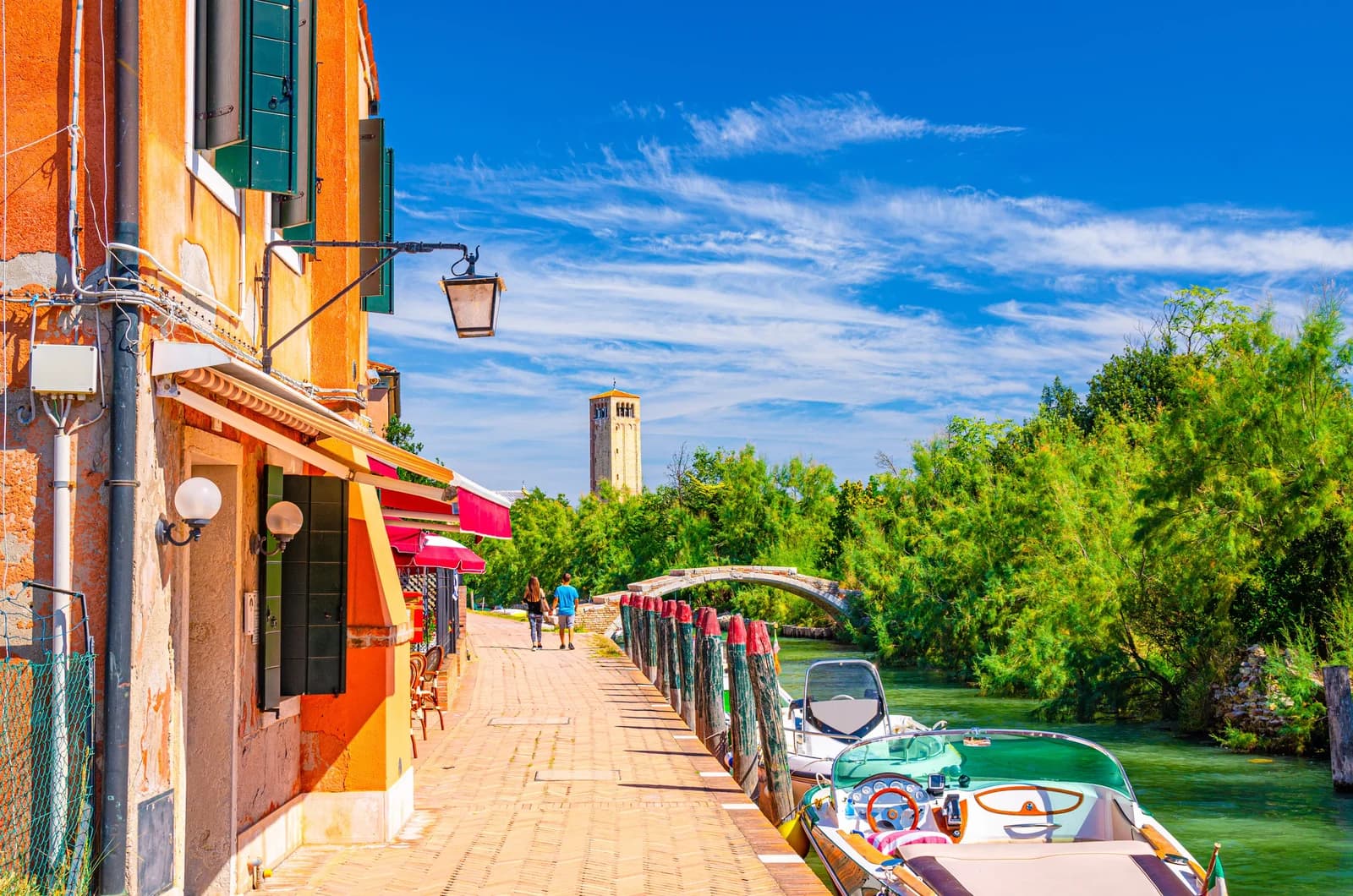
The boatman at the far end of Burano's quay looked at my notebook, then at the sky, and told me that the crossing to San Francesco del Deserto left at half past two and not a minute later, because in November he preferred to be home before the light went. It was the fourth day of a week I had set aside for the Venetian lagoon, and the first time anybody had been that honest with me about a timetable.
I had arrived with a plan that looked tidy on paper: seven days, one travel card, and every island in the northern and southern lagoon that a person can reach without chartering a boat. The plan lasted about a day and a half. What replaced it was better, but it meant giving up the idea of the lagoon as a collection of destinations and accepting that it is really a timetable with islands attached. Six of the islands on my list turned out to need something other than a ticket — a booking, a private launch, a particular day of the week, or in one case a legal dispute that has only recently been settled.
Why I Chose the End of November
The Murano–Burano–Torcello circuit is sold as a day trip, and in July the boats out of Fondamente Nove are loaded to the rails by nine in the morning. I wanted the opposite of that, and I also wanted the light. Late autumn does something to the lagoon that I have not seen in any other season: the sun never gets high, the mudflats come up the colour of wet pewter, and by four in the afternoon the campaniles on the far islands are black cut-outs against a sky the colour of a bruise. Photographers talk about golden hour. Out here in November it lasts most of the day. I counted the queue at Fondamente Nove on my first morning out of habit — eleven people, for a boat that in August would have carried two hundred.
The costs are real, though. The first is acqua alta. Autumn is when the tides run highest, driven by the sirocco pushing water up the Adriatic, and although the mobile barriers at the three lagoon inlets have been closing since 2020 to protect the city, a raised tide still affects how boats dock and which pontoons are usable. Twice in my week the landing stage at one of the smaller stops was awkward enough that the crew simply waved people back. Nothing dramatic, and nothing that cost me an island, but it argues for keeping a spare afternoon in hand and boots that come above the ankle. The second cost is that much of the lagoon's minor infrastructure shuts down: guided visits to the quarantine islands run roughly March to November and then stop, and island restaurants close for the winter without much notice.
The third cost is the timetables, and this is the one that actually shapes a trip. The main lines keep running all year, but the gaps between boats stretch, and on the minor routes a missed connection costs you two hours rather than twenty minutes. I had chosen late October for the emptiness, and the quieter months in Venice are also the months when the lagoon timetables thin out, so the two things I wanted pulled against each other all week.
In defence of going anyway: walking the length of Sant'Erasmo, I met four people, three of them working in a field.
Torcello, Given a Whole Morning
Almost everyone sees Torcello in forty minutes, between the Burano shuttle and lunch. Give it a morning and the island becomes legible. Line 12 from Fondamente Nove calls at Murano Faro, Mazzorbo, Torcello and Burano on its way to Treporti and Punta Sabbioni; line 9 runs the five-minute hop between Burano and Torcello. The Torcello pontoon has no ticket machine, so buy before you go.
The cathedral of Santa Maria Assunta was founded in 639 by the Byzantine exarch Isaac and rebuilt in 1008, and it is the oldest building of its kind in the lagoon. The west wall carries a Last Judgement in mosaic that is among the earliest to survive here, worked in the Ravennate and Veneto-Byzantine traditions: tier upon tier of the saved and the damned, with the damned rendered in considerably more detail. The bell tower is eleventh century. Next door, Santa Fosca sits on a Greek-cross plan inside a half-octagon of porticoes. Winter hours run from mid-morning to late afternoon from the start of November, and admission was in the region of five to six euros for the 2025–26 season.
What I went for is harder to put on a ticket. Tenth-century estimates for Torcello's population run from ten thousand upwards, twenty thousand being the figure most often quoted, though some archaeologists argue for nearer three thousand. The lagoon silted, the swamps spread, malaria followed, the bishopric moved to Murano in 1689, and today the permanent population is around a dozen. You walk a grass path between two canals past the foundations of a vanished town, and the cathedral stands there as the only thing still insisting the place mattered.
The Garden Islands: Sant'Erasmo and Le Vignole
Line 13 leaves Fondamente Nove, touches Murano Faro, then works east through the part of the lagoon that feeds Venice. Vignole and Lazzaretto Nuovo are request stops, which means you tell the crew. Sant'Erasmo has three: Capannone, Chiesa and Punta Vela. Gaps between departures ran from forty minutes to an hour, first boat before five and last in the late evening — generous by off-season standards, but write the return down.
Sant'Erasmo is the lagoon's kitchen garden and does not pretend otherwise: flat, banked, laid out in strips, cut by one road that a handful of cars use and a great many bicycles. Its name crop is the violet artichoke, and the castraure — the first bud cut from each plant — are a spring thing, so in November the fields were planted with chicory and radicchio instead, sold off a trestle table with an honesty box. At the eastern end stands the Torre Massimiliana, a squat polygonal gun fort put up in 1843–44 for Archduke Maximilian of Austria-Este, in military use as late as the First World War.
Le Vignole next door is smaller and stranger: a few dozen residents, most working the land, and an eastern half that is a military zone. Across two bridges from it stands Forte Sant'Andrea, the mid-sixteenth-century sea fortress that once guarded the Lido inlet. You cannot enter either, but the boat passes close enough to see what the Republic thought of as its front door.
Quarantine, Monks, and the Islands You Have to Arrange
This is where a lagoon week stops being a matter of turning up.
San Francesco del Deserto has no scheduled public service. A private launch runs from Burano in the early afternoon most days except Mondays, takes about ten minutes, and cost on the order of ten euros in 2025; a shuttle can also be pre-booked. The friars receive visitors late morning and mid-afternoon, and one of them walks you round. Saint Francis is said to have landed here in 1220 returning from the Holy Land. The friars abandoned the island in the fifteenth century as too isolated and too unhealthy, then came back. Standing in the cypress avenue with water on both sides, I could see both halves of that decision.
Lazzaretto Nuovo is where quarantine was invented as a system: a Senate decree of 1468 turned a walled vineyard into the station where incoming ships and their cargo were held. The Tezon Grande, a sixteenth-century shed over a hundred metres long, is where goods were unloaded and aired through open arches, air being the decontaminant of choice. Visits are guided only, roughly March to November, about two hours, with an English departure on Saturday mornings that must be booked days ahead and runs only if enough people sign up; adult tickets were around ten euros in 2025. Getting back on afterwards means switching on a light at the dock so the boat knows to stop.
Poveglia is the one you cannot do, and the one everybody asks about. The quarantine history is genuine, and use as a hospital and then a long-term care home ended in 1968. The rest — a hundred thousand plague dead, an asylum doctor and his lobotomies — traces back to a television programme in 2009; a Venetian historian puts the island's actual plague toll nearer twenty. In 2014 the state tried to auction a long lease; a citizens' association fought it, won in the regional courts, and in 2025 took a six-year concession on the northern part to make it a public lagoon park. That park does not exist yet. Boats will take you round the island; nobody should be landing you on it.
San Servolo and San Lazzaro degli Armeni are the easy pair, both on line 20 from San Zaccaria, eight to ten minutes out and every twenty to forty minutes. San Servolo was a military hospital and then, from the nineteenth century, Venice's asylum for men; the museum handles that history with more care than I expected and keeps an eighteenth-century pharmacy intact. Admission was in the five to seven euro range, and it opens on a short week, so check days. San Lazzaro, a leper island abandoned by 1601, was granted in 1717 to the Armenian monk Mkhitar and his followers, who built the monastery and later the press that printed in Armenian for two centuries. Byron came over to learn the language in the winter of 1816–17. Visits are by booking only, on the monastery's schedule rather than yours.
Down the Thin Islands to Chioggia
The southern lagoon is a single long day and the best one I had. Line 11 is not a boat but a chain: a bus down the Lido to Alberoni, a ferry across the inlet to Santa Maria del Mare, another bus the length of Pellestrina, then a vaporetto to Chioggia. Daytime frequency was every half hour, hourly in the evening. Because the chain crosses a fare boundary, ask at a ticket office if your card covers the whole run.
Pellestrina is a few hundred metres wide and about ten kilometres long, lagoon on one side and sea wall on the other. That wall is the murazzi, begun in 1714 and finished between 1744 and 1782: fourteen metres wide, some twenty kilometres in total and roughly ten of them along Pellestrina, built of Istrian stone laid without mortar. Walking the top of it in a November wind, spray coming over and painted houses on the inland side, is the single thing I would send anyone back for.
Chioggia at the end is not a sight; it is a town that fishes. The Canal Vena runs parallel to the kilometre-long Corso del Popolo, crossed by stone bridges and lined with working boats. There is a fish market in the mornings and a general market on Thursdays. Everyone calls it Little Venice, which undersells it: Venice sells fish to visitors, Chioggia sells fish to Venice.
What the Week Cost in Boats
Island-hopping eats single tickets alive. A 75-minute single was around nine to ten euros for the 2026 season and does not cover the return. Multi-day cards ran roughly twenty-five euros for one day to about sixty-five for seven. With two or three legs most days, the seven-day card paid for itself by my third morning.
Torcello, Mazzorbo, Burano: line 12, plus the line 9 shuttle.
Sant'Erasmo, Le Vignole, Lazzaretto Nuovo: line 13. The last two are request stops.
San Servolo, San Lazzaro degli Armeni: line 20. San Lazzaro needs a booked, guided visit.
Pellestrina, Chioggia: line 11 from the Lido — part bus, part ferry, part boat.
San Francesco del Deserto: private launch from Burano, no public line.
Poveglia: no landing.
If You Only Have One Day
Skip Murano. I say that as someone who likes glass. If the lagoon gets one day from you, take the early line 12 to Torcello, spend two hours there before the Burano crowd arrives, eat on Burano because you have to eat somewhere, then put the afternoon into Sant'Erasmo on line 13 and walk until the light goes. That gives you the oldest building in the lagoon, a working island that grows food, and the long low view across open water that is the reason the city is where it is. The quarantine islands and Chioggia will keep. They have kept for five hundred years.