
Ischgl in winter: planning the journey into the Paznaun valley
By
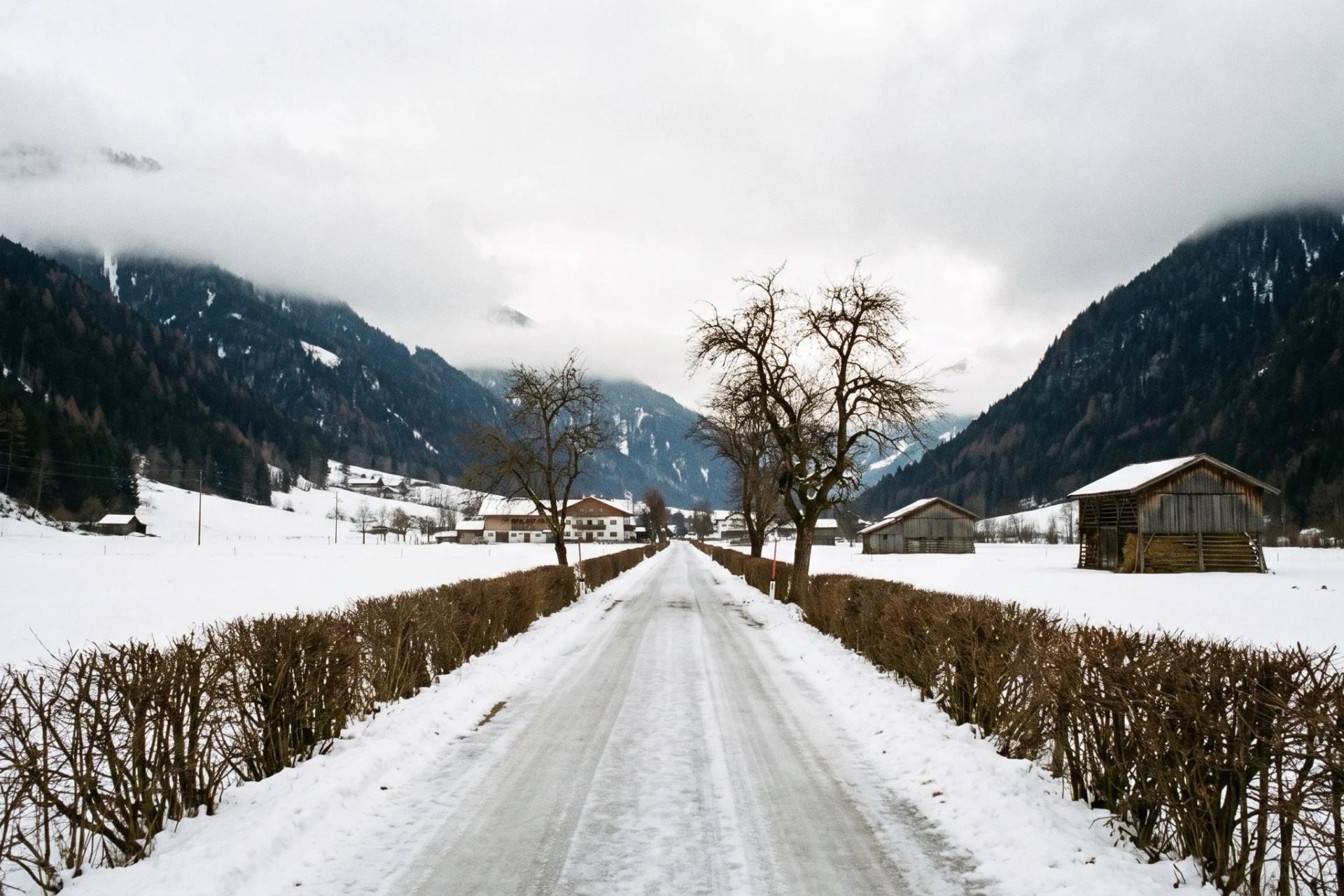
Ischgl is one of the best-known ski villages in the Alps, and also one of the more remote. It sits at 1,377 meters in the Paznaun, a side valley in the far west of the Austrian Tyrol, and in winter there is exactly one road in and out. That shapes the whole trip: which airport you pick, how long your travel day runs, and how much margin you leave for the flight home. Here is what is worth knowing before you book.
A valley with one road in winter
The Paznaun branches off the Inn valley near Landeck. Every route to Ischgl, whichever airport it starts from, leaves the Arlberg expressway (the S 16) at Pians and follows the B 188 up the valley for about 23 kilometers, through See and Kappl, to Ischgl. Above Ischgl the same road continues to Galtür.
In summer the road keeps going over the Silvretta High Alpine Road into Vorarlberg. In winter that pass is closed, which turns the Paznaun into a dead end for the ski season. Practically, that means two things. First, the last part of every journey is the same slow valley road, so allow for it even when the motorway part has gone smoothly. Second, when the valley road closes, there is no detour. On the evening of 21 January 2018 the whole B 188 between Pians and Galtür was shut in both directions because of acute avalanche danger, and the valley could not be reached by road. Closures like that are rare, but they are the reason experienced visitors do not plan a tight connection on a heavy snow day.
Austria also requires winter tires from 1 November to 15 April whenever there is snow, slush or ice on the road. If you rent a car, check that it comes properly equipped.
Which airport to fly into
Four airports are realistic for Ischgl, and the nearest is not always the most convenient. Distances below are by road to the village, and times are for a clear road with no traffic, so treat them as a minimum.
Innsbruck is the closest: 96 kilometers and about 1 hour 15 minutes, almost all of it on the A 12 motorway west through the Inn valley. It is the only route that crosses no border. The catch is the choice of flights, which is far smaller than at the big hubs.
Munich has the widest choice of flights and is where many skiers bound for Ischgl land. It is 238 kilometers and about 3 hours 20 minutes away. The shorter route runs south past Garmisch-Partenkirchen, into Austria at Griesen and over the Fernpass to Imst, before joining the A 12. The alternative is motorway almost all the way, through Kufstein and Innsbruck: about 65 kilometers longer, but on a clear road it takes roughly as long.
Zurich is 234 kilometers and about 3 hours. The road runs east past St. Gallen, crosses into Austria in the Rhine valley and reaches the Paznaun through the Arlberg road tunnel, coming out at St. Anton am Arlberg.
Memmingen, a smaller airport in southern Germany, is the fourth option, and its route joins the Zurich one before the Arlberg tunnel.
If your flight choice is open, the trade-off is simple: Innsbruck saves around two hours on the road, while Munich and Zurich give you more flights and usually more convenient times.
Tolls, vignettes and borders
Austrian motorways and expressways need a vignette, and every route to Ischgl uses some of them. The routes through the Arlberg tunnel also pay the tunnel's own section toll between St. Anton and Langen, on top of the vignette. Coming from Zurich, the first part of the drive is on Swiss motorways, which carry their own charge. German motorways are free for cars.
If you drive yourself, buy the vignette before you reach the first Austrian motorway. If you book a private transfer, check that tolls are included in the price, so the number you see when booking is the number you pay.
The border matters more on the way home than on the way in. Germany has been checking vehicles entering from Austria, and in September 2026 the German motoring club ADAC reported that the checks are planned to run until 15 March 2027. It named Kiefersfelden, the crossing on the Kufstein route to Munich, as one of the most queue-prone. There are no systematic checks entering Austria, so the outbound day is the one that needs extra time.
Getting there without a car
Ischgl's position at the end of a narrow valley is exactly why many visitors prefer not to drive at all. Public transport can get you close, but on a changeover day with skis, boots and luggage, every change of train or bus adds time. A pre-booked ischgl transfer collects you in the arrivals hall and drives you to the door of your hotel or chalet, which on a long winter travel day is worth more than it sounds.
When comparing options, a few questions separate a good transfer service from a stressful one. Does the driver track your flight and wait if it lands late? How much waiting time is included? Are tolls and the vignette in the price? And will the company tell you honestly if snow or a road closure makes the journey unsafe, rather than set off regardless?
Ischgl and its Arlberg neighbors
The Arlberg is close by. St. Anton am Arlberg sits at the eastern end of the Arlberg road tunnel, on the same S 16 that every route to Ischgl uses, so Ischgl and St. Anton share most of their roads and airports. Groups that split between the two resorts, or visitors who want a week in each, can plan both legs together. If St. Anton is on your list, St Anton transfers from Innsbruck, Munich or Zurich follow much the same roads described above.
A checklist for the travel day
Pick your airport by flight times first, then by drive time.
On a Saturday changeover, assume the clear-road times above will run longer.
Watch the forecast for the days around your arrival and departure. Heavy snow affects the valley road first.
For the flight home via Munich, leave margin for the German border check.
Keep your accommodation address handy: in Ischgl, a door-to-door drop-off saves a walk through a busy village with luggage.
Planned this way, the journey into the Paznaun is part of the trip rather than an obstacle to it, and the first view of the valley under fresh snow is a fine way to start a ski week.