
Andador de Macedonia Alcala
Oaxaca Mexico Posted by Brandon B.Admin
Overview
Andador de Macedonia Alcala is a pedestrian walkway in the heart of Oaxaca's historic center that connects two of the city's most important plazas. This tree-lined passage runs between the Zocalo and the Plaza Santo Domingo, cutting through the colonial-era street grid that defines central Oaxaca. The walkway itself has become as much a destination as the spaces it connects, lined with small shops, cafes, and galleries that reflect the city's creative energy.
The street takes its name from Macedonia Alcala, a 19th-century political figure significant to Oaxaca's history. Today, the andador (pedestrian street) functions as the main artery between Oaxaca's two principal gathering spaces, making it impossible to spend time in the city center without walking it multiple times.
Why this place matters
Andador de Macedonia Alcala represents something increasingly rare in Mexico's colonial cities: a car-free zone designed entirely for foot traffic. This simple decision fundamentally shapes how people experience central Oaxaca. The street feels human-scaled in a way that motorized thoroughfares cannot.
For visitors, the andador matters because it's where Oaxaca's layers reveal themselves. You'll pass vendors selling traditional textiles next to contemporary art galleries. A mezcal bar occupies a 400-year-old stone building. Street musicians perform beneath carved wooden balconies. This isn't a sanitized tourist district but rather the everyday commercial and cultural spine of the city, where locals do their shopping and tourists circulate by necessity.
Quick facts
- Connects the Zocalo to Plaza Santo Domingo, roughly 300 meters north
- Pedestrian-only, no vehicle traffic
- Named after Macedonia Alcala, a 19th-century Oaxacan politician
- Lined with colonial-era architecture dating back centuries
- Open to the public at all hours, though most shops operate during standard daytime hours
- No entrance fee or ticket required
Getting there
The southern entrance to Andador de Macedonia Alcala begins at the north side of the Zocalo, Oaxaca's main plaza. If you're staying anywhere near the city center, the Zocalo is the natural reference point. Look for the opening between the colonial buildings on the plaza's northern edge.
From the airport, take a taxi or ride-share into the city center and ask for the Zocalo. Once you're in the historic center, finding the andador is straightforward. It's the obvious pedestrian passage heading north from the main plaza.
If you're arriving from the north and want to enter at the Plaza Santo Domingo end, the street terminates at the church and monastery complex that dominates that square. Both endpoints are equally accessible depending on your direction of travel.
The layout and experience
Walking the andador from south to north, you move gradually from the more tourist-oriented shops and restaurants near the Zocalo toward the quieter, more artisanal commercial spaces closer to Santo Domingo. The street narrows and widens unpredictably as it follows the colonial street grid, creating natural pauses and gathering points.
The buildings lining the walkway are mostly two to three stories tall, their facades painted in muted earth tones. Many retain their original wooden doors and windows. Overhead, electrical wires crisscross between structures in a visible web that somehow doesn't detract from the visual appeal. The canopy from street trees provides shade throughout most of the day.
Shop windows display everything from handmade chocolate to embroidered textiles to contemporary jewelry. Doorways open directly onto the walkway, so you move seamlessly between public passage and private commercial space. The scale is intimate. You can hear conversations in nearby shops. You notice details in the stonework and ironwork.
The andador serves as Oaxaca's primary shopping street without feeling like a shopping street in the conventional sense. There's no uniform branding or chain stores. Each establishment has its own character. This variety is part of what makes walking it engaging across multiple visits.
Main highlights
The street itself is the highlight. Unlike many tourist attractions that concentrate interest in a single building or plaza, Andador de Macedonia Alcala distributes appeal across its entire length. The experience comes from the combination of architecture, commerce, street life, and the rhythm of walking between two important plazas.
You'll find small museums and galleries tucked into ground floors. Textile shops display traditional Oaxacan weaving techniques. Mezcal bars and small restaurants occupy centuries-old spaces. These individual stops matter less than the cumulative effect of moving through the street itself.
The connection between the Zocalo and Plaza Santo Domingo is itself significant. These two plazas represent different aspects of Oaxaca's identity: the Zocalo as the civic and commercial heart, Santo Domingo as the spiritual and architectural centerpiece. The andador links them, making it impossible to experience one without acknowledging the other.
History and background
Andador de Macedonia Alcala was formally established as a pedestrian-only street in the late 20th century, part of broader efforts to reclaim central Oaxaca's colonial core from automobile traffic. The actual street had existed for centuries as part of the Spanish colonial grid imposed on the city after the conquest.
The decision to make it car-free transformed how people used the street. What had been a standard colonial thoroughfare became a gathering space and shopping district organized around human movement rather than vehicle flow. This relatively recent change has become so integral to how Oaxacans and visitors experience the city center that most people assume it has always been this way.
The buildings lining the street date from various periods, though most visible facades reflect colonial and post-colonial construction. The ground floors have been repeatedly modified as commercial uses changed over centuries. Despite this constant alteration, the basic street pattern and building alignments remain unchanged since the colonial period.
Best time to visit
The andador functions year-round, but it's most vibrant during the daytime when shops are open and the streets are busy with both locals and visitors. Early mornings, before 9 am, tend to be quieter. Mid-morning through late afternoon is peak activity.
Depending on the season, Oaxaca's weather varies significantly. The dry season runs roughly November through April, when the climate is most comfortable for walking. The rainy season, May through October, brings afternoon storms that can be intense but usually pass quickly. Even in the rainy season, the andador remains accessible, though the narrow width means umbrellas sometimes create congestion.
If you want to experience the street with fewer tourists, visit on weekday mornings. Weekends and evenings draw larger crowds, particularly on market days and during festivals. The street takes on different character at different times, so multiple visits reveal different aspects.
Photography tips
The street itself photographs well, particularly in the early morning light when shadows emphasize the architectural details. The narrow perspective looking north or south down the walkway captures the sense of the passage effectively.
Individual shop windows and doorways offer good detail shots. The carved wooden elements, painted facades, and traditional signage reward close attention. Overhead shots of the wires and architecture create interesting abstract compositions.
The street is crowded enough that getting unobstructed shots requires patience or timing. Early morning is your best window for photos without people. If you prefer images that show the street's actual vitality and use, shoot during mid-morning or early afternoon when activity is visible but not overwhelming.
Facilities and preparation
There are public restrooms scattered throughout central Oaxaca, though you may need to ask locals for their exact locations. Several restaurants and cafes along the andador have facilities available for customers. The street itself has no official public facilities.
Comfortable walking shoes are essential. The street is paved but uneven in places, and you'll likely walk it multiple times during a visit to the city center. Water bottles and sun protection are important, particularly during the dry season when midday heat is significant.
The street is accessible to people with mobility challenges, though the uneven paving and lack of curb cuts at side passages may present difficulty. There are no significant elevation changes along the main walkway.
Combining with nearby attractions
The andador's value lies partly in how it connects other sites. The Zocalo itself is worth spending time in, with its cafes, colonial architecture, and sense of being at the heart of the city. The Plaza Santo Domingo at the northern end is anchored by the Santo Domingo church and monastery, one of Oaxaca's most significant architectural landmarks.
If you continue exploring the streets branching off the andador, you'll find the Textile Museum, various smaller galleries, and countless small shops and restaurants. The historic center is compact enough that you can walk in any direction from the andador and discover something worthwhile within a few minutes.
Sample visit plan
Start at the Zocalo early in the morning, grab a coffee at one of the plaza's cafes, then walk north along Andador de Macedonia Alcala. Move slowly, stopping at shops and galleries that catch your interest. Stop for a snack or light meal at one of the small restaurants along the way.
Reach Plaza Santo Domingo and visit the church if it's open. Explore the smaller streets branching west and east from the plaza. Make your way back south along the andador in the late afternoon, when the light changes and the street has a different character than the morning.
This can easily fill most of a day if you're inclined to linger. If you're moving quickly, you can traverse the full length in 30 to 45 minutes, but you'll miss the point of the place entirely.
Practical tips
- Walk the street multiple times during your visit. It reveals different aspects depending on time of day and direction of travel
- Bring cash in small denominations. Many small shops and vendors do not accept cards
- Watch for uneven pavement and step changes between different sections
- If you want to shop, mornings tend to be less crowded than afternoons
- The street is safe during the day and early evening. Use standard urban awareness in the evening
- Respect photography in shops and with vendors. Ask permission before photographing people
- Street vendors occasionally approach tourists, particularly near the Zocalo end. Polite declining is sufficient
FAQ
Is the andador open at night? Yes, the street itself is always open and well-lit. However, shops close in the evening, and the street becomes quieter. It's safe in the early evening but less active than during daytime.
Are there restaurants along the andador? Yes, several small restaurants and cafes line the street. They range from simple counter service to sit-down dining. Options tend toward traditional Oaxacan cuisine and casual international fare.
How long does it take to walk the full length? The actual walk takes 10 to 15 minutes if you move steadily. Most people spend 45 minutes to an hour walking it slowly and stopping at shops or galleries.
Is it crowded? It depends on the time of day and season. Weekday mornings are noticeably quieter than weekend afternoons. Even during peak times, the street doesn't feel oppressively crowded compared to popular tourist districts in other cities.
What should I buy here? Textiles, particularly woven goods from Oaxacan villages, are common. Mezcal, chocolate, traditional crafts, and contemporary art are also well-represented. Prices are generally reasonable compared to tourist areas in other Mexican cities.
Opening hours
Reviews
Sign in and mark this place visited to leave a review.
No reviews yet.
Free Trip Planner
Plan your Mexico trip with our free planner
Build a day-by-day itinerary with AI suggestions, hand-picked places, and friends. Free forever — no credit card.
Things to see near Andador de Macedonia Alcala


Places to eat or drink near Andador de Macedonia Alcala

Palenque Gracias a Dios Mezcal

Alfonsina

Mezcal El Rey de Matatlán

El Milenario
More places in Oaxaca
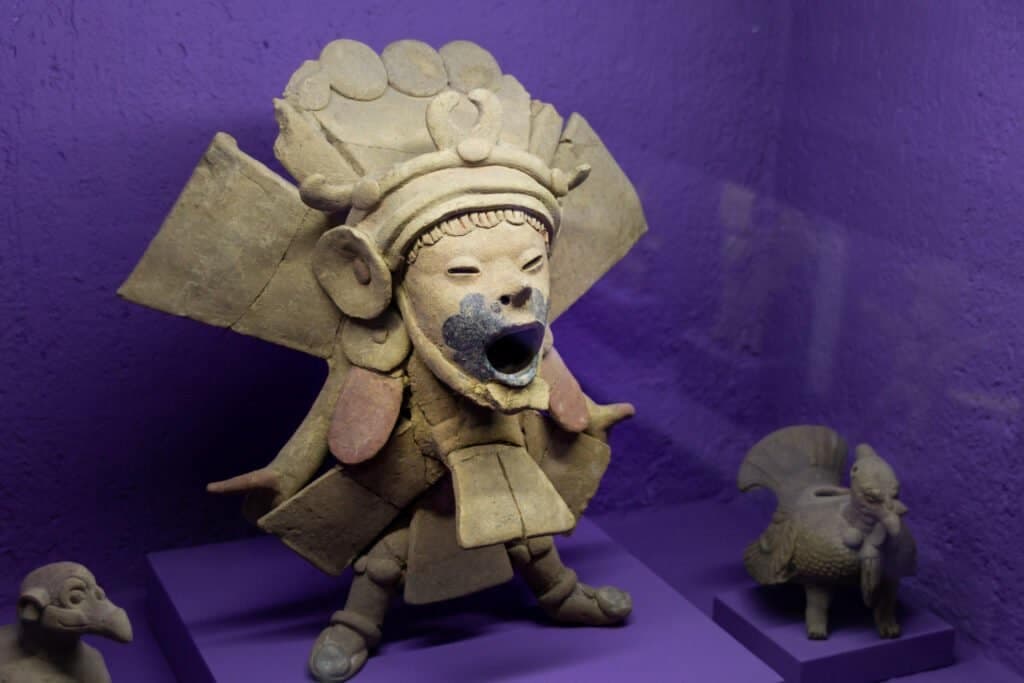
Museo de Arte Prehispanico de Mexico (Museo Rufino Tamayo)

Museum of Contemporary Art and Oaxaca Cultures

Mayordomo
