
Arcibasilica di San Giovanni in Laterano
Piazza di Porta San Giovanni, 4, 00184 Rome Italy Posted by Brandon B.Admin
The Oldest and Most Important Church in Rome You've Probably Overlooked
Before St. Peter's Basilica existed in its current form, before the Vatican became the center of the Catholic world, there was the Arcibasilica di San Giovanni in Laterano. This is the oldest public Christian church in Rome, consecrated in the early 4th century, and it holds a rank that surprises most first-time visitors: it is the cathedral of the Bishop of Rome, which means it technically outranks St. Peter's in the Catholic hierarchy. The Pope is, above all, the bishop of this church.
Most tourists spend their time around the Vatican and miss the Lateran entirely. That's a genuine loss. The basilica sits at the southeastern edge of the historic center, near the Aurelian Wall, in a neighborhood that feels noticeably less crowded than the Centro Storico. If you make the trip, you'll find one of the most layered religious sites in the Western world.
Why San Giovanni in Laterano Matters
The church's full title is Arcibasilica Cattedrale di San Giovanni in Laterano, and it holds the distinction of being the "mother and head of all churches of Rome and the world" according to its own inscription above the entrance. That's not marketing copy. It's a statement of ecclesiastical precedence that has stood for roughly 1,700 years.
The site takes its name from the Laterani family, who owned the land before the Emperor Constantine donated it to the Christian community. Constantine himself is credited with founding the original basilica around 313 AD, shortly after the Edict of Milan made Christianity legal in the Roman Empire. The church has been destroyed, rebuilt, and renovated multiple times since then, most dramatically after fires in 1308 and 1361.
The current facade, with its giant statues of Christ and the apostles along the roofline, was completed in 1735 by Alessandro Galilei. That date matters because it means what you see from the piazza is Baroque, while what you find inside reaches back through medieval, Renaissance, and early Christian layers all at once.
Quick Facts
- Full name: Arcibasilica Papale di San Giovanni in Laterano
- Founded: circa 313 AD under Emperor Constantine
- Current facade completed: 1735, designed by Alessandro Galilei
- Status: Cathedral of the Diocese of Rome, papal basilica
- Location: Piazza di Porta San Giovanni, near the Aurelian Wall and Porta San Giovanni
- Entry to the basilica: free
- The cloister and some areas require a separate ticket
- Dress code enforced: shoulders and knees must be covered
Getting There
The basilica is straightforward to reach by Metro. Line A stops at San Giovanni station, which puts you about a 5-minute walk from the main entrance on the piazza. Trams also run along Viale Carlo Felice nearby. If you're coming from the Colosseum, it's roughly a 15-minute walk south along Via Capo d'Africa and then east, or a very short taxi or bus ride.
The main facade faces Piazza di San Giovanni in Laterano. There is also a side entrance on the north side of the church, which tends to see less foot traffic and is worth knowing about if the main entrance has a queue.
The Layout and Experience
The interior is enormous. Five naves run the full length of the building, with the central nave flanked by colossal niches holding statues of the apostles, each one installed during an early 18th-century renovation commissioned by Pope Clement XI. The scale can be disorienting at first. Give yourself a moment to adjust before you start moving through the space.
The wooden ceiling above the central nave is gilded and ornate, dating from the late 16th century. The Cosmatesque floor, with its intricate inlaid marble geometric patterns, is medieval work. The contrast between the floor underfoot and the ceiling overhead gives you a sense of how many centuries have been folded into this one building.
At the far end, the papal altar contains a wooden table that tradition holds was used by St. Peter himself. Above it rises a Gothic tabernacle from the late 14th century. The apse mosaic, while largely reconstructed in the 19th century, follows a design that traces back to the 4th century original.
Don't miss the cloister. It's a separate ticketed area, but it's one of the finest examples of Cosmatesque architecture in Rome, built by the Vassalletto family in the early 13th century. The twisted, mosaic-inlaid columns surrounding the garden are unlike anything else in the city.
History and Background
The Lateran complex was the center of papal power for nearly a thousand years. The Popes lived here, not at the Vatican, until the Avignon papacy in the early 14th century pulled the seat of the Church to France. When the papacy returned to Rome in 1377, the Vatican palace became the new residence, and the Lateran never quite recovered its political centrality. But it kept its ecclesiastical rank.
Several major church councils were held here, including the First Lateran Council in 1123, the first ecumenical council held in the West. The building has also served as the site of significant papal ceremonies over the centuries. The Lateran Treaty of 1929, which established Vatican City as an independent state, was signed in the adjacent Lateran Palace, which still stands next to the basilica.
The baptistery adjacent to the church is also worth a brief visit. It's one of the oldest Christian baptisteries in existence, built in the 4th century and remodeled under several popes. Most baptisteries in Western Christianity are believed to have been modeled on its octagonal plan.
Tickets and Entry
Entry to the main basilica is free. The cloister requires a paid ticket, available at the entrance to that section inside the church. Guided tours are also available, and they're genuinely useful here because the layers of history are not self-explanatory. Audio guides can usually be hired near the entrance as well.
The Scala Santa, the sacred staircase that tradition holds was brought from Jerusalem by Constantine's mother Helena, is located in a separate building just across the piazza. It has its own entry and is worth including in your visit. Pilgrims climb it on their knees. You can also use the side staircases if you prefer to walk.
Best Time to Visit
Weekday mornings tend to be quieter than weekends, when religious services draw larger crowds. The church is a functioning cathedral, so be aware that major feast days, especially those tied to St. John the Baptist (June 24) and the Dedication of the Lateran Basilica (November 9), bring significant numbers of worshippers and can affect access to certain areas.
Late morning on a Tuesday or Wednesday is often a good window. You'll have enough light coming through the windows to appreciate the interior without the midday tour group rush that tends to build after noon. If you're visiting in summer, the building stays relatively cool inside, which is a practical bonus.
Photography Tips
The main nave offers a strong central perspective shot, especially from near the entrance looking toward the apse. The apostle statues in their niches photograph well individually. The cloister is excellent in soft morning light, when the shadows from the twisted columns fall across the Cosmatesque floor in geometric patterns.
Photography is generally permitted inside the basilica for personal use, but flash and tripods are typically restricted. During services, put the camera away entirely.
Combining with Nearby Attractions
The Lateran sits close to several other significant sites that most Rome itineraries skip. The Basilica di Santa Croce in Gerusalemme is about a 10-minute walk east. The Baths of Caracalla are roughly 20 minutes on foot to the southwest. The Circus Maximus is in the same direction. If you're spending a day in this part of Rome, you can cover a remarkable amount of ground without retracing your steps.
The neighborhood around Porta San Giovanni also has a more local feel than the tourist-heavy streets near the Pantheon or Trevi Fountain. There are decent trattorias and bars on the surrounding streets where you can eat without paying a landmark premium.
Practical Tips
- Cover your shoulders and knees before arriving. Disposable shawls are sometimes available at the entrance, but don't rely on it.
- The cloister closes earlier than the main church. Check current hours before you go.
- Pick up the free floor plan available inside the entrance. The building is large enough to be disorienting without one.
- Visit the Baptistery separately. It's in a different building to the right of the main facade and easy to walk past by accident.
- If a service is in progress when you arrive, wait near the back or return later. Wandering through during Mass is frowned upon.
- The Scala Santa across the piazza is a quick add-on. Budget an extra 20 to 30 minutes if you plan to include it.
- Metro Line A San Giovanni station makes this easy to combine with other stops on the line, including Termini and Spagna.
FAQ
Is San Giovanni in Laterano more important than St. Peter's Basilica?
In terms of ecclesiastical rank, yes. San Giovanni in Laterano is the cathedral of the Bishop of Rome (the Pope), which gives it formal precedence over St. Peter's. In terms of global recognition and daily foot traffic, St. Peter's dominates. The two serve different roles, and both are worth visiting.
Do I need to book in advance?
For general admission to the basilica, no. You can walk in during opening hours. Guided tours may benefit from advance booking, especially in peak season. The Scala Santa across the piazza also typically doesn't require advance booking.
How long should I plan to spend here?
The basilica itself warrants at least an hour if you want to take it seriously. Add another 30 to 45 minutes for the cloister. If you're including the Baptistery and the Scala Santa, plan for a half-day visit overall.
Can I attend Mass here?
Yes. San Giovanni in Laterano is an active cathedral with a regular schedule of services. Attending a Mass here, in what is technically the Pope's own cathedral, is a meaningful experience for many visitors regardless of their faith background.
Reviews
Sign in and mark this place visited to leave a review.
No reviews yet.
Free Trip Planner
Plan your Italy trip with our free planner
Build a day-by-day itinerary with AI suggestions, hand-picked places, and friends. Free forever — no credit card.
Things to see near Arcibasilica di San Giovanni in Laterano


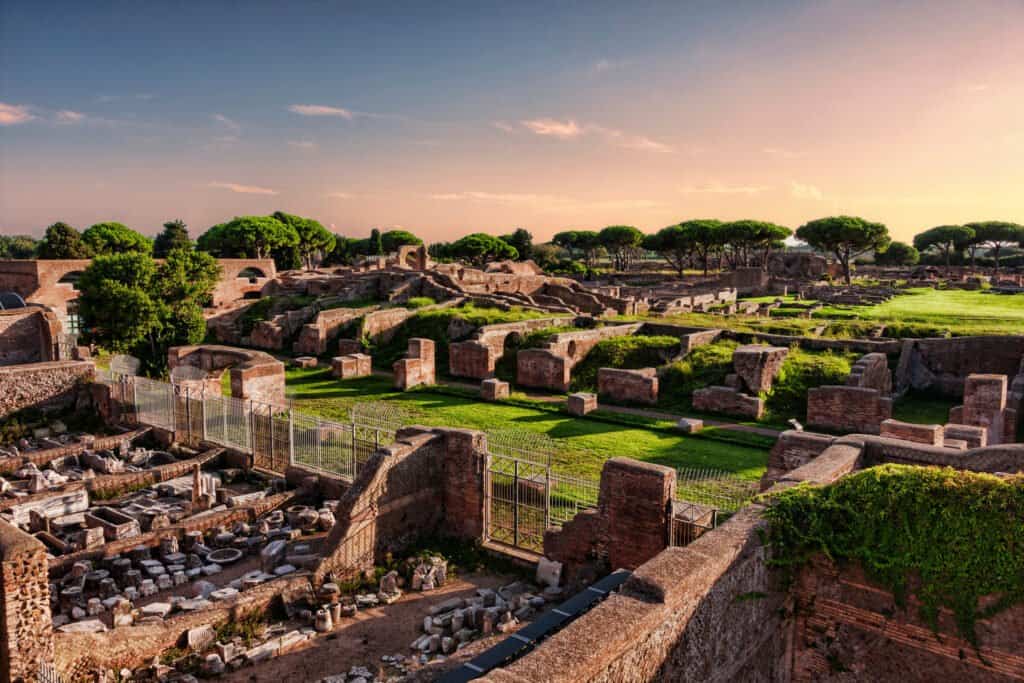

Places to eat or drink near Arcibasilica di San Giovanni in Laterano
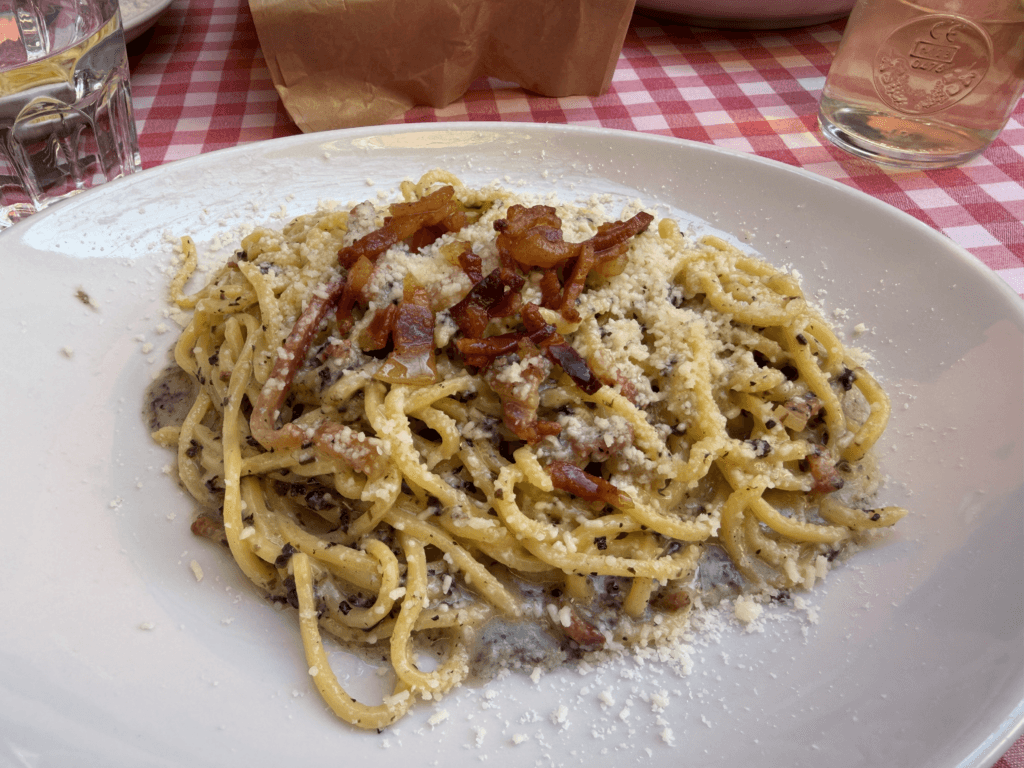
Arianna al Borghetto

La Pietra Scheggiata – Osteria/Pizzeria

Pasticceria Barberini

Trattoria Da Enzo
More places in Rome

Magia a Campo de' Fiori

Museo Storico della Liberazione

The Colosseum
