
Overview
Monte Testaccio is one of Rome's most unusual landmarks: a 45-meter hill made entirely of broken pottery shards. Located in the Testaccio neighborhood south of the city center, this artificial mound tells the story of Rome's ancient port trade in a way few other sites can. Rather than carved marble or temple stones, the hill is built from millions of discarded amphora fragments, the terracotta jars that once held wine, oil, and grain shipped from across the Mediterranean.
The name "Testaccio" derives from the Latin word "testae," meaning potsherds. What began as a dumping ground for broken cargo containers during the 1st and 2nd centuries AD has become a distinctive geographical feature and a window into daily Roman commerce. Today, you can walk around and on the hill, visit the archaeological museum embedded within it, and explore one of Rome's most authentic working-class neighborhoods that surrounds it.
Why this place matters
Monte Testaccio is archaeology made tangible. Unlike sites where you read about trade routes on information plaques, here you're standing on the physical evidence of those routes. Each fragment represents a transaction, a shipment, a decision made centuries ago to discard rather than reuse.
The hill also reveals something often overlooked in Rome's grand narratives: the infrastructure of daily life. No emperors, no religious ceremonies, no military campaigns. Just workers, merchants, and the practical problem of what to do with thousands of broken jars. It's a democratic kind of history, one built from the bottom up rather than imposed from above.
The surrounding neighborhood has retained this character. Testaccio remains less touristy than central Rome, with butcher shops, trattorias serving local food, and residents who've lived here for generations. Walking the streets around Monte Testaccio gives you a sense of Roman life that doesn't depend on restoration or reconstruction.
Quick facts
- Height: approximately 45 meters above surrounding ground level
- Composition: approximately 41 million ceramic fragments, primarily amphora shards
- Primary period of accumulation: 1st and 2nd centuries AD
- Museum location: Via Caio Cestio 7, inside the hill itself
- Neighborhood: Testaccio, about 2 kilometers south of the Roman Forum
- Access: The hill is open to walk around; the museum requires a ticket
Getting there
Monte Testaccio sits in the Testaccio neighborhood, accessible by metro line B, direction Laurentina. Get off at Garbatella station and walk 10 minutes north, or exit at Piramide station and walk 12 minutes west through the neighborhood. If you're coming from central Rome on foot, the walk from the Colosseum takes about 25 minutes heading south through the Aventine Hill district.
By tram, line 3 runs past the neighborhood. By car, there's limited street parking, though several paid car parks exist nearby. Most visitors arrive by metro, which is straightforward and avoids the traffic navigating Testaccio's narrow streets.
The layout and experience
The hill itself is the main feature. You can walk around its perimeter on street level or climb paths that wind up and around it. The ascent is gradual and not strenuous, though the paths are informal. There's no formal hiking trail, just worn footpaths that locals and visitors have created over years of foot traffic.
At the base, on Via Caio Cestio, sits the Museo della Civiltà Romana del Porto (Museum of Roman Port Civilization), a small museum built into the hill itself. This is where you'll find displayed fragments, explanations of Roman trade networks, and artifacts that contextualize what you're standing on.
The neighborhood around the hill is equally worth exploring. Via di Monte Testaccio runs along the eastern side and is lined with restaurants, wine bars, and small shops. The streets branch into residential areas where you'll find apartment buildings dating from the early 1900s, when this district was still considered outside the city proper.
Main highlights
The pottery itself is the primary attraction. As you walk around the hill, you see exposed layers of shards stacked and compacted over centuries. Some fragments are large enough to make out the maker's marks or the amphora's original shape. Observing these details makes the scale of Roman commerce tangible in a way reading about trade volumes never could.
The view from the top of the hill is worth the climb. You get a perspective of Testaccio's rooflines, the Tiber River in the distance, and a sense of how this neighborhood sits relative to central Rome. On clear days, you can see across much of the southern city.
The museum displays the most intact pieces recovered from the hill, alongside maps showing where these amphorae originated. The collection illustrates which regions supplied Rome and what goods flowed through the port. You'll see fragments from North Africa, Spain, Gaul, and the eastern Mediterranean, each with slightly different clay compositions and vessel shapes.
The neighborhood's market and food culture are inseparable from Monte Testaccio's character. The area has historically been working-class, and that's reflected in the restaurants and butcher shops. This isn't a polished tourist precinct. It's a neighborhood where people live and work, and where you can eat well without pretense.
History and background
Rome's port stood along the Tiber River, about 25 kilometers downstream from the city center. Goods arrived by ship, were unloaded, and were transported upriver or distributed locally. Amphorae were the standard shipping containers, each one holding wine, oil, grain, or other goods. Once emptied, they were often broken and discarded rather than transported back downriver.
The Testaccio dumping ground accumulated these fragments over several centuries, but the majority dates to the 1st and 2nd centuries AD, when Rome's population was at its peak and imports were at their highest. The hill grew organically, layer upon layer, as workers dumped broken amphorae into the same location.
By the 3rd century, the practice slowed and eventually stopped. The hill became a natural landmark in a flat landscape. Medieval Romans built structures on its slopes. Renaissance and later builders quarried pottery from the hill for use as fill in other construction projects. In the 19th century, the hill was more extensively excavated, and by the early 1900s, archaeologists began studying it systematically.
The museum was established in the 1980s as a dedicated space to study and display the hill's contents. Excavations continue periodically, and the hill itself remains under archaeological protection.
Tickets and entry
Walking around the hill is free. There's no barrier or entry fee for exploring the mound itself and observing the pottery fragments from the paths around it.
The museum at the base charges a separate admission fee. It's a small museum with modest but focused exhibits, ideal for understanding what you're looking at on the hill itself. The fee is budget-friendly, and visiting the museum typically takes 30 to 45 minutes depending on your interest level.
No booking or timed entry is required. You can arrive and enter at your own pace during opening hours.
Best time to visit
Spring and fall offer the most pleasant weather for walking around the hill and exploring the neighborhood. Summer can be quite warm, and the area offers little shade on the mound itself. Winter is mild in Rome, though occasional rain can make the paths muddy.
Testaccio is quieter on weekday mornings compared to weekends. If you prefer fewer crowds, arrive before noon on a weekday. The neighborhood's markets are most active in the morning, which is also a good time to see local life in action.
Avoid visiting on Mondays, when the museum is typically closed. Most other days, morning hours offer the best light and the fewest tourists.
Photography tips
The texture of the pottery fragments photographs well in direct sunlight, which brings out the layering and clay color variation. Shoot close-ups of individual shards to show the detail, and also capture wider views showing how densely packed the fragments are.
From the top of the hill, the neighborhood spreads out below in a way that shows Testaccio's density and character. Shoot in the direction of the Tiber or toward the Aventine Hill for compositional context.
The museum's artifacts are lit for visibility but not always for photography. Check with staff about whether photographs are permitted inside. The best light for outdoor pottery shots comes in the morning or late afternoon, when shadows emphasize the fragments' texture.
Facilities and preparation
The hill has no facilities at its summit. There are no water fountains, restrooms, or shelter. Bring water, especially in warm months. The paths are uneven and can be slippery when wet, so wear sturdy shoes with good traction.
The neighborhood has bars, cafes, and restaurants nearby, so you can grab a drink or meal before or after visiting. The museum has a small gift shop and basic information materials.
If you have mobility limitations, the hill's paths are informal and not wheelchair accessible. You can view the pottery from ground level around the perimeter, but climbing is not feasible for those with significant mobility challenges.
How it compares to similar places
Rome has many archaeological sites, but few are as immediately readable as Monte Testaccio. The Forum requires imagination to reconstruct; the Colosseum's structure speaks for itself but not its daily function. Monte Testaccio is literally made of the evidence of daily Roman economic life. It's less monumental but more intimate.
Among artificial mounds and archaeological heaps elsewhere in Europe, Monte Testaccio is unusual because it's both archaeologically significant and geographically prominent enough to shape the neighborhood around it. It's not a site you visit and leave; it's a feature that defines the area.
Combining with nearby attractions
The Testaccio neighborhood is worth exploring on its own. The Cimitero Acattolico (Non-Catholic Cemetery) is about 15 minutes' walk away, a quiet, beautifully maintained burial ground with graves of notable foreigners including poets. The Pyramid of Gaius Cestius, a 1st century AD Roman pyramid, stands nearby.
The Aventine Hill, with its churches and parks, is a 10-minute walk north. The river and the Ponte Rotto (broken bridge) are accessible from the neighborhood's western edge. A visit to Testaccio often combines well with time in these quieter, less-crowded areas of southern Rome.
If you're interested in Roman food culture, the neighborhood's trattorias and food markets provide context for understanding how a city of a million people was fed. This connects directly to why those amphorae were needed in the first place.
Sample visit plan
Arrive mid-morning. Start by walking around the base of the hill to get a sense of its scale and the pottery visible on its slopes. Spend 15 to 20 minutes just observing the fragments and the landscape.
Enter the museum. Allow 30 to 45 minutes to view the exhibits and read the explanations. This context will deepen your understanding of what you saw outside.
Climb the hill. The ascent takes 10 to 15 minutes depending on your pace. Spend time at the top looking around and taking photographs. Descend via a different path if possible to see different exposures of pottery.
Walk through the neighborhood. Head to Via di Monte Testaccio or into the surrounding streets. Browse a neighborhood market or shop. Stop for lunch or a coffee at a local cafe or trattoria. Budget 1 to 2 hours for this.
Visit the Cimitero Acattolico or the Pyramid of Gaius Cestius if you have time. Both are short walks away and complement the visit well. Total time for the full experience: 3 to 4 hours.
Practical tips
- Bring water and sun protection. The hill offers no shade, and the pottery doesn't reflect light gently.
- Wear sturdy walking shoes. The paths are worn and uneven, and loose pottery shards can be underfoot.
- Visit the neighborhood's butcher shops and markets in the morning when they're most active. They're worth seeing for understanding local food culture.
- If you speak Italian, chat with shop owners or restaurant staff. Many have family connections to the neighborhood going back generations.
- The museum's text is in Italian and English. Allow time to read if you want to understand the context of what you're seeing.
- Testaccio is less touristy than central Rome, so services may be less geared toward visitors. This is part of its appeal but means fewer restaurants with English menus or staff.
- Photography of individual artifacts in the museum may be restricted. Ask before shooting.
FAQ
Can I climb the hill freely? Yes, the hill is open to walk around and climb. There are worn paths but no formal trails or barriers. Use caution on steep sections, especially if wet.
Is there a guided tour? Formal guided tours of Monte Testaccio are not always available. Check with the museum at the base for current options. Walking the neighborhood independently is straightforward and often more rewarding.
How long should I spend here? If you visit just the hill and museum, allow 1.5 to 2 hours. If you explore the neighborhood, plan 3 to 4 hours total.
What exactly are the pottery shards? They're fragments of amphorae, large terracotta containers used to ship wine, oil, grain, and other goods throughout the Roman world. Once broken, they were discarded at this location rather than repaired or transported.
Is Monte Testaccio worth visiting if I have limited time in Rome? If you're interested in understanding Roman daily life and economic systems, yes. If you're focused only on monumental sites, it's a lower priority. But it's unique enough that most visitors find it memorable, and it's easy to combine with other southern Rome attractions.
Reviews
Sign in and mark this place visited to leave a review.
No reviews yet.
Free Trip Planner
Plan your Rome trip with our free planner
Build a day-by-day itinerary with AI suggestions, hand-picked places, and friends. Free forever — no credit card.
Things to see near Monte Testaccio


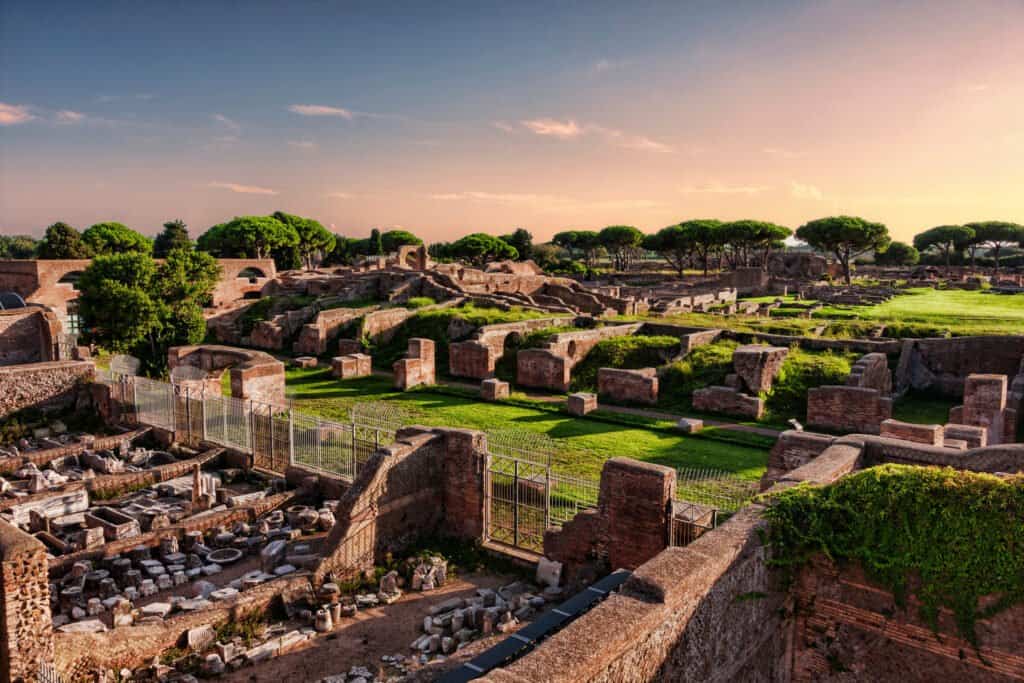

Places to eat or drink near Monte Testaccio
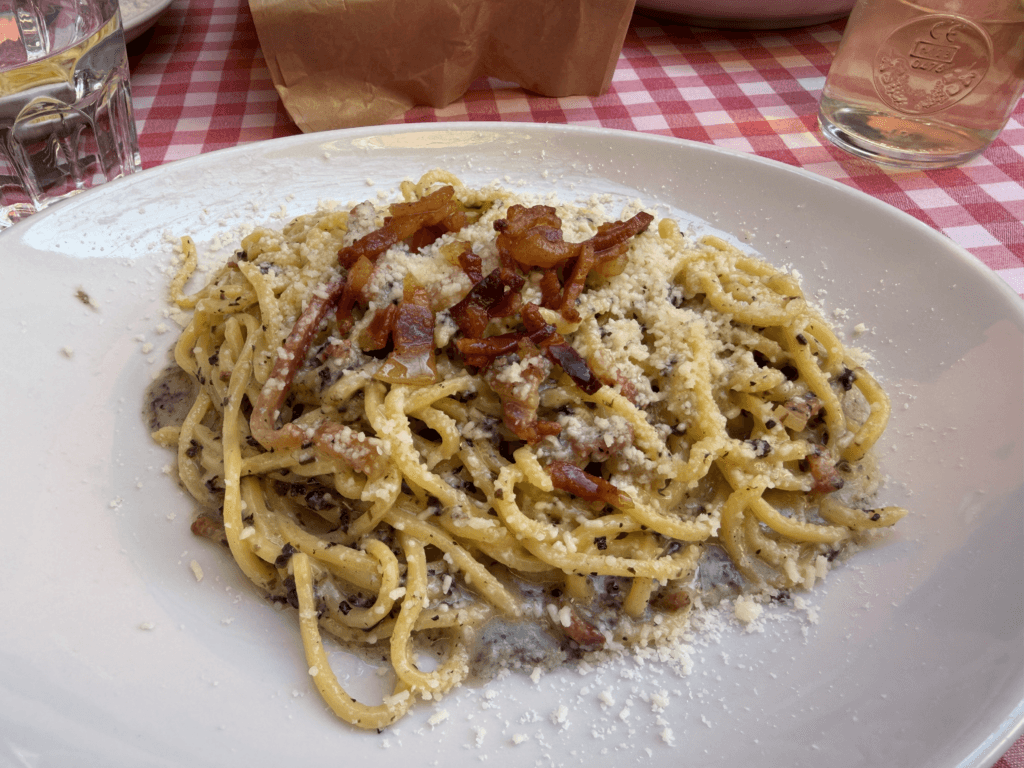
Arianna al Borghetto

La Pietra Scheggiata – Osteria/Pizzeria

Pasticceria Barberini

Trattoria Da Enzo
More places in Rome

The Colosseum

Tombs of Via Latina
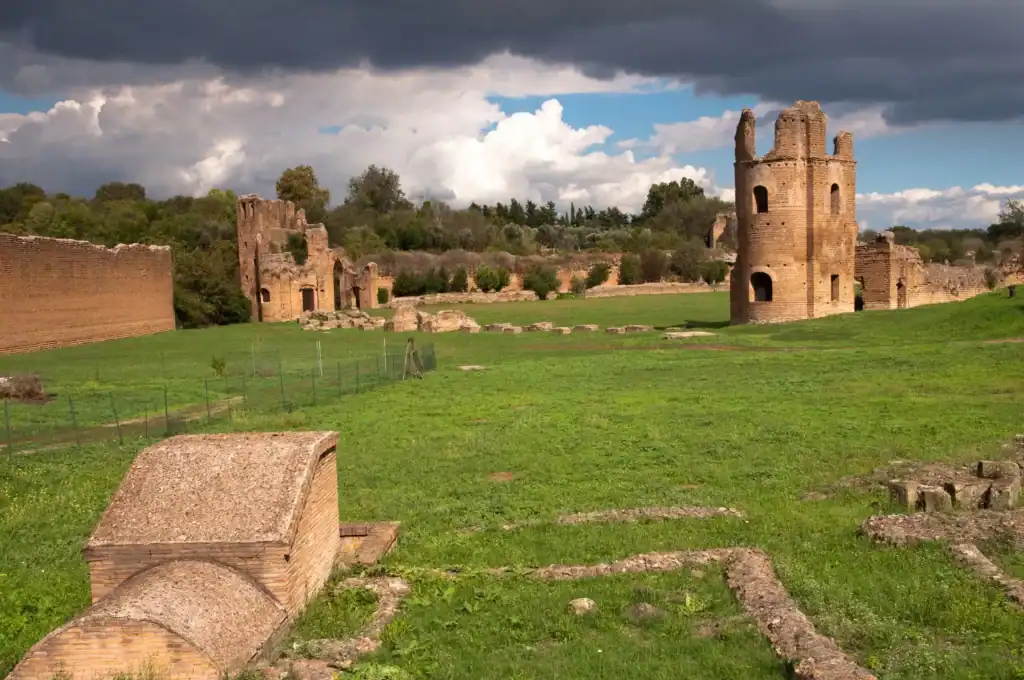
Circus of Maxentius
