Barcelona Walking Tour
Plaça de Catalunya, Pl. Catalunya, Barcelona, Barcelona 08002, Spain Posted by Brandon B.Admin
Walking Barcelona from Plaça de Catalunya
A Barcelona walking tour starting from Plaça de Catalunya drops you at the geographic and symbolic center of the city. From this wide, fountain-filled square you can walk in almost any direction and hit something worth seeing within five minutes. The Ramblas stretches south toward the port. The Eixample grid fans out to the north and west. The Gothic Quarter's tangled medieval lanes begin just steps from the square's southeastern edge. Most organized tours use Catalunya as their launch point for exactly this reason.
Barcelona rewards walkers more than almost any other major European city. The blocks are compact, the neighborhoods shift character quickly, and the architecture refuses to stay consistent. You can go from a Roman wall fragment to a Gaudí façade to a modernista pharmacy in the space of twenty minutes on foot.
Why a Walking Tour Works Here
Barcelona's street life is the attraction. Sitting on a bus or watching the city through a screen means missing the way Barceloneta smells like salt and fried fish, or the fact that the columns on the Palau de la Música Catalana catch afternoon light differently than any photograph suggests. A walking tour forces proximity.
The city is also genuinely confusing for first-timers. The Gothic Quarter and El Born look similar on a map but feel completely different on the ground. A guide or a well-planned self-guided route helps you understand why the streets bend the way they do, which parts are medieval and which parts are 19th-century reconstruction, and where to turn without accidentally walking in circles for half an hour.
Quick Facts
- Starting point: Plaça de Catalunya, accessible by Metro lines L1 and L3
- Typical guided tour duration: 2 to 3 hours on foot
- Average distance covered: roughly 3 to 5 kilometers depending on the route
- Languages: most popular tours run in English and Spanish; Catalan tours also available
- Tour types: free (tip-based), paid small-group, private guided, and self-guided audio options
- Best age range: suitable for most ages, though uneven cobblestones in the Gothic Quarter can be difficult for strollers and mobility aids
- Booking: some operators require advance reservation, especially in summer
Getting There
Plaça de Catalunya sits at the top of Las Ramblas and is one of the best-connected transit hubs in the city. Metro lines L1 (red) and L3 (green) both stop directly underneath the square. Multiple bus lines also terminate here. If you're coming from the airport on the Aerobus, this is the final stop.
From most central hotels you can walk to Catalunya in under 15 minutes. The square itself is large enough that meeting point instructions from your tour operator usually specify a particular landmark within it, such as the fountain on the northern end or the steps near Carrer de Pelai. Check those details before you arrive.
The Layout and Experience
Most Barcelona walking tours fall into one of a few standard routes, each covering genuinely different ground.
The Gothic Quarter and El Born
This is the most popular route and for good reason. It takes you through the Barri Gòtic, past the remains of the Roman city wall near Carrer del Bisbe, through the Cathedral of Barcelona's surrounding lanes, and eventually into El Born with its 19th-century iron market building and the archaeological site of the 1714 siege buried underneath it. The streets here are narrow enough that groups larger than about 15 people start to feel unwieldy.
The Eixample and Modernisme Route
Walking the Eixample means walking Ildefons Cerdà's 1860 grid plan, which he designed with chamfered corners so carriages could turn easily. Today those corners create small open pockets at every intersection. This route typically passes Casa Batlló and Casa Milà (La Pedrera) on Passeig de Gràcia, and often includes a stop to look at the block nicknamed the "Manzana de la Discordia" where three competing modernista architects built side by side. You don't need to pay entry to appreciate the facades from the street.
El Raval and the Waterfront
Less common on standard tours but increasingly popular, this route moves through El Raval's MACBA square and down to the port area, past the Columbus monument at the foot of Las Ramblas and along the Barceloneta boardwalk. It covers roughly 4 kilometers and gives you a sense of how the city connects to the sea, something the medieval core doesn't show you at all.
Main Highlights Along the Way
Depending on your route, you'll likely pass several landmarks that deserve a moment of attention rather than a quick glance.
- The Barcelona Cathedral, built primarily between the 13th and 15th centuries, with its Gothic cloister where geese have been kept for centuries as a tradition tied to the city's patron saint
- Pont del Bisbe, the neo-Gothic bridge connecting two government buildings across Carrer del Bisbe, built in 1928 and often mistaken for something much older
- Palau de la Música Catalana, a UNESCO World Heritage Site designed by Lluís Domènech i Montaner and completed in 1908, with a stained glass ceiling that functions as an inverted dome
- Mercat de Santa Caterina in El Born, rebuilt in 2005 with an undulating mosaic roof designed by Enric Miralles, visible from the street at no cost
- Plaça Reial, a neoclassical square just off Las Ramblas with lampposts designed by a young Gaudí in 1879
Best Time to Visit
Early morning, before 9am, is when the Gothic Quarter actually belongs to the people who live there. The narrow streets are quiet, the light is soft, and you can hear the city waking up rather than competing with tour groups. If you're doing a self-guided walk, this timing is hard to beat.
Organized tours tend to start mid-morning, often around 10am or 11am. This works well for most visitors but puts you on the streets during peak tourist hours, which in summer means navigating real crowds near Las Ramblas and the Cathedral.
Spring and autumn are the most comfortable seasons physically. July and August can push temperatures above 30°C, and the Gothic Quarter's lack of shade becomes a real issue by midday. Wear appropriate footwear regardless of season. Cobblestones are uneven and heels are a bad idea.
Photography Tips
The Gothic Quarter is best photographed in the hour after sunrise when the light hits the stone at a low angle and the streets are empty. By 10am, most of the famous alleys like Carrer del Paradís have groups moving through them constantly.
For Passeig de Gràcia facades, shoot from across the street and slightly to one side rather than head-on. The chamfered corners mean you can often get two buildings in the same frame. Late afternoon light from the west works well here.
The Palau de la Música interior requires a ticket for proper photography, but the exterior on Carrer de Sant Pere Més Alt offers plenty of detail. The mosaic pillars at street level photograph well even with a phone camera.
Practical Tips
- Wear comfortable, flat-soled shoes. Cobblestones are the norm in the Gothic Quarter and El Born
- Carry water, especially between May and September. Drinking fountains exist but aren't always easy to find on a moving tour
- Keep bags zipped and worn in front on Las Ramblas and in Plaça de Catalunya, both areas with well-documented pickpocket activity
- Most free tours are tip-based. Tipping the equivalent of a mid-range coffee per person is considered on the low end; most guides rely on tips as their primary income
- If you book a private tour, confirm the exact meeting spot within Plaça de Catalunya in advance. The square is large and mobile signal can be patchy underground near the Metro exits
- Many sites along the route have entry fees if you want to go inside. A walking tour covers exteriors and context. Budget separately for interior visits to places like Casa Batlló or the Palau de la Música
- Audio guide apps are a reasonable alternative if you prefer to set your own pace. Several well-reviewed options are available for download before you travel
Combining with Nearby Attractions
A morning walking tour pairs naturally with an afternoon at the Picasso Museum on Carrer de Montcada in El Born, which sits along most Gothic Quarter routes anyway. The museum's permanent collection covers Picasso's formative years in Barcelona and benefits from the street-level context a walking tour provides first.
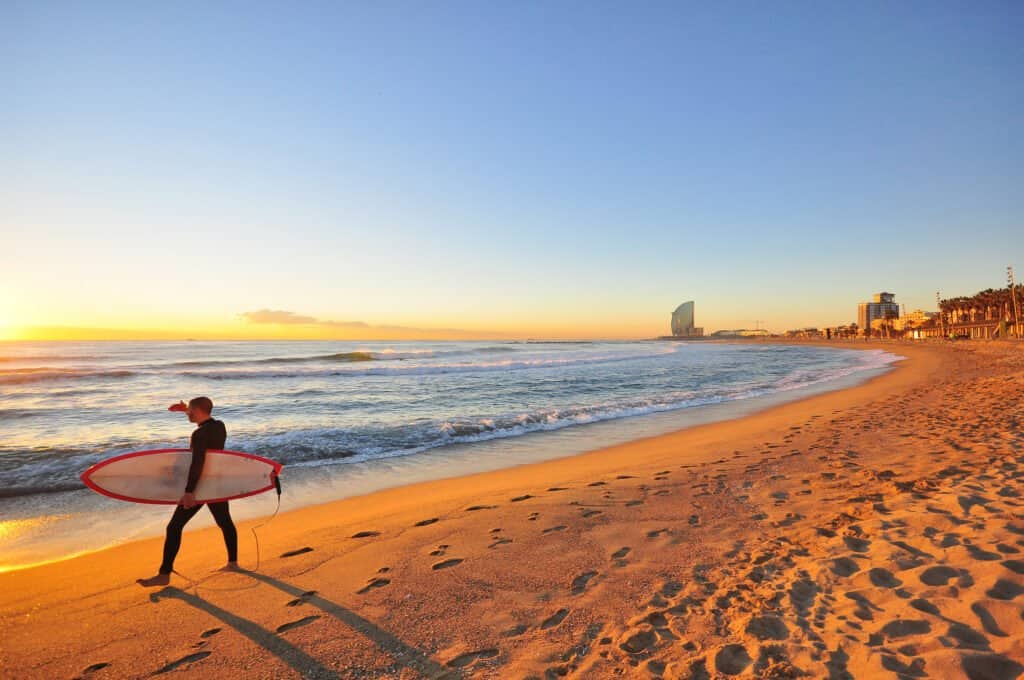
If your tour ends near the waterfront, Barceloneta beach is a short walk east. It's more functional than beautiful, but after two or three hours on cobblestones, sitting near water with something cold makes practical sense.
Park Güell is often added to walking tour itineraries but requires a separate timed-entry ticket for the monumental zone and sits about 30 minutes by Metro from Catalunya. It's better treated as a separate half-day than bolted onto a morning walk.
FAQ
Do I need to book a Barcelona walking tour in advance?
For free tip-based tours, booking is often optional but recommended in peak season since group sizes can fill. Private and small-group paid tours typically require advance reservation, sometimes days ahead in July and August.
How long should I plan for a walking tour?
Most guided tours run 2 to 3 hours. Add extra time if you plan to stop for coffee, browse a market, or step inside any of the sites along the way. A self-guided walk covering the same ground tends to take longer because you set your own pace.
Is the tour accessible for people with mobility limitations?
The Gothic Quarter and El Born have significant cobblestone surfaces and occasional steps with no ramp alternatives. The Eixample grid is far more accessible, with level pavements and proper crossings. If accessibility is a concern, ask operators specifically about their route before booking.
Are children welcome on walking tours?
Most tours allow children. The Gothic Quarter route tends to hold kids' attention well given its narrow lanes and visible Roman ruins. Younger children may struggle with a full 3-hour walk, so a shorter private route is worth considering if you're traveling with anyone under about 7 or 8.
What's the difference between a free tour and a paid tour?
Free tours are tip-based and often run with larger groups of 15 to 25 people. Paid tours tend to be smaller, allow more time for questions, and sometimes include skip-the-line access or small-group conversations that larger free tours can't offer. Both can be excellent depending on the guide.
Reviews
Sign in and mark this place visited to leave a review.
No reviews yet.
Free Trip Planner
Plan your Spain trip with our free planner
Build a day-by-day itinerary with AI suggestions, hand-picked places, and friends. Free forever — no credit card.
Related reading

Things to see near Barcelona Walking Tour

Colonia Guell Gaudi Crypt
Montjuïc Castle
Magic Fountain of Montjuïc