
Children’s Peace Monument
1 Nakajimacho, Naka Ward, Hiroshima, 730-0811, JapanThe Children's Peace Monument in Hiroshima's Peace Memorial Park
The Children's Peace Monument stands at one of the most quietly affecting corners of Hiroshima's Peace Memorial Park, a short walk from the hypocenter of the 1945 atomic bombing. It was built to honor Sadako Sasaki and the thousands of children who died as a result of the bomb, and it draws visitors from all over the world who come to leave paper cranes, say something quiet, and stand still for a moment. If you visit only one spot in the park, this tends to be the one that stays with you longest.
Why the Children's Peace Monument Matters
Sadako Sasaki was two years old when the bomb fell on Hiroshima on August 6, 1945. She survived the initial blast but developed leukemia a decade later. According to Japanese legend, folding 1,000 origami cranes grants a wish, and Sadako began folding them from her hospital bed. She died in 1955 at age twelve. Her story spread through her school, then through Japan, and eventually across the world.
Her classmates launched a campaign to build a monument in her memory. Donations came from children across Japan. The monument was completed in 1958 and has since become a symbol of the global movement for nuclear abolition and children's rights to peace. Every year, children's groups from Japan and abroad send tens of millions of paper cranes to Hiroshima. The cranes are collected here, displayed in glass cases around the monument, and eventually recycled into paper products.
That ongoing act of sending cranes is what keeps this monument alive. It is not a relic. It is still receiving mail.
Quick Facts
- Location: Peace Memorial Park, 1 Nakajimacho, Naka Ward, Hiroshima
- Completed: 1958
- Entry: Free, open at all hours
- Nearest landmark: Roughly a 5-minute walk from the Atomic Bomb Dome (Genbaku Dome)
- Nearest tram stop: Genbaku Dome-mae on the Hiroshima Electric Railway
- Park access: Open year-round, 24 hours
Getting There
Peace Memorial Park sits in central Hiroshima, easily reached by the city's streetcar network. The Genbaku Dome-mae stop on Line 2 or Line 6 deposits you directly at the park's northern edge, right beside the Atomic Bomb Dome. From there, the Children's Peace Monument is about a 5-minute walk south through the park.
If you're coming from Hiroshima Station, the tram ride takes roughly 15 minutes. Buses also run to the park from multiple points around the city. Walking from the Hondori shopping arcade takes around 10 minutes and passes through a neighborhood that shifts noticeably quieter as you approach the park boundary.
The Layout and Experience
The monument itself is a bronze statue of a girl standing atop a granite pedestal, arms raised, holding a golden crane. That figure is Sadako. The pedestal is inscribed with the words "This is our cry, this is our prayer, for building peace in the world." Around the base, glass cases hold thousands of folded paper cranes in every color imaginable, sent by schoolchildren and peace groups and tourists from well over 100 countries.
The effect is not somber in the way you might expect. The cranes are bright. There are always fresh ones arriving. On most days you will find school groups gathered here, Japanese students in uniforms reading the inscription or adding cranes they folded themselves. The monument manages to feel both heavy with history and genuinely hopeful, which is a hard balance to strike.
The surrounding area of the park is open lawn with mature trees, benches, and paths that connect to the Peace Memorial Museum to the south and the Cenotaph for the Atomic Bomb Victims nearby. You can spend a focused 20 minutes here or use it as an anchor for a longer half-day walk through the whole park.
History and Background
Peace Memorial Park was built on land that before 1945 was one of Hiroshima's busiest commercial and residential districts. After the bombing, the city made a deliberate choice to dedicate this ground to memory rather than rebuilding it for commerce. The park was designed by architect Kenzo Tange and opened in 1954.
The Children's Peace Monument was proposed and funded by Sadako's classmates at Noboricho Elementary School after her death in 1955. They raised money from children across Japan. The sculptor was Kazuo Kikuchi. When the monument was unveiled in 1958, it represented something unusual for a memorial: it was built by children, for children, asking for a future rather than simply mourning the past.
Sadako's story was later introduced to Western readers through the 1977 book "Sadako and the Thousand Paper Cranes" by Eleanor Coerr, which became a standard reading in schools across North America and Europe. That book is largely responsible for the international flow of cranes that continues to this day.
Best Time to Visit
August 6 is the anniversary of the bombing and the date of the annual Peace Memorial Ceremony. The park draws enormous crowds on that day, and the atmosphere is intensely moving, but you should expect limited movement and a very different kind of visit than on a quiet weekday. If you want space to reflect, a weekday morning outside of summer school holidays tends to be calmer.
Spring brings cherry blossoms to the park, which creates a complicated but beautiful contrast. The monument looks particularly striking surrounded by falling petals. Winter mornings, when mist sometimes sits low over the Motoyasu River nearby, are among the quietest times to visit.
Photography Tips
The monument faces roughly east, so morning light catches the bronze figure well. Afternoon light can produce strong shadows on the inscription. If you want to photograph the crane displays without crowds, arrive before 9am on a weekday.
The wide shot that includes the pedestal, the statue, and the tree line behind it works best from about 15 meters back on the main path. Getting low to include the crane cases in the foreground with the statue above is a framing that many visitors miss. The cranes themselves, especially the dense arrangements in the glass cases, photograph well in overcast light without harsh glare on the glass.
Combining with Nearby Attractions
The Children's Peace Monument is one stop on a natural circuit through Peace Memorial Park. From here, it is a short walk to the Cenotaph for the Atomic Bomb Victims and the Flame of Peace, and then on to the Peace Memorial Museum, which provides deep historical context for everything you see in the park. Budget at least two hours for the museum if you plan to read exhibits carefully.
The Atomic Bomb Dome, a UNESCO World Heritage Site since 1996, sits at the northern tip of the park. It is the skeletal remains of the Hiroshima Prefectural Industrial Promotion Hall, one of the few structures that partially survived the blast. Seeing the Dome and the Children's Peace Monument on the same visit gives you two very different registers of the same event: ruin and renewal.
Across the Motoyasu River, the Nakajima district has cafes and small restaurants if you need a break. Hiroshima's famous okonomiyaki district, Okonomi-mura, is a short tram ride or 20-minute walk away.
Practical Tips
- Entry is free and the monument is accessible at any hour, though the surrounding park is best visited in daylight.
- If you want to leave paper cranes, there are designated collection points at the monument. Cranes left here are genuinely processed and used, not discarded.
- The park has public restrooms near the Peace Memorial Museum and at several points along the main paths.
- Benches are available throughout the park if you need to sit and take time before or after your visit.
- Hiroshima can be very hot and humid in July and August. Carry water if you are visiting in summer.
- Most signage in the park is available in Japanese and English. The monument inscription is also rendered in English on the base.
- Respectful, quiet behavior is the norm here. School groups are frequent, so expect some activity even on quiet mornings.
FAQ
Can I fold and leave my own cranes at the monument?
Yes. The monument has designated collection points for paper cranes. You can fold them yourself and leave them, or purchase pre-folded cranes at some shops near the park. The cranes collected here are eventually repurposed into paper goods, so they are not wasted.
Is the Children's Peace Monument suitable for children?
Most families find it appropriate, and many Japanese school trips include it as a required stop. The monument focuses on hope rather than graphic imagery. The Peace Memorial Museum nearby has sections that are more intense and that parents may want to preview before bringing young children.
How long should I plan to spend at the monument?
The monument itself can be experienced in 15 to 20 minutes, but most visitors linger longer, especially if school groups are present or if you want to read the surrounding displays about Sadako's story. As part of a full Peace Memorial Park visit, plan for at least two to three hours total.
Is there an admission fee for Peace Memorial Park?
The park itself is free and open at all hours. The Peace Memorial Museum charges a general admission fee, which is modest and separate from the park.
Reviews
Sign in and mark this place visited to leave a review.
No reviews yet.
Free Trip Planner
Plan your Hiroshima trip with our free planner
Build a day-by-day itinerary with AI suggestions, hand-picked places, and friends. Free forever — no credit card.
Things to see near Children’s Peace Monument

Miyajima Public Aquarium
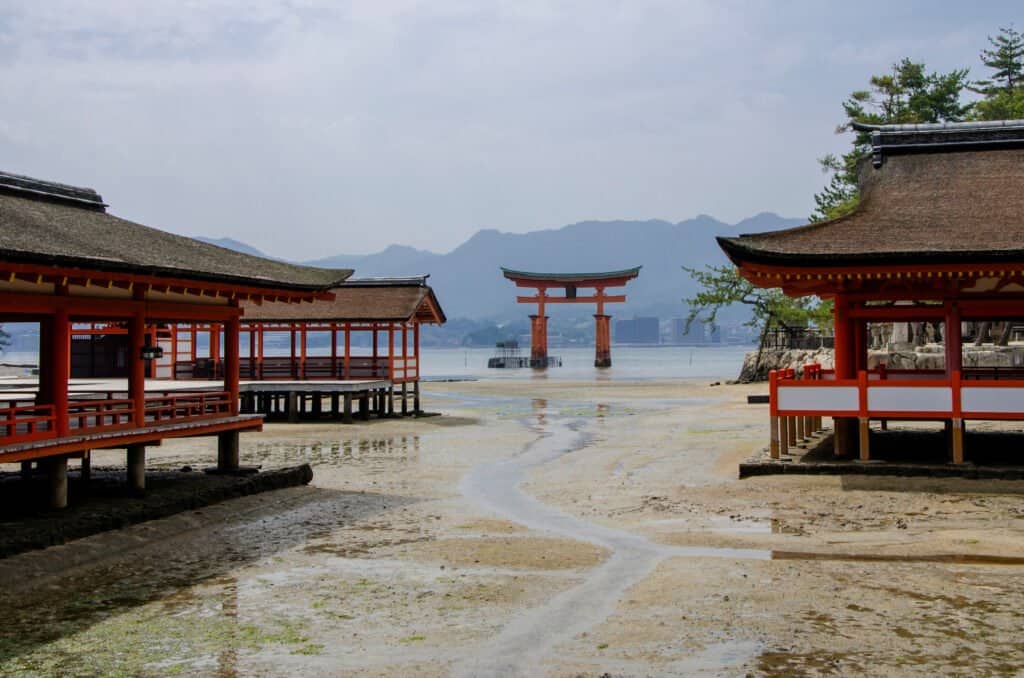
Itsukushima Jinja

Hiroshima Peace Memorial Museum

Peace Memorial Park – Hiroshima
More places in Hiroshima

Hiroshima Orizuru Tower

Shukkei-en Garden

Atomic Bomb Dome
