Overview
Field Gate stands in the historic core of Colonia del Sacramento, a UNESCO World Heritage town on Uruguay's west bank facing the Río de la Plata. This restored colonial gateway marks the boundary of the old fortified settlement, giving visitors a tangible entry point into the 17th century Portuguese town that became one of South America's most atmospheric heritage sites. The gate itself is modest in scale but carries outsized significance: it represents the physical threshold between the modern town and the carefully preserved district where cobblestone streets, whitewashed buildings, and period architecture transport you backward in time.
Why this place matters
Colonia del Sacramento was founded in 1680 as a Portuguese settlement, and Field Gate was part of the defensive infrastructure protecting the town's perimeter. Though the settlement changed hands several times between Portuguese and Spanish rule over the centuries, the architectural and urban layout remained rooted in that original Portuguese colonial design. The gate itself embodies that layered history. Walking through it isn't just a photograph opportunity; it signals entry into a different era. The town's entire layout radiates from the fortified center, and Field Gate marks where that protected zone begins.
The gate has become iconic in how visitors experience Colonia. Most approach it from the modern town side, and stepping through feels like crossing a temporal boundary. UNESCO's recognition of Colonia del Sacramento in 1995 included the entire old town district, of which Field Gate is a defining visual marker.
Quick facts
- Located in the heart of Colonia del Sacramento's historic district, walkable from most accommodations
- Part of a UNESCO World Heritage Site designated in 1995
- The town was founded in 1680 by the Portuguese
- Free to pass through; no tickets or entry fees required
- Accessible year-round, most days during daylight hours
- Approximately 45 minutes by car from Montevideo, or a short ferry ride across the Río de la Plata from Buenos Aires
Getting there
If you're arriving by car from Montevideo, take Route 2 west toward Colonia. The drive takes roughly 45 minutes depending on traffic. Once in town, follow signs toward the historic center (centro histórico). Street parking exists near Field Gate, though the narrow cobblestone streets limit vehicle access to the immediate area. Most visitors leave cars in the modern town zone and walk the final few blocks.
The ferry is another option if you're coming from Buenos Aires. Two ferry operators run services across the Río de la Plata; the crossing takes around 50 minutes to an hour. Once you arrive at the ferry terminal in Colonia, Field Gate is roughly a 10-minute walk northward through the town streets.
Within Colonia itself, everything is walkable. The old town is compact enough that you can reach Field Gate from any corner within 15 minutes on foot. If you're staying in the modern commercial district, head toward Calle Manuel Lobo or Avenida General Flores, both of which lead toward the historic zone where Field Gate sits.
The layout and experience
Field Gate appears as a simple arched stone passage, restored but recognizable as a colonial defensive structure. It's not a monumental gateway in the style of European fortress entrances, but rather a practical aperture in what was once a wall surrounding the settlement. The gate itself is narrow enough that pedestrian traffic flows through easily, but vehicles cannot pass.
The experience of approaching Field Gate depends on which direction you come from. If you enter from the modern town side (heading toward the old district), you're walking uphill slightly on narrower streets that signal the transition into heritage territory. The buildings around the gate tend to be whitewashed or painted in soft pastels, with tile roofs and wooden shutters typical of Portuguese colonial style. Plantings of bougainvillea and other flowering vines soften the stone walls.
On the other side of the gate, the old town opens into a network of pedestrian streets radiating outward. The main plaza, Plaza Mayor, sits a short walk away. The sensation is deliberately preserved: no modern signage clutters the immediate area, and the soundscape changes from the busier modern town to the quieter rhythm of the heritage district.
Main highlights
Field Gate itself is the primary visual attraction at this specific location, but it functions as a gateway to the larger historic district. Once through, you enter a zone containing multiple heritage sites within a few minutes' walk.
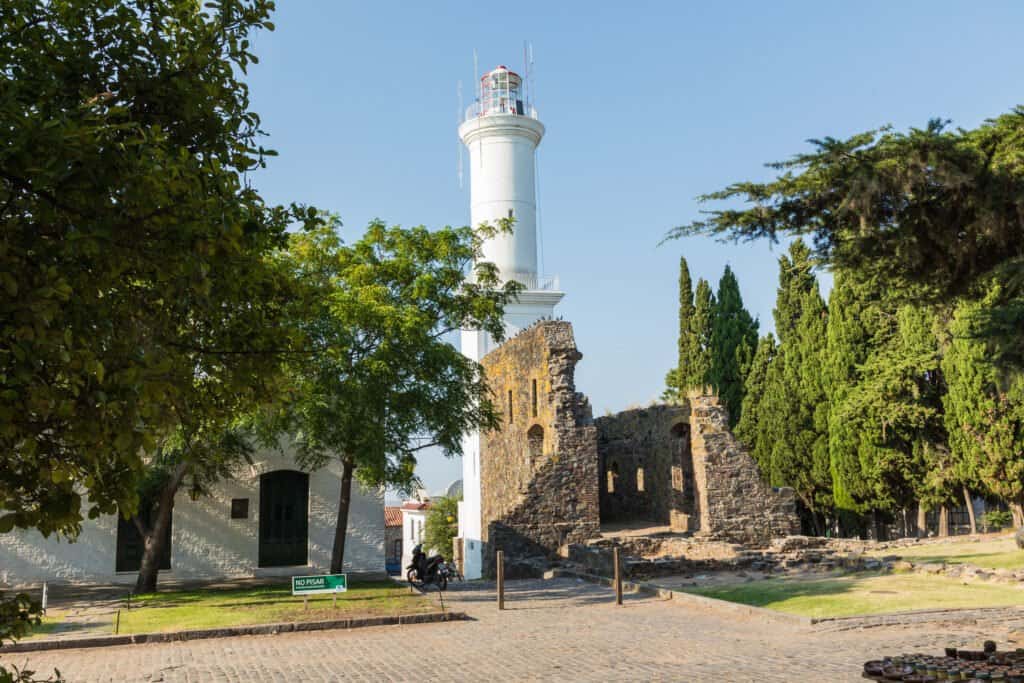
The Museum of Uruguayan History (Museo Portugués) lies just beyond the gate and occupies a restored colonial residence. The Basilica del Santísimo Sacramento, built in 1680 alongside the town's founding, stands nearby on the main plaza. The lighthouse (Faro de Colonia) offers views across the Río de la Plata toward Argentina, roughly a 5-minute walk from the gate. The old city walls themselves, partially restored, form a walking loop around the heritage zone.
Street-level details reward close attention. Doorways feature wrought iron hardware and heavy wooden doors. Corners of buildings are marked with hand-painted tiles and street names in Portuguese style. Small shops, galleries, and cafes occupy ground floors of historic buildings, and many maintain period-appropriate aesthetics.
History and background
Colonia del Sacramento was established in 1680 by the Portuguese as a strategic outpost on the eastern bank of the Río de la Plata. Spain controlled most of the region, so the Portuguese settlement represented a contested toehold. The town was fortified accordingly, with Field Gate forming part of that defensive perimeter.
The settlement changed hands multiple times. Spanish forces took it in 1705, the Portuguese regained it in 1715, and Spain captured it again in 1762. By the time the Spanish-Portuguese wars ended in the late 18th century, Colonia had transitioned under Spanish rule, though the Portuguese architectural and urban character remained embedded in its layout and building styles.
The gate you see today is a restoration. The original structure would have served a practical military function, controlling movement in and out of the fortified core. As defensive technology evolved and the town's strategic importance diminished, the gate lost its military purpose. However, its symbolic and architectural value preserved it. Modern restoration work has maintained the colonial appearance while ensuring structural integrity for the foot traffic it now receives.
Tickets and entry
There is no ticket or entry fee to pass through Field Gate. It remains open to pedestrian access at all hours, though the surrounding historic district tends to be busiest during daylight hours and quieter in early morning or evening.
If you plan to visit museums or other attractions within the heritage zone, those do charge separate admission. The Museum of Uruguayan History and other cultural institutions operate on their own schedules and fee structures. Most museums in Colonia are mid-range in cost and offer general admission options, with some providing reduced rates for students or group visitors.
Best time to visit
Colonia del Sacramento can be visited year-round. Summer months (December through February) bring warmer weather and longer daylight, making the cobblestone streets pleasant for extended walking, though crowds also increase. Spring (September through November) and autumn (March through May) tend to offer mild temperatures and fewer tourists, making for a more contemplative experience of the historic district.
Winter (June through August) is cooler and occasionally rainy, but the town's compact size and covered arcades in some streets make it navigable. Weekday visits, particularly Tuesday through Thursday, are typically quieter than weekends, when Buenos Aires day-trippers and Uruguayan visitors increase foot traffic.
If you're sensitive to crowds, arriving at Field Gate early in the morning (before 10 AM) or later in the afternoon (after 4 PM) tends to mean fewer other visitors. Photography in soft early light or late-afternoon golden light also renders the colonial architecture more dramatically.
Photography tips
Field Gate photographs well from multiple angles. The arched opening itself frames nicely when you position yourself to capture the passage with the heritage district visible through it. The whitewashed walls flanking the gate create strong contrast and texture, especially in direct sun.
The surrounding cobblestone streets provide foreground interest. Early morning light, when the sun is low and the streets are less crowded, creates long shadows that emphasize the texture of stone and the geometry of the colonial layout.
If you're documenting the broader experience, include details: the hand-painted street signs, the flowering vines, the doorway hardware, the mix of whitewashed walls with darker roof tiles. These details convey the character of Colonia better than wide shots alone.
The view from the gate looking back toward the modern town offers a different perspective, showing the transition between eras. At dusk, when street lamps illuminate the gate and the surrounding buildings, the atmosphere becomes particularly evocative for photography.
Facilities and preparation
The immediate area around Field Gate has limited facilities. There are no restrooms at the gate itself, but the historic district contains several cafes and restaurants within a 2-minute walk where you can use facilities and purchase refreshments. The modern town zone, just outside the gate on the opposite side, has more conventional services including banks, pharmacies, and shops.
Walking through Colonia's heritage district requires comfortable shoes with good grip. The cobblestones are uneven and can be slippery when wet. Bring water, especially in warmer months. The town has limited shade in some areas, so sun protection (hat, sunscreen) is advisable. In cooler months, a light jacket helps, as the wind off the Río de la Plata can be brisk.
There is no admission process at the gate itself. Simply walk through. If you're visiting during siesta hours (roughly 1 PM to 4 PM on some days), some shops and smaller attractions may close, though the gate and streets remain accessible.
Combining with nearby attractions
Field Gate functions as an entry point to the larger Colonia del Sacramento experience. Plan to spend at least 2 to 3 hours exploring the heritage district, including the gate and surrounding streets, the Plaza Mayor, the Basilica, and the lighthouse.
The Museum of Uruguayan History, located steps from the gate, is worth 45 minutes to an hour if you're interested in the town's colonial and independence-era history. The lighthouse climb takes 15 to 20 minutes and offers views across the Río de la Plata toward Argentina.
If you're based in Colonia for the day or overnight, consider combining your Field Gate visit with a meal at one of the restaurants occupying restored colonial buildings in the historic district. Several galleries and artisan shops also cluster near the gate, offering local crafts and contemporary art alongside the historical setting.
Sample visit plan
Arrive at Field Gate in early morning, before the town becomes busy. Spend 10 to 15 minutes photographing and examining the gate from multiple angles. Then walk through into the heritage district and explore the surrounding cobblestone streets for 20 to 30 minutes, allowing yourself to wander without a strict itinerary.
Head to the Plaza Mayor and visit the Basilica del Santísimo Sacramento if it's open. Walk the perimeter of the old town walls, which takes roughly 20 to 30 minutes. If you have energy, climb the lighthouse for views.
Return to a cafe near the gate for lunch or coffee. Spend the afternoon in the museums or browsing galleries. If you're staying overnight, return to Field Gate at sunset to see how the light and atmosphere change.
Practical tips
- Visit early morning or late afternoon to avoid peak crowds and capture better light for photographs
- Wear comfortable walking shoes with good grip; cobblestones are uneven and can be slippery when wet
- Bring water and sun protection, especially in warmer months
- There are no restrooms at the gate itself; use facilities in nearby cafes or the modern town zone
- The heritage district is compact and walkable; you don't need a map to explore, though one can help you locate specific museums
- Many restaurants and shops close for siesta in early afternoon; plan your timing accordingly
- If arriving by ferry from Buenos Aires, allow 10 minutes to walk from the terminal to Field Gate
FAQ
Is there a fee to walk through Field Gate? No, it's free to pass through. However, museums and other attractions in the historic district charge separate admission.
How long should I spend at Field Gate itself? The gate takes 10 to 15 minutes to examine and photograph. Most visitors spend 2 to 3 hours exploring the surrounding heritage district.
Can cars drive through Field Gate? No, the gate is pedestrian only. Vehicles cannot pass through, which helps preserve the character of the historic district.
What's the best time of day to photograph Field Gate? Early morning (before 10 AM) or late afternoon (after 4 PM) offer the best light and fewest crowds. Golden hour at sunset creates particularly atmospheric images.
Is Colonia del Sacramento worth a day trip from Montevideo or Buenos Aires? Yes. From Montevideo it's a 45-minute drive; from Buenos Aires it's a ferry ride of around an hour. Most visitors find a half-day to full day in Colonia sufficient to experience Field Gate and the main heritage sites.
```Opening hours
Reviews
Sign in and mark this place visited to leave a review.
No reviews yet.
Free Trip Planner
Plan your Colonia del Sacramento trip with our free planner
Build a day-by-day itinerary with AI suggestions, hand-picked places, and friends. Free forever — no credit card.
Things to see near Field Gate

La Bombonera
Colonia del Sacramento Lighthouse

Calle de los Suspiros