
Fuente Portuguesa
G4HX+FMP, 70000 Colonia del Sacramento, Colonia Department, Uruguay Posted by Brandon B.Admin
Fuente Portuguesa – Colonia del Sacramento, Uruguay
Overview
The Fuente Portuguesa (Portuguese Fountain) is one of the oldest and most charming landmarks in Colonia del Sacramento, Uruguay’s UNESCO-listed colonial gem. Built by Portuguese settlers in the early 18th century, this stone fountain once served as the town’s main source of fresh water. Located within the historic Barrio Histórico, near the City Gate (Puerta de la Ciudadela), it reflects the city’s early urban planning and the practical ingenuity of its colonial inhabitants. Surrounded by cobbled streets and shaded by trees, the fountain is a peaceful reminder of Colonia’s everyday life centuries ago. Though simple in design, it carries immense historical value, symbolizing the blend of Portuguese architecture, craftsmanship, and community that defines the old town.
Why Visit
- See one of Colonia’s oldest surviving structures from the Portuguese colonial era
- Learn about the city’s early water systems and daily life in the 1700s
- Explore a beautifully preserved UNESCO World Heritage landmark
- Take photos of a site that perfectly captures Colonia’s old-world charm
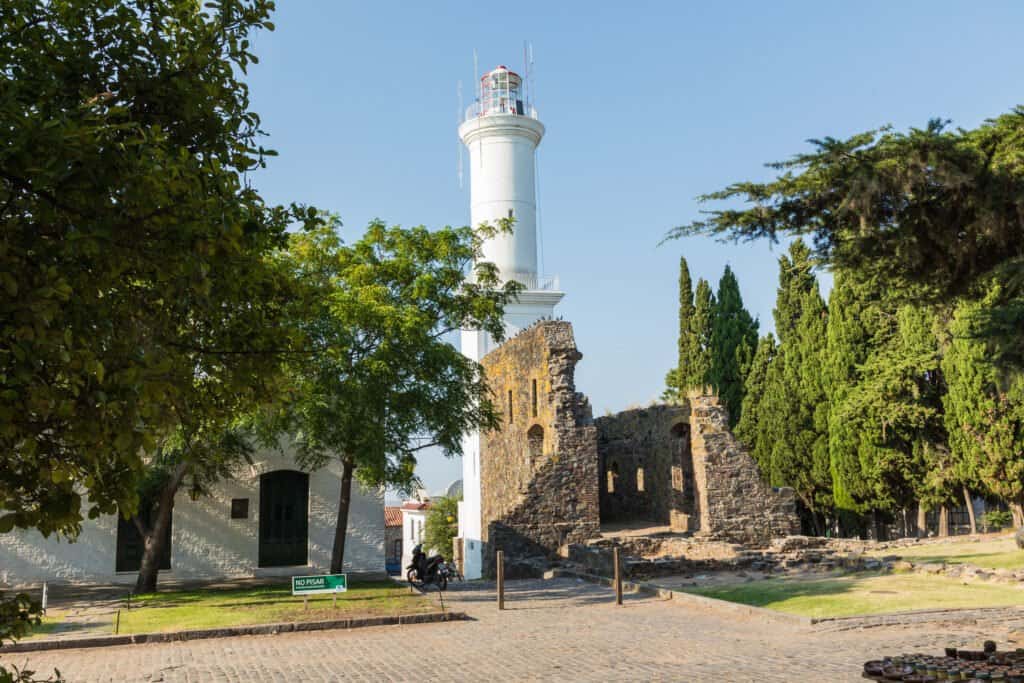
- Combine your visit with nearby attractions like the City Gate and Lighthouse
Highlights
- 18th-Century Stonework: Constructed with solid local stone and featuring the original steps leading down to the spring
- Arched Opening: A small vaulted entrance where residents once drew water with buckets
- Restored Details: Subtle renovations have preserved its authenticity while improving access
- Photogenic Setting: Framed by ivy and cobblestones, it’s one of the most photographed corners of the Barrio Histórico
- Proximity to the City Walls: Located just inside the fortified entrance of Colonia’s old town
History & Cultural Significance
The Fuente Portuguesa was constructed in 1746 by Portuguese settlers during their occupation of Colonia del Sacramento, which alternated between Portuguese and Spanish control for over a century. At that time, the fountain was the main source of fresh water for the fortified settlement. Built over a natural spring, it provided clean water to residents and soldiers living within the walls. The fountain’s stone vault, carved steps, and drainage channel reveal advanced engineering for the era, designed to both protect the water supply and make it easily accessible. After the Spanish took control of Colonia in 1777, the fountain continued to serve local residents. Over the years, it became not only a practical feature but also a symbol of the Portuguese contribution to the city’s architectural identity. Today, it remains one of the best-preserved examples of 18th-century Portuguese public infrastructure in South America.
Typical Costs & Tickets
Visiting the Fuente Portuguesa is completely free, and it’s open to the public 24 hours a day. The fountain is located in a small public square within the Barrio Histórico, just a few steps from the Puerta de la Ciudadela. No tickets or reservations are required. Many visitors see it as part of a guided walking tour of the historic district, which typically costs around US$10–20 per person. Informational signs near the fountain describe its history in both Spanish and English, allowing for self-guided exploration. Because of its small size, most travelers spend 10–15 minutes at the site before continuing through the old town.
Best Time to Visit
The Fuente Portuguesa can be visited at any time of day, but it’s particularly beautiful in the morning light when the sun illuminates the stone arch and surrounding walls. Late afternoon and sunset also offer soft, golden lighting perfect for photography. If visiting during peak tourist hours, mornings are quieter and allow for uninterrupted exploration. The site is shaded by trees, making it comfortable even in summer, and during the rainy season (October–March), the moss-covered stones take on a rich, green hue that adds to its charm.
Nearby Experiences
The fountain is surrounded by several of Colonia del Sacramento’s most important landmarks. Just a few meters away is the Puerta de la Ciudadela, the original gateway into the fortified town. Continue walking to reach the Plaza Mayor 25 de Mayo and the Basilica del Santísimo Sacramento, Uruguay’s oldest church. To the south lies the Colonia Lighthouse and the Ruins of the Convent of San Francisco Xavier, offering panoramic views of the city and the Río de la Plata. The nearby Museo Portugués and Museo Municipal provide excellent context on the era when the fountain was built. After sightseeing, visitors can enjoy a coffee or local wine at one of the charming cafés that line the nearby cobblestone streets.
Travel Tips
- Wear comfortable shoes—the cobblestone streets around the fountain can be uneven
- Visit early in the morning for the best photos without crowds
- Read the on-site plaque for historical details in Spanish and English
- Combine with a guided tour of the Barrio Histórico to learn more about Portuguese urban design
- Bring water, as there are few shops within the old quarter itself
Fun Facts & Local Legends
- The fountain’s natural spring was once the main water supply for the Portuguese garrison stationed in Colonia
- Legend says that the spring never dried up, even during droughts, earning it a reputation for being “blessed”
- The fountain’s design mirrors those found in Portuguese towns such as Évora and Lagos
- Locals sometimes toss coins into the basin for good luck, though it’s discouraged to preserve the site
Opening hours
Reviews
Sign in and mark this place visited to leave a review.
No reviews yet.
Free Trip Planner
Plan your Uruguay trip with our free planner
Build a day-by-day itinerary with AI suggestions, hand-picked places, and friends. Free forever — no credit card.
Things to see near Fuente Portuguesa

La Bombonera
Colonia del Sacramento Lighthouse

Calle de los Suspiros
