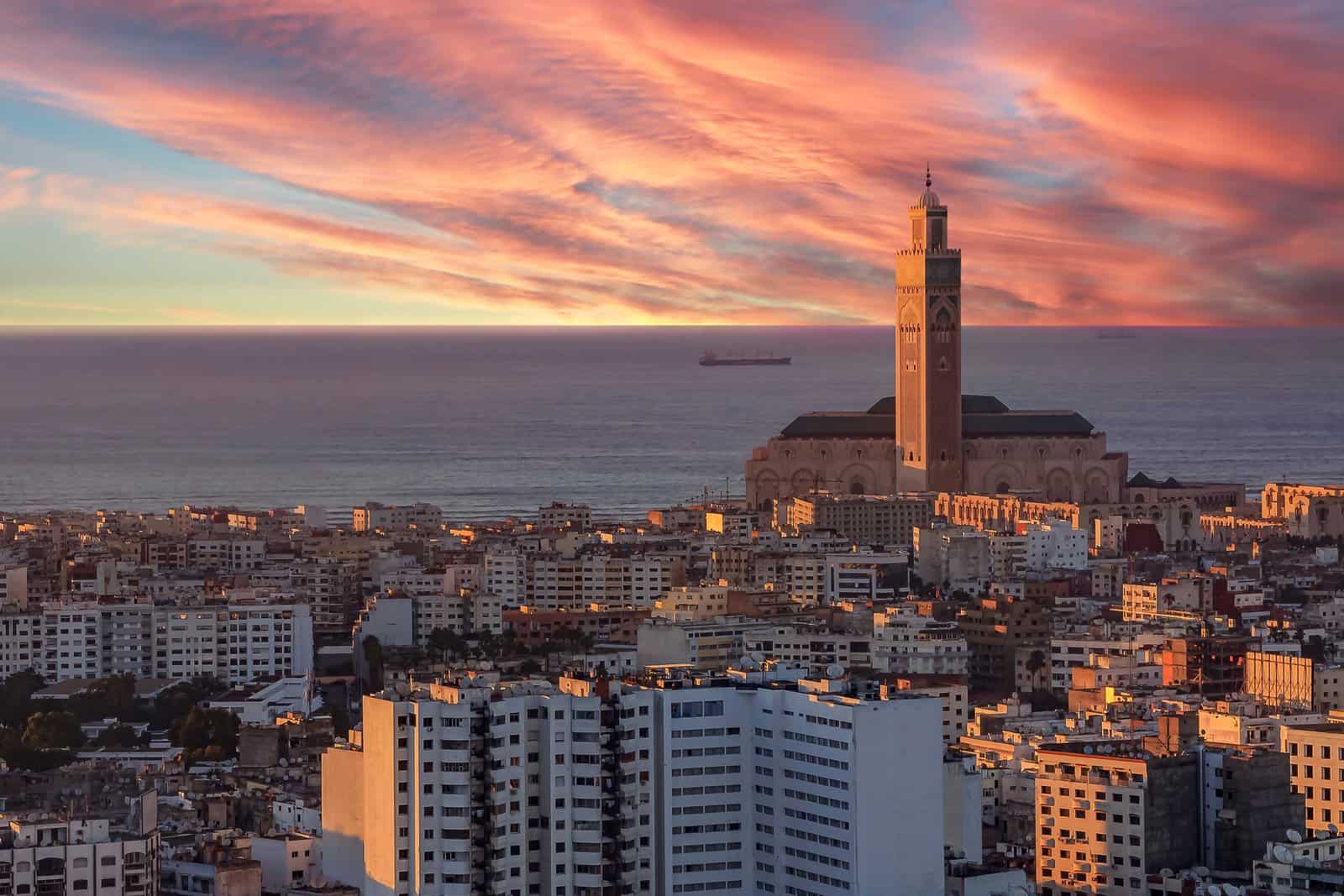
Grand Mosque of Tangier
76 Rue de la Marine, Tangier 90030, MoroccoThe Grand Mosque of Tangier sits at 76 Rue de la Marine, a narrow street that runs downhill through the old medina toward the port. It is the principal mosque of the old city, and if you spend any time walking the medina's tangle of lanes you will pass it, probably more than once, often without quite meaning to. Non-Muslim visitors cannot go inside, which is standard practice at mosques across Morocco, so for most people this is a building you experience from the street: the minaret rising above the rooftops, a tiled doorway catching the light, the sound of the call to prayer rolling down toward the harbor five times a day.
Why the Grand Mosque of Tangier matters
What makes this site worth pausing for isn't really the current structure, which dates mostly from the late seventeenth century with later additions. It's what lies underneath it. The ground beneath the mosque has carried a Roman temple, a Portuguese cathedral, and now this mosque, in that order. Three empires, three religions, one patch of raised ground above the harbor. If you wanted the short version of Tangier's entire history, this corner of the medina is about as compact a summary as the city offers.
Tangier's position at the mouth of the Mediterranean made it a prize for whoever controlled the strait, and the city changed hands more times than most. The Romans knew it as Tingis. The Portuguese seized it in 1471 and held it for close to two centuries, building fortifications and a cathedral on the high ground overlooking the port. In 1661 Tangier passed to England as part of the dowry when Catherine of Braganza married Charles II, and for roughly two decades it was an English possession, garrisoned and fortified at considerable expense. The English withdrawal in 1684 was not a quiet handover. Before leaving, English forces demolished much of what they had built, including the mole that had protected the harbor. Moroccan forces under the Alaouite sultan Moulay Ismail moved in afterward, and the mosque that stands today was built, or substantially rebuilt, on the site in the years that followed, replacing the cathedral that had stood there under Portuguese rule.
Quick facts
- Location: 76 Rue de la Marine, in the old medina of Tangier, downhill toward the port
- Current structure dates mainly from the late seventeenth century, after the 1684 English withdrawal, with later extensions
- Earlier buildings on the same site included a Roman temple and a Portuguese cathedral
- Entry is restricted to Muslims, as with the great majority of mosques in Morocco
- Visitors typically see the minaret and entrance doorway from the street rather than the interior
Getting there
The mosque sits inside the medina walls, close to the area that slopes down from the Petit Socco toward the port gates. Most visitors reach it on foot, as part of a general wander through the old city rather than as a dedicated destination. If you're coming from the Petit Socco, head toward Rue de la Marine and follow it downhill. You'll pick up the mosque's minaret above the rooflines before you reach the doorway itself. The medina's streets here are narrow and not always obviously named, so treat the walk as part of the experience rather than something to navigate precisely. Taxis can drop you near the medina gates but cannot get close to the mosque itself, since the surrounding lanes are pedestrian only.
The layout and experience
From the street, what you'll notice first is the minaret, square-sectioned in the style common to Moroccan mosques, often tiled near the top in green or a mix of colors depending on when that section was last restored. The main entrance on Rue de la Marine has a decorated doorway, usually the most photogenic element from outside, with zellige tilework and carved plasterwork framing the opening. Through the door, if it happens to be open, you may catch a glimpse of the courtyard or ablution area, but this is a passing view rather than an invitation.
Since entry is reserved for Muslims, there is no ticketed visit, no guided tour, and no interior itinerary to follow. The experience is almost entirely about context: standing on a street that has carried a temple, a cathedral, and now a mosque, and understanding what that layering says about the city around you. People who want to see the inside of a working mosque in Tangier sometimes look instead to guided cultural visits that are occasionally arranged through local associations, though these are irregular and not something to plan a trip around.
Best time to visit
Early morning or late afternoon tends to work best, partly for the light on the tilework and partly because the surrounding lanes are less congested with market traffic. If you happen to be nearby around the call to prayer, it's worth stopping for a few minutes rather than hurrying past. The street empties out somewhat as worshippers head in, and the sound carries through the medina in a way that's easy to miss if you're moving quickly. Friday midday draws the largest crowds of worshippers, which is interesting to witness from a respectful distance but not a convenient time to linger directly in front of the entrance.
Photography tips
The doorway is the obvious shot, and the tilework photographs well in the raking light of early morning. The minaret is harder to frame well from street level because the lane is narrow, so you may need to back up toward the Petit Socco end of Rue de la Marine to get the full height in frame. As with photographing anyone at prayer or entering a mosque anywhere in Morocco, be discreet. Avoid photographing worshippers directly, and lower the camera if someone seems uncomfortable.
Combining with nearby attractions
The mosque fits naturally into a walk that covers the lower medina. The Petit Socco, with its cafés and the old Cinema Rif nearby, is a short walk uphill. The Kasbah and its museum sit higher still, reachable by a steeper climb through narrower streets, and reward the effort with views over the strait. Downhill from the mosque you reach the port gates, where the medina gives way to the harborfront and the newer part of the city. The American Legation Museum, one of the more unusual small museums in Tangier, is also within easy walking distance and worth the detour if you have an interest in the city's diplomatic history, since Morocco was the first country to recognize American independence and Tangier housed the first American diplomatic property abroad.
Practical tips
- Dress modestly when walking past, as you would anywhere near a working mosque, even though you won't be entering
- Non-Muslims cannot go inside, so don't expect or request entry at the door
- Visit as part of a medina walk rather than a standalone stop, since there's no ticket office or formal visitor experience
- Wear comfortable shoes. The surrounding lanes are stepped, uneven in places, and often slick after rain
- Keep voices down and avoid flash photography near the entrance, particularly around prayer times
FAQ
Can non-Muslims enter the Grand Mosque of Tangier?
No. As with nearly all mosques in Morocco, entry is reserved for Muslims, so visitors see the building from the outside.
Is there an admission fee?
There's nothing to pay, since there's no public interior visit. Viewing the exterior from Rue de la Marine is free.
What was on the site before the mosque?
Historical layers beneath the current building include a Roman temple and a Portuguese cathedral, reflecting Tangier's long succession of rulers before the current mosque was built in the late seventeenth century.
How long should I spend here?
A few minutes is enough to take in the doorway and minaret. Most people fold it into a longer walk through the medina rather than treating it as a separate stop.
Is it easy to find?
It's on Rue de la Marine, a main route between the Petit Socco and the port, so most people encounter the Grand Mosque of Tangier simply by walking that stretch of the medina.
Reviews
Sign in and mark this place visited to leave a review.
No reviews yet.
Free Trip Planner
Plan your Morocco trip with our free planner
Build a day-by-day itinerary with AI suggestions, hand-picked places, and friends. Free forever — no credit card.