Intihuatana Stone
Machupicchu, Cusco, Peru Posted by Brandon B.Admin
Intihuatana Stone at Machu Picchu
The Intihuatana Stone sits in the sacred heart of Machu Picchu, a precisely carved granite altar that dominates the Temple of the Sun complex. Built around 1450 during the reign of Inca Pachacuti, this two-meter-tall stone pillar remains one of the most enigmatic structures at the site. Its name translates to "hitching post of the sun" in Quechua, and archaeologists believe the Inca used it as an astronomical observation tool to track the winter solstice and other celestial events. Unlike many stone structures at Machu Picchu, the Intihuatana Stone was never toppled or deliberately destroyed by Spanish conquistadors, making it a rare surviving example of Inca sacred architecture in its original position.
Why This Place Matters
The Intihuatana Stone represents the pinnacle of Inca engineering and astronomical knowledge. The stone's precise angles and alignment with solar events suggest the Inca possessed sophisticated understanding of celestial mechanics. Its survival through five centuries of earthquakes and weathering speaks to the structural integrity of its construction, as does its placement atop the highest point of the Temple of the Sun complex.
For visitors, touching the stone has become a ritual act. Many travelers believe contact with the Intihuatana transfers spiritual energy or grants clarity. Whether you subscribe to this belief or approach it purely as an archaeological artifact, the stone commands attention. It occupies a central position in how visitors navigate and experience Machu Picchu's upper terraces.
Quick Facts
- Height: approximately 2 meters tall above the carved platform
- Age: constructed around 1450, roughly 100 years before Spanish conquest
- Material: a single piece of precisely fitted granite
- Location: the highest point of the Temple of the Sun, in the Sacred Plaza area
- Accessibility: free to visit as part of general Machu Picchu admission
- Best viewed: early morning, when fewer visitors are present and light angles favor photography
Getting There
The Intihuatana Stone requires a walk of 20 to 30 minutes from the main entrance to Machu Picchu. Most visitors arrive at the site via train from Cusco or the Sacred Valley, disembarking at Aguas Calientes station at the base of the mountain. From there, a bus winds upward for about 25 minutes to reach the entrance gate.
Once inside the site, head upward through the Agricultural Sector toward the Urban Sector. The path becomes steeper as you approach the Temple of the Sun. If you're unsure of the route, follow the stone staircases that lead toward the highest structures. Many visitors hire a guide at the entrance; guides typically include the Intihuatana Stone on their standard tours of the site.
The stone sits at an elevation of about 2,430 meters. If you're arriving from lower altitudes, allow a few hours for acclimatization before attempting the walk. The air is noticeably thinner at this height.
The Layout and Experience
The Intihuatana Stone occupies a carved platform within the Temple of the Sun complex. The platform itself is engineered with multiple stone levels, creating a tiered effect that frames the pillar. The stone points upward at a slight angle, not perfectly vertical, which some researchers believe allows it to align with the sun's position at specific times of year.
The platform is open to foot traffic. Most visitors approach from the south, climbing a steep set of stone steps. Once you reach the upper level, the stone rises directly in front of you. The carved base shows evidence of intentional shaping, with what appear to be directional markers or astronomical reference points carved into the surrounding platform.
The experience changes dramatically depending on when you visit. In early morning, before 8 AM, you may have the platform almost to yourself. By 10 AM, crowds build. By afternoon, the area becomes congested. The angle of sunlight also shifts throughout the day, revealing different facets of the carved surfaces and creating distinct shadow patterns on the platform.
Main Highlights
The primary highlight is the stone itself. Its surface shows tool marks from Inca stoneworking, evidence of the labor required to shape such a massive piece of granite. The angles and planes of the cuts appear deliberate, not random. Some faces catch the light in ways that suggest intentional orientation.
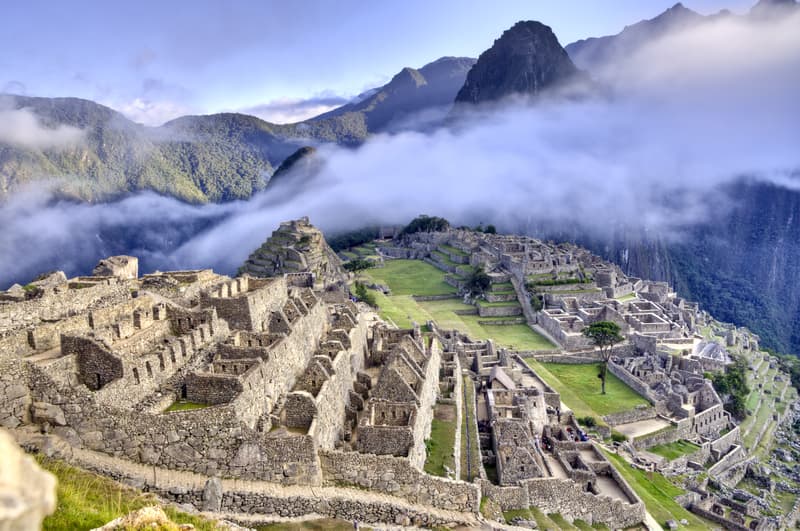
The surrounding platform offers views of the entire Sacred Plaza and the wider Machu Picchu complex. From this vantage point, you can see the Condor Temple, the Temple of Three Windows, and the steep agricultural terraces that cascade down the mountainside. On clear days, the view extends to Huayna Picchu, the distinctive peak that rises to the north.
The carved channels and grooves in the platform around the stone hint at ritual use. Some researchers propose these channels carried water for ceremonial purposes. Others suggest they served astronomical functions, perhaps directing sunlight into specific angles at key times of year.
History and Background
Machu Picchu was constructed in the mid 1400s as a royal estate and sacred ceremonial site. The Intihuatana Stone was built as part of this original construction, not added later. Its placement in the Temple of the Sun indicates its importance to Inca religious and astronomical practice.
The name "Intihuatana" was given by modern researchers and local guides. No contemporary Inca records exist that document the original name or its specific function. What we know comes from the stone's physical properties, its alignment with celestial events, and Inca practices documented in Spanish colonial records.
The Spanish conquest of Peru began in 1532, but Machu Picchu remained unknown to Spanish forces. The site was abandoned gradually over the next century, likely due to disease or administrative decisions by colonial authorities. Because Spanish conquistadors never reached Machu Picchu, they never deliberately destroyed the Intihuatana Stone as they did with many other Inca sacred objects elsewhere in Peru.
Modern rediscovery of Machu Picchu occurred in 1911 when historian Hiram Bingham reached the site. Early photographs show the Intihuatana Stone exactly as it appears today, suggesting the stone has remained largely untouched for at least the past 110 years.
Tickets and Entry
The Intihuatana Stone is included in general admission to Machu Picchu. You cannot purchase a separate ticket for the stone alone. Standard admission includes access to all areas of the site, including the Sacred Plaza and Temple of the Sun complex where the stone is located.
Timed entry tickets are required. You choose a specific entry time when purchasing your ticket, typically with 15 or 30 minute entry windows depending on the season and how far in advance you book. The stone is accessible during all hours that Machu Picchu is open to visitors.
If you want a detailed explanation of the stone's history and significance, hiring a guide is worthwhile. Guides can be arranged at the entrance or booked in advance through tour operators in Cusco or Aguas Calientes. Some guides specialize in astronomical and archaeological aspects of the site.
Best Time to Visit
The dry season runs from May through September, offering the clearest skies and most stable weather. June and July tend to be the busiest months. If you prefer fewer crowds, visit in May or September when weather remains good but visitor numbers drop.
The winter solstice, around June 21, is a significant date for observing the Intihuatana Stone if you're interested in its astronomical function. At this time, the sun's shadow alignment with the stone is at its most dramatic. However, this date also draws devoted visitors, so expect larger crowds.
Early morning visits, regardless of season, offer the best experience. Arriving at the entrance as soon as it opens means you can reach the stone before crowds build. The light is also softer and more photogenic in early hours.
Photography Tips
The stone photographs best in early morning light, when the sun is low and creates strong shadows that emphasize the carved surfaces. Afternoon light tends to flatten the detail and create harsh contrasts. Overcast mornings work well too, providing even, diffuse light across the carved surfaces.
Position yourself to the south or southeast of the stone for the clearest view of its main face. The carved base reveals more detail from this angle. If possible, include the surrounding platform and the wider Sacred Plaza in your frame to convey the stone's context within the site.
The platform itself casts interesting shadows. These shadows move throughout the morning and create compositional opportunities. Return to the same spot at different times of day if you have the flexibility to observe how light transforms the stone.
Avoid using flash photography. The stone's surface is delicate, and flash can distort colors and wash out fine detail. Natural light, even in dim conditions, produces better results.
Facilities and Preparation
Machu Picchu has limited facilities at the site itself. There is a restaurant and gift shop near the entrance, but once inside, you're on your own. Bring plenty of water, especially if you arrive during the dry season. The sun is intense at this elevation, and the stone platform offers minimal shade.
Wear comfortable walking shoes with good grip. The stone staircases and paths can be steep and slippery, particularly if there has been recent rain. A light jacket is useful even in the dry season, as temperature drops significantly at this elevation, particularly in the early morning.
Sunscreen is essential. The sun reflects off the light-colored stone and amplifies UV exposure. A hat with a brim protects both your head and helps reduce glare when viewing and photographing the stone.
Allow at least two hours to reach the stone from the entrance and to spend time observing it. If you want to explore the surrounding Temple of the Sun complex thoroughly, add another hour.
How It Compares to Similar Places
The Intihuatana Stone is unique among Inca sites because it survived in its original location and original form. Most other major Inca astronomical or ceremonial stones were either destroyed by Spanish conquistadors or relocated. The Temple of the Sun in Cusco, for instance, was largely dismantled, with Spanish colonists using its precisely fitted stones to build churches.
Other Inca sites in the region, such as Ollantaytambo or Pisac, contain impressive stonework and astronomical alignments, but the Intihuatana Stone at Machu Picchu is the most intact example of its kind. Its survival makes it archaeologically significant in ways that replicated or reconstructed examples cannot match.
Combining with Nearby Attractions
The Intihuatana Stone sits within the larger Machu Picchu complex, so you can easily combine a visit with exploration of nearby structures. The Temple of Three Windows stands just below the stone, offering an equally impressive example of Inca architecture. The Temple of the Sun, which contains the stone, is itself worth extended study.
The Sacred Plaza, immediately adjacent to the stone, is the ceremonial heart of Machu Picchu. Spending time here allows you to understand the stone within its original context. The Condor Temple, accessible from the Sacred Plaza, is another major site within the complex.
If you're interested in astronomical observation, the Intihuatana Stone pairs well with other Inca observatories and temples designed with celestial alignment. Most guides can point out other structures at Machu Picchu that align with solstices or equinoxes.
Sample Visit Plan
Enter Machu Picchu at your scheduled time, typically early morning. Head directly toward the upper terraces, avoiding the crowds gathering in the lower sections. Allow 20 to 30 minutes to reach the Temple of the Sun complex.
Spend 30 to 45 minutes around the Intihuatana Stone itself. Walk the platform, observe the stone from different angles, and notice the carved details. If you've hired a guide, they will explain the astronomical alignments and construction techniques during this time.
Extend your visit to include the surrounding Sacred Plaza and the Temple of Three Windows. This adds another 45 minutes to an hour. By mid-morning, larger crowds will have arrived, but you'll have seen the primary sites in optimal conditions.
If you have additional time and energy, explore the Agricultural Sector and other areas of the site in the afternoon. Many visitors find that two to three hours total at Machu Picchu is sufficient for a focused visit centered on the Intihuatana Stone and the Sacred Plaza.
Practical Tips
- Arrive at the entrance as early as possible, ideally within the first entry window of the day
- Bring more water than you think you'll need, especially if visiting during dry season
- Wear sturdy, closed-toe hiking shoes with good ankle support and sole grip
- Consider hiring a guide if you want detailed information about the stone's astronomical function and construction
- Visit the stone before 9 AM if possible to avoid peak crowds
- Allow your body to acclimatize to the altitude before exerting yourself on steep paths
- Bring a camera or phone with sufficient battery life, as there are no charging facilities at the site
- Do not touch the stone excessively or lean against it, as oils from skin can damage the carved surfaces over time
FAQ
Can I touch the Intihuatana Stone? Yes, touching the stone is permitted. However, many visitors do so, and accumulated contact over time can damage the carved surfaces. If you choose to touch it, do so gently and briefly. Respect the site and other visitors who may be observing or photographing.
What does the Intihuatana Stone do? Modern researchers believe it served as an astronomical observation tool, allowing the Inca to track the sun's position at key times of year, particularly the winter and summer solstices. Some theories propose it had ceremonial significance related to sun worship. Its exact function remains debated among archaeologists.
Why wasn't the Intihuatana Stone destroyed like other Inca sites? Spanish conquistadors never reached Machu Picchu. The site was abandoned gradually in the decades following the conquest, and Spanish forces never discovered it. This is why many structures at Machu Picchu remain intact, unlike sites in Cusco and other areas that were deliberately dismantled.
Is there a best time of year to see the Intihuatana Stone's astronomical alignment? The winter solstice, around June 21, is the most significant astronomical event at the stone. At this time, the sun's shadow alignment is at its most pronounced. However, you don't need to visit on the solstice to observe and appreciate the stone's construction and craftsmanship.
How long should I spend at the Intihuatana Stone? Plan for 30 to 45 minutes at the stone itself, depending on whether you're traveling with a guide and how much detail you want to observe. If you include the surrounding Temple of the Sun and Sacred Plaza, add another 45 minutes to an hour.
Reviews
Sign in and mark this place visited to leave a review.
No reviews yet.
Free Trip Planner
Plan your Cusco trip with our free planner
Build a day-by-day itinerary with AI suggestions, hand-picked places, and friends. Free forever — no credit card.
Related reading

Things to see near Intihuatana Stone

Places to eat or drink near Intihuatana Stone

Tampu Restaurant at Sanctuary Lodge

Tinkuy Restaurant

Peru Cafe Machupicchu