
A Taste of Peru: culinary must-dos for food & drink lovers in Peru
By
Whether you are wandering through the Mercado Central de San Pedro in Cusco, trying one of Lima’s many internationally lauded restaurants, or raising a Pisco sour to the sunset over the Pacific coast, Peru has some wonderful food and drink experiences.
Llama Travel has curated and sold holidays to Peru for almost 25 years, and many of its staff have visited the destination first-hand. In that time, they have tried almost every tipple and sat at some of the finest dining tables in all of Peru. This blog showcases that expertise and examines the must-do culinary experiences that a visit to Peru isn’t complete without.
Lima: the jewel in Peru’s culinary crown
Lima is the culinary capital of Peru and perhaps the whole of Latin America. Four restaurants in the Peruvian capital featured in 2025’s World’s Best 50 Restaurants list, making Lima the most represented city anywhere in the world. All the way from the city’s fine dining establishments to street food made and favoured by locals, there is a whole host of wonderful experiences that give you a true taste of the Peruvian capital.
Many of Lima’s finest dishes revolve around seafood; its location on Peru’s Pacific coast means freshly-caught produce is practically ever-present, and the combination with exotic Andean produce (especially potatoes) is a delight to explore. Whether it’s Jalea, a zesty seafood platter; Aji de Gallina, a rich stew of chicken, yellow peppers, cheese and ground walnuts; or Ceviche (more on that later), colourful and flavourful combinations are very much a staple of Lima’s cuisine.
Street food and local dishes capture the capital’s cultural story on a plate (or sometimes, just on a napkin). The best example of this is lomo saltado. The dish, comprised of wok-fried Peruvian staples like beef, yellow peppers, onions, and potatoes, was created by Chinese-Cantonese immigrants who arrived in Lima in the late-19th century. Plenty of restaurants in Lima’s Barrio Chino (Chinatown), where the dish was created, serve wonderful versions of the now-classic Peruvian staple. Anticuchos, skewered beef heart marinated in spices and grilled, is a street food favourite, and speaks to Lima’s colonial era. Spanish slaveowners would only give scraps of food (such as organs) to enslaved Africans, who added Andean and coastal spices and peppers, creating what would become the Anticucho, and a symbol of culinary and cultural resilience and ingenuity.
Ceviche: the definitive national classic
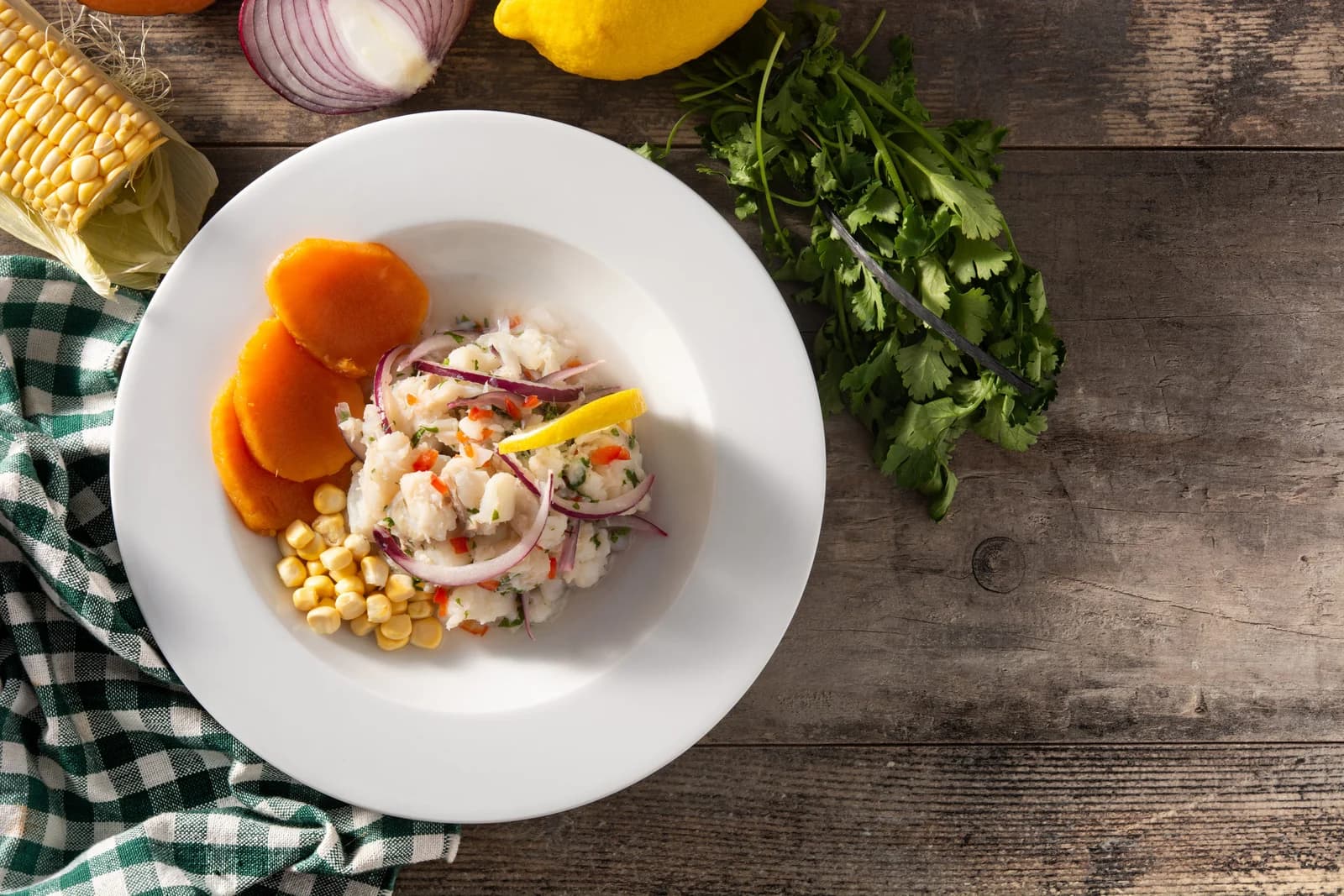
Ceviche practically serves up a reflection of Peru’s biodiversity on a plate. Fresh fish caught in the Pacific, limes often grown in the tropical north and central coastline, sweet potato and corn grown in the high-altitude Andes, and fiery peppers from the coast and rainforest all combine to make a vibrant, colourful and, best of all, edible reflection of Peru.
The dish is estimated to have originated over 2,000 years ago, with ancient Moche and Inca civilisations likely using acidic passionfruit or corn beer to flavour and cure the raw seafood before the introduction of citrus by Spanish conquistadors in the 16th century. First prepared along the northern coast near modern-day Mancora, the dish is now widely available across Peru, and there is much debate around which region’s ceviche is the finest. A much fiercer debate in the wider context of Latin America also continues, with practically every country in the region having their own spin on the Peruvian classic, and believing that theirs is the best.
Cusco: a culinary gateway to the Imperial City
Very few districts, landmarks or sights in Cusco offer you a better introduction to the city than Mercado Central de San Pedro (San Pedro Market). Wandering the aisles of fresh produce shoulder-to-shoulder with Cusqueños immerses you in local life, acting as a crash course into Peru’s culinary diversities as you explore hundreds of native potato varieties, exotic Andean and Amazonian fruits, and aromatic herbs.
The San Pedro Market is equally cultural as it is culinary. Previously, trading in Cusco took place out in the open across the city. In 1910, the San Pedro Market was commissioned to provide a central, organised location for produce trading, and Gustave Eiffel (the same architect as the Eiffel Tower in Paris) was commissioned to design the main hall. Today, it houses almost 1,200 stalls, but carries the same cultural vibrancy and sometimes chaotic energy as ancient Inca trading sites.
Pisco sours: raise a toast in Peruvian style
Pisco sours are a classy tipple made from a grape brandy and fresh lime juice. Often served in swanky hotel bars or perhaps in the dining car of one of Peru’s classic train rides to Machu Picchu or Lake Titicaca, any holiday to Peru is incomplete without a taste of the bright, frothy and zesty national cocktail.
The fondness among Peruvians for the pisco cannot be understated. The first Saturday of every year is National Pisco Sour Day (or rather, Dia del Pisco Sour), an official national holiday. In 2007, it was declared a Cultural Heritage of the Nation by the government. That fondness makes a pisco sour a staple of any truly Peruvian bar or restaurant, and perhaps the ultimate Peruvian food & drink classic.
If this blog entry piqued your appetite to visit Peru, no one knows it better than Llama Travel. They can serve up a holiday visiting the classics like Lima and Cusco, combine it with a visit to the iconic Machu Picchu, and add dozens of other extensions and excursions to build the holiday you want—with first-hand recommendations for great bars and restaurants along the way. Contact the operator’s experts here.