Khan Al-Khalili
Cairo Egypt Posted by Brandon B.Admin
Khan Al-Khalili: Cairo's Iconic Bazaar
Khan Al-Khalili is Cairo's most famous bazaar, a sprawling marketplace in the heart of Islamic Cairo where merchants have traded textiles, spices, jewelry, and crafts for over six centuries. The warren of narrow lanes and covered passages in the Al-Gamaliya neighborhood draws both locals hunting for everyday goods and tourists seeking souvenirs, making it one of Egypt's most visited attractions. Walking through Khan Al-Khalili means navigating centuries of commerce, haggling tradition, and the layered history of Cairo itself.
Why This Place Matters
Khan Al-Khalili emerged during the Mamluk period and remains one of the world's oldest continuously operating bazaars. It is not a museum frozen in time but a living marketplace where Cairenes buy wedding gifts, spices for cooking, and everyday clothing alongside the tourist trade. The bazaar sits adjacent to the Al-Azhar Mosque and the Khan Al-Khalili Mosque, placing it within one of Cairo's most historically dense quarters. For visitors, it offers an unfiltered look at how Egyptians actually shop, negotiate, and move through their city.
Quick Facts
- Location: Al-Gamaliya neighborhood, Islamic Cairo
- Established: 14th century (Mamluk era)
- Entry: Free and open to the public
- Best visited: Early morning or late afternoon
- Primary goods: Textiles, spices, jewelry, leather goods, souvenirs, perfumes, and handicrafts
- Nearby landmarks: Al-Azhar Mosque (minutes away), Al-Muizz Street historic district
Getting There
Khan Al-Khalili sits in Islamic Cairo, roughly 3 kilometers northeast of Tahrir Square. The easiest approach by taxi or ride-share is to navigate to Al-Muizz Street, the main north-south artery that borders the bazaar. If you arrive by metro, the closest station is Sayyida Zainab on the Red Line, though you'll still walk 15 to 20 minutes through residential streets to reach the main entrance.
Street navigation within Islamic Cairo can feel chaotic if you're unfamiliar with the layout. Most visitors enter Khan Al-Khalili from the south, near the intersection of Al-Muizz Street and the lanes leading toward Fishawi Café. The bazaar has no single grand entrance. Instead, it bleeds into the surrounding neighborhood, so you may find yourself already inside before realizing you've crossed the threshold.
The Layout and Experience
Khan Al-Khalili is not a rectangular grid. It's a labyrinth of interconnected passages, dead ends, and hidden courtyards that reveal themselves as you wander. Sections tend to cluster by merchandise type, though boundaries blur and overlap. The gold and jewelry quarter sits near the center, recognizable by the glint of windows and the density of shops displaying rings and necklaces. The textile and carpet section sprawls across multiple lanes with bolts of fabric stacked high and rugs hanging overhead. Spice vendors occupy their own tight corridor where the smell alone tells you exactly where you are.
Walking the bazaar means being approached constantly. Shopkeepers call out as you pass. "Welcome, welcome, my friend." Some are genuine; others are fishing. Haggling is expected, not insulting. A quoted price is an opening offer, not a final one. If you're not interested in negotiating, a polite "no thank you" followed by moving on works. Cairenes navigate this with practiced indifference.
The covered passages provide relief from the Cairo heat, though ventilation is limited and the air grows thick with incense, perfume, and crowd breath during busy hours. Narrow passages mean shoulder-to-shoulder walking at peak times. If you dislike crowds, arrive before 10 a.m. or after 5 p.m., when the bazaar empties considerably.
Main Highlights
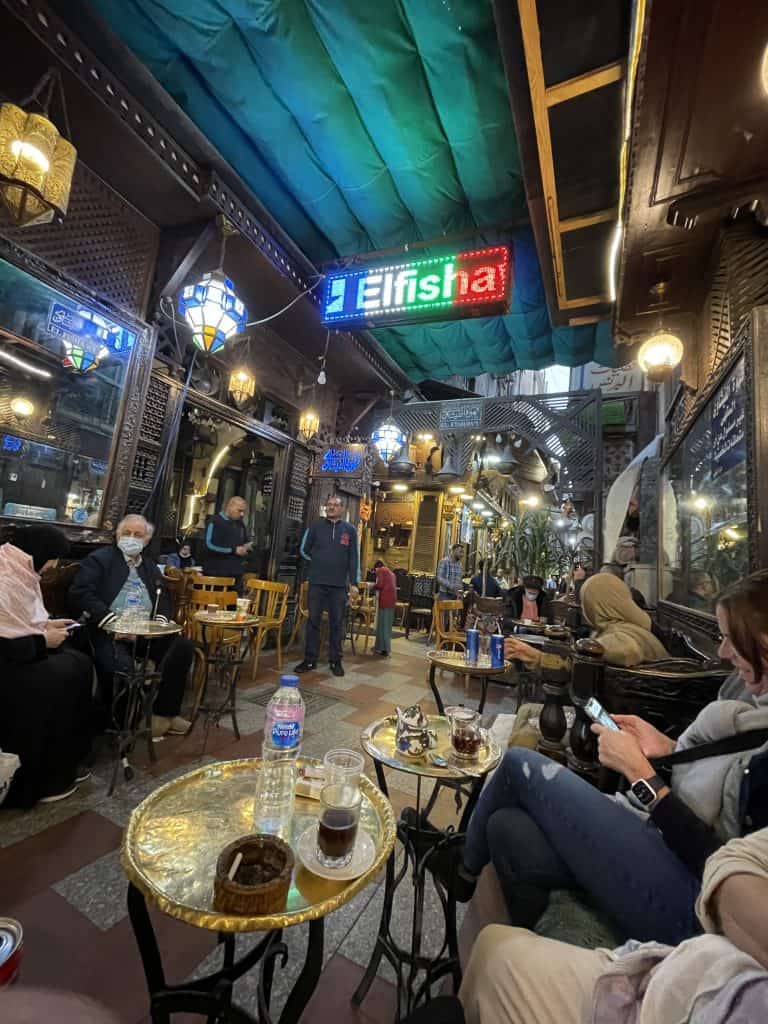
Fishawi Café sits at the southern edge of Khan Al-Khalili and serves as an unofficial meeting point and landmark. Established in 1773, it's a coffee house where you can order mint tea or Turkish coffee and watch the bazaar pass by from a small seating area that spills onto the street. The café is mid-range and frequented by tourists and locals alike. Arriving early or late helps you secure a seat.
The gold market (the Souk Al-Sagha) deserves its own attention. Shops here display intricate gold chains, traditional Egyptian jewelry, and modern designs. Prices are based on the weight and purity of gold, though the vendor markup varies. If you're considering a purchase, visiting multiple shops helps you understand the range. Gold here tends to be 18-karat purity or higher.
The spice market radiates fragrance from blocks away. Vendors sell za'atar, sumac, saffron, dried hibiscus, and dozens of blends used in Egyptian and Middle Eastern cooking. Many travellers buy small quantities to bring home. Prices are reasonable for visitors, though locals typically pay less. Ask for a smell before committing to a purchase, and note that some vendors mix quality levels.
The textile section offers cotton, linen, and silk fabrics, many produced in Egypt. You'll see traditional galabiyyas (long robes), scarves, and bolts of cloth in patterns ranging from conservative to vibrant. This section is less touristy than the gold and spice zones, making it a good place to observe how locals actually shop.
Khan Al-Khalili Mosque sits within the bazaar itself and remains active for prayer. Visitors can often visit outside of prayer times, though you should dress modestly and remove your shoes before entering. The mosque dates to the Mamluk period and features carved wooden screens and a small courtyard.
History and Background
Khan Al-Khalili was founded in 1382 by a Mamluk emir named Khalili, from whom it takes its name. It expanded significantly during subsequent centuries as Cairo's merchant class grew and the city became a major node on trade routes between Europe, the Mediterranean, and the Indian Ocean. Goods flowing through Khan Al-Khalili once included spices from India, silks from Persia, and textiles from across the Islamic world.
The bazaar's layout reflects its medieval origins. Narrow passages provided security and fire protection. Caravanserais (merchant inns) allowed traders to lodge and store goods. The covered sections kept goods protected from dust and heat. While modern retail has transformed many bazaars worldwide, Khan Al-Khalili retained much of its physical structure and commercial character.
The bazaar suffered damage during political upheaval and fires over the centuries, most notably a major fire in 1821. Successive renovations have preserved key sections while accommodating contemporary commercial needs. Today it remains officially recognized as a historic monument, though it operates as a living marketplace rather than a preserved artifact.
Tickets and Entry
Khan Al-Khalili is open to the public at no cost. You walk in and out freely. There are no gates, no ticket booths, and no restricted hours. That said, the bazaar operates primarily during daylight and early evening. Most shops close between 10 p.m. and midnight. During Ramadan, hours shift significantly, with many shops closing during the day and opening in the evening after the fast breaks.
Best Time to Visit
Early morning between 8 a.m. and 10 a.m. offers the most pleasant experience if you dislike crowds. The bazaar is awake but not yet packed, and you can navigate without being swept along by the current of other visitors. Late afternoon after 4 p.m. works similarly, though some shops begin closing by 6 p.m.
Avoid midday in summer (June through August), when heat becomes oppressive and the covered passages feel suffocating. Ramadan changes the rhythm entirely. Many shops close during fasting hours, and the bazaar becomes subdued. It comes alive after sunset when Egyptians break their fast and shop for evening activities. If you're visiting during Ramadan, plan to arrive after 7 p.m.
Fridays see different foot traffic patterns. Fewer tourists arrive on Fridays, but the bazaar fills with locals shopping for the weekend. The Al-Azhar Mosque nearby draws worshippers, adding another layer of activity.
Photography Tips
The bazaar's covered passages create uneven, warm lighting that photographs beautifully in early morning or late afternoon. Overhead passages filter sunlight into dappled patterns that work well for atmospheric shots. The dense merchandise and narrow lanes create natural framing.
Be respectful when photographing people. Some shopkeepers welcome it, while others prefer not to appear in photos. Always ask before shooting someone's face directly. Photographs of religious spaces like Khan Al-Khalili Mosque require particular sensitivity. Ask permission first.
The gold market's glinting displays photograph well, though the reflective surfaces can confuse your camera's light meter. Spice vendors' arrangements of colorful powders and dried goods make striking shots. The textile section offers rich colors and patterns. Avoid using flash in covered passages, as it tends to create harsh shadows and annoys shopkeepers.
Facilities and Preparation
Khan Al-Khalili is a medieval bazaar without modern amenities. There are few public restrooms, and those available are often in attached cafés or restaurants where you're expected to be a customer. Bring water, especially if you visit in summer. The narrow passages offer shade but limited air circulation, so you'll warm up quickly.
Wear comfortable walking shoes with good grip. The passages are paved with worn stone and can be slippery, especially if you visit during or just after rain. Dress modestly out of respect, particularly if you plan to enter mosques or religious spaces. Long sleeves and pants or long skirts are appropriate. This also helps you avoid unwanted attention.
Bring a small daypack or crossbody bag. Pickpocketing occurs in crowded areas, though it's not rampant if you stay aware. Keep valuables secure and avoid displaying large amounts of cash or expensive jewelry. Having small bills makes haggling and purchasing easier, as many vendors prefer cash to cards.
How It Compares to Similar Places
Cairo has other bazaars and markets, but Khan Al-Khalili remains the most historically significant and most visited. The Spice Market (Souk Al-Attarin) is technically separate but physically adjacent and often treated as part of Khan Al-Khalili by visitors. The Tentmakers Market (Souk Al-Khayamiya) specializes in decorative tent fabrics and is smaller and less crowded, appealing to visitors who want bazaar atmosphere without peak-hour congestion.
Khan Al-Khalili differs from tourist-oriented bazaars in other countries because it remains primarily functional for Egyptians. You see locals buying wedding gifts, spices for cooking, and work clothes alongside tourists hunting souvenirs. This dual identity makes it feel more authentic than bazaars that cater exclusively to visitors, though it also means dealing with occasional aggressive salesmanship.
Combining with Nearby Attractions
The Al-Azhar Mosque stands just steps from Khan Al-Khalili and is one of Cairo's most important Islamic monuments. You can visit the bazaar and the mosque in the same outing. The mosque is open to non-Muslims outside of prayer times, though you must remove your shoes and dress modestly. The courtyard and prayer hall are remarkable for their carved wooden screens and age.
Al-Muizz Street, which runs alongside Khan Al-Khalili, is itself a historic district worth exploring. It contains dozens of medieval Islamic buildings, smaller mosques, madrasas (religious schools), and historic houses. Walking Al-Muizz Street before or after Khan Al-Khalili gives you context for the bazaar's place in Cairo's larger urban fabric.
The Egyptian Museum sits about 30 minutes south by taxi and holds one of the world's largest collections of ancient Egyptian artifacts. Pairing Khan Al-Khalili with the museum lets you see both the medieval and ancient layers of Egyptian civilization in a single day, though you'd need to start early.
Sample Visit Plan
Arrive at Khan Al-Khalili by 8:30 a.m. to beat crowds. Spend your first 45 minutes wandering without a specific destination, getting oriented to the layout and observing how the bazaar is organized. Note where the gold market, spice vendors, and textile sections are located.
Next, focus on areas that interest you most. If jewelry appeals, spend 30 to 45 minutes in the gold market, visiting at least three shops to understand pricing and design variety. If you want spices, allow 20 to 30 minutes in the spice section, sampling and comparing vendors.
By late morning (around 10:30 a.m.), head to Fishawi Café for mint tea or coffee. Sit for 20 to 30 minutes and observe the bazaar's rhythm. This also gives you a break from walking and a chance to process what you've seen.
If you're interested in the Al-Azhar Mosque, visit next while energy is still high. Budget 45 minutes to an hour to see the courtyard, prayer hall, and surrounding spaces. Leave Khan Al-Khalili by noon to avoid peak afternoon crowds.
Total time: 3 to 4 hours for a solid first-time experience. Repeat visitors often spend less time or focus on specific sections.
Practical Tips
- Haggle respectfully. Start by offering 50 to 60 percent of the asking price and negotiate from there. It's a game both parties expect.
- Ask shopkeepers for recommendations on items you're considering. Many have genuine expertise and pride in their goods.
- Avoid buying fragile items like glassware unless you're confident in packing. Many shops offer shipping, though costs add up quickly.
- If a vendor is too aggressive, a firm "no thank you" and moving on works better than engaging in conversation.
- Visit the spice market near the end of your bazaar time so the smell doesn't linger on your clothes.
- Change money before entering if you need Egyptian pounds. ATMs exist nearby but may have lines during busy hours.
- Stay hydrated and take breaks. The bazaar's sensory intensity builds over time.
FAQ
Is Khan Al-Khalili safe for tourists? Yes, generally. It's one of Cairo's most visited tourist sites and has a heavy police presence. Petty theft occurs in crowded areas, so stay aware of your surroundings and secure valuables. Avoid the bazaar very late at night.
Do vendors accept credit cards? Most do not. Bring cash in Egyptian pounds. A few larger shops accept cards, but it's not reliable. ATMs are located around the perimeter of the bazaar.
What if I don't want to haggle? Many fixed-price shops exist, particularly those catering to tourists. Prices are higher than negotiated ones, but you avoid the back-and-forth. Alternatively, visit local shops where Egyptians shop, where prices are already lower and haggling is more subdued.
How much time should I spend here? First-time visitors typically spend 3 to 4 hours. Repeat visits or deep dives into specific sections take longer. You can also do a quick 90-minute tour if time is limited.
When is the bazaar least crowded? Early morning (before 10 a.m.) and late afternoon (after 4 p.m.) are quietest. Avoid midday and peak tourist hours in mid-morning.
Reviews
Sign in and mark this place visited to leave a review.
No reviews yet.
Free Trip Planner
Plan your Cairo trip with our free planner
Build a day-by-day itinerary with AI suggestions, hand-picked places, and friends. Free forever — no credit card.