
Komarda rock beach
Ul. Frana Supila 8, 20000, Dubrovnik, CroatiaKomarda Rock Beach sits just outside Dubrovnik's old town, a stretch of concrete platforms and natural stone that drops straight into the Adriatic below Ulica Frana Supila. It isn't sand, and it was never meant to be. What you get instead is a working swimming spot that locals have used for decades, with the old town's bell towers and the fortress walls visible across the water. If you want a beach day that feels more like Dubrovnik and less like a postcard, this is it.
Why Komarda Rock Beach matters
Most visitors to Dubrovnik end up on Banje Beach, a few hundred meters away, because it's the obvious choice near Ploče Gate. Komarda is the quieter alternative that locals actually use. There's no sand to rake, no loungers to rent, and no beach bar soundtrack. What you get instead is direct access to open water, a view back toward the old town that most tourists never bother to walk for, and a slice of how Dubrovnik residents actually spend a hot afternoon in July or August.
Quick facts
- Location: Ul. Frana Supila 8, 20000 Dubrovnik, in the Ploče district just east of the old town walls
- Type: rocky and concrete swimming area, not a sand beach
- Admission: free, public access
- Walking distance from the old town: roughly 20 minutes
- Facilities: minimal to none, no bars or restaurants on site
- Best suited for: swimmers comfortable with uneven footing rather than families with toddlers
Getting there
The address, Ul. Frana Supila 8, places Komarda in the Ploče neighborhood on the eastern edge of the old town, not far from the Dubrovnik Harbour. The simplest route is on foot. From the old town's eastern gate, the walk takes about 20 minutes along Frana Supila, a road that climbs gently past some of Dubrovnik's older residential villas and hotel buildings. Public buses serve the Ploče area as well, and taxis are easy to find near the old town if you'd rather skip the uphill stretch on the way back. Driving is possible but parking near the beach itself is scarce, so most people leave the car in one of the lots closer to the old town and walk the rest of the way.
There's no single marked entrance. You'll recognize it by the concrete terraces stepping down toward the water, usually with a handful of towels spread across the flatter sections.
The layout and experience
Komarda isn't a beach in the conventional sense, it's closer to a series of concrete ledges and natural rock shelves that people have adapted for swimming over the years. Metal ladders and worn stone steps lead down into the sea at a few points, which is how most swimmers get in rather than wading from a shoreline. The terrain is uneven and sometimes slippery when wet, so this isn't the spot for flip-flops or anyone unsteady on their feet. Water shoes help.
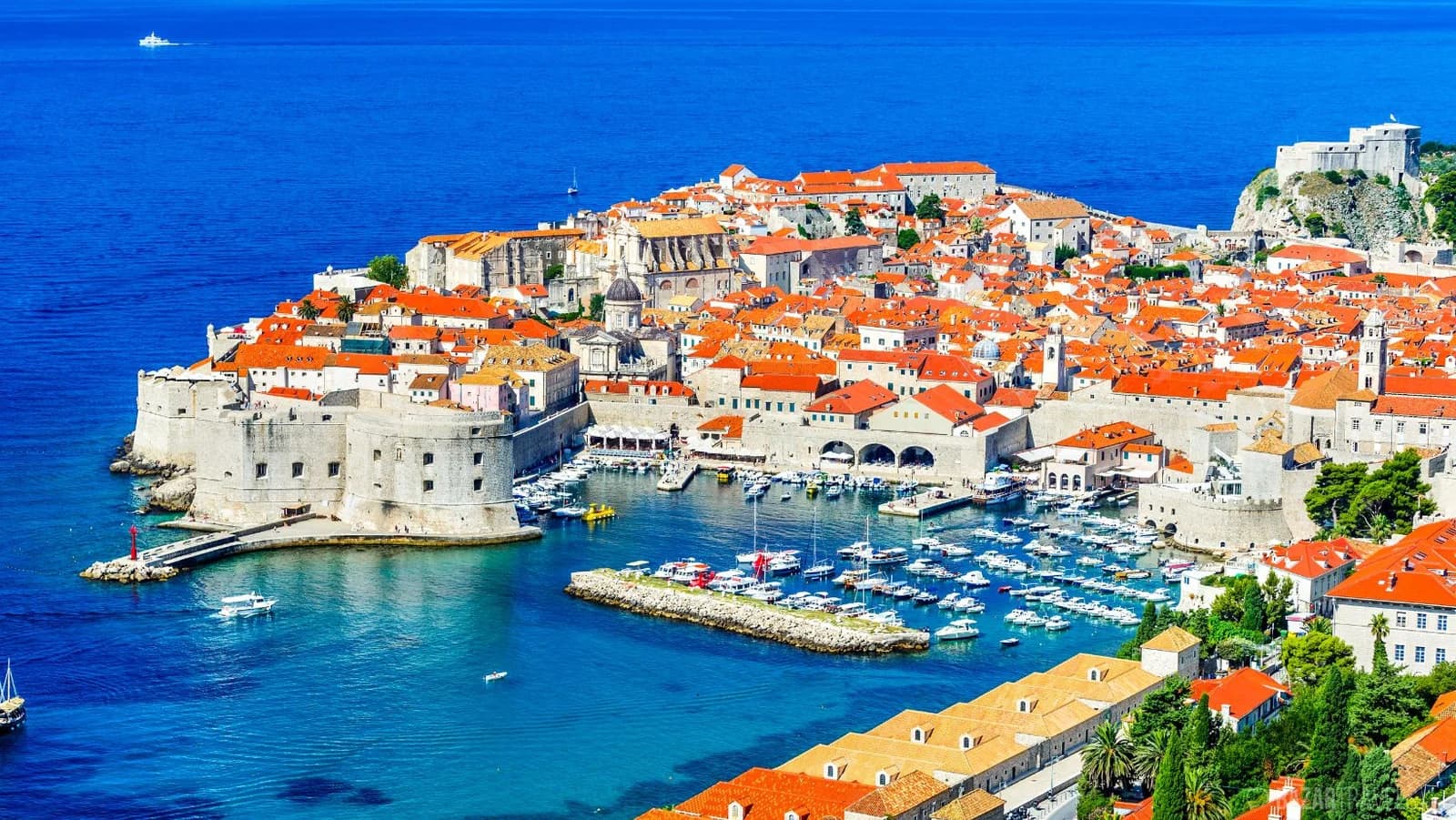
What makes the place worth the walk is the angle it gives you on Dubrovnik. From the rocks you're looking back across the water at the old town walls and rooftops, a view that's hard to get from inside the city itself. It's a genuinely good spot for photographs, especially in the late afternoon when the light softens over the terracotta roofs.
Main highlights
- Concrete and rock formations that step down into the sea, giving swimmers a direct, ladder-assisted entry point rather than a gradual shoreline
- Open views of the old town walls and rooftops from across the water, a different angle than you'll get from inside the walls
- Occasional water polo matches held in the bay, reflecting Dubrovnik's strong local water polo culture, the city's club has long been one of Croatia's most decorated
- Proximity to Fort Lovrijenac and the city walls, both within easy walking distance for a half-day combined with the beach
History and background
Komarda isn't a historic site with a known founding date, it's a stretch of coastline that's been shaped over time by both the sea and by whoever built the concrete platforms that now define most of it. That kind of informal, practical beach infrastructure is common along the Dalmatian coast, where flat rock and poured concrete often substitute for sand in places too rugged for a conventional shoreline. The result at Komarda is a landscape that feels functional rather than scenic at first glance, until you notice the old town sitting right across the water.
The water polo connection is worth a mention here. Dubrovnik has a serious water polo tradition, the local club has won multiple Croatian and European titles over the decades, and the sport is taken seriously along this stretch of coast. When matches or informal games happen at Komarda, it adds a layer of local life to the spot that you won't find at the more tourist-oriented beaches nearby.
Tickets and entry
There's no admission fee and no ticket booth. Komarda is open public coastline, and you can come and go as you please. The only costs you might run into are for organized water activities, kayak rentals or guided swim tours, if any operators happen to be running them in the area that day. For a standard swim, bring nothing but a towel.
Best time to visit
Early morning is the quietest window, before the midday sun turns the concrete hot underfoot. In peak summer, arriving before 9am or after the late afternoon heat has eased tends to make the uneven terrain more comfortable to walk on barefoot. Outside of July and August, the beach is noticeably emptier, and the water stays swimmable well into September for anyone visiting in shoulder season.
Facilities and preparation
- No beach bars, restaurants, or kiosks nearby, so bring your own water and snacks
- Wear sturdy sandals or water shoes, the rock and concrete surfaces are uneven and can be sharp in places
- No shade structures, so sunscreen and a hat matter here more than at beaches with umbrellas for rent
- No lifeguard presence that's publicly confirmed, so swim with the same caution you'd use at any unsupervised rocky coastline
Combining with nearby attractions
Komarda's location makes it easy to fold into a day that also covers Dubrovnik's main sights. Fort Lovrijenac, the fortress that guards the old town's western approach, is a short walk away and worth the climb for its own harbor views. The city walls themselves, one of the best-preserved medieval fortification systems in Europe, are within easy reach from the Ploče Gate entrance. Banje Beach, the old town's main public beach, sits a few hundred meters off and makes a useful comparison point if you want to see both ends of Dubrovnik's beach spectrum in one afternoon, sand and sun loungers on one side, bare rock and quiet on the other.
Practical tips
- Plan your visit for earlier in the day to avoid both the heat and the crowds that build up by midafternoon
- Wear shoes you don't mind getting wet, the walk down to the water involves uneven rock and concrete steps
- Pack your own food and drink, there's nothing to buy on site
- Combine the visit with a walk to Fort Lovrijenac or the city walls since they're all within the same 20-minute radius
- Be respectful of the natural surroundings, this is an informal public space without staff managing it
FAQ
Is Komarda Rock Beach sandy?
No. It's made up of concrete platforms and natural rock, with ladders or steps leading into the water at several points.
Is there an entrance fee?
No, it's a free public area with no ticket required.
How far is it from Dubrovnik's old town?
About a 20-minute walk from the old town, in the Ploče district near Ulica Frana Supila.
Is it suitable for young children?
Not especially. The uneven, sometimes slippery terrain and lack of a gradual shoreline make it better suited to confident swimmers than small kids.
Are there facilities like bars or toilets nearby?
No, there are no beach bars or restaurants at the site itself, so bring your own supplies.
Reviews
Sign in and mark this place visited to leave a review.
No reviews yet.
Free Trip Planner
Plan your Croatia trip with our free planner
Build a day-by-day itinerary with AI suggestions, hand-picked places, and friends. Free forever — no credit card.
Related reading

Things to see near Komarda rock beach


Places to eat or drink near Komarda rock beach

Buža Bar

Segreto Pasta & Grill

aROMA Gelato Boutique Dubrovnik


