Larnaca Marina
Marina, Larnaka 6017, CyprusOverview
Larnaca Marina sits along the waterfront in Larnaka, a coastal city on Cyprus's southern edge. The marina stretches for roughly 650 meters and serves as both a working port for fishing vessels and a recreational hub where locals and visitors gather to walk, dine, and watch the water. Unlike the larger cruise ship terminals elsewhere in the city, this marina maintains a slower pace. You'll find fishing boats alongside modest yachts, restaurants with outdoor seating, and enough space to simply stand and take in the Mediterranean without feeling crowded.
The marina is free to walk around. No ticket required. You come for the atmosphere, the seafood restaurants, and the chance to see how the city meets the sea on a daily basis rather than a polished resort scale.
Why this place matters
Larnaca Marina anchors the city's relationship with the water. It's where commercial fishing still happens, where local fishermen tie up their boats, and where you can eat fish that was caught that morning. This keeps the marina grounded in reality rather than purely touristic performance. The waterfront here tells you something about how Cypriots actually use their coast.
Quick facts
- Location: Marina district, Larnaka, 6017
- Cost: Free to visit
- Length: Approximately 650 meters of walkable waterfront
- Best for: Evening walks, waterfront dining, photography at sunset
- Parking: Available nearby, typically free or low-cost
- Time needed: 30 minutes to 2 hours depending on dining or lingering
Getting there
Larnaca Marina is in the city center, close to the old harbor district. If you're arriving by air, Larnaca International Airport is about 9 kilometers away, roughly a 15-minute drive or taxi ride. From the airport, head toward the city center and follow signs for the marina or waterfront.
Public transport in Larnaka is limited, so most visitors rent a car or take a taxi. Once you're in the city center, the marina is hard to miss. Street signs point toward the harbor. If you're staying in central Larnaka, you can walk to the marina in 10 to 15 minutes from most hotels or the old town.
Parking is straightforward. There are public parking areas adjacent to the marina, and spaces are generally available except during peak summer weekends. The cost is minimal, typically a few euros for a few hours.
The layout and experience
The marina is linear. You arrive and immediately have a choice: walk left or right along the waterfront. Both directions offer similar views, but the eastern section tends to have more restaurants and casual foot traffic. The western section is quieter and better for photography or a solitary walk.
The walkway is paved and level, making it accessible for all ages and mobility levels. On your left is the water, the boats, and the open sea. On your right are restaurants, cafes, small shops, and residential buildings. It's a genuine mix, not a manicured resort strip.
Most people spend their time on the walkway itself, stopping at a restaurant for lunch or dinner. The restaurants here operate informally. Many don't have printed menus displayed outside. You arrive, sit, and a server brings you options. Seafood dominates, though you'll also find grilled meats and standard Mediterranean fare.
Fishing boats come and go throughout the day. Early mornings (before 8 AM) you'll see the most activity as boats return from overnight fishing. If you want to photograph working fishermen or authentic harbor life, arrive early.
Main highlights
The primary draw is the waterfront walk itself. There's no single "attraction" here in the traditional sense. The attraction is the experience: salt air, the sound of water, the sight of boats, and the smell of grilled fish from nearby kitchens.
Dining at a waterfront restaurant is the obvious secondary activity. Tables are set up directly on the walkway, so you eat with a view of the harbor. The seafood tends to be fresh and reasonably priced for a waterfront location. If you arrive after 5 PM, expect the restaurants to fill up with locals and tourists finishing their workday or starting their evening.
Photography opportunities are strong, especially during the golden hour before sunset. The light reflects off the water, boats cast long shadows, and the restaurants' warm interior lights begin to glow. The scene changes throughout the day, so revisiting at different times yields different images.
Beyond dining and walking, there isn't much structured activity. No museums, no shops of particular note, no organized tours launching from here. This is intentional. The marina's value is in its simplicity.
History and background
Larnaca has been a port city for millennia. The current marina reflects the city's modern era but sits on centuries of maritime tradition. Cyprus's position in the eastern Mediterranean made it a natural stopping point for trade routes, and Larnaka was one of the island's main harbors. The present-day marina, though modest by international standards, continues that function.
Fishing remains a genuine part of the marina's daily life, not a nostalgic relic. Local fishermen still operate from here, though their numbers have declined over decades as fishing becomes less economically viable. The mix of commercial and recreational boats reflects the marina's transitional status: old livelihoods coexisting with new leisure activities.
Best time to visit
Spring (April to May) and autumn (September to October) offer the most pleasant weather. Temperatures are warm but not oppressive. The water is calm, and the sun feels less intense than in midsummer.
Summer (June to August) brings heat and crowds. Restaurants are busier. The glare off the water is strong, and the midday heat makes walking uncomfortable for most people. If you do visit in summer, come early in the morning or after 6 PM.
Winter (November to February) is mild by northern standards but can be rainy and occasionally windy. The marina is quieter, restaurants may have reduced hours, and the light is softer. If you prefer solitude and don't mind cooler temperatures, winter is rewarding.
The best time of day is late afternoon into early evening, roughly 4 PM to 7 PM. The light is warm, the temperature drops from daytime heat, and restaurants are beginning to fill with diners. The marina takes on an animated but not frenzied energy.
Photography tips
The golden hour (the hour before sunset) is essential. Position yourself on the walkway facing west or southwest to capture the sun reflecting off the water and boats silhouetted against the glow. Boats are constantly moving, so patience helps. Wait for a moment when the composition feels right.
Shoot from water level or lower whenever possible. Get down, crouch, sit on a bench. This angle makes boats and the waterfront feel more immersive than shooting from standing height.
The restaurants' interior lights begin to glow around 6 PM in summer. Try framing a restaurant's warm window light against the dimming sky. The contrast is strong and visually interesting.
Early morning (before 8 AM) captures fishermen and working boats. The light is soft and directional. The marina feels emptier and more authentic. If you want images without crowds, this is the window.
Avoid midday (11 AM to 3 PM). The sun is harsh and directly overhead. Shadows are harsh. The glare off the water is intense and difficult to manage.
Facilities and preparation
The marina has no formal facilities like restrooms or information centers in the traditional sense. However, the restaurants lining the waterfront have bathrooms available to customers. If you're not dining, you may need to ask permission or find a cafe willing to let you use facilities.
There are no rental shops, boat tours, or organized activities launching from the marina. You come to walk and eat, not to book an excursion.
Bring sunscreen and a hat if you're visiting during warm months. The waterfront offers little shade beyond restaurant awnings. The glare off the water intensifies sun exposure.
Wear comfortable walking shoes. The paved walkway is smooth, but you'll be standing and walking for at least 30 minutes. Flip-flops work if you're only stopping for a meal, but proper shoes are better if you want to explore the full length of the marina.
Combining with nearby attractions
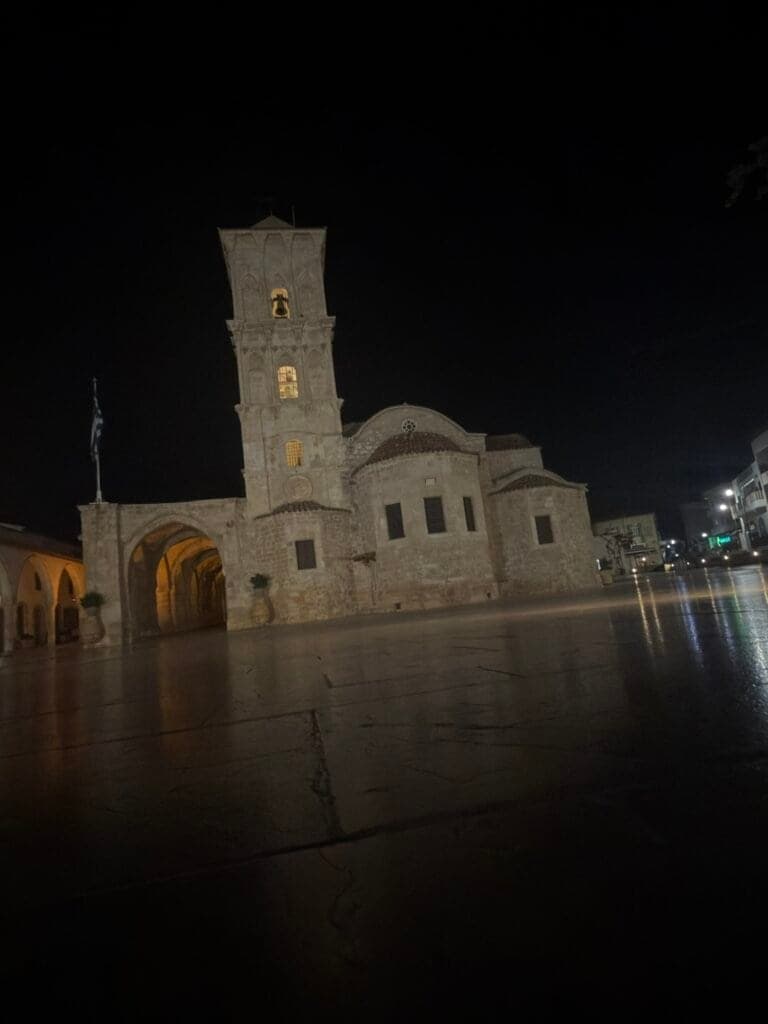
Larnaca Marina is close to several other sites worth visiting. The Church of Saint Lazarus, one of the most important Byzantine churches in Cyprus, is a 10-minute walk inland from the marina. The old town of Larnaka, with its narrow streets and local shops, is also walkable from the waterfront.
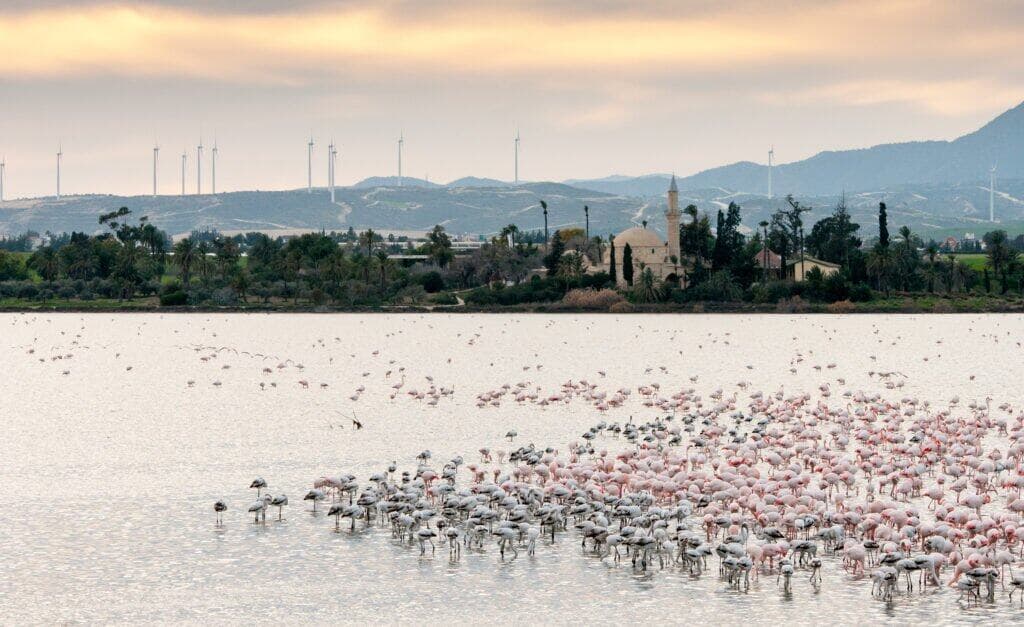
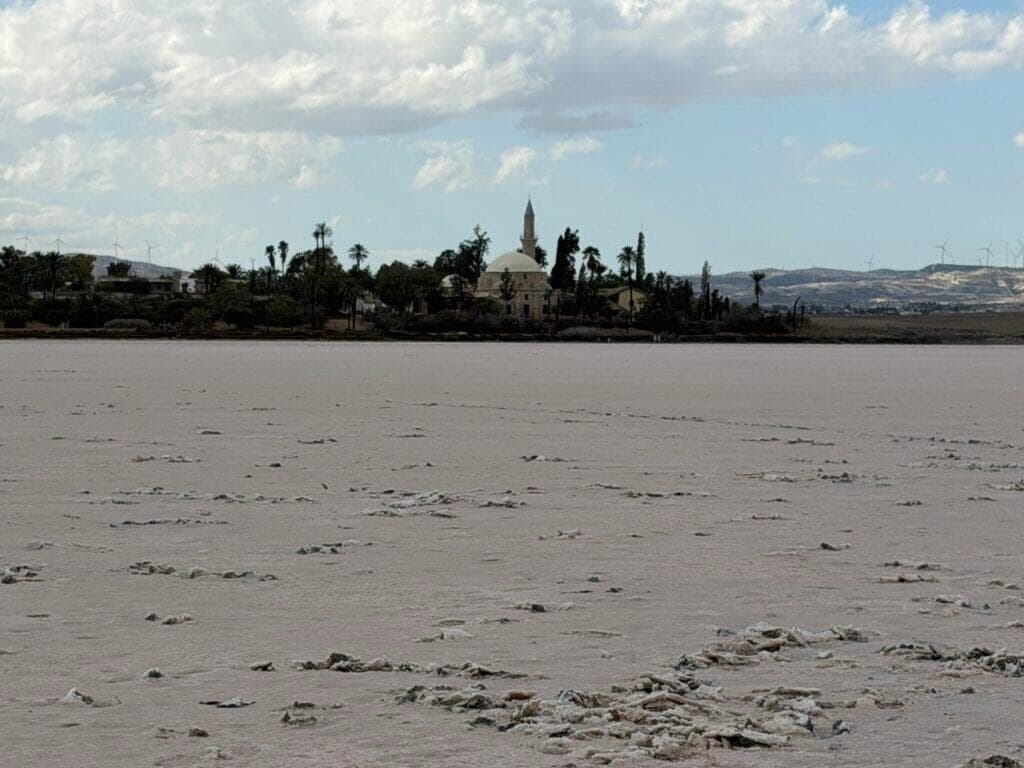
The Larnaca Salt Lake lies just north of the city. During certain seasons, the lake attracts flamingos and other migratory birds. It's a short drive from the marina and offers a completely different landscape and activity.
If you want more structured tourism, the Cyprus Museum in Nicosia is about 50 kilometers away (roughly 45 minutes by car). However, most visitors combine the marina with a meal and a stroll through old Larnaka rather than making a full day of multiple attractions.
Sample visit plan
Arrive at the marina around 4 PM. Park nearby and walk the full length of the waterfront, taking 30 to 45 minutes. This gives you a sense of the space without rushing. Observe the boats, the restaurants, and the light changing as the sun moves lower.
Around 5 PM or 5:30 PM, choose a restaurant and sit. Order seafood and a drink. Watch the sunset while you eat. Most meals take 60 to 90 minutes if you're not rushed. By the time you finish, it's dark, the marina has shifted into its evening energy, and the restaurants' lights are full on.
After dinner, take a short walk back along the waterfront if you're in the mood, or head inland to explore the old town. The entire marina visit, including dining, typically takes 2.5 to 3 hours.
Practical tips
- Most restaurants accept both cash and card, but carry euros just in case
- Ask your server what the catch of the day is rather than ordering from a menu
- Tables fill up after 7 PM on weekends; arrive by 6 PM if you want immediate seating
- The waterfront can be windy, especially in afternoon; bring a light jacket if you're sensitive to wind
- Parking is easiest on weekday afternoons; weekends can require circling to find a spot
- English is spoken in most restaurants, but menus may be limited
- Bring a camera or phone with a charged battery; the light and scenery are worth capturing
FAQ
Is there an entrance fee to visit Larnaca Marina? No. The marina is free to walk around. You only pay if you dine at a restaurant.
Can you take a boat tour from the marina? Not typically. The marina is primarily a working harbor and dining destination. Boat tours operate from other locations in Larnaka, but not from this specific marina.
What's the best restaurant at the marina? There's no single "best" option. The restaurants are relatively consistent in quality and price. Choose based on how crowded it is and whether you can see a table with a view you like. Ask locals if you want a recommendation.
Is the marina safe at night? Yes. The waterfront is well-lit and populated in the evenings. It's a public, busy space. Standard urban safety practices apply, but there's nothing particularly risky about being here after dark.
Can you swim at the marina? No. The marina is a working port with boat traffic. Swimming is not permitted. There are designated beaches elsewhere in Larnaka if you want to swim.
Opening hours
Reviews
Sign in and mark this place visited to leave a review.
No reviews yet.
Free Trip Planner
Plan your Larnaca trip with our free planner
Build a day-by-day itinerary with AI suggestions, hand-picked places, and friends. Free forever — no credit card.