
Lazebnický most
381 01 Český Krumlov-Český Krumlov 1, CzechiaOverview
Walk across Lazebnický most on an early morning and the Vltava River seems to belong entirely to you. This stone bridge in Český Krumlov spans the water between the old town's narrow streets and the quieter bank beyond, its weathered arches catching light in a way that explains why painters and photographers never leave without shooting it. The bridge is small enough that you can cross it in under a minute, but large enough to feel like a genuine threshold rather than a mere pedestrian crossing.
Lazebnický most connects the heart of Český Krumlov's medieval core to the residential and less touristy areas on the opposite bank. Its position makes it both a practical crossing and a vantage point from which the town's castle and old town buildings arrange themselves in ways that feel almost staged. The bridge takes its name from the barber-surgeons (lazebníci) who once worked in this quarter, a detail that roots it in centuries of local life.
Why this place matters
In a town full of postcard-worthy corners, Lazebnický most matters precisely because it is not trying. Unlike the main bridge (Lazebnický most's larger neighbor further downstream), this one has remained relatively intimate. It serves locals as much as visitors, which means you will see people crossing it with groceries, not just cameras.
The bridge is a working part of Český Krumlov's medieval street network, not a monument cordoned off for admiration. That distinction matters. It means you experience it as the people of the town do: as a necessary, beautiful, unremarkable part of moving through your day.
Quick facts
- Location: Český Krumlov old town, spanning the Vltava River
- Best time to visit: Early morning or late afternoon, when crowds thin and light is strongest
- Cost: Free to cross
- Time to cross: Less than 2 minutes on foot
- Nearest landmark: Český Krumlov Castle, visible from the bridge
- Accessibility: Stone steps at each end; the bridge itself is level
Getting there
If you are staying in Český Krumlov's old town, finding Lazebnický most is straightforward. From the main square (Náměstí Svornosti), head downhill toward the river along any of the narrow streets that slope in that direction. The bridge sits on the southeastern edge of the old town core, roughly a 5 to 10 minute walk from the castle.
There is no dedicated parking for the bridge itself. If you are driving, use one of the town's parking areas on the outskirts and walk in. The old town is pedestrianized in most places, making the bridge accessible only on foot once you are in the historic center.
The layout and experience
Lazebnický most is a modest stone structure with a single arch. The crossing is narrow enough that two people walking in opposite directions must be slightly careful of each other, which slows the pace and forces a kind of attentiveness to your surroundings.
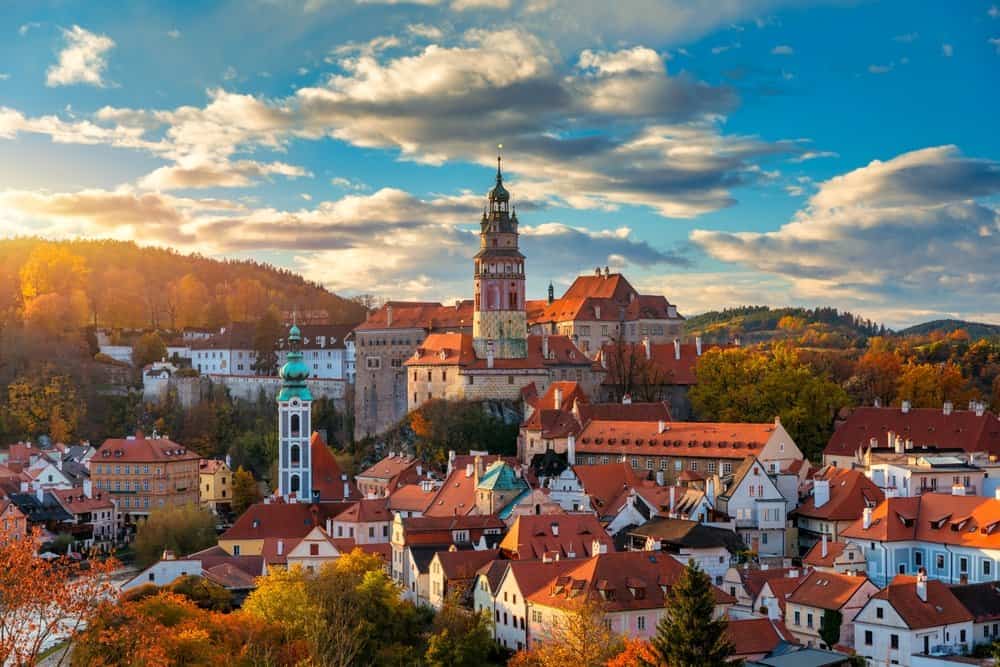
From the bridge itself, the Vltava flows on both sides in a way that makes you acutely aware of the water. The castle looms above on one side. On the other, the town's red roofs descend toward the river in tiers. If you pause mid-crossing, you see why Český Krumlov has drawn artists for centuries: the composition is almost too perfect, the light on the water too clear.
The bridge connects two very different experiences of the town. On the old town side, you are in the medieval crush of tourists and narrow streets. On the far bank, residential neighborhoods open up. The crossing marks a genuine transition, not just a physical one but a temporal one: you move from "visiting Český Krumlov" to "being in Český Krumlov."
Main highlights
The bridge's primary appeal is its view. Stop in the middle and look back toward the castle and old town. The angle is steep enough that the architecture stacks visually, and the water below provides a mirror and a break in the urban texture. Early morning light, especially in summer, hits the castle walls and the river at angles that make photography almost inevitable.
The bridge also marks the best place to see the Vltava as a working river, not just as backdrop. From here, the water's current is visible, its color shifts with the season, and you can follow it downstream toward the countryside beyond the town. If you time it right, you might see locals fishing from the banks nearby.
The west bank of the river, reached by crossing the bridge, offers quieter access to the water itself. There are small paths and benches where you can sit away from the old town's foot traffic. This bank is less developed and less photographed, which makes it feel like a discovery even though it is only a minute's walk from the center.
History and background
Český Krumlov's bridges are woven into the town's medieval fabric. The Vltava determined where the settlement grew, and bridges determined how the settlement moved. Lazebnický most, though not as famous as the larger main bridge (Vltavský most), has been part of that network for centuries.
The bridge's name refers to the barber-surgeons who practiced in this quarter of town. Lazebníci were a specific guild in medieval Central Europe, occupying a middle ground between craftsmen and medical practitioners. Their presence in this neighborhood suggests it was a commercial and artisanal zone, distinct from the wealthier merchant areas around the main square. That social geography has mostly vanished, but the name persists, a small linguistic anchor to a life that no longer exists.
Best time to visit
Early morning, before 8 a.m., is when Lazebnický most feels most like itself. The light is soft and directional. The bridge is empty or nearly empty. The river is quiet. By mid-morning, tour groups begin to flow through the old town, and the bridge becomes busier, though still far less crowded than the main crossing upstream.
Afternoon light, especially in the hour before sunset, also rewards a visit. The angle of sun creates sharp shadows on the stone and turns the water golden. If you are photographing, these two windows are what matter most.
Seasonally, spring and autumn offer the clearest light and the most comfortable walking temperatures. Summer brings crowds and heat. Winter can be slippery, and snow sometimes obscures the bridge's texture, though the emptiness and the muted colors have their own appeal.
Photography tips
The bridge itself is compact, which limits your framing options but also makes composition straightforward. Shoot from the banks before crossing to capture the arch and the water together. From mid-bridge, looking back toward the castle, you get the stacked roofline and the water in the same frame.
The stone's color and texture are worth close attention. Macro or detail shots of the weathered blocks, the mortar, the lichen can be as striking as wide views. Early light rakes across the surface and emphasizes the three-dimensionality of the stonework.
The reflection in the water below is most interesting when there is movement, either from current or from clouds passing overhead. Still water can feel flat. Wait for a breeze or shoot when clouds are moving across the sky.
Facilities and preparation
There are no facilities directly on or immediately after the bridge. No restrooms, no shops, no benches on the bridge itself. The old town center, a short walk back the way you came, has restaurants, cafes, and restrooms aplenty.
The bridge has steps at both ends, which can be slippery when wet. Wear shoes with decent grip. If you are crossing with luggage or a stroller, note that the steps are steep and narrow. There is no wheelchair-accessible route across this particular bridge.
The bridge is open year-round and is not gated or restricted. You can cross at any time of day or night. It is well-lit at night, though the old town streets leading to it may be dimmer.
Combining with nearby attractions
Český Krumlov Castle is the obvious pairing, visible from the bridge and accessible within a 10 minute walk. The castle grounds and rooms offer hours of exploration, and the view from the castle back toward the bridge and the town below is the complement to the view you get from the bridge itself.
The old town's narrow streets are worth wandering without a plan. Use the bridge as a reference point and a destination, but the real draw of Český Krumlov is the texture of walking through the medieval core, ducking into courtyards, noticing details on doorways and shutters.
The Vltava River itself can be explored by boat. Several companies offer rowing or paddling trips that launch from points near the old town. Seeing the bridge and the castle from the water provides a perspective you cannot get from land.
Sample visit plan
Arrive in Český Krumlov early, before the day-trippers. Walk directly to Lazebnický most and cross it at dawn light. Spend 15 to 20 minutes photographing or simply sitting on the far bank, watching the town wake up. Return across the bridge and spend the morning in the old town's streets, working toward the castle. Have lunch at one of the restaurants near the main square. Spend the afternoon in the castle rooms and gardens. Return to the bridge in late afternoon light for a second crossing, this time with a different angle on the light and the crowds. Finish the day with dinner in the old town, staying late enough to see the bridge lit at night.
Practical tips
- Cross the bridge at least twice during your visit: once in the morning light, once in the afternoon or evening. The same bridge looks entirely different depending on the sun's angle.
- If you are staying on the far bank, the bridge becomes your daily commute to the old town. Walk it at different times of day to notice how it changes.
- Bring a camera or phone capable of capturing detail. The stonework and the reflections in the water reward close attention.
- If crowds are heavy in the old town, the far bank of the river is quieter. Cross the bridge and walk along the water to escape the peak tourist zones.
- The bridge is not wheelchair accessible due to the steps, but locals use it constantly, so it is well-maintained and safe for anyone with mobility to handle stairs.
FAQ
Is there a toll or entrance fee to cross Lazebnický most? No. The bridge is free and open to the public at all times.
How old is the bridge? The exact age is not well documented in readily available sources. It is medieval in origin and has been part of the town's street network for centuries, but specific dates of construction or major renovation are not widely publicized.
Can I swim in the Vltava from the bridge? The river is generally accessible for swimming in the warm months, though water quality and current should be checked locally. The bridge itself is not a designated swimming access point, but the banks near it are used by swimmers in summer.
Is the bridge safe at night? Yes. The bridge is lit and well-maintained. The surrounding old town is safe, though streets can be dark. Use normal city caution and good lighting.
What is the best single shot to take from this bridge? Looking back toward the castle and old town from mid-bridge in early morning light. This angle captures the arch, the water, the castle, and the town's roofline in a single frame.
Opening hours
Reviews
Sign in and mark this place visited to leave a review.
No reviews yet.
Free Trip Planner
Plan your Český Krumlov trip with our free planner
Build a day-by-day itinerary with AI suggestions, hand-picked places, and friends. Free forever — no credit card.
Things to see near Lazebnický most



Places to eat or drink near Lazebnický most
Penzion a restaurace Maštal

Masná 130 House﹠Café

Drunken Coffee

Kolektiv cafe & wine bar
More places in Český Krumlov

Egon Schiele Art Centrum

Český Krumlov Castle Tower

náměstí Svornosti
