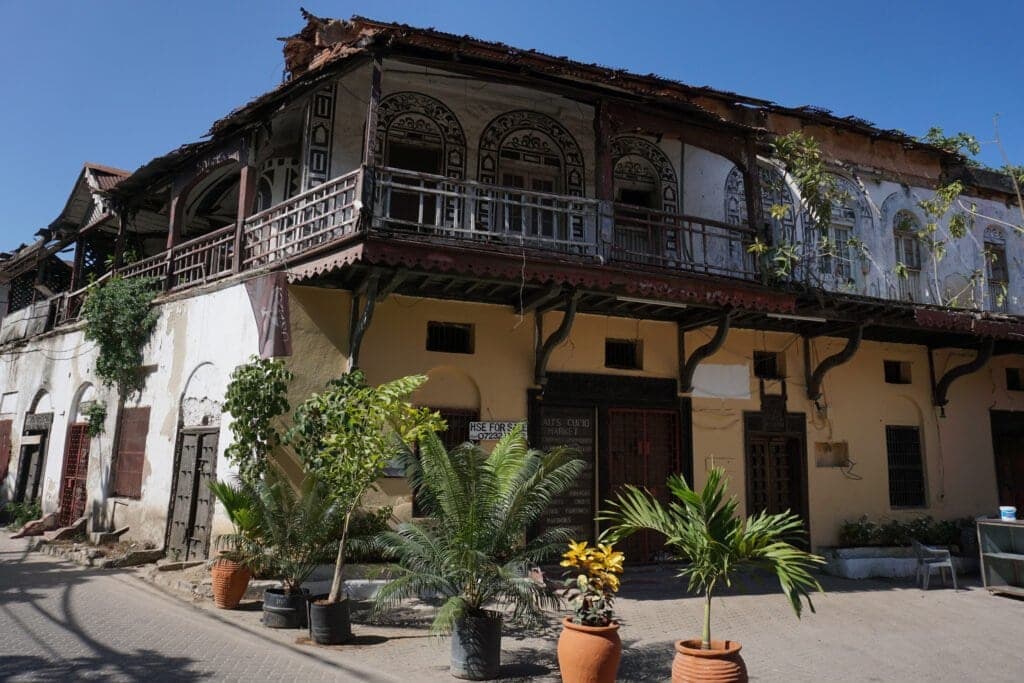
Mandhry Mosque
Open now
 Posted by bazartravelsAdmin
Mandhry Mosque in Mombasa
The Mandhry Mosque stands on Sir Mbarak Hinawy Road in Mombasa's historic core, one of the oldest and most significant Islamic structures on Kenya's coast. Built in the late 19th century, this mosque represents a crucial chapter in Mombasa's religious and cultural heritage. The building itself reflects the distinctive Swahili-Arab architectural style that defines the Old Town, with its carved wooden elements and whitewashed walls telling the story of centuries of trade and cultural exchange.
If you're exploring Mombasa's religious landmarks or diving into the city's layered history, the Mandhry Mosque offers insight into how Islam has shaped coastal Kenya. It remains an active place of worship, not primarily a museum, so your visit should reflect that reality.
Why this place matters
Mombasa's significance as a Swahili trading port rests partly on its Muslim communities, who arrived centuries before the colonial era. The Mandhry Mosque embodies that continuity. Its construction during the late 1800s came at a moment when the city was navigating major transitions under different rulers and powers. The mosque serves the Bohra community, a Shia Muslim group with deep roots in East Africa, and it remains central to their religious and social life.
The building itself is an artifact. Its architectural details, from the interior timber work to the proportions of its spaces, reflect knowledge passed down through generations of builders who understood how to construct cool, dignified spaces in a tropical climate without modern air conditioning.
Quick facts
- Built in the late 19th century
- Located on Sir Mbarak Hinawy Road in Mombasa's Old Town
- Active mosque serving the Bohra Muslim community
- Swahili-Arab architectural style with carved wooden details
- Requires respectful dress and behavior as a functioning place of worship
Getting there
Sir Mbarak Hinawy Road runs through the heart of Mombasa's Old Town, a compact neighborhood where most sites are within a 10 to 15 minute walk of each other. If you're arriving by taxi or ride-hail service, ask the driver to drop you on Sir Mbarak Hinawy Road near the mosque. The street is busy during daytime hours, so the driver will have no trouble locating it.
From Mombasa's main commercial center (Fort Jesus area), the Old Town is roughly a 10 to 15 minute journey on foot heading northeast. The streets narrow as you approach, and the atmosphere shifts distinctly. If you're unfamiliar with the area, walking with a local guide is a sensible choice, both for navigation and for context about the neighborhoods you'll pass through.
The layout and experience
The Mandhry Mosque occupies a substantial footprint on Sir Mbarak Hinawy Road, its presence immediately recognizable by its whitewashed exterior and the geometric patterns typical of Islamic architecture. The entrance faces the street directly, and the building rises prominently among the surrounding structures.
Inside, the space reflects careful attention to light and proportion. Wooden lattice screens filter natural light, creating a serene environment. The timber work visible throughout the interior shows the skill of craftspeople who understood how to use local materials expressively. The prayer hall itself is designed to accommodate a significant congregation, with galleries and defined spaces for different groups of worshippers.
As an active mosque, the building follows a rhythm determined by prayer times. If you visit outside prayer times, you may find it quieter and more welcoming to non-Muslim visitors, though you should always ask permission before entering.
Main highlights
The carved wooden elements throughout the mosque deserve your attention. Doors, screens, and structural details display patterns and techniques that connect to broader Swahili design traditions while reflecting the specific taste of the Bohra community. These elements are not decorative flourishes but functional components that have proven their durability over more than a century.
The interior spatial arrangement reflects Islamic principles about how a prayer hall should function and feel. The mihrab (the niche indicating prayer direction toward Mecca) and the minbar (the pulpit) occupy positions of clear prominence, their design consistent with the overall aesthetic of restraint and proportion.
The relationship between the mosque and the street tells you something about how Mombasa's Old Town developed. Unlike some religious buildings that sit isolated, the Mandhry Mosque is woven into the urban fabric, with shops and residences nearby. This integration reflects how religious, commercial, and domestic life have coexisted in this neighborhood for centuries.
History and background
The late 19th century was a period of significant change for Mombasa. The city was transitioning from Omani rule toward German and then British colonial control. Even amid this political instability, religious communities continued to establish and maintain their institutions. The Bohra community, which had long-standing commercial ties to the Arabian Peninsula and South Asia, saw the mosque as essential to preserving their faith and identity during uncertain times.
The Bohra are known throughout the Indian Ocean world for their entrepreneurial traditions and their commitment to community welfare. In Mombasa, as elsewhere, they built not just mosques but schools and other communal institutions. The Mandhry Mosque reflects that broader commitment to creating infrastructure that would serve their community across generations.
Understanding the mosque requires some awareness of Swahili history more broadly. The Swahili coast developed over centuries as a zone of exchange between Arab, Persian, African, and eventually Asian traders. Islam arrived early and became woven into Swahili culture, though always in locally specific ways. The architecture of the Mandhry Mosque shows this fusion: it's unmistakably Islamic in its religious purpose and basic form, but distinctly Swahili in its details and materials.
Tickets and entry
The Mandhry Mosque does not charge admission fees. As a functioning place of worship, entry is governed by respect for Islamic practice rather than by ticketing systems.
Before entering, you should ask permission from anyone present at the entrance. This is both courteous and practical, since prayer times and special occasions may restrict access. Non-Muslims are generally welcome to visit outside prayer hours, but this is not guaranteed and depends on the discretion of those managing the space on any given day.
Dress respectfully. Women should wear a headscarf, long sleeves, and pants or a long skirt. Men should wear long pants and a shirt. Remove your shoes before entering the prayer hall. These requirements are not arbitrary rules but expressions of how Muslims understand appropriate behavior in a sacred space.
Best time to visit
Avoid visiting during the five daily prayer times, which are determined by the position of the sun and shift seasonally. If you're unfamiliar with Islamic prayer schedules, ask at your hotel or a local contact for the approximate times before you go.
Mombasa's climate is hot and humid year-round. The cooler months fall between June and September, though "cooler" still means warm. The rainy season runs from March to May and November to December, when streets in the Old Town can become congested with water. Late morning or early afternoon tends to be a reasonable time to visit, as the heat is intense but not at its peak, and prayer times are usually between late afternoon and evening.
Friday is the most important prayer day in Islam, so the mosque will be particularly busy on Friday mornings and afternoons. If you want a quieter experience, visit on another day of the week.
Photography tips
Ask permission before photographing inside the mosque or photographing any individuals. Many Muslims prefer that prayer spaces not be photographed, so be prepared to respect a request not to take pictures inside the prayer hall.
The exterior of the mosque is visually striking, especially in morning or late afternoon light when shadows define the texture of the whitewashed walls and carved elements. The street itself, with the mosque as part of the surrounding fabric, often makes for more interesting photographs than the building in isolation.
Facilities and preparation
The Old Town neighborhood has basic facilities. Small shops and restaurants are nearby, though they tend to be modest establishments rather than tourist-oriented venues. Water is available, but bring a bottle with you to be safe. There are no dedicated restrooms for visitors at the mosque itself.
Wear comfortable shoes that you can easily remove and carry. The streets of the Old Town are uneven in places, and the heat can be intense, so good walking shoes matter. Bring water, a hat, and sunscreen.
The neighborhood is generally safe during daylight hours, but it's a working neighborhood, not a sanitized tourist zone. Stay aware of your surroundings as you would in any urban area, and avoid displaying expensive items like cameras or jewelry unnecessarily.
Combining with nearby attractions
The Mandhry Mosque sits within walking distance of other significant sites in Mombasa's Old Town. Fort Jesus, the Portuguese fortress from the 1500s, is roughly a 15 minute walk away. The Old Town itself contains numerous residential buildings, smaller mosques, Hindu temples, and narrow streets that reward exploration on foot. The district known as Mikindani, just south of the main Old Town, has its own character and several notable structures.
If you're interested in Islamic architecture and history, the nearby Jami Mosque and other religious buildings in the Old Town complement a visit to the Mandhry. If you want to understand Mombasa's broader history, combining this site with Fort Jesus and the nearby Fort Jesus Museum provides a more complete picture of how the city has been shaped by different powers and communities.
Sample visit plan
Spend 30 to 45 minutes at the Mandhry Mosque, including time to observe the architecture carefully and speak with anyone present about the space. Arrive in late morning or early afternoon, outside prayer times. After visiting the mosque, walk through the surrounding streets of the Old Town, noting the architecture of residential buildings and the character of the neighborhood. You could combine this with a visit to Fort Jesus or a meal at one of the small restaurants nearby.
Practical tips
- Check prayer times before visiting to avoid arriving during worship
- Bring a headscarf with you if you don't have one; some mosques loan them, but don't assume
- Ask permission to enter and to photograph, even if no one is visibly present
- Remove your shoes before entering the prayer hall
- Bring water and sun protection; the Old Town streets offer little shade
- Visit with a local guide if you want context about the neighborhood and its history
- Respect the rhythm of prayer and community life; don't treat the space as a museum
FAQ
Can non-Muslims enter the Mandhry Mosque? Yes, outside prayer times, non-Muslims are generally welcome. Always ask permission at the entrance, and dress respectfully.
What should I wear when visiting? Women should wear a headscarf, long sleeves, and long pants or a skirt. Men should wear long pants and a shirt. Both should remove shoes before entering the prayer hall.
Is there an admission fee? No. The mosque does not charge visitors. Donations are sometimes accepted, but never expected.
How long should I plan to spend there? Thirty to forty-five minutes is typically sufficient to observe the architecture and absorb the space, depending on how much detail you want to explore.
When is the best time to visit? Weekday afternoons outside prayer times work best. Avoid Fridays when the mosque is busiest, and avoid the five daily prayer times.
Mandhry Mosque in context
The Mandhry Mosque is not a major tourist destination in the way that Fort Jesus is, nor should you expect it to be. Its value lies in what it reveals about how communities sustain themselves across time, how architecture embodies cultural priorities, and how Mombasa's character emerges from the interplay of many religious and ethnic groups. A visit here connects you to a layer of the city that most guidebooks barely mention, and that's precisely why it matters. If you're willing to approach it with respect and genuine curiosity, the Mandhry Mosque offers insight into Mombasa that no photograph or secondhand account can fully convey.
Opening hours
Reviews
Sign in and mark this place visited to leave a review.
No reviews yet.
Free Trip Planner
Plan your Kenya trip with our free planner
Build a day-by-day itinerary with AI suggestions, hand-picked places, and friends. Free forever — no credit card.