
Mirante Dona Marta
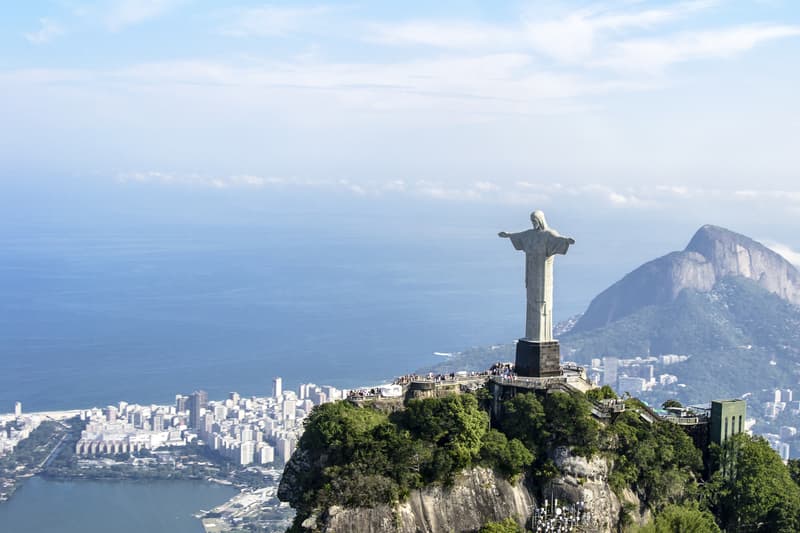
Estr. Mirante Dona Marta, S/N - Cosme Velho, Rio de Janeiro - RJ, BrazilMirante Dona Marta sits on a spur of the Tijuca massif, a few hundred metres below the feet of Christ the Redeemer, and it delivers the single most reproduced view of Rio de Janeiro. From the railing you look straight down over Botafogo's curved bay, with Sugarloaf standing guard at its mouth and the high-rises of the city centre stretching out behind. It is the shot you have seen on postcards, in opening credits, on the cover of guidebooks, and it costs nothing to see in person.
Unlike Corcovado, where the statue itself demands a ticket, a scheduled van, and a shuffle through turnstiles, Dona Marta has no gate and usually no line. You pull up, you walk to the rail, and the whole panorama is there. That contrast is really the point of visiting: Corcovado for the monument, Dona Marta for the view of the monument's surroundings, often with far fewer people getting in the way of your photo.
Why Mirante Dona Marta matters
Rio is a city best understood from above, wedged as it is between granite peaks and the sea, and Dona Marta happens to sit at almost the ideal angle to read that geography in one glance. Sugarloaf anchors the right side of the frame, Botafogo beach curves below in a tidy arc, and on a clear afternoon you can trace the coastline all the way toward Copacabana. Because the lookout faces roughly south-southeast, it also happens to be one of the better perches in the city for watching the sun drop behind the hills to the west, with the bay catching the last colour.
Quick facts
- Location: Estrada do Mirante Dona Marta, in Cosme Velho, the same district where the Corcovado cog train departs
- Elevation: on a lower outcrop of the Tijuca massif, well below the Christ statue but high enough to see over Botafogo and out to Guanabara Bay
- Cost: free, with no ticket booth or entry gate
- Crowds: generally light compared with Corcovado or Sugarloaf, though tour vans do stop through the late afternoon
- Best known for: the panoramic shot of Botafogo bay with Sugarloaf at its mouth, used constantly in Rio marketing and film
Getting there
You reach the mirante by road, not on foot. The access route climbs through the Dona Marta favela, and walking the route is not advised, regardless of time of day. A taxi, rideshare, or a seat in an organized tour van is the standard way up, and most Rio-based tours that cover Corcovado or Sugarloaf will offer Dona Marta as an add-on stop, often timed for the hour before sunset. If you are arranging a private driver for Corcovado, ask whether a short diversion to Dona Marta is possible on the way down. It typically adds very little time to the itinerary since the turnoff is close to the Cosme Velho approach road.
The layout and experience
The site itself is modest: a paved overlook with railings, a small parking area, and room for a cluster of cars and vans rather than a formal visitor complex. There are no ticket windows, no gift shop, and usually no facilities to speak of, so this is a stop you fold into a longer day out rather than a destination that occupies hours on its own. Most visitors spend somewhere between fifteen and forty minutes here, long enough to take in the view, get photos from a few different spots along the rail, and watch the light change if you've timed it for late afternoon.
Because the drop-off and viewing area are compact, it can feel crowded in a different way than Corcovado does, with vans arriving in waves rather than a steady line. Early evening tends to bring the heaviest traffic, precisely because that is when the view is best.
History and background
The favela that the access road passes through, also called Dona Marta, holds a particular place in Rio's recent history. In late 2008 it became the first community in the city to receive a Unidade de Polícia Pacificadora, part of a state security program that aimed to establish a permanent police presence in favelas long controlled by drug trafficking factions, ahead of the 2014 World Cup and 2016 Olympics. The program made Dona Marta something of a symbol, pointed to in international coverage as an early test case for the pacification strategy, with mixed results debated in Rio ever since. That context is worth knowing as you pass through on the way up, even if the overlook itself sits apart from the community below.
The viewpoint's fame as a photographic vantage point predates the pacification era by decades. Its angle on Sugarloaf and the bay made it a natural choice for film and television crews looking for an efficient way to establish "this is Rio" in a single frame, and it continues to show up in footage of the city for exactly that reason.
Best time to visit
Sunset is the reason most people make the trip. The sun drops behind the hills to the city's west, and the bay, Sugarloaf, and the buildings along Botafogo catch warm light before the blue hour settles in and the city starts lighting up below you. Arrive thirty to forty-five minutes before sunset to get a decent spot at the rail before the tour vans fill the small lot. Midday visits work fine for clarity and photography too, particularly if you want sharp, high-contrast shots of Sugarloaf against the bay, but they lack the atmosphere of the golden hour.
Like most outdoor viewpoints in Rio, clear visibility depends heavily on weather. Clouds frequently sit low on the Tijuca massif, and a hazy or overcast day can mean Sugarloaf disappears into grey rather than standing out crisply. Checking a live view or recent photos before you commit to the trip, especially if you are short on time in the city, is a reasonable precaution.
Photography tips
The classic composition places Sugarloaf on the right third of the frame with the curve of Botafogo bay leading the eye through the middle, so arriving early enough to claim a spot along the central section of the railing matters more here than at wider viewpoints. A wide-angle lens captures the full sweep of the bay, while a short telephoto compresses Sugarloaf and the water into a tighter, more dramatic composition. Blue hour, the fifteen or so minutes after the sun has fully set, tends to produce the most striking images, when city lights start to come on against a still-blue sky. A small tripod helps if you're shooting then, since light levels drop fast.
Combining with nearby attractions
Dona Marta sits close enough to the Cosme Velho side of Corcovado that pairing the two in one outing is the standard approach. Many visitors do Christ the Redeemer in the morning or early afternoon, when visibility and light tend to be better for the statue itself, then head to Dona Marta later in the day to catch the sunset view over the bay. If your schedule allows for a third stop, Sugarloaf's own cable car ride, over in Urca, offers a complementary perspective looking back toward Dona Marta and Corcovado from the opposite direction, though it typically needs its own dedicated block of time given the queues.
Practical tips
- Arrange transport in advance, whether a taxi, rideshare, or tour booking, since there is no practical way to walk in from the base of the hill
- Time your visit for roughly 30 to 45 minutes before sunset to get a good railing position before tour groups arrive
- Bring a light jacket for after dark, since the elevation and open exposure make evenings noticeably cooler than street level
- Check weather and cloud cover for the Tijuca area before heading up, since fog or low cloud can erase the view entirely
- Keep valuables minimal and out of sight in the car, standard practice anywhere along this route in Rio
- Pair the stop with Corcovado on the same day, since both sit on the Cosme Velho side of the mountain
FAQ
Is there an entry fee for Mirante Dona Marta?
No. It is a free public overlook with no ticket booth or gate.
Can you walk up to the mirante?
It is not advisable. The access road climbs through the Dona Marta favela, and the standard and safer approach is by taxi, rideshare, or tour van.
How does it compare to the view from Corcovado?
Corcovado puts you at the statue itself, looking out in multiple directions from a much greater height. Dona Marta sits lower on the same mountain range and frames a tighter, arguably more photogenic composition of Botafogo bay with Sugarloaf at its mouth, without the ticket or crowds of Corcovado.
What is the best time of day to go?
Late afternoon into sunset, when the light is warm and the bay and Sugarloaf take on strong colour, followed by blue hour for city-light shots.
Is Mirante Dona Marta included in Corcovado tours?
Often, yes. Many tour operators and private drivers covering Corcovado offer Dona Marta as a short add-on stop, usually on the way back down.
Reviews
Sign in and mark this place visited to leave a review.
No reviews yet.
Free Trip Planner
Plan your Brazil trip with our free planner
Build a day-by-day itinerary with AI suggestions, hand-picked places, and friends. Free forever — no credit card.
Related reading
Things to see near Mirante Dona Marta

Ipanema Beach
Rocinha Favela

Square Nossa Senhora da Paz
Copacabana Beach
Places to eat or drink near Mirante Dona Marta

Paris 6

Tapí Tapioca e Açaí
Uruguay Tent

Adega do Cesare
More places in Rio de Janeiro

Station of Santa Teresa trams

Diamante Gastrobar

Casa Nossa Lounge
