

Rio de Janeiro on the map
63 places from this guide. Tap a pin to open the listing.
Overview
This Rio de Janeiro travel guide pulls together sights, restaurants, and neighborhoods that genuinely earn a spot on an itinerary, drawn from dozens of places across the city that we've covered in depth. Rio is not a city you see in two days. It stretches from the colonial streets of Centro Histórico to the granite peaks ringing the bay, and the best version of a trip here usually mixes beach time with a few mornings spent somewhere older and less postcard-ready.
Most visitors orient themselves around two things: the coastline and the hills. Sugarloaf Mountain, reached by cable car via the smaller Morro da Urca, gives the view everyone expects. Christ the Redeemer gets more attention, but Sugarloaf's two-stage ride up a granite dome rising straight out of the water feels more dramatic in person. Inland and north, Centro Histórico holds the city's older buildings, including the Real Gabinete Português de Leitura, a 19th-century library with a reading room that looks like it belongs in Lisbon rather than South America. Between the two extremes sits Lagoa Rodrigo de Freitas, a saltwater lagoon with a running and cycling path that locals use far more than tourists do.

When to Visit
Rio sits in the southern hemisphere, so December through March is summer, hot and humid with afternoon downpours that pass quickly. This is also Carnival season, which usually lands in February or early March depending on the lunar calendar, and it is the loudest, most expensive, and most crowded stretch of the year. If you want the energy without the full chaos, the weeks just before Carnival still carry street parties (blocos) in neighborhoods like Santa Teresa and Lapa.
April through June and September through November count as shoulder season, with milder temperatures, fewer crowds, and lower hotel rates. July and August are Rio's winter, which mostly means slightly cooler evenings rather than anything approaching cold, and it's also when Brazilian school holidays bring domestic tourists to the beaches. If beach weather matters more to you than avoiding crowds, aim for October or November, when the ocean is warming up but the summer surge hasn't hit yet.
Where to stay
Copacabana remains the default choice for first-time visitors, mostly because of its metro access and sheer number of hotels at every price point. The beach itself is wide and loud, lined with kiosks, and it's a reasonable base if you want to walk everywhere.
- Ipanema and Leblon: quieter, more residential, with better restaurants and a beach scene that skews local. Good if you want to feel like you live there for a week.
- Santa Teresa: hillside, cobblestone, full of artists' studios and guesthouses in converted mansions. The Arcos da Lapa aqueduct marks the edge of the neighborhood, and Parque das Ruínas, the shell of a early-20th-century mansion turned viewpoint, sits a short walk up the hill. Not ideal if you're hauling heavy luggage up steep streets.
- Botafogo: a working neighborhood with a bay view toward Sugarloaf, cheaper than the beach zones, and close to Mirante Dona Marta, a lookout point partway up Corcovado that gives one of the better panoramic shots of the city without the Christ the Redeemer crowds.
- Centro: makes sense only if your focus is history and weekday business district energy. It empties out at night and on weekends, so it's not a great base for evenings out.
How to reach the destination
Most international flights land at Galeão International Airport (GIG), on an island in Guanabara Bay about 40 to 60 minutes from the Zona Sul beaches depending on traffic. A smaller airport, Santos Dumont (SDU), sits right downtown near Centro and handles mostly domestic routes, including the frequent shuttle to São Paulo. If your trip includes other Brazilian cities, flying into GIG and out of SDU, or vice versa, can save backtracking.
Overland arrivals usually come by long-distance bus from São Paulo (around 6 hours) or other coastal towns. Brazil's domestic bus network is extensive and reasonably comfortable on the longer routes, with reclining seats on the pricier "leito" services.

Getting around the destination
Rio's metro covers the main tourist corridor reasonably well, running through Centro, Botafogo, Copacabana, and Ipanema, and it's a cheap, air-conditioned way to skip traffic. It does not reach Santa Teresa or the favela neighborhoods, where you'll rely on buses, the Santa Teresa tram, or a short Uber ride.
Ride-hailing apps work well in Rio and are generally the easiest way to get around at night or to anywhere off the metro line. Walking is pleasant along the beachfront promenades but less so in the hillier neighborhoods, where sidewalks can be narrow or absent.
For day trips, Cabo Frio and the beach towns along that stretch of coast make an easy outing if you have a car or are willing to take a bus for a few hours each way. Further south, Paraty and its surrounding coastline, including the more remote Praia do Sono, reward a longer trip, ideally with at least one overnight, since the drive alone runs several hours from the city.
A visit to Rocinha, one of Latin America's largest favelas, is worth doing with a local guide rather than on your own. Guided tours there focus on community projects and viewpoints rather than treating the neighborhood as a spectacle, and a guide will know which streets are fine to walk and which aren't on a given day.
Top destination travel tips
- Leave valuables in the hotel. Carry a phone and cash you're prepared to lose, not your passport, on beach days.
- Portuguese, not Spanish, is the language, and English is patchy outside hotels and major tourist sites. A translation app helps more than you'd expect.
- Tipping around 10 percent is common in restaurants, often already added to the bill as a service charge, in which case you don't need to add more.
- Sun exposure is stronger than it feels because of the sea breeze. Reapply sunscreen more often than you think you need to.
- Favela neighborhoods vary enormously in safety and openness to visitors. Go with a guide rather than wandering in independently.
- Brazil uses type N/C plugs at 127V or 220V depending on the state, so check your charger's voltage range before plugging in.
- Street vendors and beach kiosks rarely take cards, so keep small bills on you.
Typical costs in the destination
Brazil's currency is the real (BRL). A casual lunch, like a plate at a per-kilo buffet, sits at the budget end, while a sit-down dinner at a mid-range restaurant in Ipanema costs noticeably more. Botecos (neighborhood bars serving food) like Bar do Mineiro and Aconchego Carioca fall into the mid-range category, with generous portions meant for sharing. For something more composed, Lasai, a fine dining restaurant in Humaitá built around Brazilian ingredients, sits at the upscale end of the scale, as does Diamante Gastrobar.
Budget travelers can eat very well at juice bars and tapioca stands, Tapí Tapioca e Açaí among them, where a filled tapioca crepe or açaí bowl costs little and fills you up. Museum entry tends to be inexpensive, the cable car to Sugarloaf costs more than most single attractions in the city, and taxis or rideshares across town are generally cheaper than in comparable North American or European cities. Carnival season inflates almost every price, from flights to hotel rooms, so budget accordingly if you're visiting in February or March.

Must try food and drinks
- Feijoada: a black bean and pork stew, traditionally served on Saturdays, found at restaurants like Aconchego Carioca and Cultivar.
- Picanha: the cut of beef at the center of Brazilian churrasco, grilled over coals and sliced thick.
- Pão de queijo: small, chewy cheese bread rolls made with tapioca flour, sold everywhere from bakeries to street carts.
- Açaí na tigela: a frozen açaí berry puree served as a bowl, usually topped with granola and banana.
- Caipirinha: Brazil's national cocktail, made with cachaça, lime, and sugar.
- Moqueca: a coconut milk and palm oil fish stew with roots in Bahian cooking, worth trying at Restaurante Banana da Terra.
- Coxinha: a teardrop-shaped fried snack filled with shredded chicken, standard bar food.
- Pastel at Confeitaria Colombo: this century-old Centro café, with its stained glass and marble counters, is as much about the setting as the food, though its pastries hold their own.
FAQ
How many days do you need in Rio de Janeiro?
Four to five full days lets you cover the main sights, Sugarloaf, Centro Histórico, a beach day in Ipanema or Copacabana, and at least one day trip or neighborhood deep dive like Santa Teresa. A week gives room for Cabo Frio or Paraty without rushing.
Is Rio de Janeiro safe for tourists?
Rio is generally safe in the tourist-heavy Zona Sul neighborhoods if you take normal precautions, avoid flashing valuables, and stay aware at night. Petty theft is the main risk rather than violent crime against tourists, and some neighborhoods, including most favelas, are best visited with a local guide.
Is Rio de Janeiro expensive?
It's moderate by international standards, cheaper than most US or Western European cities for food, transport, and mid-range hotels, though Carnival season and beachfront accommodation push costs up noticeably. Fine dining spots like Lasai sit at the top end of the local scale.
Do you need to speak Portuguese?
You can get by with English in hotels and major attractions, but it's not widely spoken on the street, in local restaurants, or on public transit. Learning a handful of basic Portuguese phrases goes a long way.
What's the best month to visit Rio de Janeiro?
October and November offer warm weather, lower humidity than peak summer, and smaller crowds than Carnival season. If Carnival itself is the draw, aim for February or early March and book accommodation well ahead.
Is Rio de Janeiro walkable?
The beach neighborhoods and Centro are walkable in sections, but the city overall is large and hilly, so you'll combine walking with metro rides or rideshares to cover real distance. Santa Teresa and the hillside areas require more careful footing than the flat beachfront promenades.
Is Paraty or Cabo Frio worth a day trip from Rio?
Cabo Frio works as a long day trip given its proximity to the city, but Paraty, with its colonial center and nearby beaches like Praia do Sono, rewards an overnight stay given the several-hour drive each way. Any solid Rio de Janeiro travel guide should flag that rushing either as a same-day trip cuts into the appeal.
Top Places to Visit in Rio de Janeiro
View all See & DoFree
Largo dos Guimarães
 See & Do
Parque Lage Visual Art School
See & DoChrist the Redeemer
 See & Do
Morro da Urca
 See & DoFree
Santa Teresa
 See & DoFree
Tijuca National Park
 See & DoFree
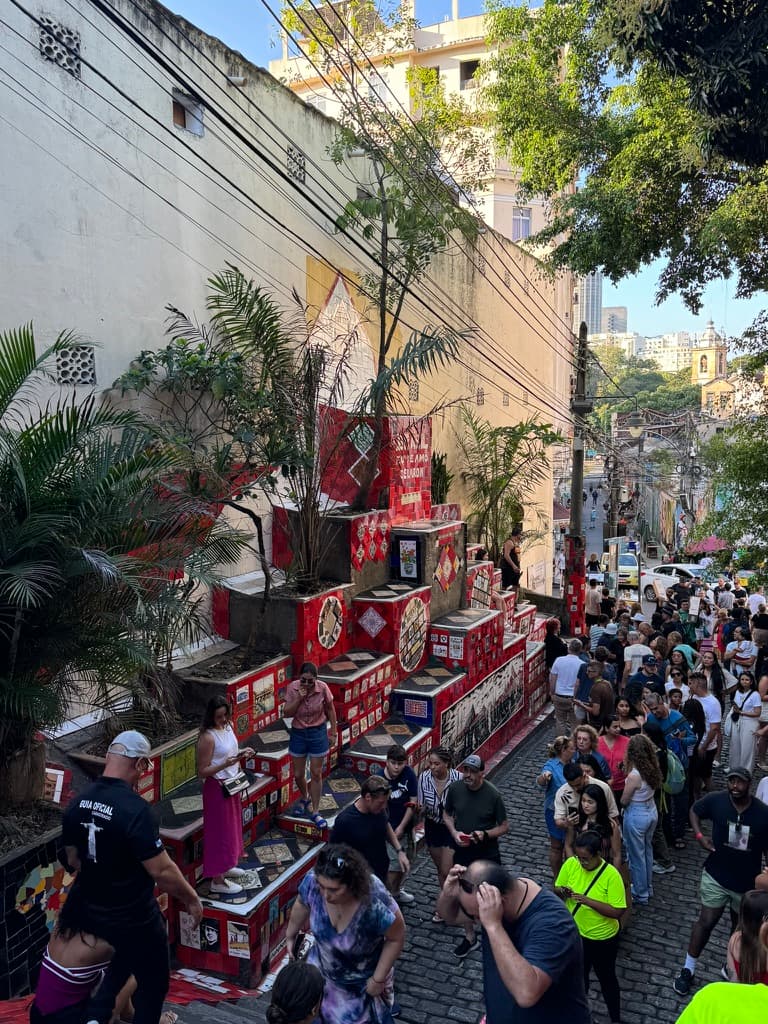 See & DoFree
Escadaria Selarón (Selaron Stairs)
Top Places to Eat in Rio de Janeiro
View all Eat & DrinkModerate · $$
Casa Nossa Lounge
 Eat & DrinkModerate · $$
Bar do Mineiro
 Eat & DrinkBudget · $
Cultivar
 Eat & DrinkExpensive · $$$
Maria e o Boi
 Eat & DrinkUltra Luxury · $$$$$
Feijoada House
 Eat & DrinkBudget · $
Confeitaria Colombo (CCBB)
 Eat & DrinkExpensive · $$$
Casa Camolese
 Eat & Drink
Tapí Tapioca e Açaí
Bookable experiences
Top experiences in Rio de Janeiro

Half Day Hiking Tour Morro Dois Irmaos and Favela Vidigal

Paragliding Rio de Janeiro

From the Past to the Present: A Historical Walking Tour of Rio

Day Tour in Rio de Janeiro

Tijuca National Park and all its wonders

Private customized Tour of Rio de Janeiro
Bookings made via these links may earn Bazar Travels a small commission, at no extra cost to you. Tours are provided by Viator, a Tripadvisor company.