
Museo Nazionale di Castel Sant’Angelo
Lungotevere Castello 50, 00193 Rome Italy Posted by Brandon B.Admin
Museo Nazionale di Castel Sant'Angelo: Rome's Most Dramatic Monument
There are buildings in Rome that hold history, and then there is Castel Sant'Angelo. The Museo Nazionale di Castel Sant'Angelo sits on the west bank of the Tiber at Lungotevere Castello 50, close enough to the Vatican that you can see St. Peter's dome from its upper terrace. What started as a Roman emperor's tomb became, over roughly nineteen centuries, a mausoleum, a fortress, a papal refuge, a prison, and finally the museum it is today. That layering of purposes is exactly what makes it worth your time.
Few monuments in Rome reward slow exploration the way this one does. Most visitors give it two hours and leave wishing they had more.
Why Castel Sant'Angelo Matters
The building began as the Mausoleum of Hadrian, commissioned by the emperor around 123 AD and completed after his death in 139 AD. Hadrian designed it as a dynastic tomb, and several emperors after him were interred here. Then the function changed entirely. By the medieval period, the structure had been fortified and absorbed into Rome's defensive walls. The popes eventually connected it to the Vatican Palace by the Passetto di Borgo, an elevated corridor built along the walls, which allowed them to flee to the castle in emergencies. Pope Clement VII famously used it during the Sack of Rome in 1527.
That escape route still exists. You can walk part of it today.
The castle also served as a papal prison for centuries. Giordano Bruno and Galileo Galilei were both held here at different points, which gives the place a weight that no amount of renovation can paper over. The angel on top, a bronze figure of the Archangel Michael, was placed there after a vision Pope Gregory I reportedly had in 590 AD during a plague, when he saw the angel sheathing its sword as a sign the plague was ending. The current bronze statue dates from the 18th century, though earlier versions preceded it.
Quick Facts
- Address: Lungotevere Castello 50, 00193 Rome
- Construction began: around 123 AD under Emperor Hadrian
- Originally built as: the Mausoleum of Hadrian
- Current use: state museum (Museo Nazionale)
- Floors: the complex spans six levels, from the original Roman base to the upper terrace
- Nearest bridge: Ponte Sant'Angelo, about a two-minute walk from the entrance
- Nearest Vatican entrance: roughly a ten-minute walk along the river
Getting There
The castle stands on the right bank of the Tiber, in the Prati neighborhood. From the historic center, walking across Ponte Sant'Angelo is the most direct approach and also one of the more pleasant walks in Rome. The bridge is lined with Bernini-designed angel sculptures and gives you a clear frontal view of the castle as you approach.
If you are coming by metro, the nearest stop is Lepanto on Line A, about a ten-minute walk north along the river. Bus routes along Lungotevere also stop nearby. Taxis can drop you directly at the entrance on Lungotevere Castello. Driving is not practical in this part of Rome, and parking near the river is genuinely difficult most days.
The Layout and Experience
The visit moves through distinct historical layers, and that is not a metaphor. You physically descend into the original Roman mausoleum and then work your way upward through medieval fortifications, Renaissance papal apartments, and finally the open terrace at the top. The spiral ramp at the core of the building is one of the most unusual architectural features you will encounter in any museum in the world. It dates to the original Roman construction and winds through the heart of the cylindrical structure.
The papal apartments on the upper levels are richly decorated, with frescoes and furnishings that reflect the tastes of Renaissance popes. Rooms like the Sala Paolina and the bathroom of Clement VII feel oddly intimate given the military character of the rest of the building. The contrast between the heavy stone of the lower levels and the painted ceilings above is genuinely striking.
The terrace at the top is where most people stop and catch their breath, both literally and figuratively. The view takes in St. Peter's Basilica, the Tiber, and a wide sweep of Rome's rooftops. On clear days, which are common outside of summer haze, it is one of the better panoramic views the city offers without requiring a climb up a bell tower.
Tickets and Entry
The museum charges general admission, and there is also a reduced rate for EU citizens in certain age groups. Timed entry is available and can help you avoid the worst of the crowds, particularly in summer. Booking in advance is worth doing from April through October, when lines at the entrance can stretch along the Lungotevere. The museum participates in Italy's free-entry days for state museums, which typically occur on the first Sunday of each month, though these days get extremely busy.
Guided tours, both official and independent, are available and can add a lot to the experience, particularly in the lower Roman sections where the context is not always obvious from the signage alone.
Best Time to Visit
Early morning on a weekday is the most comfortable time to visit. The castle opens in the morning and the first hour tends to be significantly quieter than midday. If you arrive around opening time, you can often have the spiral ramp and lower levels almost to yourself before tour groups filter in.
Summer afternoons are the hardest time to enjoy the place. The upper terrace has very little shade, and temperatures in July and August can make it genuinely unpleasant. Spring and autumn offer the best combination of comfortable weather and manageable crowds. December and January are quiet, though some rooms may be closed for maintenance during the off-season.
The castle is also occasionally open for evening visits during certain periods, which changes the terrace view entirely and is worth checking for when you plan your trip.
Photography Tips
The best exterior shot of the castle is from Ponte Sant'Angelo itself, ideally in the hour before sunset when the light hits the travertine facade from the west. For the interior, the spiral ramp photographs well with a wide lens and benefits from natural light filtering through the small openings in the walls. The terrace is an obvious spot, but if you move to the far corners rather than crowding the central viewing area, you get cleaner compositions with fewer other visitors in frame.
Flash photography is restricted in the decorated papal apartments, and tripods are generally not permitted without prior arrangement. A phone camera handles most of the interior well in good light, but the lower Roman sections are genuinely dim.
Combining with Nearby Attractions
The Vatican Museums and St. Peter's Basilica are the obvious pairing, roughly ten minutes on foot along the river. Most visitors combine the two on the same day, though that makes for a long and tiring visit. A more manageable approach is to do Castel Sant'Angelo in the morning and then cross to the Vatican neighborhood for lunch in Prati before heading into St. Peter's Square in the afternoon.
Piazza Navona is about a twenty-minute walk through the historic center, and the Campo de' Fiori is not far beyond that. If you are spending a full day in this part of Rome, both are worth adding. The walk from the castle toward Piazza Navona takes you through streets that are considerably less tourist-dense than the main Via della Conciliazione corridor toward the Vatican.
Practical Tips
- Wear comfortable shoes. The spiral ramp and stone staircases are uneven in places and there is no shortcut to the upper levels.
- Bring water, especially in summer. The terrace has no shade and the climb through the building is warmer than you might expect.
- The audio guide is available in multiple languages and covers the main rooms well. It is worth picking up if you are visiting independently.
- Bags larger than standard daypack size may need to be checked at the entrance.
- The museum is closed on Mondays, which is consistent with most Italian state museums.
- If you book a skip-the-line ticket, confirm whether it includes the cost of the audio guide or whether that is a separate fee at the desk.
- The Passetto di Borgo, the elevated papal escape corridor, is visible from the castle but not always accessible to general visitors. Check current access when booking.
FAQ
How long does a visit to Castel Sant'Angelo take?
Most visitors spend between one and a half and three hours inside, depending on how closely they look at the papal apartments and the military museum collections. If you want to cover everything without rushing, allow at least two and a half hours.
Is Castel Sant'Angelo accessible for visitors with mobility limitations?
The original spiral ramp is accessible and connects several levels, but parts of the castle involve steep stairs with no lift alternative. It is worth contacting the museum directly before your visit if mobility is a concern, as accessible routes cover some but not all of the building.
Can you see the Passetto di Borgo from inside the castle?
Yes. The elevated corridor connecting the castle to the Vatican walls is clearly visible from the upper levels and from the terrace. Whether you can walk along it depends on current programming, as access is not always open to general visitors.
Is the museum suitable for children?
The spiral ramp, the rooftop views, and the general scale of the place tend to go over well with older children. The rooms focused on Renaissance decoration and papal history are less likely to hold the attention of younger kids, but the fortress and military aspects of the building often do.
Do I need to book in advance?
From spring through early autumn, advance booking is strongly recommended. In the quieter winter months, you can often walk in, but it is still worth checking availability online before you go rather than assuming the queue will be short.
Reviews
Sign in and mark this place visited to leave a review.
No reviews yet.
Free Trip Planner
Plan your Italy trip with our free planner
Build a day-by-day itinerary with AI suggestions, hand-picked places, and friends. Free forever — no credit card.
Things to see near Museo Nazionale di Castel Sant’Angelo



Places to eat or drink near Museo Nazionale di Castel Sant’Angelo
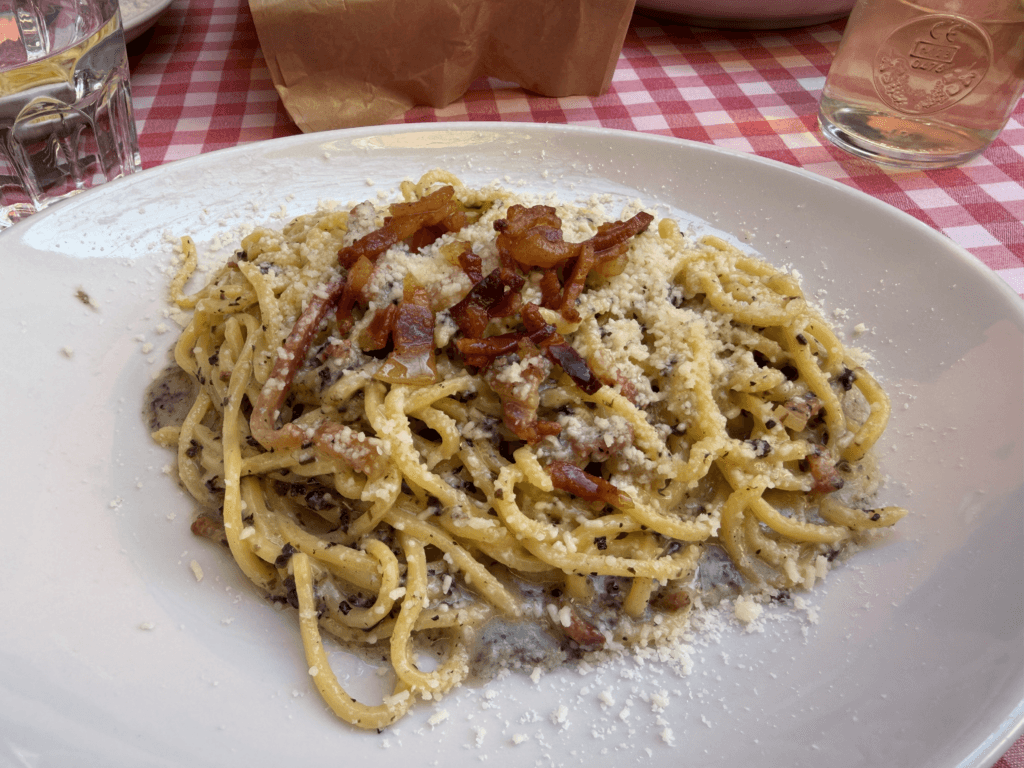
Arianna al Borghetto

La Pietra Scheggiata – Osteria/Pizzeria

Pasticceria Barberini


