Posted by Brandon B.Admin
Patershol: Ghent's Medieval Neighborhood Frozen in Time
Patershol is a quarter-square-kilometer neighborhood in central Ghent that feels like stepping backward seven centuries. Narrow cobblestone streets barely wide enough for two people, shuttered Flemish townhouses with uneven facades, and a layout that hasn't changed since the 1300s make this one of Belgium's most intact medieval districts. Unlike many renovated heritage zones that cater to tourists, Patershol remains a lived-in neighborhood where residents actually live, work, and eat. The streets have names like Haringsteeg and Graffiti Street, and the houses lean at angles that suggest they've been settling into their foundations for 600 years.
The quarter sits just north of Sint-Baafskathedraal and east of the main canal, tucked into a fold of Ghent's landscape where it's easy to lose track of modern time. You'll find small restaurants, cafes, and galleries mixed with residential doors. On quiet mornings, you might hear only footsteps and the occasional shutter opening.
Why This Place Matters
Patershol survived the religious upheaval of the 16th century, the French occupation of the 1790s, and the industrial sprawl of the 19th century without significant demolition or reconstruction. That survival is almost accidental. The neighborhood was poor and working-class for most of its history, so developers never saw profit in razing it. By the time Ghent's medieval charm became fashionable in the late 20th century, locals had already decided to preserve rather than replace.
The name itself comes from the Pater Begijnhof, a beguinage founded in the 13th century where lay religious women lived under loose monastic rules. That spiritual history still colors the place. You won't find the beguinage building itself anymore, but the narrow streets and tight community feeling echo it.
Quick Facts
- Medieval quarter established in the 1200s, largely unchanged since the 1400s
- Core area covers roughly 20 hectares of interconnected streets
- No admission fee to walk the streets
- Main entrance: Haringsteeg, near Sint-Baafskathedraal
- Best explored on foot; car access is limited
- Mix of residential spaces, cafes, restaurants, and small galleries
Getting There
Patershol is a ten-minute walk from Ghent Centraal station. Exit the station heading northwest, cross the Grasbrug bridge, and follow Graffiti Street (yes, the actual name) uphill. The neighborhood sits on a slight slope that rises away from the main canal zone.
If you arrive by tram, lines 1 and 4 stop near Sint-Baafskathedraal. From there, Patershol is a two-minute walk north.
Parking is nearly impossible during the day. If you must drive, aim for the parking garage at Sint-Baafskathedraal and walk from there, or visit very early morning when street parking occasionally opens up on the neighborhood's southern edge.
The Layout and Experience
Patershol has no grid. Streets curve and connect unpredictably. Haringsteeg runs north-south and serves as the main spine, while smaller alleys branch off at odd angles. Graffiti Street climbs steeply from the south. This maze-like quality is intentional. Medieval neighborhoods were designed for defense and foot traffic, not through-routes. You'll turn a corner expecting to hit a dead end and find a passage opening onto a hidden courtyard instead.
Walking here means surrendering to being temporarily lost. That's the point. You notice details you'd miss on a straight path: a carved stone date above a doorway (1542), a window frame made from a single piece of granite, the way light falls differently on each narrow street depending on the time of day.
Most streets are wide enough for a single car but too narrow for two. Residents navigate by foot and bicycle. During the day, the neighborhood feels quiet even when busy. Voices don't carry the same way they do in open spaces.
Main Highlights
Sint-Maartenskerk sits on the neighborhood's eastern edge. This late Gothic church was completed in 1533 and contains original stained glass and carved wooden choir stalls. The interior is spare compared to Ghent's other major churches, but the craftsmanship repays close attention.
Graffiti Street (Graffitistraat) is Patershol's steepest climb and most recognizable route. Despite the name, it's not covered in spray paint. The street earned its nickname from its history as a working-class quarter where residents were known for direct speech. It's lined with restaurants and cafes that spill onto the pavement on warm days.
The small courtyards tucked behind residential doors are worth noticing if you spot open gates. These private spaces often contain gardens, washing lines, and the everyday life of the neighborhood. You're not invited into them, but glimpses reveal how residents actually use their medieval surroundings.
Sint-Veerleplein is a small square in the neighborhood's heart where locals gather. On weekends, it hosts an informal market. The surrounding buildings date from the 1400s and 1500s.
History and Background
Patershol began as a settlement outside Ghent's first city walls in the 12th and 13th centuries. Working people lived here: weavers, fullers, dyers, and laborers connected to the cloth trade that made Ghent wealthy. The Pater Begijnhof, founded in the early 13th century, brought religious structure to the area. Women living there followed a spiritual life without taking permanent vows, a status unique to the Low Countries.
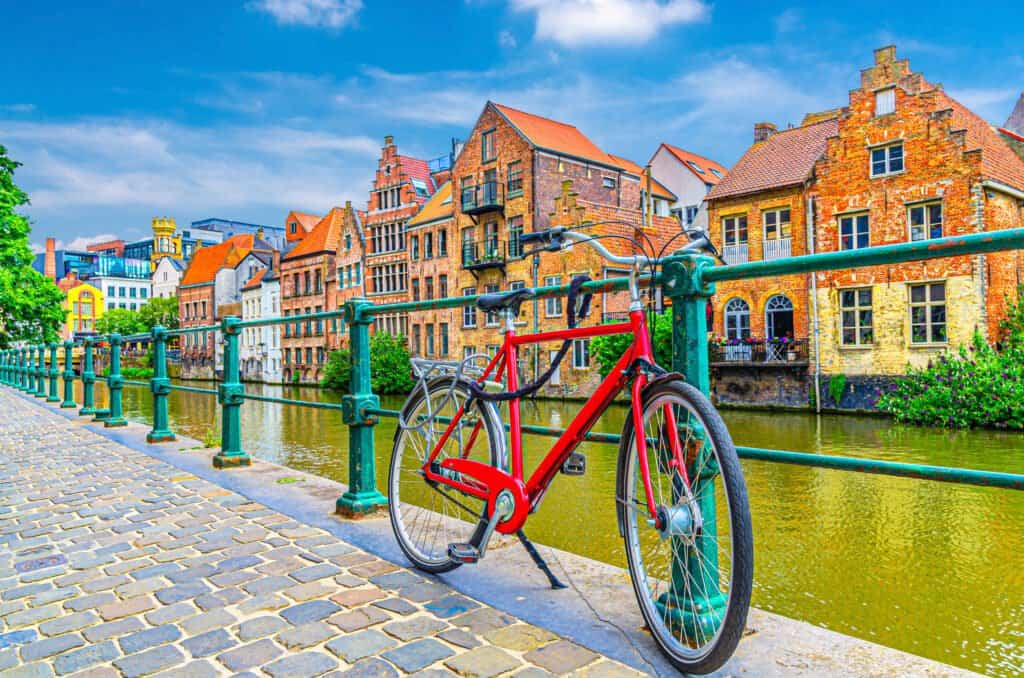
By the 1400s, Patershol was a fully developed neighborhood with its own character. The buildings you see today mostly date from that period through the 1600s. The architecture is Flemish: brick with sandstone details, shuttered windows, pitched roofs with dormer windows, and facades that settle unevenly as the timber frames beneath them shift.
The neighborhood declined in the 19th and early 20th centuries as industrial Ghent expanded elsewhere. By the 1960s, Patershol was slated for demolition as part of urban renewal plans. Local residents and preservationists fought back. In 1973, the city designated Patershol a protected historic district. Restoration began slowly and continues in fits and starts as residents maintain their homes.
Best Time to Visit
Spring and autumn offer the best balance. Summer brings crowds, especially on weekends, and the narrow streets get congested. Winter is quieter and atmospheric, though short days mean you'll lose light by 4 p.m. in December.
Weekday mornings are noticeably calmer than weekend afternoons. If you visit on a Saturday or Sunday, go early, before 10 a.m., to experience the neighborhood closer to how residents know it.
Rain suits Patershol. The cobblestones gleam, the shutters look darker and more defined, and fewer tourists arrive. You'll have the narrow streets nearly to yourself.
Facilities and Preparation
Wear comfortable walking shoes with good grip. The cobblestones are authentic and uneven. The neighborhood is hilly, especially if you climb Graffiti Street. The streets are narrow enough that you'll brush shoulders with people coming the other way.
The neighborhood has several cafes and restaurants, but no supermarkets or pharmacies. If you need supplies, buy them before entering Patershol or head back to the main shopping district.
Public restrooms are scarce. Use facilities at a cafe or restaurant if you need them. Several cafes will serve you a coffee or beer without pressure to stay long if you're primarily looking for a restroom.
Combining with Nearby Attractions
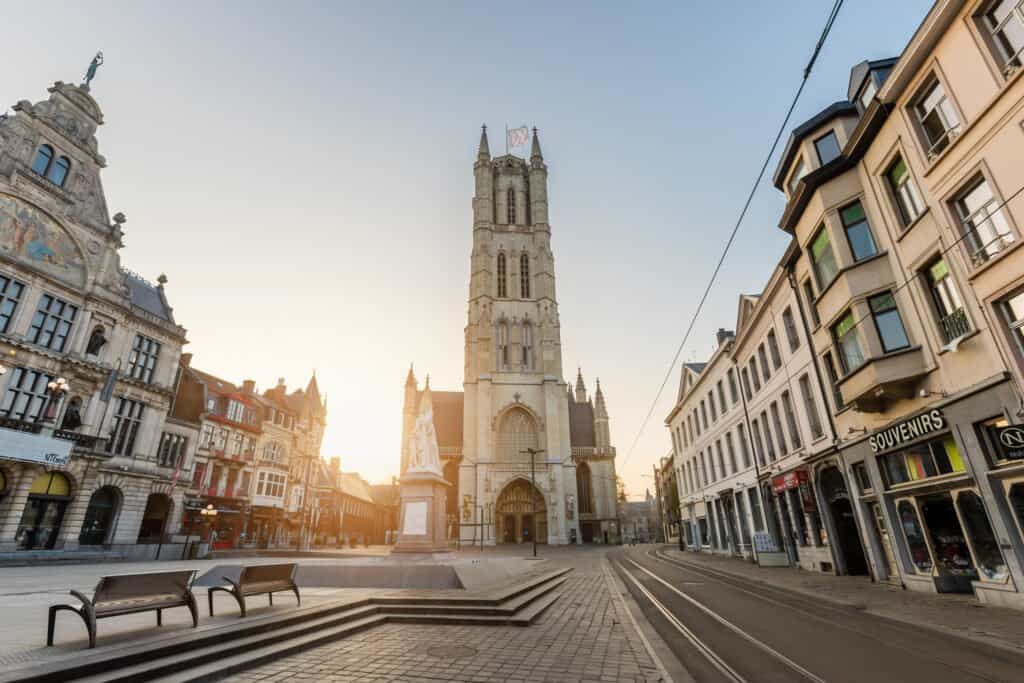
Sint-Baafskathedraal, where the Ghent Altarpiece hangs, is a two-minute walk south. The cathedral's interior is overwhelming after the intimate scale of Patershol. The contrast between the two spaces is worth experiencing in that order.
The Museum of Fine Arts and the Museum of Contemporary Art sit west of Patershol, about a 15-minute walk through the city center. Spend two to three hours in Patershol, then head to one of the museums for the afternoon.
Sint-Veerleplein connects to the broader network of Ghent's canals. If you walk south from Patershol toward Sint-Michielsbrug, you enter the postcard zone of Ghent where the old guild halls line the waterfront. The two areas feel entirely different despite being minutes apart.
Sample Visit Plan
Arrive at Patershol by 9 a.m. Start at Haringsteeg and walk slowly north, allowing yourself to turn down any side street that looks interesting. Stop at Sint-Maartenskerk and spend 20 minutes inside. Continue exploring the eastern streets. By 10:30 a.m., you'll have a sense of the neighborhood's layout.
Find a cafe on Graffiti Street for a coffee and pastry around 11 a.m. Sit outside if the weather permits. Watch the street come to life as the morning progresses.
Spend the next hour revisiting any streets you want to photograph or any shops that caught your eye. By noon, head south to Sint-Baafskathedraal or continue exploring Ghent's canal zone.
Practical Tips
- Bring a camera or phone with good battery. The light changes dramatically as you move between narrow streets and small squares
- Download an offline map. Cell signal is patchy in the oldest streets
- Respect residential privacy. Don't photograph people or open windows without permission
- Visit a cafe or restaurant to support the neighborhood's local economy. Patershol survives because residents can afford to live there
- Bring cash. Several smaller cafes and galleries don't accept cards
- Walk slowly. You'll notice details invisible at normal pace
FAQ
How long does it take to walk through Patershol? A casual walk through the main streets takes 45 minutes to an hour. If you stop at cafes, visit Sint-Maartenskerk, and explore side alleys, plan two to three hours.
Is Patershol wheelchair accessible? No. The cobblestones are uneven, many streets are very steep, and doorways are narrow. This is a challenging neighborhood for mobility issues.
Are there hotels in Patershol? A handful of small guesthouses operate within the neighborhood, but they're limited. Most visitors stay elsewhere in Ghent and walk in for a few hours.
Can you buy anything besides food in Patershol? Several small galleries, antique shops, and craft studios operate in the neighborhood, but the selection is limited. Patershol is primarily a residential area with some tourism infrastructure, not a shopping district.
Do I need a guide to visit Patershol? No. The neighborhood is safe, and getting lost is part of the experience. If you prefer structure, walking tour companies in Ghent offer guided tours that include Patershol as part of larger city routes.
Patershol's Quiet Persistence
Patershol isn't a museum or a theme park. It's a neighborhood where people live. You're not entering a restored historical district frozen in time; you're walking through a place where medieval buildings have been continuously occupied, repaired, and adapted for 600 years. That distinction matters. The narrow streets carry the weight of actual time rather than the feeling of preservation.
If you're seeking Instagram moments and major attractions, Patershol will disappoint you. If you want to understand what a medieval neighborhood actually felt like to live in, and you're willing to spend a few hours noticing details, Patershol rewards your attention. The neighborhood asks you to slow down. Most visitors do.
Reviews
Sign in and mark this place visited to leave a review.
No reviews yet.
Free Trip Planner
Plan your Belgium trip with our free planner
Build a day-by-day itinerary with AI suggestions, hand-picked places, and friends. Free forever — no credit card.
Things to see near Patershol

Museum Voor Schone Kunsten

STAM Ghent City Museum
St. Bavo’s Cathedral (Sint-Baafskathedraal)