

Belgium on the map
80 places from this guide. Tap a pin to open the listing.
Belgium packs an outsized amount of material into a small footprint. You can stand in Brussels in the morning, walk the canal paths of Bruges by lunchtime, and be back in time for dinner, all without touching a motorway for more than an hour. This Belgium travel guide is built around that compactness: where to go, when to go, what to eat, and how the trains and trams actually work once you land. Expect medieval market squares, serious beer culture, and a stretch of the Ardennes where the Second World War is still written into the landscape.
Overview
Most first trips to Belgium orbit three cities: Brussels for politics and Art Nouveau, Bruges for the canals, and Ghent for a quieter, less touristed version of the same medieval fabric. Antwerp adds fashion, diamonds, and a bigger port-city energy. Beyond the cities, the Ardennes forests in the south hold both hiking trails and a heavy layer of WWII history around Bastogne.
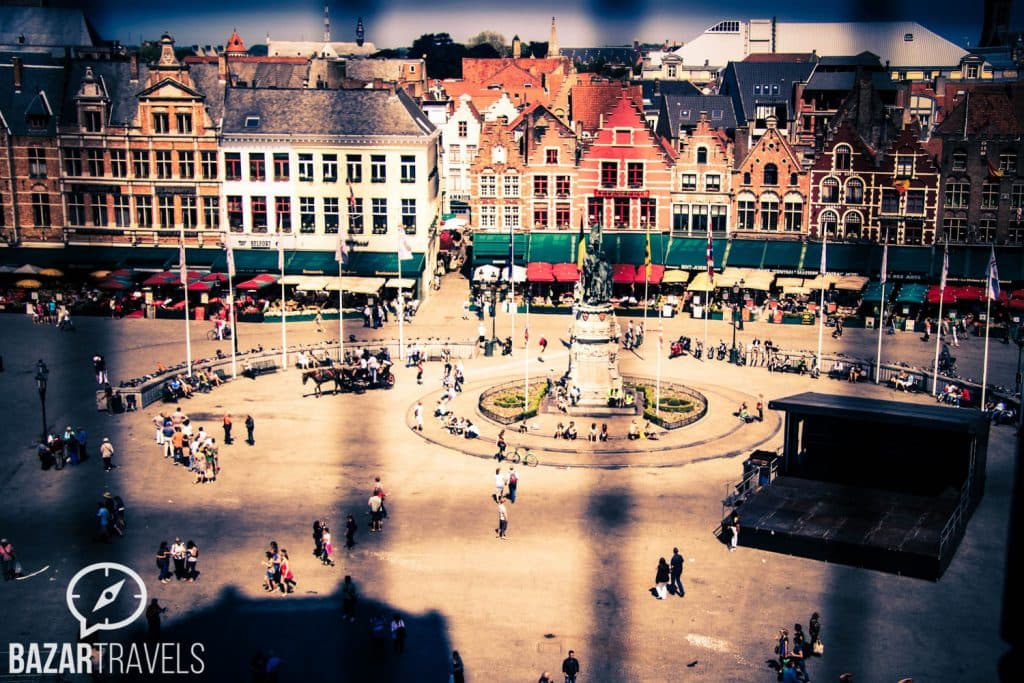
Bruges rewards slow walking more than any checklist. The Markt sits at the center of it all, ringed by gabled guild houses and the Belfry tower, and from there it's a short walk to the Basilica of the Holy Blood, a church that has held its relic since the 12th century and still draws pilgrims alongside sightseers. The Church of Our Lady, a few streets over, holds a Michelangelo sculpture, the Madonna and Child, one of the few pieces by him that left Italy during his lifetime. Its brick tower climbs past 115 meters, among the tallest of its kind anywhere. For art, the Groeninge Museum is the city's strongest collection of Flemish Primitives, with work by van Eyck and Memling hung in rooms small enough that you're never far from the canvas.
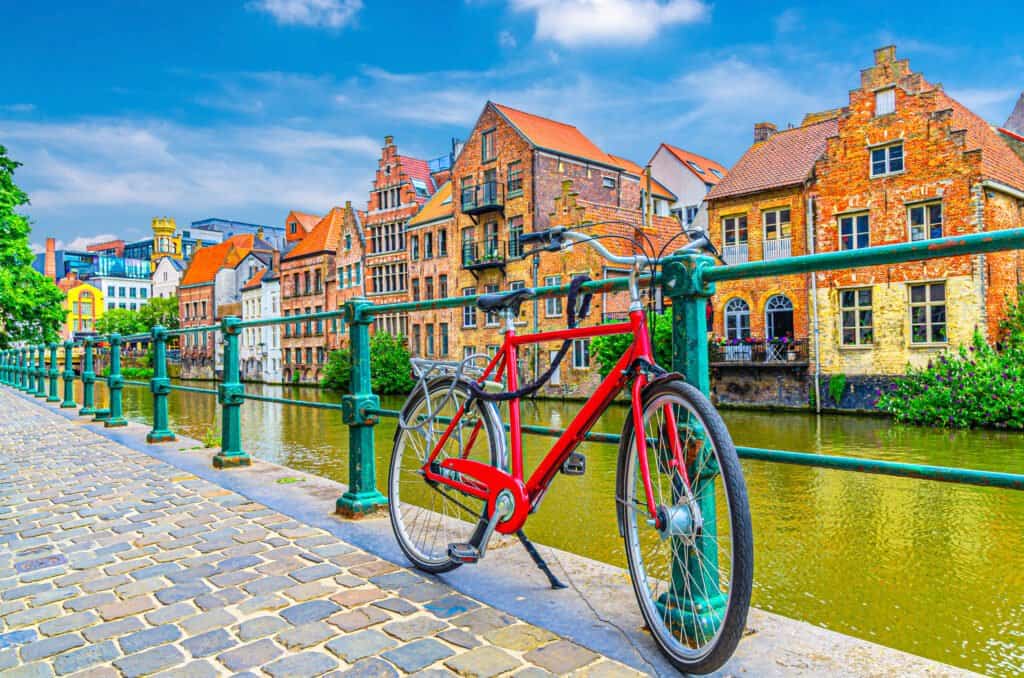
Give yourself at least an hour by the water. A Bruges Canal Tour is the easiest way to see the back sides of houses that face the canals rather than the streets, and it's genuinely the best angle on the city. Walk south afterward to the Beguinage "Ten Wijngaerde," a walled community of whitewashed houses founded for lay religious women in the 13th century and now partly occupied by Benedictine nuns, and then to Minnewater, the small lake just beyond it that locals call the Lake of Love.
When to Visit
Spring, from April through June, is when Belgium's parks and gardens wake up, and it's a comfortable stretch for walking cities without crowds at their peak. Ghent's Floralien and the seasonal displays at Brussels' Royal Greenhouses (open only a few weeks a year, so check the dates ahead) are worth timing a trip around.
Summer, June through August, brings the longest days and the busiest festival calendar. The Brussels Jazz Marathon and the ten-day Gentse Feesten in Ghent turn whole neighborhoods into open-air stages. It's also peak tourist season in Bruges, where the Markt and the canal paths can get genuinely crowded by midmorning, so an early start pays off.
Autumn, September through November, cools things down and thins the crowds. Brussels' parks color up nicely, and food-focused events like Brussels Chocolate Week give you a reason to eat more than usual. It's a good season if you'd rather have the Groeninge Museum or the Beguinage largely to yourself.
Winter runs cold and gray more often than not, but December brings Christmas markets to Brussels' Grand Place, Bruges, and Antwerp, plus mulled wine and speculoos at every turn. Days are short, so plan indoor time accordingly.
How to reach the destination
Brussels Airport (Zaventem) is the main international gateway, with direct connections across Europe and a handful of long-haul routes. Brussels South Charleroi Airport, about an hour south of the capital, handles a lot of the budget carrier traffic, including Ryanair. Antwerp and Liège airports exist mainly for regional and cargo traffic rather than general tourism.
By train, Belgium sits inside the European high-speed network. Eurostar connects Brussels directly with London, and Thalys (now folded into the Eurostar brand) links it with Paris, Amsterdam, and Cologne, with journey times under two hours from several of those cities. If you're coming from elsewhere in Western Europe, train is often faster door to door than flying once you factor in airport time.
Driving in is straightforward given Belgium's position at the crossroads of France, Germany, the Netherlands, and Luxembourg, and the motorway network is dense and well signed. From the UK, ferries run from Hull and other ports to Zeebrugge, and that route works well if you're bringing a car.
Getting around the destination
The national rail operator, SNCB/NMBS, is the backbone of getting around the country. Brussels to Bruges takes about an hour, Brussels to Ghent around half that, and Brussels to Antwerp less than an hour, which makes day trips genuinely easy without a car.
Within cities, Brussels runs its own integrated network of metro, tram, and bus through STIB/MIVB, while Flemish cities like Bruges, Ghent, and Antwerp rely on De Lijn trams and buses. Bruges itself is compact enough to walk end to end in under half an hour, and most visitors never need public transport inside the old center at all.
Bikes are a serious transport option, not just a tourist activity. Belgium's cycling infrastructure is solid, and Bruges and Ghent especially reward exploring by bike. If your itinerary includes the Ardennes and the Bastogne battlefield sites, a car becomes much more useful, since many of the individual memorials and cemeteries sit along rural roads with no public transport nearby.
Top destination travel tips
- Set aside a full day for the Ardennes around Bastogne if WWII history interests you at all. The 101 Airborne Museum Le Mess – Bastogne covers the December 1944 siege in detail, and the surrounding countryside still carries physical traces of it: a Tank Turret sits roadside on the Route de Neufchâteau, and the German Military Cemetery in Recogne and the site of the Temporary American Cemetery in Foy sit within a short drive of each other.
- Walk the Bois Jacques forest near Foy if you've watched Band of Brothers. The Shifty Powers Bullet Impacts, tree trunks still marked from the fighting, are a quiet, unmarketed stop that most tour buses skip.
- Look for the Liberty Road milestones as you drive through the region, including Liberty Road Milestone 1147 and Liberty Road Milestone 1146, numbered markers tracing the Allied advance from the Normandy beaches to Bastogne. Near town, the Monument Emile Cady and the Memorial Renée Lemaire and 10th Armored Aid Station honor a Belgian civilian and a nurse who both died helping the wounded during the siege.
- Tipping is modest. Rounding up a bill or leaving a euro or two is normal; nobody expects American-style percentages.
- Dutch, French, and German are all official languages, and which one you'll hear depends entirely on region: Dutch in Flanders (Bruges, Ghent, Antwerp), French in Wallonia and much of Brussels. English is widely understood in tourist areas regardless.
- Watch your bike and your bag in busy squares like the Grand Place and the Markt. Petty theft is more of an issue than anything violent.
- In Antwerp, make time for something less obvious than the cathedral: Retsins Lucifernum is a private baroque house turned bar and small museum, open only a few nights a week, and it's one of the odder, more memorable stops in the city if the hours line up with your visit.
- A local SIM or eSIM is easy to pick up at the airport, and coverage across the country, including the Ardennes, is generally reliable.
Typical costs in the destination
Belgium uses the euro, and prices sit in the mid-range for Western Europe, cheaper than Paris or Amsterdam but not far behind. A casual lunch, a sandwich or a plate of fries with a beer, runs budget to mid-range, while a proper sit-down dinner with wine pushes into upscale territory, especially in central Brussels or along Bruges' main tourist streets.
Museum entry generally falls into a budget to mid-range tier per ticket, and many cities offer combined city-pass cards that bundle transport and attractions if you're hitting several sights in a day. Beer, unsurprisingly, is one of the better values in the country: a glass of a strong Trappist or abbey beer in a local pub costs less than you'd expect given the quality.
Train travel is reasonably priced for the distances involved, and booking ahead on SNCB rarely saves much since most routes are short enough that fares stay flat. Accommodation ranges from budget hostels to upscale boutique hotels in converted canal houses in Bruges, with the latter commanding a real premium in summer.
Must try food and drinks
- Belgian waffles, which split into two regional styles: the dense, caramelized Liège waffle and the lighter, crisper Brussels waffle. Chez Albert - Gauffres - Waffles in Bruges is a reliable, no-frills spot to try one fresh off the iron.
- Moules-frites, mussels steamed in white wine or cream and served with a mountain of fries, is close to a national dish and shows up on almost every menu from brasseries to upscale restaurants.
- Belgian fries themselves deserve attention on their own, twice-fried in the traditional method and served in a paper cone with mayonnaise rather than ketchup.
- Beer is the country's deepest culinary tradition. In Bruges, Huisbrouwerij De Halve Maan still brews on-site in the city center and runs tours through its old copper kettles, and Café Vlissinghe, dating back to 1515, is generally considered the oldest pub in Bruges and a good place to sit with a Trappist beer at the end of the day.
- Chocolate is everywhere, but quality varies wildly between tourist-trap shops and real chocolatiers, so look for places that make pralines in-house rather than importing them.
- Speculoos, the spiced, caramelized cookie, pairs naturally with coffee and shows up in everything from ice cream to spread form in winter.
For sit-down meals in Bruges, Maguie and Tatar both do modern bistro cooking without straying far from Belgian basics, GUS is a relaxed option near the canals, Shrimp's focuses on seafood close to the Markt, and CALMOS doubles as a wine bar and caviste if you'd rather graze and drink than commit to a full dinner. In Brussels, Le 17.45 in Ixelles is worth seeking out if you want a neighborhood dining room away from the main tourist strip.
FAQ
How many days do you need in Belgium?
Four to six days covers the main cities comfortably: two in Brussels, one or two in Bruges, and a day each for Ghent and Antwerp if time allows. Add an extra day or two if you want to include the Ardennes and the Bastogne battlefield sites, since they sit outside the usual rail-and-walk itinerary.
Is Belgium expensive?
It sits in the mid-range for Western Europe, generally cheaper than France or the Netherlands but not a budget destination. Beer and casual food offer good value, while hotels in central Bruges during summer weekends can get surprisingly pricey, so book ahead if you're visiting in peak season.
Is English widely spoken in Belgium?
Yes, especially in Brussels, Bruges, Ghent, and Antwerp, where most people working in tourism and hospitality speak it comfortably. In smaller towns, particularly in rural Wallonia, French dominates and English fluency drops off, though a polite attempt at French or Dutch is always appreciated.
Do you need a car in Belgium?
Not for the main cities. Trains connect Brussels, Bruges, Ghent, and Antwerp quickly and frequently, and the city centers themselves are walkable. A car becomes genuinely useful if you plan to explore the Ardennes or the Bastogne-area WWII sites, since several of those memorials sit well off the rail network.
Is Belgium safe?
Yes, by most standard measures Belgium is a safe destination for travelers. The main risks are practical rather than serious: pickpocketing in crowded squares like the Grand Place and bike theft in cities with heavy cycling traffic. Normal city precautions cover you.
What's the best month to visit Belgium?
May and September tend to offer the best balance of decent weather and manageable crowds. If festivals matter more to you than crowd size, July and August bring the Gentse Feesten and the Brussels Jazz Marathon, while December brings the Christmas markets at the cost of short, cold days.
Is Bruges worth a day trip from Brussels, or should you stay overnight?
A day trip covers the highlights, including the Markt, the Basilica of the Holy Blood, and a canal tour, but Bruges empties out noticeably after the tour buses leave in late afternoon. Staying one night lets you see the city at its quietest and catch the Beguinage and Minnewater without the daytime crowds, which is the version most people end up preferring once they've tried it.
Top Places to Visit in Belgium
View all See & Do
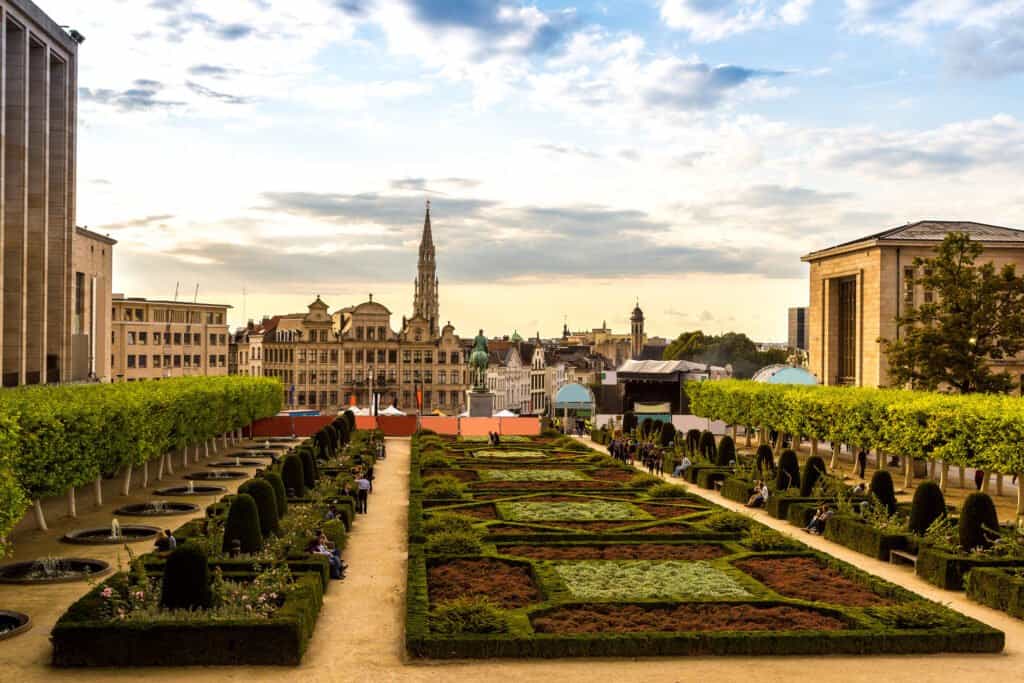
Jardin du Mont des Arts
 See & Do
 See & Do
 See & Do
 See & Do
 See & DoBudget · $
 See & Do
 See & DoBudget · $


