St Michael’s Bridge
Sint-Michielsplein, Ghent 9000 Belgium Posted by Brandon B.Admin
St Michael's Bridge
St Michael's Bridge spans the Leie River in the heart of Ghent, connecting Sint-Michielsplein with the medieval core of Belgium's most photogenic city. Built in 1898, this cast-iron footbridge has become the defining vantage point for viewing Ghent's three spires, the silhouette that defines the city's skyline. You'll find it crowded with cameras at dusk, but for good reason. The bridge itself is a modest structure, roughly 40 meters long, yet what surrounds it transforms a simple crossing into something far more significant.
Why This Place Matters
The bridge serves as the visual anchor for understanding Ghent's layout and history. From the center of St Michael's Bridge, three Gothic towers align in the frame: Sint-Baafskathedraal to the left, Sint-Niklaaskerk in the middle, and Sint-Jacobskerk to the right. This trinity of spires represents different centuries of Ghent's religious and civic power. The view from the bridge is so iconic that it appears on postcards, tourist brochures, and the cover of countless travel guides about Flanders.
But the bridge also matters as a gathering place. Locals and visitors pause here to orient themselves, to rest between museum visits, to watch the light change on the water. It's one of the few spots in Ghent where you can actually stand still and absorb the medieval fabric of the city without being swept along by foot traffic.
Quick Facts
- Built in 1898 as a cast-iron pedestrian bridge
- Spans the Leie River, approximately 40 meters in length
- Free to cross at any time of day
- Best light for photography is one to two hours before sunset
- No entrance fee or tickets required
Getting There
St Michael's Bridge is centrally located, about a 10-minute walk from Ghent's train station (Gent Sint-Pieters). If you're arriving by train, exit the station and follow signs toward the city center. Head north through the streets, and you'll gradually descend toward the water. The bridge sits at Sint-Michielsplein, the small plaza that opens onto it from the east side.
By tram, lines 1, 2, and 4 serve central Ghent. Get off at Sint-Jacobs or Graffiti Street stops, depending on your direction. From either stop, the bridge is a five-minute walk. Street parking exists nearby, though the historic center discourages cars. If you're driving, use one of the paid car parks on the perimeter and walk in.
The Layout and Experience
The bridge itself is narrow and carries foot traffic only. The metal railings have darkened with age and weather. From the western side (facing Sint-Michielsplein), you look out toward the spires. From the eastern side, you see the university buildings and the Citadelpark neighborhood.
The real draw is the western view. The three towers rise in a gentle arc from left to right. Sint-Baafskathedraal, the oldest, leans slightly. Sint-Niklaaskerk, the tallest, dominates the center. Sint-Jacobskerk, the newest of the three, completes the composition on the right. The water below reflects these towers on clear days, doubling the visual impact.
The plaza on the east side (Sint-Michielsplein) is paved and open. Cafes ring the square. You can sit at an outdoor table and frame the bridge and towers in your view. On summer evenings, the plaza fills with locals and tourists alike, creating a social atmosphere that contrasts with the quieter neighborhoods immediately north and south.
Main Highlights
The iconic three-tower view is the primary reason to visit. Stand in the center of the bridge and look west. This is the composition that defines Ghent in the minds of millions. The perspective changes slightly depending on where you stand along the bridge's length, so spend time shifting your position.
The bridge's cast-iron railings themselves are worth a moment's attention. The metalwork is simple but sturdy, showing the industrial aesthetic of the 1890s. Plaques and small carvings mark the bridge's age.
Water reflections appear on calm days, especially in early morning before wind picks up. The reflections in the Leie River double the visual depth of the towers and surrounding buildings. Photographers often shoot from the bridge looking both directions to capture different moods.
History and Background
St Michael's Bridge replaced an earlier wooden crossing that had served the same location for centuries. The 1898 cast-iron design reflected Ghent's prosperity during the industrial boom of the late 19th century. The city was wealthy, connected by rail and canal to the North Sea, and the bridge's engineering reflects that confidence.
The three towers it frames date from different eras. Sint-Niklaaskerk was begun in the 13th century as a market church, serving the merchant class. Sint-Baafskathedraal, where the Van Eyck Altarpiece hangs, dates from the 14th century. Sint-Jacobskerk, the most ornate of the three, came later in the 15th century. Together, they map Ghent's religious and economic evolution across three centuries.
The bridge became a formal vantage point in the 20th century as tourism grew. By the 1960s and 1970s, it was recognized as the essential Ghent view. Today it's protected as part of the UNESCO World Heritage site that encompasses Ghent's medieval city center.
Best Time to Visit
Early morning, before 8am, is quiet. You'll have the bridge nearly to yourself and the light is soft and even. Midday brings crowds and harsh shadows. Late afternoon, roughly 4pm onward, brings the best light for photography. The sun drops low enough to illuminate the tower faces without bleaching the details.
The hour before sunset is peak crowding. If you want solitude, arrive after sunset when the city lights come on. The towers glow against the darkening sky. Winter offers longer shadows and cooler light. Summer brings tourists but also clear skies.
Rain actually enhances the reflections in the water. A light rain on a cloudy afternoon can produce striking photographs because the water becomes mirror-like and the towers are evenly lit.
Photography Tips
The classic shot frames all three towers with water in the foreground. Stand roughly in the center of the bridge and shoot from waist height or slightly above. Use a wide-angle lens (35mm or wider on a full-frame camera) to capture the full sweep of the towers and the bridge railings in the same frame.
For reflections, position yourself on the bridge railings' side and shoot down and across the water at a low angle. This requires stepping back from the crowds, often to the eastern side of the bridge. Early morning light produces the clearest reflections because the water is calm.
Shoot the towers at different times of day to compare how the light changes. The yellow brick and stone of the cathedral and church faces shift from cool gray in morning light to warm gold in late afternoon. The tower spires show fine detail in soft, diffused light but become silhouettes at sunset.
Avoid shooting directly into the sun unless you're going for a silhouette effect. The contrast between the bright sky and dark towers will fool your camera's meter. Use exposure compensation or spot metering on the tower faces.
Facilities and Preparation
The bridge itself has no facilities. There are no restrooms, no benches, no shelter from rain. The plaza on the east side (Sint-Michielsplein) has cafes and restaurants, and a public restroom is available in the Citadelpark area, about a five-minute walk north.
Wear comfortable shoes. The bridge is paved but the surrounding streets are cobblestone, which can be tiring after hours of walking. Bring a light layer even in summer, as the bridge is exposed to wind and the water creates a cooling effect.
If you're visiting during peak hours (late afternoon in summer), expect crowds. The bridge is not very wide, so moving around other visitors can be challenging. Arrive early or late to avoid the rush.
Combining with Nearby Attractions
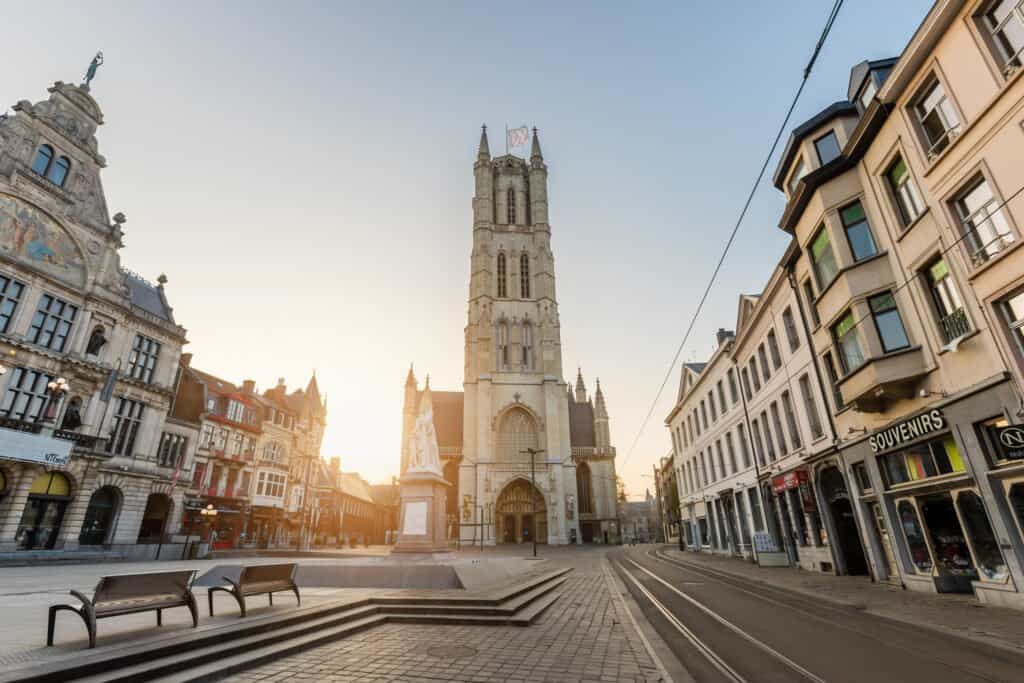
Sint-Baafskathedraal is immediately adjacent to the bridge's western side, about a two-minute walk. The cathedral houses the Van Eyck Altarpiece, one of the most important paintings in European art. Entry requires a ticket.
Sint-Niklaaskerk, the central spire, is also within two minutes' walk. It functions as a working church but is open to visitors during daylight hours. The interior is stark and beautiful, quite different from the ornate cathedral.
The Citadelpark lies north of the bridge and contains several museums including the Museum of Fine Arts and the Design Museum. The park itself is green and quiet, a contrast to the busier central streets.
Graslei, the historic waterfront on the opposite (northern) side of the Leie River, is accessible by crossing one of the other bridges or walking the riverside path. Medieval guild houses line this street, offering another essential Ghent view.
Sample Visit Plan
Arrive at St Michael's Bridge early, around 7am, for a quiet morning view and soft light. Spend 20 to 30 minutes taking photographs and sitting on the plaza. Walk west across the bridge and enter Sint-Baafskathedraal (allow 45 minutes to an hour inside).
Exit the cathedral and walk to Sint-Niklaaskerk (10-minute walk). Spend 30 minutes inside. Continue north through the city streets toward the Citadelpark if you're interested in museums, or return to Sint-Michielsplein for lunch at one of the cafes.
In the afternoon, explore the neighborhoods north and east of the bridge. Return to the bridge in late afternoon (4 to 5pm) for a second visit with better light. Have dinner at a restaurant overlooking the plaza, timing it so you can watch the towers light up at dusk.
Practical Tips
- Visit twice: once at dawn for quiet and soft light, again at dusk for golden hour and city lights
- The bridge is wheelchair accessible and flat
- Bring a tripod if you're serious about photography, though crowds may limit where you can set it up
- Download a map of Ghent before you arrive; cell service can be spotty in the medieval streets
- The plaza cafes are tourist-oriented and moderately priced; explore side streets for cheaper local spots
- Ghent's winter months (November to February) are gray and cool but less crowded than summer
FAQ
Is there an entrance fee to cross the bridge? No. The bridge is free and open 24 hours.
How long does a typical visit last? Most people spend 20 to 40 minutes on and around the bridge itself. If you combine it with the cathedrals and museums, plan for a full morning or afternoon.
Can I take a boat tour from here? Yes. Several boat tour companies depart from piers near Sint-Michielsplein. These tours circle the city's canals and offer different perspectives on the same towers you see from the bridge.
What's the best season for visiting? Late spring (May to June) and early autumn (September to October) offer clear skies, good light, and fewer crowds than peak summer. Winter is quiet but often gray and cold.
Reviews
Sign in and mark this place visited to leave a review.
No reviews yet.
Free Trip Planner
Plan your Belgium trip with our free planner
Build a day-by-day itinerary with AI suggestions, hand-picked places, and friends. Free forever — no credit card.
Things to see near St Michael’s Bridge

Museum Voor Schone Kunsten

STAM Ghent City Museum
St. Bavo’s Cathedral (Sint-Baafskathedraal)