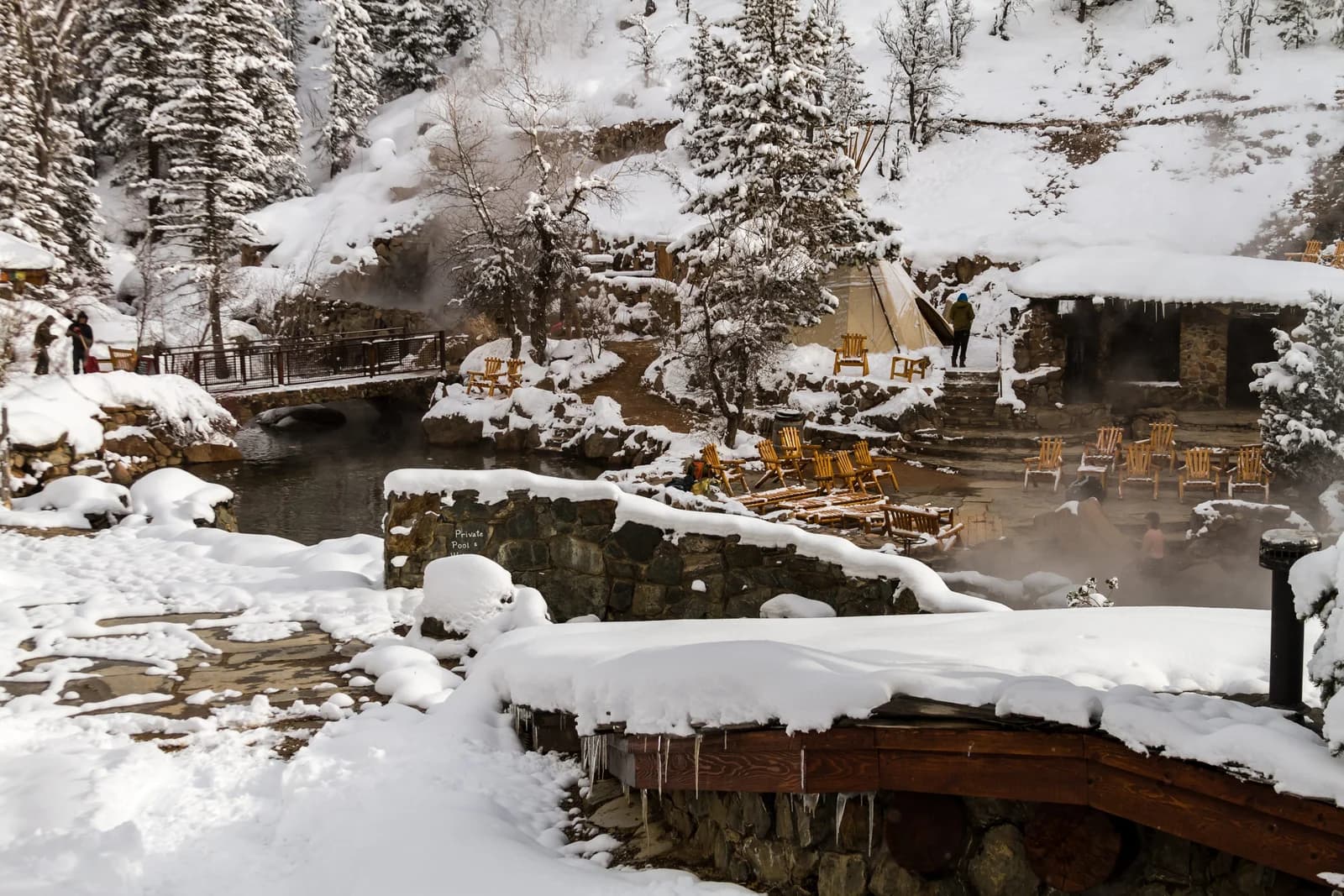
Piedra River Hot Springs
Piedra River Hot Springs, Colorado 81122, USAPiedra River Hot Springs sits beside the Piedra River northwest of Pagosa Springs, Colorado, reached only on foot and only after you've crossed the river itself. There's no building, no front desk, no sign welcoming you in. What you get instead is a scatter of shallow pools along the riverbank, warmed by geothermal water seeping up through the rock, with a soundtrack of moving water instead of piped-in music. If you've already done the developed pools in town and want something rawer, this is the next step out.
It's worth saying upfront that this is not a backup plan for a rainy day or a quick stop between errands. Getting there takes some effort, the crossing can be genuinely dangerous depending on the season, and once you're in the water there's no one checking on you. That's the appeal for a certain kind of traveler and the dealbreaker for everyone else.
Why Piedra River Hot Springs matters
Pagosa Springs built its whole identity around hot water. The name itself comes from a Ute phrase roughly meaning "boiling water," and the springs downtown feed what's often described as one of the deepest known geothermal wells in the world. But all of that infrastructure, the resort pools, the spa decks, the mineral bars, sits in town. Piedra River Hot Springs is the version with none of it stripped away. The water comes up through the riverbed the same way it probably always has, unmediated by concrete or plumbing, and the only engineering involved is whatever rocks previous visitors have stacked to hold a pool's shape for a season or two before the river rearranges them again.
That makes it less a tourist attraction and more a local secret that's become less secret over time, the way these things tend to go once enough trip reports and photos circulate online.
Quick facts
- Location: beside the Piedra River, northwest of Pagosa Springs, Colorado 81122
- Access: hiking trail of roughly a mile and a half, including a river crossing
- Cost: free
- Supervision: none, no staff, no facilities
- Water temperature: variable, dependent on river level and flow
- Best season: generally late summer through fall, when the river runs lower
Getting there
The springs lie northwest of Pagosa Springs, off Highway 160 and up into the Piedra River drainage, an area that also feeds into the San Juan National Forest. There isn't a marked trailhead with a parking lot sign and a kiosk map in the way you'd find at a state park. Most people find the route through word of mouth, local outfitters, or online trip logs, then follow a trail along the river for about a mile and a half before reaching the pools themselves.
The sticking point, and the thing that trips up a lot of first-time visitors, is the river crossing partway along the route. During spring runoff, typically from roughly April through June depending on snowpack, the Piedra River runs high, fast, and cold enough to make the crossing genuinely unsafe. People have been swept off their feet in lower, calmer rivers than this one. If you're attempting the hike in spring, turn back if the crossing looks higher or faster than you expected. The pools will still be there in August.
The layout and experience
Once you're across the river and at the springs, don't expect a single large soaking pool. What you'll find is a handful of shallow pockets along the bank where hot water mixes with the cold river, some big enough for two or three people, others barely large enough to sit in. Rocks get stacked and restacked by visitors to dam off warmer water from the cold current, but these makeshift walls don't last. A high-water week can undo months of careful pool-building, so the shape and depth of what you find changes from one visit to the next.
Temperature is the other variable people underestimate. Because the hot springs are mixing directly with river water rather than being channeled into an isolated pool, how warm you get depends heavily on river flow. Low water in late summer or fall tends to mean hotter, more stable pools. High water means the heat gets diluted fast, and you might find the pools lukewarm at best.
How it compares to similar places
If you've soaked at the commercial pools in downtown Pagosa Springs, or at other developed Colorado hot springs resorts, the contrast is immediate. Those places have changing rooms, graduated pool temperatures, and staff checking wristbands. Piedra River Hot Springs has none of that. It's closer in spirit to the backcountry hot springs scattered through Colorado's mountains, places like Conundrum Hot Springs near Aspen, where the reward is proportional to the effort and the crowds thin out considerably once you're past the trailhead. It's quieter than anything in town, and that quiet is really the whole point.
Best time to visit
Late summer and fall are generally the more reliable windows, once spring runoff has eased and the river has dropped to a safer, more crossable level. Winter access is possible for the hardier visitor but brings its own obstacles, including icy trail conditions and a genuinely cold river crossing. Spring, as mentioned, is the one season to approach with real caution, since the same snowmelt that feeds the Piedra River's beauty also makes it dangerous to wade through.
Practical tips
- Check river conditions before you go, especially from April through June, and be willing to turn back if the crossing looks unsafe
- Wear shoes you don't mind getting wet, both for the crossing and for navigating the rocky pool edges
- Pack out everything you bring in, there's no trash service or staff to clean up after visitors
- Bring a dry bag for your phone, keys, and anything else you don't want soaked during the river crossing
- Go with at least one other person if possible, given the lack of supervision or cell service in the area
- Don't expect a hot soak every time, bring a backup plan if the water turns out lukewarm
FAQ
Is there an entrance fee for Piedra River Hot Springs?
No. There's no fee, no ticket booth, and no staff on site.
Is the hike difficult?
The trail itself runs about a mile and a half, which isn't long, but the river crossing adds a layer of difficulty and risk that a simple distance figure doesn't capture. Treat it as a moderate hike with a serious caveat.
Can I visit in spring?
You can, but the river crossing during spring runoff can be impassable or dangerous due to high, fast-moving water. Many locals recommend waiting until later in summer or fall.
Are the pools always hot?
Not necessarily. Temperature depends on the river's flow level at the time of your visit. Lower river levels generally mean hotter pools, while high water dilutes the heat.
Is this a good alternative to the hot springs in downtown Pagosa Springs?
If you want a developed, supervised soaking experience with changing rooms and graduated pools, downtown is the better bet. Pied
Reviews
Sign in and mark this place visited to leave a review.
No reviews yet.
Free Trip Planner
Plan your Pagosa Springs trip with our free planner
Build a day-by-day itinerary with AI suggestions, hand-picked places, and friends. Free forever — no credit card.