The Springs Resort
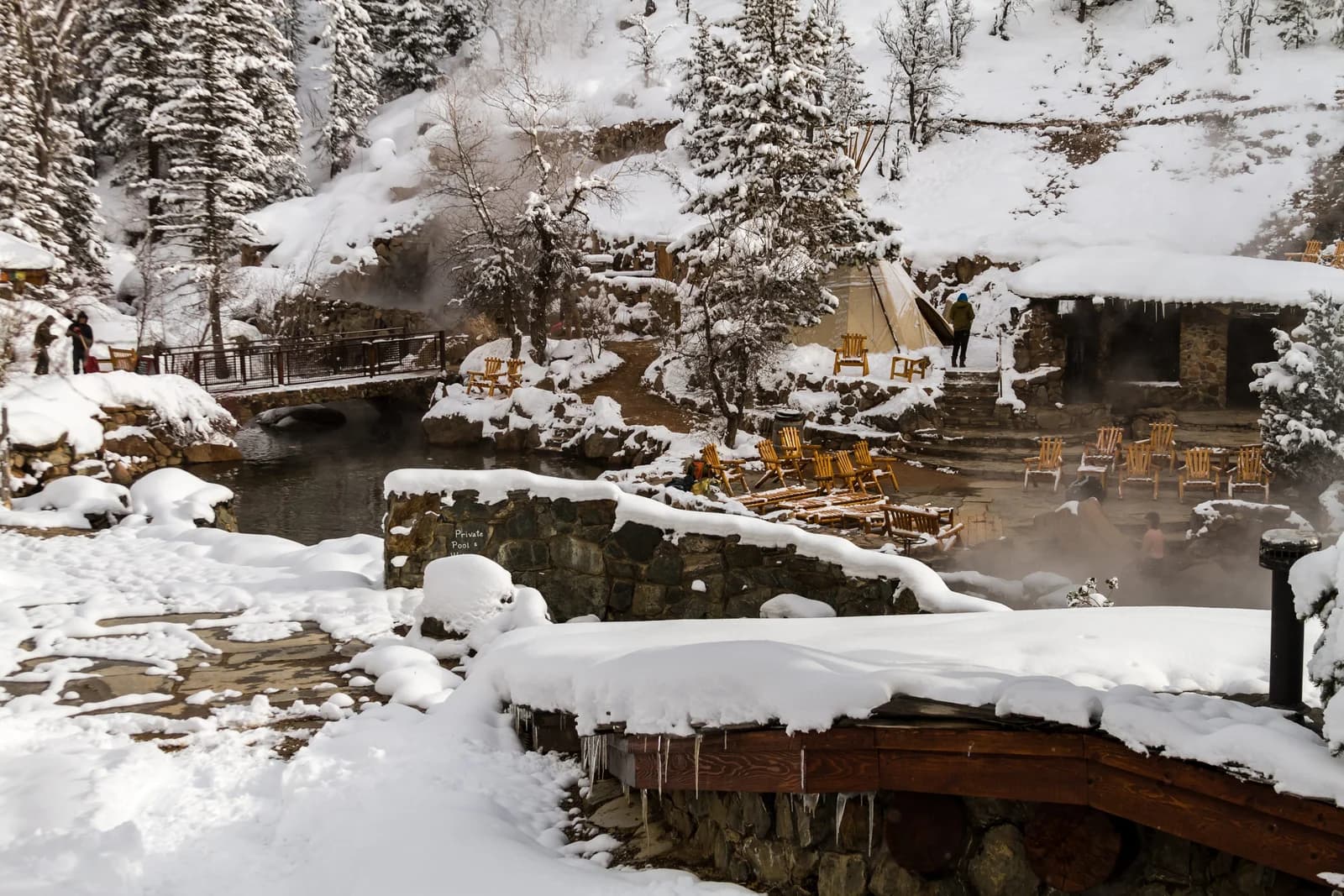
323 Hot Springs Blvd, Pagosa Springs, CO 81147, USAThe Springs Resort sits where Hot Springs Boulevard curves along the San Juan River in downtown Pagosa Springs, and it's the reason most people stop here at all. More than twenty soaking pools step down the riverbank in terraces, each set at a different temperature, fed by the same source that has made this stretch of southern Colorado famous since long before the town had a name. If you're planning a soak in Pagosa Springs, this is the complex most visitors mean when they say "the hot springs." It functions as much as a working resort as a sightseeing stop. There's lodging on site, so you can soak at odd hours without driving anywhere, and the pools stay open through the winter, when snow piles around the edges and steam hangs low over the water.
Why The Springs Resort matters
Pagosa Springs' whole identity is built on its geothermal water, and The Springs Resort is built directly on top of the source of it. The town's name is often traced to a Ute phrase roughly meaning "healing waters," and the spring at the center of this resort, known as the Mother Spring, is the one locals point to when they claim Pagosa has the deepest geothermal hot spring in the world. Nobody has actually found the bottom of it. Geologists have tried to measure its depth and come up empty, which is an odd thing to be able to say about a hole in the ground in a small Colorado town, and it has become the central piece of local lore here.
That depth matters in practical terms too. The aquifer feeding the Mother Spring produces a large, continuous volume of hot mineral water, which is what lets a complex of twenty-plus pools run without the water going stale or cooling unevenly. Smaller hot springs operations elsewhere often have to ration flow or rotate pools through maintenance cycles. Here, the water just keeps moving, pool after pool, all the way down to the river.
Quick facts
- Address: 323 Hot Springs Blvd, Pagosa Springs, CO 81147
- More than twenty soaking pools, terraced down to the San Juan River
- Source: the Mother Spring, an aquifer whose full depth has never been measured
- Open year-round, including winter, when steam rises off the pools against the cold
- Both day passes and overnight lodging are available on site
Getting there
Pagosa Springs sits in the mountains of southwestern Colorado, and the resort is close enough to downtown that once you're in town, you're basically there. The property fronts the San Juan River right along Hot Springs Boulevard, within walking distance of the main shopping and dining strip. Most visitors arrive by car, either as a stop on a broader southern Colorado road trip or as a dedicated soak-and-stay weekend. There's no public transit system to speak of in a town this size, so plan on driving or walking from wherever you're staying.
The layout and experience
The pools are arranged in tiers on the slope between the resort buildings and the river, so as you move from the top of the complex toward the water, you're also moving through pools of varying temperature. Some are kept hot enough that a few minutes is plenty before you need to step out and cool off. Others run cooler and are easy to sit in for a long stretch while you watch the river move past or look up at the ridge on the far bank.
The bottom tier puts you close enough to the San Juan River that you can hear it even over the sound of other soakers. On a cold morning, with mist sitting on the surface and the river running a few feet away, it's hard to overstate how different this feels from a hotel pool deck.
Because the resort draws day visitors, overnight guests, and locals on annual passes all at once, the pools can get crowded, particularly in the evening and on weekends. Early morning tends to be the calmest window, with fewer people around and often that same layer of mist on the water if the air is cold. The complex is built for soaking rather than swimming laps, so don't expect lap lanes or much open water to move around in. People mostly sit, talk quietly, or just stare at the steam rising off the surface.
History and background
Hot springs have drawn people to this bend of the San Juan River for a very long time before any resort existed here. The Ute people used the springs for generations, and the mineral water is part of why this particular location was settled as a town rather than somewhere else along the river corridor. Geologists have periodically tried to establish how deep the Mother Spring's aquifer actually runs, and the honest answer, repeated by resort staff and town boosters alike, is that no one knows. Measurement attempts have simply failed to find a bottom, which is the basis for Pagosa Springs' claim to the world's deepest geothermal spring, a claim you'll see printed on local murals and repeated by nearly anyone who works downtown.
The resort as it exists today has grown up around that spring, expanding its pool count and lodging over the years to become the largest soaking operation in this part of the state. It isn't a historic bathhouse in the way some older American spa towns have preserved, with original tilework or century-old architecture. It's a modern complex built specifically to make use of an ancient, essentially bottomless source of hot water, and that's really the point of visiting. The draw isn't the building. It's what's underneath it.
Tickets and entry
Entry works on a day pass system for visitors who aren't staying overnight, alongside separate packages for guests of the on-site lodging. Because pool access and pricing structures shift with season, demand, and occupancy, it's worth checking directly before you go rather than assuming a flat rate or walk-up availability. Advance reservations are a good idea during peak weekends and holiday periods, when day-pass access can be capped or sold out entirely.
Best time to visit
Winter is, for a lot of people, the best version of this place. Soaking in hot mineral water while snow falls around you and steam rises off the pools is close to the signature Pagosa Springs experience, and the resort stays fully operational through the cold months, odd-hour soaks included. Summer brings more river recreation nearby and longer daylight for an evening soak, but also bigger crowds and warmer air that takes some of the contrast out of the experience. If you want quiet, aim for a weekday morning in spring or fall, when the town thins out but the water is exactly as hot as it is in January.
Combining with nearby attractions
Downtown Pagosa Springs is walkable from the resort, with shops and restaurants along the main strip a short stroll away, so you can turn a soak into a half-day outing without moving the car. The San Juan National Forest surrounds the town and offers hiking and river access if you want to balance the soaking with some actual movement beforehand. Wolf Creek Ski Area is a drive from town and pairs naturally with a visit here in winter, since not much closes out a ski day like sliding into hot water afterward. The San Juan River itself, which the pools overlook, also gets used for fishing and tubing depending on the season, so it's easy to build a full day around the river corridor without leaving the immediate area at all.
Practical tips
- Bring water shoes or sandals, since the deck areas around the pools can get hot underfoot and can be slick
- Pack a swimsuit and a lightweight robe or towel you don't mind getting a little sulfur smell on
- Go early morning or late evening for a quieter soak, especially outside summer
- Book ahead on weekends and holidays, as day pass availability can be limited
- If staying overnight, factor in easy pool access at odd hours as one of the main perks of lodging on site
FAQ
How many pools does The Springs Resort have?
More than twenty, terraced down the hillside to the San Juan River, each set at a different temperature.
How deep is the Mother Spring?
Nobody knows for certain. Geologists have tried to measure its full depth and haven't succeeded, which underpins Pagosa Springs' claim to the world's deepest geothermal spring.
Is the resort open in winter?
Yes, it operates year-round, and many visitors consider a snowy soak the best version of the experience, with steam rising off the pools while snow collects around the deck.
Can you visit without staying overnight?
Yes, day passes are available for non-guests, though reservations are worth making ahead of time on weekends and holidays when access can be limited.
Is this the same as the smaller hot springs around town?
No. There are quieter, smaller soaking spots elsewhere in Pagosa Springs, but The Springs Resort is the large, terraced complex built directly over the Mother Spring, and it's generally what people mean when they refer to "the hot springs" in town.
Reviews
Sign in and mark this place visited to leave a review.
No reviews yet.
Free Trip Planner
Plan your Pagosa Springs trip with our free planner
Build a day-by-day itinerary with AI suggestions, hand-picked places, and friends. Free forever — no credit card.