Raekoja plats
Raekoja plats, 10146 Tallinn, EstoniaOverview
Raekoja plats sits at the heart of Tallinn's Old Town, a medieval town square that feels like stepping into a 14th-century freeze frame. The moment you walk onto the cobblestones, the Town Hall rises in front of you, its Gothic spire catching the light at every angle. Around the square, narrow merchant houses press shoulder to shoulder, their pastel facades now occupied by restaurants, cafes, and gift shops. This is where the city's pulse beats strongest, and it's impossible to visit Tallinn without spending time here.
Why this place matters
Raekoja plats is the oldest public square in Estonia and has been the center of civic life since the 14th century. The Town Hall standing here dates to 1371 and is the oldest continuously functioning town hall in the Nordic countries. During medieval times, this square hosted markets, festivals, and public gatherings. Today it serves the same purpose, functioning as both a historic monument and a living social hub where locals and visitors converge.
The square's significance extends beyond architecture. It represents the autonomy of Tallinn's merchant class during the Hanseatic period, when the city was a major trading port. The layout, the buildings, and even the cobblestone pattern reflect centuries of careful urban management and a commitment to preserving medieval character.
Quick facts
- Town Hall built in 1371 and still in use as the seat of the Mayor of Tallinn
- The square covers approximately 2,000 square meters
- A UNESCO World Heritage site as part of Tallinn's Old Town (inscribed 1997)
- Named "Raekoja plats" meaning "Town Hall Square" in Estonian
- Located in the medieval Old Town district at the city's highest point
Getting there
If you're coming from Tallinn's port area, the walk up Pikk street (the longest street in the Old Town) takes about 10 minutes and slopes gradually upward. The square sits at the highest elevation in the Old Town, so most approaches involve walking uphill on narrow, often steep lanes.
Public transport drops you nearby but not directly at the square. The closest stops are served by trams and buses, but from there you'll need to navigate the Old Town's pedestrian-only streets. The square itself has no vehicle access. Walking from Kiek in de Kok tower or Alexander Nevsky Cathedral takes about five minutes through winding lanes.
If you're staying in the lower part of the Old Town, follow the main thoroughfares like Pikk or Vene street northward and upward. Local signage points toward Raekoja plats, and the Town Hall spire is visible from several blocks away.
The layout and experience
The square is roughly rectangular, bounded by four main facades. The Town Hall dominates the southern side with its distinctive spire rising 64 meters. The north side is anchored by the Kik Galerii building. East and west sides are lined with merchant houses, their ground floors now occupied by restaurants and shops.
During most months, the square fills with outdoor seating in the warmer months, and the space transforms into an open-air social arena. Locals cut across to reach other parts of the Old Town. Tour groups gather near the Town Hall. Cafe tables spill onto the cobblestones. In winter, the square often hosts a Christmas market (typically from November through December), with wooden stalls and holiday decorations creating a different atmosphere entirely.
The cobblestones underfoot are uneven and worn smooth by centuries of foot traffic. Walking here requires attention to your footing, especially if it's wet or icy. The square has no shade except what the surrounding buildings provide in early morning and late afternoon.
Main highlights
The Town Hall itself is the architectural centerpiece. Its Gothic spire, topped with a small copper weathervane shaped like a knight, is one of Tallinn's most photographed details. The building's facade is cream-colored with stepped gable rooflines typical of Hanseatic merchant architecture. You can enter the ground floor, where the tourist information center is located, though the upper floors remain administrative offices not open to the public.
The surrounding merchant houses vary in age and character. Some date to the 14th and 15th centuries, though many have been rebuilt or heavily restored. The pastel colors you see now (soft pinks, yellows, greens) are relatively recent restorations. Medieval versions would have been simpler, often whitewashed or left in natural stone and wood.
The pharmacy at the northeast corner of the square, now a museum, claims to be one of Europe's oldest continuously operating pharmacies, though its current location has been modified significantly. The restaurants and cafes surrounding the square offer views of the Town Hall and are popular for lingering over coffee or a meal.
History and background
Tallinn's position as a major Hanseatic port shaped Raekoja plats into what it is. The square emerged as the natural gathering place for merchants and civic leaders in the 1300s. The Town Hall was built in stages, with the core structure completed by 1371. The spire was added later, reaching its current form by the 15th century.
During the medieval period, the square hosted markets where merchants from across the Baltic traded grain, furs, amber, and other goods. Public events, festivals, and even executions took place here. The square's prominence made it a symbol of Tallinn's independence and merchant power.
The Old Town's layout remained largely intact even as Tallinn changed hands over centuries. Wars, fires, and Soviet-era occupation all left marks, but the medieval street pattern and core buildings survived. The restoration of the Old Town as a heritage site began in earnest after Estonian independence in 1991.
Best time to visit
Summer (June through August) brings the most visitors and the liveliest atmosphere. Outdoor seating is full, street musicians perform, and the light lingers until 10 PM or later. The square can feel crowded, especially mid-morning through early evening.
Shoulder seasons (April to May, September to October) offer pleasant weather with fewer crowds. The light is softer and more photogenic, particularly in autumn when the low sun catches the building facades in golden tones.
Winter transforms the square into something different. The Christmas market (typically November to December) draws crowds but creates a festive atmosphere. January through March is quieter and colder, with icy cobblestones and shorter daylight hours. Snow can make the uneven stones treacherous.
Early morning, before 9 AM, offers the quietest experience and the best light for photography if you arrive when the sun is low and the square hasn't filled with tour groups.
Photography tips
The Town Hall spire is the most photographed element. Shooting from the opposite side of the square (the north side) gives you the full facade with the spire centered. Early morning or late afternoon light is dramatically better than midday, which flattens the details.
Ground-level shots of the cobblestones with buildings framing the edges can capture the intimate scale of the square. The narrow lanes leading into the square offer framing opportunities and context for how the square sits within the Old Town.
Restaurant seating areas, especially in summer, provide foreground interest with the Town Hall in the background. Shooting from upper windows of buildings overlooking the square (if you're staying nearby) captures the layout and crowd patterns that illustrate why this place matters.
The spire's weathervane is worth a close-up if you have a telephoto lens. The detail is intricate and iconic to Tallinn's silhouette.
Facilities and preparation
Raekoja plats itself has no public restrooms, but restaurants and cafes surrounding the square provide facilities if you make a purchase. The tourist information center in the Town Hall has basic facilities and staff who can answer questions.
Bring comfortable walking shoes with good traction. The cobblestones are beautiful but unforgiving on knees and ankles. If visiting in winter, waterproof boots with grip are essential.
The square has no shade. If you're planning to sit and linger, go early in the day or later in the afternoon when buildings cast shadows. Sunscreen and a hat are wise in summer.
Most surrounding restaurants and cafes accept card payments, though some smaller shops may be cash-only. ATMs are scattered throughout the Old Town.
How it compares to similar places
Medieval town squares exist across Europe. Prague's Old Town Square is larger and more ornate, with more architectural diversity. Brussels' Grand Place is grander in scale and decoration. Raekoja plats is smaller and more intimate. It feels less like a monument and more like a lived-in square, which is part of its appeal.
The Town Hall here is older than many European counterparts and has remained in continuous administrative use, which sets it apart. The surrounding merchant houses are less uniform than those in some other Old Towns, reflecting authentic layers of rebuilding rather than coordinated restoration.
Combining with nearby attractions
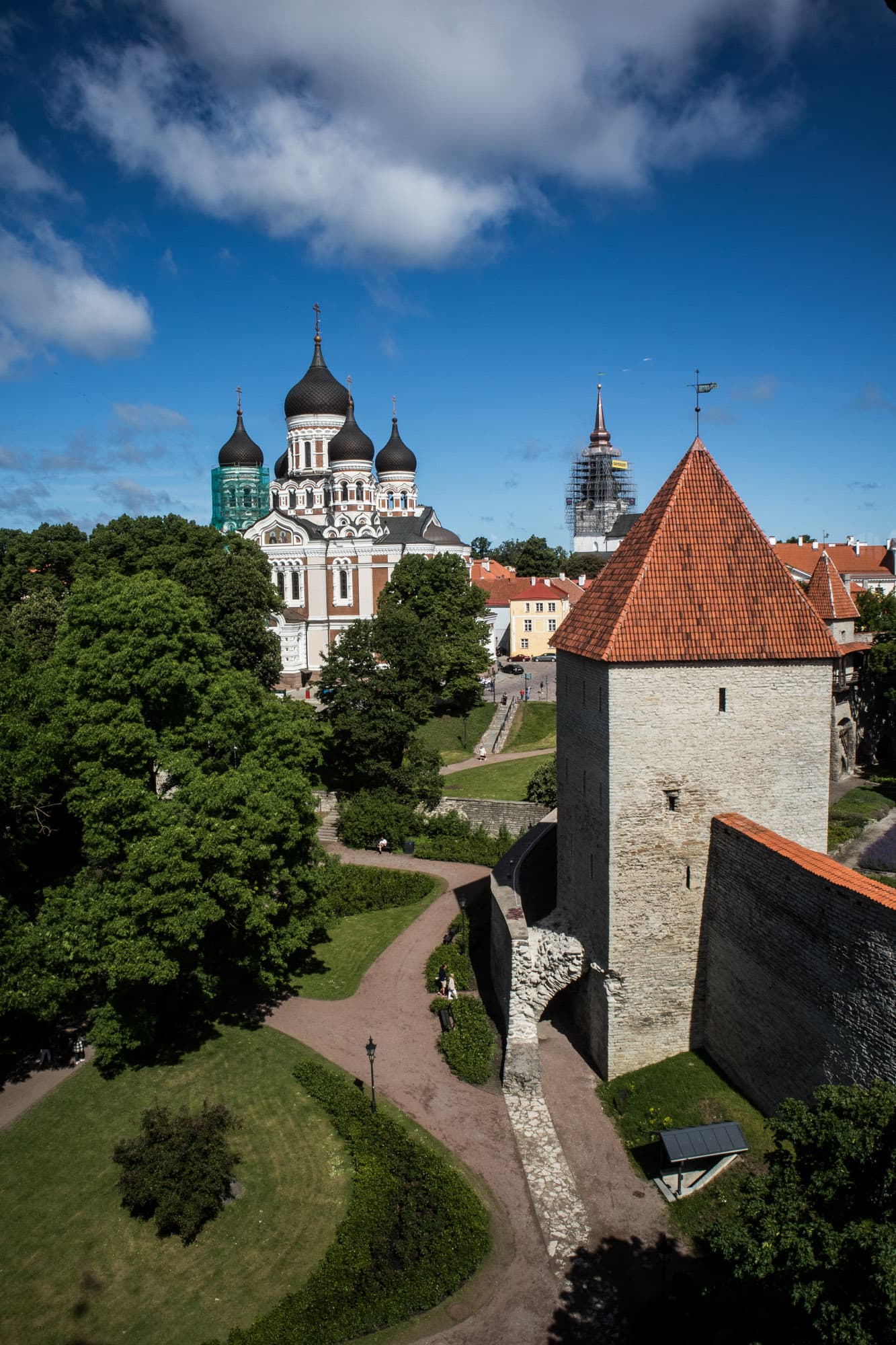
Alexander Nevsky Cathedral sits directly above the square on Toompea hill, about a five-minute walk uphill. The contrast between the Orthodox cathedral's ornate onion domes and the medieval square below is striking.
Kiek in de Kok tower, a 15th-century defensive tower, is a ten-minute walk away and offers views back over the Old Town and Raekoja plats from its upper levels. The museum inside covers Tallinn's military history.
The Dominican monastery and cloister are a short walk northwest, offering a quieter, more contemplative space than the busy square. Several museums are scattered throughout the Old Town within ten minutes' walk, including the Museum of Occupation and Freedom, which covers Estonia's Soviet experience.
Restaurants and cafes within the square itself make it easy to build time here into a longer Old Town exploration. You can easily spend 30 minutes to an hour just sitting and observing, then move outward to other sites.
Sample visit plan
Arrive at Raekoja plats by 8:30 AM to experience it before the crowds. Walk the perimeter, noting the architectural details of each building. Enter the Town Hall to orient yourself with maps and information.
Spend 20 to 30 minutes observing the square from different angles. Sit at one of the cafes if it's open, or simply occupy one of the benches if available. Watch how locals move through the space versus how tourists navigate it.
By 10 AM, head uphill to Alexander Nevsky Cathedral or explore the lanes leading away from the square. Return to Raekoja plats in late afternoon when the light changes and the crowds thin slightly. Grab dinner or a drink at one of the surrounding restaurants, watching the spire as it gets lit in the evening.
Total time: two to three hours, depending on how much time you spend sitting and how many nearby attractions you visit.
Practical tips
- The cobblestones are slippery when wet. Plan extra time if it's raining or if ice is present in winter
- Restaurants and cafes surrounding the square tend to be pricier than those deeper in the Old Town. Budget accordingly if eating here
- The Town Hall spire is particularly dramatic when lit at night. Return after dark if you can for a different perspective
- Sunday mornings tend to be quieter than weekday mornings. Saturday afternoons are busiest
- Bring a small backpack rather than a large rolling suitcase if you're planning to explore the Old Town. The narrow lanes and stairs make wheeled luggage difficult
- Most shops and restaurants close between 6 PM and 8 PM depending on season. Plan accordingly if you're visiting in winter
FAQ
Can I go inside the Town Hall? The ground floor is open during business hours and houses the tourist information center. The upper floors are administrative offices and not open to the public. You can see the main facade and courtyard from the square.
Is Raekoja plats free to visit? Yes. The square itself is free and open at all times. Restaurants and cafes charge for food and drink. Museums and attractions nearby have separate admission fees.
How long does it take to see the square? You can walk through and photograph it in 15 to 20 minutes. Sitting, lingering, and exploring the surrounding buildings easily extends this to two to three hours.
Is the square accessible if I have mobility issues? The cobblestones are uneven and challenging for wheelchairs or those with mobility difficulties. Some surrounding restaurants are accessible via side entrances, but the square itself is not wheelchair-friendly.
What's the best season to visit? Late spring (May) or early autumn (September) offer good weather, manageable crowds, and excellent light. Winter is atmospheric but cold. Summer is busy but reliably pleasant.
Reviews
Sign in and mark this place visited to leave a review.
No reviews yet.
Free Trip Planner
Plan your Tallinn trip with our free planner
Build a day-by-day itinerary with AI suggestions, hand-picked places, and friends. Free forever — no credit card.