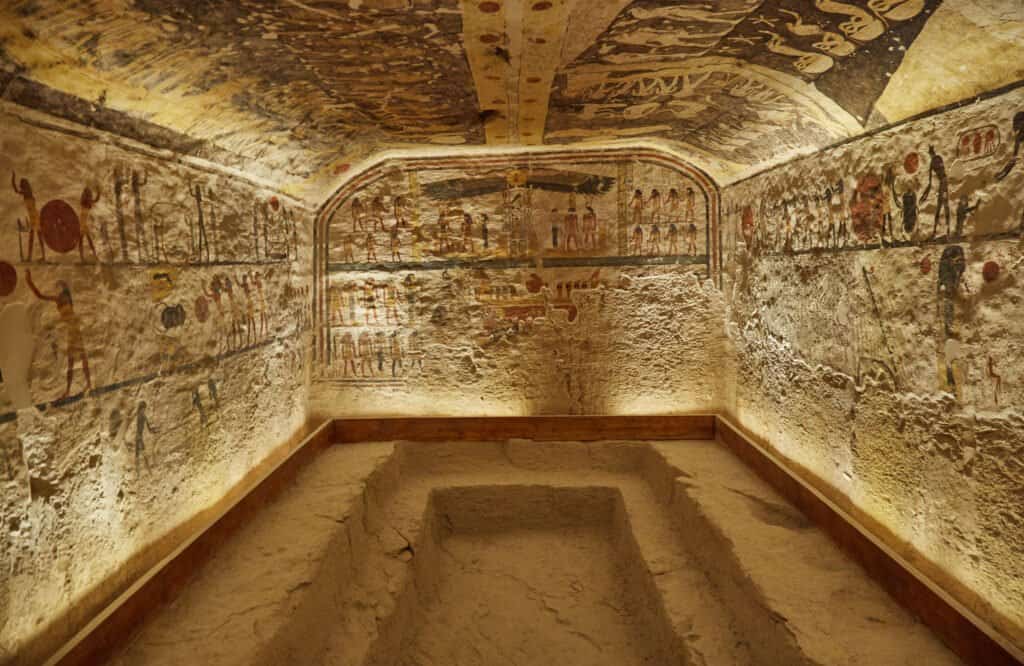
Ramesseum (Mortuary Temple of Ramses II)
West Bank, Luxor Egypt Posted by Brandon B.Admin
The Ramesseum: Ramses II's Temple of Eternity on Luxor's West Bank
The Ramesseum stands on the West Bank of Luxor as one of ancient Egypt's most commanding mortuary temples, built by Ramses II during his long reign in the 13th century BCE. Even in its partially ruined state, the scale of the place is hard to fully absorb when you first walk in. Massive columns, a colossal toppled statue, and walls covered in battle reliefs tell a story that has been slowly eroding for over three thousand years. If you've already visited Karnak across the river and thought you'd seen what ancient Egypt could build, the Ramesseum will make you reconsider.
It sits roughly two kilometers from the banks of the Nile, tucked between the agricultural fields that still flood each season and the dry limestone cliffs that hold the Valley of the Kings further west. For many visitors to Luxor, it gets overshadowed by the more famous sites nearby. That's partly what makes it worth your time.
Why the Ramesseum Matters
Ramses II ruled Egypt for around 66 years, dying at roughly 90 years old, and spent much of that reign constructing monuments to himself and the gods. The Ramesseum was his personal mortuary temple, designed to sustain his cult after death through daily rituals and offerings. It was here that Percy Bysshe Shelley drew inspiration for his 1818 poem "Ozymandias," after hearing a description of the shattered colossal statue that still lies in the first courtyard. That statue, when standing, would have been among the largest ever carved in ancient Egypt, estimated at around 17 meters tall and weighing over 1,000 tons.
The temple was also a functioning economic center in its day. Archaeological evidence points to large mudbrick storerooms surrounding the main stone structure, used for grain, oil, and goods that supported the surrounding community. It was, in a sense, both a religious institution and a kind of administrative hub for the West Bank.
Quick Facts
- Location: West Bank, Luxor, Egypt, roughly 2 km from the Nile ferry crossing
- Built: Construction began around 1279 BCE under Ramses II of the 19th Dynasty
- Dedicated to: Amun-Ra, with Ramses II himself venerated as a divine figure
- Status: Open to visitors as a ticketed archaeological site
- Entry type: General admission, no timed entry required on most days
- Photography: Permitted throughout the site
- Time needed: Allow 1.5 to 2 hours for a comfortable visit
- Best combined with: Valley of the Queens, Medinet Habu, the Colossi of Memnon
Getting There
From central Luxor, you cross the Nile by local ferry or tourist boat to the West Bank. The crossing itself takes around 10 minutes and drops you near the ticket offices for the West Bank sites. From there, the Ramesseum is accessible by taxi, tuk-tuk, bicycle, or organized tour vehicle. Most drivers on the West Bank know the site immediately.
If you're cycling, the roads between the main West Bank sites are mostly flat and manageable outside of peak summer heat. Renting a bike near the ferry landing is a common and affordable option. Many visitors combine the Ramesseum with Medinet Habu and the Colossi of Memnon on a single loop, which flows naturally given the geography.
The Layout and Experience
The temple is oriented roughly east to west, following the standard alignment of ancient Egyptian temples toward the Nile. You enter through what remains of the first pylon, though much of it has collapsed over the centuries. The first courtyard is where you'll encounter the most famous sight: the fallen granite colossus of Ramses II, lying face-up in fragments across the ground. The sheer mass of it, even broken, is difficult to put into words.
Beyond the first court, the second courtyard leads into the hypostyle hall, where rows of papyrus-bud columns still stand. The hall is smaller than the famous hypostyle hall at Karnak, but the carvings here are often in better condition and feel more intimate. Look up at the ceiling sections that survive and you'll find traces of astronomical decoration in deep blue pigment, stars and constellations that were meant to guide the pharaoh through the afterlife.
Further into the temple, the sanctuary and inner chambers become more fragmentary, but reliefs showing the Battle of Kadesh from around 1274 BCE run along the walls in detail. This battle between Egyptian and Hittite forces was one of the earliest recorded military engagements in history, and Ramses claimed it as a great personal victory. Whether it truly was is still debated by historians.
Main Highlights
The Fallen Colossus
No other single object at the site competes with the toppled statue in the first courtyard. Made from a single block of Aswan granite, it originally depicted Ramses II seated on his throne. The scale becomes real when you walk alongside it. The ear alone is roughly a meter long.
The Hypostyle Hall
Around 48 columns remain standing in this hall, decorated with scenes of Ramses before various deities. The quality of the carved relief work is exceptional in places, especially along the upper registers where erosion has been slower.
Battle of Kadesh Reliefs
The north wall of the second court carries some of the most detailed battle narrative reliefs in Egypt. You can follow the scenes left to right, watching the Egyptian army advance, the chariot charges, and the aftermath. Hieroglyphic texts accompanying the images are part of the so-called Poem of Pentaur, a literary account of the battle that was copied onto temple walls across Egypt.
The Mudbrick Storerooms
The vaulted mudbrick storerooms surrounding the main temple are often overlooked, but they're structurally fascinating. Many of the barrel-vaulted ceilings have survived largely intact, which is remarkable given they're made of mud brick rather than stone. They give a clearer sense of the temple complex as a working institution rather than just a ceremonial space.
Best Time to Visit
Early morning is the most comfortable and most photogenic time to visit, typically before 9am when the light is low and the crowds are thin. Summer temperatures on the West Bank can push well above 40 degrees Celsius by midday, so arriving early isn't just aesthetic advice, it's practical. Winter months, roughly October through February, are the most popular season and bring noticeably more visitors, though the Ramesseum rarely feels as crowded as the Valley of the Kings.
Midweek visits tend to be quieter than weekends. If you arrive in the late afternoon, the angled light on the reliefs is beautiful, but you'll have less time before the site closes.
Photography Tips
The fallen colossus photographs best in morning light when shadows define the carved features still visible on its surface. For the hypostyle hall columns, a wide-angle lens helps capture the full height, and the columns on the south side tend to get better directional light in the morning hours. The astronomical ceiling fragments are dim and difficult to capture without a camera that handles low light well.
Bring a hat and be aware that there's very little shade in the outer courtyards. You'll be squinting if you arrive mid-morning or later without sunglasses.
Combining with Nearby Attractions
The Ramesseum sits within easy reach of several other major West Bank sites. Medinet Habu, the mortuary temple of Ramses III, is around 2 kilometers to the southwest and is arguably in better overall condition. The Colossi of Memnon, the two massive seated statues that once fronted the mortuary temple of Amenhotep III, are a short drive toward the Nile. The Valley of the Queens is also within a few kilometers and tends to be less visited than the Valley of the Kings.
A full West Bank day could reasonably include the Ramesseum, Medinet Habu, and a stop at the Colossi of Memnon in roughly five to six hours, depending on how long you spend at each. The Deir el-Medina workers' village is another worthwhile addition if you have the energy.
Practical Tips
- Bring more water than you think you need. There are limited vendors inside the site and none in the inner temple areas.
- Wear closed shoes. The ground is uneven with loose stone and ancient debris throughout.
- A licensed guide can add significant context to the battle reliefs and the astronomical ceilings. Many operate independently on the West Bank and can be arranged at the ferry landing.
- The site ticket is purchased separately from other West Bank sites. Check at the central West Bank ticket office before heading in.
- Modest dress is appreciated, though not strictly enforced the way it is at active religious sites.
- If you're visiting in summer, plan to be done by 10am or wait until late afternoon.
FAQ
Is the Ramesseum suitable for children?
Generally yes, though the terrain is uneven and there are no barriers around the colossus fragments or the open pits in the outer areas. Young children need close supervision. The battle reliefs and colossal statue tend to genuinely impress older kids.
How does it compare to Karnak?
Karnak is larger, better preserved in many sections, and sees far more visitors. The Ramesseum is quieter, often more atmospheric, and gives a stronger sense of what a single pharaoh's personal religious project looked like. They're complementary rather than redundant.
Do I need to book tickets in advance?
On most days, tickets can be purchased at the West Bank ticket office without advance booking. During peak season in winter, arriving early in the day is advisable to avoid queues at multiple sites.
Is there a guided tour option?
Independent licensed guides are available on the West Bank and can often be arranged informally near the ferry landing or through your hotel. Larger tour operators in Luxor also include the Ramesseum as part of structured West Bank itineraries.
Reviews
Sign in and mark this place visited to leave a review.
No reviews yet.
Free Trip Planner
Plan your Egypt trip with our free planner
Build a day-by-day itinerary with AI suggestions, hand-picked places, and friends. Free forever — no credit card.