
Rector's Palace
Ul. Pred Dvorom 3, 20000, Dubrovnik, CroatiaThe Rector's Palace stands on Ul. Pred Dvorom, a narrow paved street that runs between the Cathedral of the Assumption and the old harbor, in the oldest section of Dubrovnik's walled city. For roughly four hundred years it was the administrative heart of the Republic of Ragusa, a self-governing city-state that managed to stay independent of Venice through a mix of diplomacy, naval trade, and a political system designed specifically to prevent any one family from seizing power. Today the building houses Dubrovnik's Cultural History Museum. It also has a second life among a much younger audience as the atrium of the Spice King's palace in Qarth, the city where Daenerys Targaryen is turned away by the Thirteen and denied the ships she needs to sail for Westeros. Most visitors know the palace for one of these two things and rarely both, which is a shame, because the real history here is odder and more compelling than anything scripted for television.
Why the Rector's Palace matters
Dubrovnik governed itself as a republic from the Middle Ages until Napoleon's forces dissolved it in 1808, run by a rotating council of nobles rather than a monarch or a doge with personal authority. The rector was the republic's head of state, but the position was built to be weak by design. He held office for one month only, and during that month he was forbidden to leave the palace except for official ceremonies. He ate, slept, and conducted business entirely within these walls, a form of dignified confinement written directly into the constitution. The idea was blunt and effective: if the most powerful man in the city could not even walk to the harbor without an escort and a reason, he could never accumulate the kind of personal power that let doges elsewhere turn republics into dynasties. Walking through the rooms where this actually happened tells you more about how Ragusa functioned than any plaque along the Stradun.
Quick facts
- Address: Ul. Pred Dvorom 3, Dubrovnik Old Town
- Former seat of the Rector of the Republic of Ragusa, the city's elected one-month head of state
- Now houses the Cultural History Museum, part of the Dubrovnik Museums network
- Used as a Game of Thrones filming location, standing in for the Spice King's palace atrium in Qarth
- The courtyard hosts concerts during the Dubrovnik Summer Festival
- Combined tickets covering several Old Town museums are generally available, worth considering if you're also visiting Sponza Palace or the Maritime Museum
Getting there
The palace sits inside the city walls, a two-minute walk from the Cathedral and barely further from Luža Square and the Sponza Palace. If you come in through the Pile Gate, walk the full length of the Stradun and you'll come out near the Orlando Column and the old harbor, with the palace just off to your right past the Cathedral. There's no vehicle access anywhere inside the walls, so everyone arrives on foot, whether from a cruise tender down at the port, a guesthouse room in the Old Town, or the cable car station partway up Mount Srđ.
The layout and experience
You enter straight from the street into a vaulted ground floor that once held the city's armory, treasury vaults, and for a period a gunpowder store, a storage decision that turned out badly at least once in the palace's history. Past that you step into the courtyard, and this is the part worth slowing down for. It's a square, arcaded atrium built in pale local limestone, Renaissance in its proportions, with a stone staircase rising along one side. Set into a niche is a stone bust of Miho Pracat, a shipowner from the island of Lopud and the only commoner ever granted a monument inside the palace, a small but telling detail in a building otherwise reserved for nobility. The stone keeps the courtyard noticeably cooler than the street outside, which is partly why it hosts concerts through the summer festival season and partly why it's a genuine relief to duck into on a hot August afternoon.
Upstairs, the museum rooms are smaller and more personal than the courtyard's grandeur might lead you to expect. You'll find rectors' ceremonial robes, portraits of Ragusan noble families, and furnished period rooms that give a sense of daily administrative life rather than spectacle. It's a quieter, more domestic contrast to the civic theater of the ground floor and courtyard below.
History and background
The building has been rebuilt more than once, the result of fires and at least one gunpowder explosion tied to the stores once kept on the ground floor. What stands today reflects a late-Gothic and Renaissance rebuilding, a style that fits neatly alongside the Sponza Palace and the Cathedral nearby, all part of the same civic core the republic maintained carefully even as it rebuilt piece by piece. The republic itself lasted from the medieval period until 1808, when Napoleon's army dissolved it, ending one of the longest-running experiments in oligarchic self-government on the Adriatic. The rector system, with its one-month terms and built-in isolation, was one of the mechanisms that kept it running that long without collapsing into the kind of family rule that defined Venice.
Tickets and entry
Entry is through standard museum ticketing rather than timed slots, and general admission covers both the ground floor armory spaces and the upstairs museum rooms. Combined tickets covering multiple Dubrovnik museums, including the Sponza Palace and the Maritime Museum, are generally available and tend to make sense if you're planning to see more than one of the Old Town's historic buildings on the same day. As with most sites inside the walls, exact pricing and hours shift seasonally, so it's worth checking locally rather than relying on anything printed well in advance.
Best time to visit
Early morning, shortly after the Old Town opens for the day, is the easiest time to see the courtyard without a crowd gathered for photos. Midday in summer brings heat that makes the cool stone arcades genuinely appealing rather than just atmospheric, so an early afternoon visit timed around the worst of the sun isn't a bad strategy either. If a Summer Festival concert happens to coincide with your visit, the courtyard transforms into a performance space in the evening, a very different experience from the quiet museum visit during the day.
Combining with nearby attractions
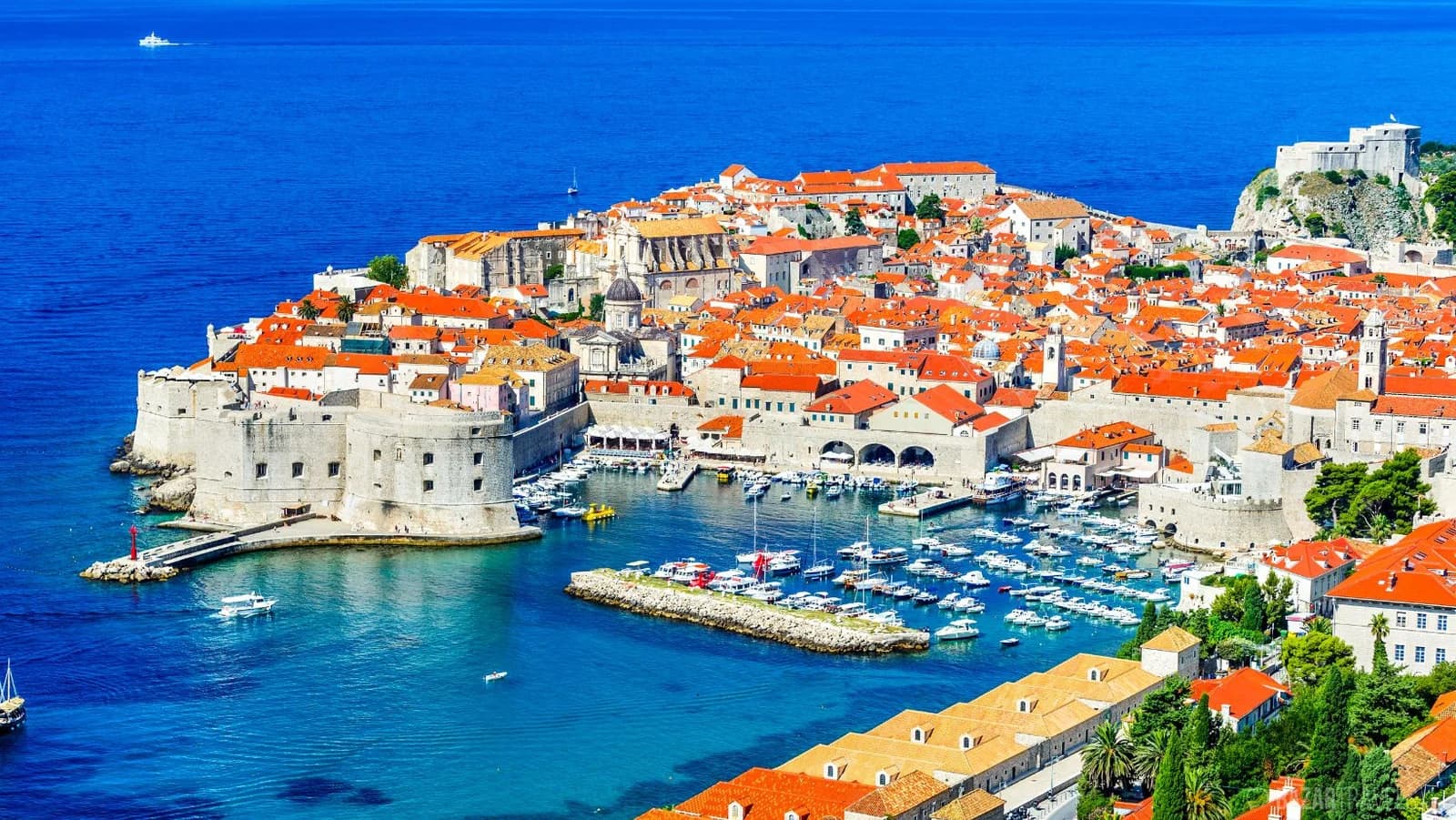
The palace's location makes it easy to fold into a short walk around the Old Town's civic quarter. The Cathedral of the Assumption is a two-minute walk away, and Sponza Palace and the Orlando Column sit just past it near Luža Square. The old harbor, with its own small fortifications and boat traffic, is close enough to reach on foot in a few minutes if you want to break up museum time with some open air. Anyone working through Dubrovnik's Game of Thrones filming locations will likely already have this stretch of the Old Town on their route, since several other King's Landing scenes were shot within a short walk of here.
Practical tips
- The ground floor and courtyard are flat and easy to move through, but the upstairs museum rooms involve stone staircases without much alternative access
- Bring water in summer, the courtyard is shaded but the street outside is not
- If you're combining museums, check whether a joint ticket covers the Rector's Palace before buying separate entries
- Photographers should aim for the courtyard in the first hour after opening, before tour groups fill the arcade
- If you recognize the courtyard from Game of Thrones, know that filming here was limited and brief, so don't expect production-related displays inside
FAQ
Is the Rector's Palace the same building featured in Game of Thrones?
Yes. The courtyard served as the atrium of the Spice King's palace in Qarth during the show's third season.
What's inside the museum?
Rectors' ceremonial robes and regalia, portraits of Ragusan noble families, period furniture, and the ground-floor spaces that once held the city's armory and treasury.
How long does a visit take?
Most visitors spend somewhere between thirty minutes and an hour, longer if a concert or event is happening in the courtyard.
Why was the rector only allowed to serve for one month?
The short term, combined with a rule confining him to the palace during his service, was designed to prevent any single noble or family from building enough personal power to threaten the republic's collective government.
Is the Rector's Palace worth visiting if I'm not interested in Game of Thrones?
Yes. The building is one of the clearest physical records of how the Republic of Ragusa actually governed itself for four centuries, independent of both Venice and any single ruler.
Reviews
Sign in and mark this place visited to leave a review.
No reviews yet.
Free Trip Planner
Plan your Croatia trip with our free planner
Build a day-by-day itinerary with AI suggestions, hand-picked places, and friends. Free forever — no credit card.
Related reading

Things to see near Rector's Palace



Places to eat or drink near Rector's Palace

Buža Bar

Segreto Pasta & Grill

aROMA Gelato Boutique Dubrovnik


