
San Nicola in Carcere
San Nicola in Carcere, Via del Teatro di Marcello, 46, 00186 Roma RM, Italy Posted by Brandon B.Admin
San Nicola in Carcere
San Nicola in Carcere sits on one of Rome's most layered archaeological sites, where a medieval church rises directly above the remains of three ancient Roman temples. Located on Via del Teatro di Marcello in the Sant'Angelo neighborhood, this church offers an unusual chance to stand inside a building that spans nearly two thousand years of Roman history. The name itself reveals its past: "in carcere" refers to the prison that once occupied this space, though what you see today is the fusion of medieval piety and classical ruin.
Why this place matters
Most Roman churches sit atop classical foundations. San Nicola in Carcere lets you see the transition directly. The church's crypt descends into the substructure of three separate Republican-era temples dedicated to Janus, Juno, and Spes. Walking through the interior, you encounter Corinthian columns still standing from the first century BCE, integrated into the medieval stone walls. This isn't a museum display of artifacts. These are load-bearing fragments of a lost city holding up a functioning church.
The site also anchors one corner of the Teatro di Marcello, an amphitheater built by Augustus that predates the Colosseum by decades. Being here places you at the intersection of several Rome's most important periods.
Quick facts
- Founded as a church in the sixth century, though the site was inhabited much earlier
- Built directly atop three Roman temples from approximately the second century BCE
- Located adjacent to Teatro di Marcello, one of Rome's oldest surviving amphitheaters
- Interior features visible Corinthian columns from the original temples
- The church underwent significant reconstruction in the twelfth century
- Free entry, though donations are welcome
Getting there
The easiest approach is from the Largo di Torre Argentina side, walking southeast toward the river. If you're coming from the Colosseum area, head northwest down Via dei Fori Imperiali, then turn left onto Via del Teatro di Marcello. The walk takes about ten to fifteen minutes from the Colosseum.
Public transport works if you're coming from elsewhere in the city. Tram 8 stops near Largo di Torre Argentina, a few minutes' walk away. The neighborhood itself is pedestrian-friendly once you're in it, though the streets narrow and wind without obvious logic.
The layout and experience
You enter through a modest wooden door on the street side. The interior is modest in scale and can feel dim, especially if you arrive on an overcast day. Your eyes adjust slowly to the light filtering through small windows.
The main nave is narrow. Medieval columns alternate with sections of ancient marble. Some of these columns came from the temples below, repurposed during the church's medieval reconstruction. Others are later additions. The effect isn't disorienting, but it does create an unusual visual rhythm as you walk toward the altar.
The crypt lies beneath the main floor. Access depends on who's present that day. If you find someone working in the church, asking politely often results in a brief tour downstairs. The crypt contains the most dramatic evidence of the Roman temples: column bases, sections of foundation wall, and fragments of marble flooring from antiquity. Some columns still stand to their full height, their capitals still bearing traces of ancient tooling.
A small sacristy holds additional artifacts and sometimes has informational materials, though these are informal and limited.
Main highlights
The Corinthian columns are the primary draw. These aren't replicas or reconstructions. They're the actual structural elements from temples that stood in this exact location before Christianity existed in Rome. Running your hand along the fluting of a column that's been handled by Roman stonemasons creates an immediate, tactile connection to the past.
The contrast between the Roman elements and the medieval architecture is equally striking. You can see where medieval builders carefully worked around existing stones, sometimes incorporating them into walls, sometimes leaving them exposed. This pragmatism, born from necessity and budget constraints, created something archaeologically honest that modern conservation would likely not permit.
The proximity to Teatro di Marcello adds context. Standing in the church and then stepping outside to view the amphitheater's arches helps you understand the scale and density of Roman public building in this neighborhood.
History and background
The three temples beneath the church date to the second century BCE, during Rome's Republican period. They honored Janus, the god of transitions and beginnings; Juno, queen of the gods; and Spes, the personification of hope. The arrangement and dedication suggest this was a significant religious precinct, though the exact ceremonial function remains debated among scholars.
As Rome's religious landscape shifted toward Christianity, these temples lost their function. Rather than demolish them, medieval builders constructed a church using the existing foundations and materials. This practical recycling preserved the temples in a way that pure demolition would not have. The resulting structure became known as San Nicola in Carcere, named after Saint Nicholas and the prison that occupied the site at some point during the medieval period.
The church underwent major reconstruction in the twelfth century, which explains the Romanesque elements visible in the current structure. Further modifications occurred over subsequent centuries, though always within the constraint of the ancient foundations below.
Tickets and entry
San Nicola in Carcere is free to enter. There is no ticket counter or formal admission process. A donation box sits near the entrance, and small contributions support the church's maintenance.
Hours tend to be morning through early afternoon, but they're not rigidly posted. If the door is locked, try again in an hour or approach a local resident who might have information. This informality is typical of smaller Roman churches that aren't major pilgrimage sites.
Best time to visit
Mid-morning tends to offer the best light inside the church. Morning sun angles through the windows without creating harsh glare on the marble surfaces. Avoid visiting during Mass times if you prefer a quieter, more exploratory experience, though attending a service is entirely welcome.
Weekday visits are generally less crowded than weekends, though this church never draws the tourist masses of the Pantheon or the Sistine Chapel. Even on a busy Saturday, you're unlikely to encounter more than a handful of other visitors at any given moment.
The neighborhood itself is pleasant to walk through any time of year. Summer heat can make the narrow streets feel oppressive, while winter rain makes the cobblestones slippery. Spring and autumn offer ideal conditions.
Photography tips
The interior lighting is challenging. Bring a camera that handles low light well, or expect to push your ISO. The Corinthian columns photograph best from angles that include both the ancient stone and the medieval walls around them, which helps convey the temporal layering.
The exterior view of the church nestled against Teatro di Marcello is worth capturing. Step back onto Via del Teatro di Marcello to get the full composition, showing the church's position relative to the amphitheater's arches beyond.
If you gain access to the crypt, the column bases and foundation walls create strong compositions with directional lighting from above. Bring a small flashlight if you have one.
Facilities and preparation
This is a working church, not a museum, and facilities are minimal. There's no café, gift shop, or formal information desk. Restrooms are not available to visitors. The floors are uneven in places, particularly in the crypt, so wear shoes with good grip.
Bring a small flashlight if you think you might explore the crypt. The lighting downstairs is poor, and details become visible only when directly illuminated. A notebook is useful if you want to record observations or sketch the column arrangements.
The church is cool year-round due to thick medieval walls and limited sunlight. A light layer is comfortable.
How it compares to similar places
San Clemente in Laterano, another Roman church with layered archaeology, shows a similar principle taken further: you descend through a medieval church into an early Christian basilica, then further into a Roman temple. San Clemente is more famous and more formally organized as a tourist site.
San Nicola in Carcere is smaller and less touristed. What it lacks in scale it compensates for in intimacy. You're not herded through on a designated path. The integration of Roman and medieval elements feels less curated, more genuinely accidental.
The Pantheon shows Roman building at its most magnificent. San Nicola in Carcere shows Roman building being repurposed and lived with. Both perspectives matter.
Combining with nearby attractions
Teatro di Marcello is immediately adjacent. The exterior is open to view at all hours, and the dramatic arches are particularly striking photographed from various angles around the site. The amphitheater feels more substantial if you've spent time in San Nicola understanding the religious and civic density of this neighborhood.
The Largo di Torre Argentina, home to Julius Caesar's assassination site and the remains of four Republican temples, lies a ten-minute walk northwest. The museum there provides context for the Republican-period temples beneath San Nicola in Carcere.
The Trastevere neighborhood is a short walk south, across the river. You could easily spend an afternoon moving between San Nicola, Teatro di Marcello, and the Largo di Torre Argentina, then cross into Trastevere for dinner.
Sample visit plan
Start at San Nicola in Carcere first thing in the morning, when the light is good and the church is likely to be open and unoccupied. Spend twenty to thirty minutes exploring the main floor, observing the column details and the medieval-Roman interaction.
If someone is present, ask about accessing the crypt. If not, that's fine; the main floor conveys the essential story. Exit and spend ten minutes circling Teatro di Marcello, viewing it from different angles and understanding its scale relative to the church.
Walk to Largo di Torre Argentina next. The museum visit takes thirty to forty-five minutes if you're thorough. The context you gain here enriches your understanding of what you saw in San Nicola.
Have lunch in the surrounding neighborhood, then return to Teatro di Marcello area for final photographs if the light has shifted.
Practical tips
- Bring a small flashlight for the crypt if you gain access. Phone flashlights work adequately
- Knock gently if the door appears closed. Someone may be inside and will often open it
- Donations of a few euros are appreciated and support the church's upkeep
- Visit on a weekday morning for the quietest experience and best light
- The neighborhood streets are confusing. Use a map application if you're uncertain of your location
- Wear comfortable walking shoes. The cobblestones are uneven, and you'll want to explore the surrounding area
- Photography inside is permitted without flash. Flash would damage the medieval frescoes
FAQ
Is there an admission fee? No. San Nicola in Carcere is free to enter. Donations are welcome.
Can I visit the crypt? It depends on who's present. If someone is working in the church, polite asking often results in access. There's no guarantee, but it's worth trying.
How long should I spend here? Twenty to thirty minutes is typical for the main floor. If you access the crypt, add another fifteen minutes. Most visitors spend less than an hour total.
Is this church still used for religious services? Yes. It remains an active Catholic church. Visiting during Mass is fine, but plan your visit around service times if you prefer a quieter experience.
What's the best time of day to visit? Mid-morning offers the best natural light and the fewest crowds. Avoid early morning and late afternoon when the interior is very dark.
Reviews
Sign in and mark this place visited to leave a review.
No reviews yet.
Free Trip Planner
Plan your Italy trip with our free planner
Build a day-by-day itinerary with AI suggestions, hand-picked places, and friends. Free forever — no credit card.
Things to see near San Nicola in Carcere


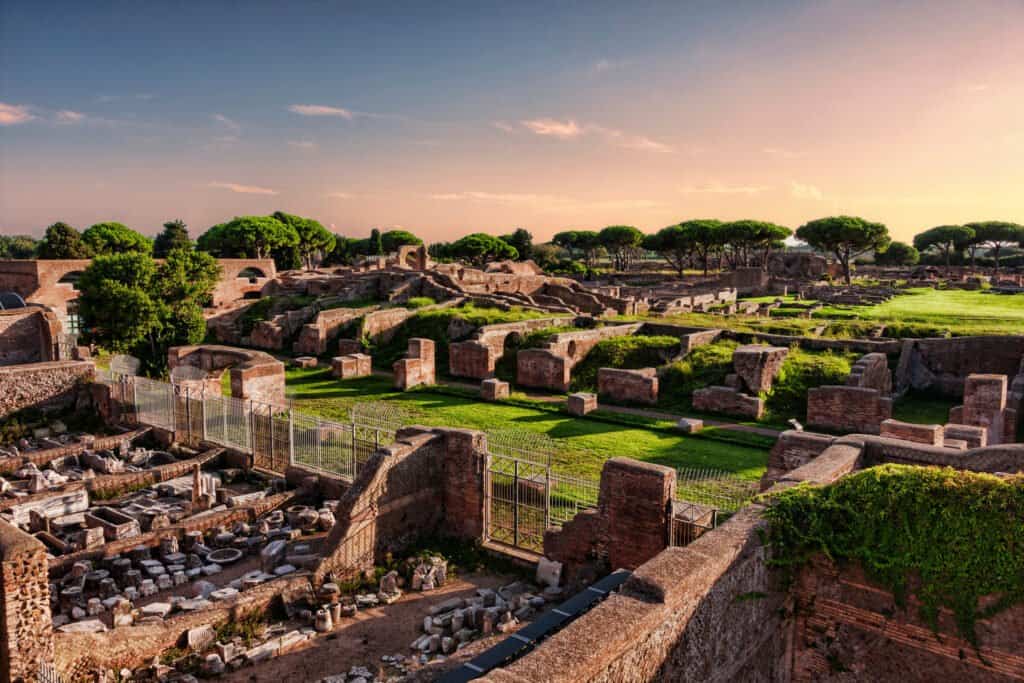

Places to eat or drink near San Nicola in Carcere
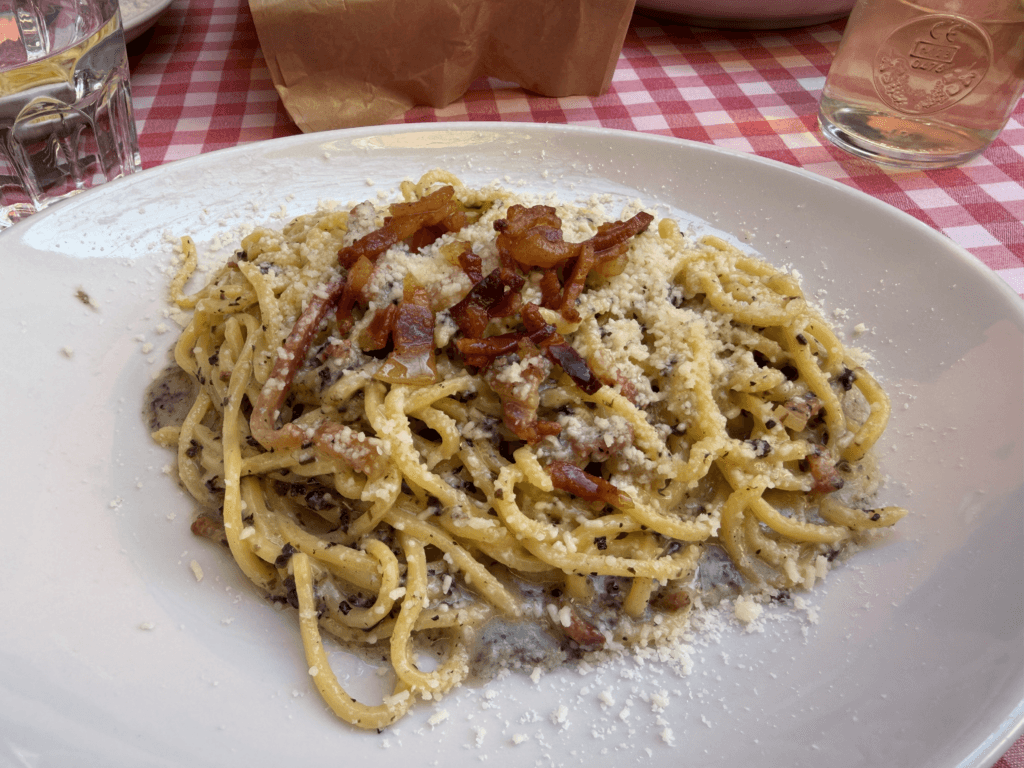
Arianna al Borghetto

La Pietra Scheggiata – Osteria/Pizzeria

Pasticceria Barberini

Trattoria Da Enzo
More places in Rome

Magia a Campo de' Fiori

Museo Storico della Liberazione

The Colosseum
