Salzburg Cathedral
Kapitelplatz 2, Salzburg 5020 Austria Posted by Brandon B.Admin
Salzburg Cathedral: A Baroque Masterpiece at the City's Core
Salzburg Cathedral stands at the center of the old city, framing the southern end of Residenzplatz with a facade that stops most people mid-step. This is the cathedral where Wolfgang Amadeus Mozart was baptized in 1756, where he later served as court organist, and where the weight of that history still hangs in the air. For a building that looks so commanding from the outside, the interior manages to feel even larger than you expect.
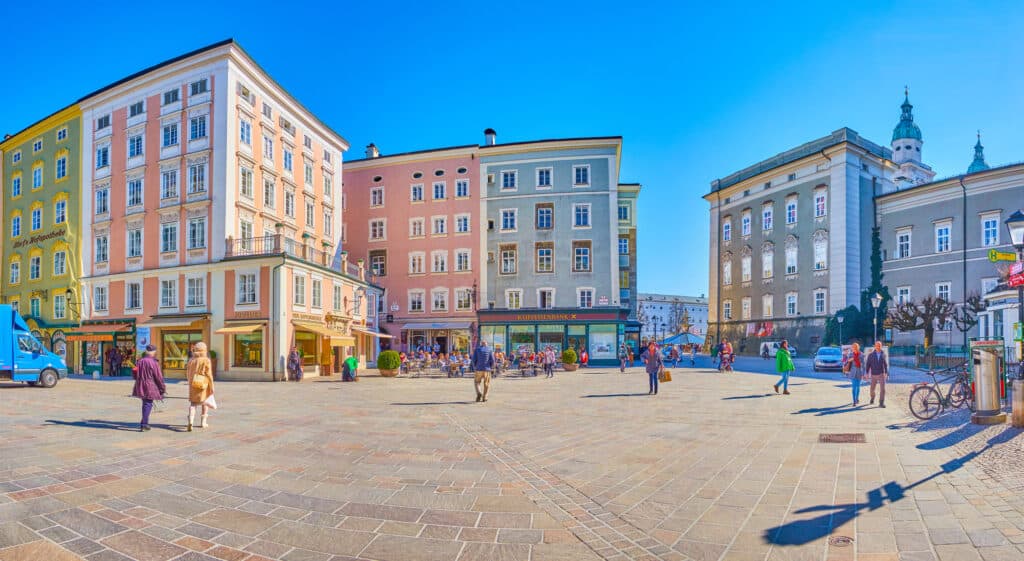
It sits on Kapitelplatz, surrounded by the Archbishop's Residence, St. Peter's Abbey, and the cliffs of the Festungsberg. You can approach from multiple directions, but most visitors arrive through Residenzplatz and see the twin towers first, rising about 79 meters above the square.
Why Salzburg Cathedral Matters
The cathedral is widely considered one of the most significant early Baroque churches north of the Alps. When the Italian architect Santino Solari completed it in 1628, it introduced a style to this part of Europe that had barely been seen before. The building replaced an earlier Romanesque cathedral that burned in 1598, and the ambition of the replacement was deliberate. Archbishop Wolf Dietrich von Raitenau and his successors wanted something that announced Salzburg's importance as a seat of Catholic power.
For Mozart fans, this is close to sacred ground. The baptismal font used at his christening is still inside, original and intact. He spent years of his professional life here before his complicated departure from Salzburg in 1781.
Quick Facts
- Address: Kapitelplatz 2, 5020 Salzburg, Austria
- Completed: 1628, with the current facade largely unchanged since
- Architect: Santino Solari, Italian-born master builder
- Twin towers: approximately 79 meters tall
- Capacity: the nave can hold several thousand worshippers
- Entry to the main cathedral: free of charge most days
- Cathedral Museum: separate paid admission required
- Location: Altstadt (Old Town), a UNESCO World Heritage Site since 1997
Getting There
The cathedral is in the heart of Salzburg's Altstadt, which is largely pedestrianized. If you're coming from the main train station (Salzburg Hauptbahnhof), a bus or a roughly 20-minute walk will bring you into the old city. From Mozartplatz, the cathedral is less than two minutes on foot. Parking is limited near the Altstadt, so arriving by public transport or on foot from one of the outer parking garages tends to work better.
Getreidegasse, the old city's famous shopping street, connects to the cathedral area easily from the west. If you're already walking that route, you'll reach the cathedral without needing to navigate much at all.
The Layout and Experience
The facade faces north onto Residenzplatz, made from pale Salzburg marble with four large statues flanking the portal. The figures represent Saints Rupert and Virgil (the cathedral's patron saints) along with Saints Peter and Paul. Step through the bronze doors and the shift is immediate. The interior is a long Latin cross plan with a massive dome over the crossing, painted with frescoes that took decades to complete.
The nave is wide and bright, which surprises a lot of visitors who expect something darker. Stucco decoration covers nearly every surface, but it's applied with enough restraint that the space still breathes. Look up at the dome before doing anything else.
The baptismal font is in the left side aisle near the entrance. It dates to around 1321, meaning it was salvaged from the earlier Romanesque cathedral and installed here. That detail is easy to miss if you're moving quickly.
The cathedral also has a crypt below the nave, accessible from inside, where several archbishops are buried. It's quieter down there and worth a few minutes.
History and Background
Salzburg has had a cathedral on roughly this site since the late 8th century. The Romanesque predecessor was substantial, but a fire in 1598 gave Archbishop Wolf Dietrich the opportunity he apparently wanted to build something grander. Construction of the current building started under his successor, Archbishop Markus Sittikus, and was finished under Paris Lodron, who consecrated it in 1628.
The cathedral survived the Second World War largely intact, though a bomb in 1944 collapsed part of the dome. Restoration work was completed by 1959, and the rebuilt sections blend well enough that most visitors don't notice the repair.
Mozart's relationship with the cathedral is well documented. He was baptized here the day after his birth on January 27, 1756, and the record of that baptism still exists. His father Leopold also worked in the Archbishop's court, making the cathedral a constant backdrop to Mozart's early life.
Tickets and Entry
Walking into the main nave costs nothing during open hours, which makes this one of the more accessible major sights in Salzburg. The Cathedral Museum (Dom Museum), which occupies spaces above the nave and contains religious art, liturgical objects, and archaeological finds from earlier structures on the site, requires a separate ticket. Guided tours of the cathedral are available and worth considering if the history matters to you. Timed entry is not typically required for general admission.
The crypt can be visited during cathedral opening hours and is usually included without additional charge, though it's worth confirming at the door since access occasionally depends on whether services are scheduled.
Best Time to Visit
Salzburg draws crowds year-round, but the cathedral gets especially busy during the Salzburg Festival in July and August, when the city fills with visitors for opera and classical performances. If you want the interior to yourself, arriving when it opens in the morning tends to work. Midday in summer can feel crowded, particularly on days when multiple tour groups arrive at once.
Sunday mornings are special in a different way. Mass is held with the cathedral's five organs, the largest of which has over 4,000 pipes. Attending a service is free and gives you an experience of the building that sightseeing alone doesn't replicate. The acoustics are extraordinary.
Winter visits have their own appeal. The square outside hosts one of Austria's better Christmas markets from late November, and the cathedral facade at night, lit against the dark, is worth going out of your way to see.
Photography Tips
The exterior shot most people want is from the center of Residenzplatz, where both towers fit into the frame with the fountain in the foreground. Early morning gives you softer light and far fewer people in the shot. The interior presents the usual challenge of high contrast between the bright dome and the darker side aisles. A wide lens helps with the nave, and the crossing under the dome rewards a straight-up shot if you're willing to look slightly absurd lying on the floor.
Photography is generally permitted inside for personal use, though flash and tripods are typically restricted. During services, put the camera away entirely.
Combining with Nearby Attractions
Everything in the Altstadt is walkable from the cathedral. The Hohensalzburg Fortress is visible from Kapitelplatz and reachable by funicular in about 5 minutes from the base station nearby. Mozart's Birthplace on Getreidegasse is roughly a 5-minute walk northwest. The Residenz, the former Archbishop's palace, shares the square and has its own museum. St. Peter's Abbey and its cemetery, one of the oldest Christian cemeteries in the German-speaking world, is immediately adjacent to the cathedral's south side.
If you're spending a full day in the Altstadt, the cathedral works well as either a starting point or a midday anchor, since it's roughly central to all the main sights.
Practical Tips
- Dress modestly. Shoulders and knees should be covered, and the cathedral enforces this more strictly than some churches.
- The cathedral closes during services, so check the schedule before planning a sightseeing visit around midday or Sunday mornings.
- Audio guides are available and provide more detail on the frescoes and the organ history than the free printed materials.
- The Dom Museum ticket often covers multiple sites in a combined pass, which can represent good value if you plan to visit the Residenz as well.
- The square outside (Kapitelplatz) has a large golden sphere sculpture that makes for a useful meeting point if you're visiting with a group.
- Restrooms are not located inside the cathedral itself. The nearest public facilities are in Kapitelplatz or Mozartplatz.
FAQ
Is Salzburg Cathedral free to enter?
The main nave is free to enter during opening hours. The Dom Museum, crypt access on certain days, and guided tours involve separate fees.
Can you attend a concert or service here?
Yes. Regular Catholic masses are held throughout the week and are open to the public. Organ concerts and other musical events take place periodically, especially during the summer festival season. Check the cathedral's own schedule for current listings.
How long should you plan to spend inside?
A thorough self-guided visit to the main nave and crypt takes about 45 minutes to an hour. Adding the Dom Museum means budgeting closer to two hours total.
Is Salzburg Cathedral suitable for visitors with mobility limitations?
The main nave is accessible at ground level. The crypt involves stairs, and parts of the Dom Museum may have limited accessibility. It's worth contacting the cathedral in advance if this is a concern.
Was the cathedral really damaged in World War II?
Yes. A bomb strike in October 1944 destroyed part of the dome and caused significant structural damage. The restoration, completed in 1959, rebuilt the dome and repaired the interior to closely match the original design.
Reviews
Sign in and mark this place visited to leave a review.
No reviews yet.
Free Trip Planner
Plan your Austria trip with our free planner
Build a day-by-day itinerary with AI suggestions, hand-picked places, and friends. Free forever — no credit card.