Salzburger Altstadt
Altstadt, Salzburg Austria Posted by Brandon B.Admin
Overview
Salzburger Altstadt, the old town of Salzburg, sprawls across the left bank of the Salzach River in the heart of Austria. This medieval and Baroque district is where Mozart was born, where the Alps loom above narrow cobblestone streets, and where nearly every corner presents a postcard view. The Altstadt is not a museum frozen in time. It pulses with cafes, bookshops, galleries, and residents going about their day. You can walk its entire length in about 45 minutes, but most visitors spend a full day here, moving between monuments, ducking into churches, and lingering over coffee.
The neighborhood is compact enough to navigate on foot and dense enough that you will not run out of things to see. It is the reason most travelers come to Salzburg at all.
Why this place matters
Salzburger Altstadt represents one of Europe's best-preserved Baroque old towns. The city escaped heavy bombing during World War II, so the architecture you see dates mostly from the 17th and 18th centuries, when prince-archbishops ruled Salzburg and wealthy merchants built the grand townhouses that line the streets today. Mozart's birth house sits here. The cathedral where he was baptized stands here. The fortress that overlooks the Altstadt has watched over the town for nearly 900 years.
The Altstadt also tells the story of a city that was once powerful enough to mint its own coins and maintain its own army. That history is visible in the scale of the buildings, the width of the squares, and the deliberate urban planning that still shapes how you move through the space.
Quick facts
- Located on the left bank of the Salzach River in central Salzburg
- Covers roughly 25 city blocks in the medieval core
- UNESCO World Heritage Site since 1996
- Mozart was born here in 1756
- Salzburg Cathedral was built between 1614 and 1628
- Hohensalzburg Fortress overlooks the district from above
- Best explored on foot, no cars in most streets
- Free to walk around most of the Altstadt
Getting there
If you arrive by train at Salzburg Hauptbahnhof, the Altstadt is about a 15-minute walk or a short ride on local buses 1, 2, 3, or 6. The main bridge into the old town is Staatsbrücke, which deposits you directly onto Makartplatz near the festival halls.
If you are driving, park on the right bank of the Salzach. The Altstadt itself is largely car-free, with only residents and delivery vehicles permitted on certain streets. Several paid car parks sit just outside the historic zone.
Many visitors also arrive via the Salzach River path from the train station, which is a pleasant walk through parks and along the water.
The layout and experience
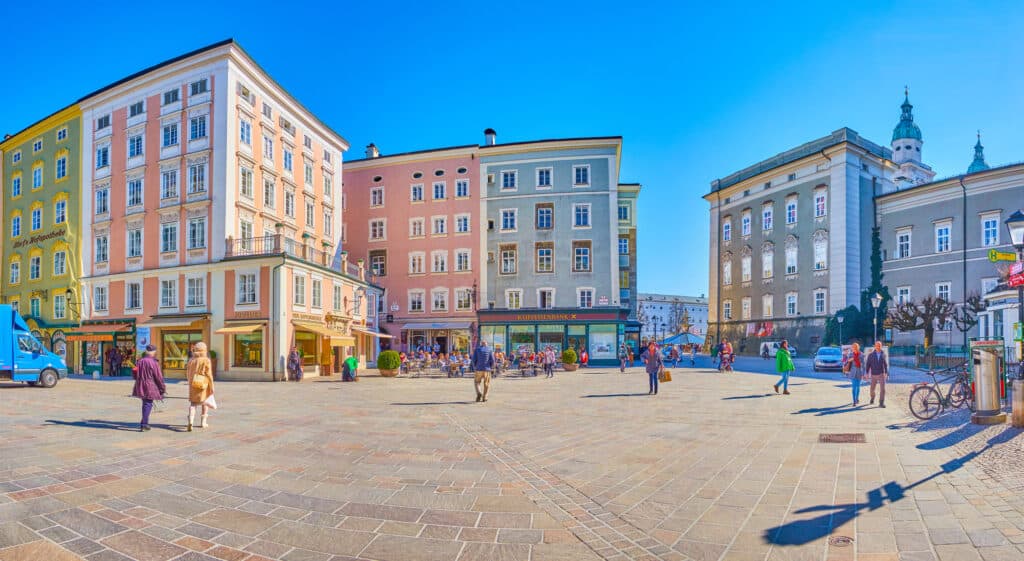
The Altstadt is organized around three main plazas connected by narrow lanes. Mozartplatz, the southernmost square, is where you find Mozart's birth house and the Mozart statue. From there, the district opens into Residenzplatz, the largest and grandest plaza, ringed by the Archbishop's Residence, the cathedral, and arcaded townhouses. The northern edge is anchored by Domplatz and Kapitelplatz, where the Franciscan Church and the Benedictine convent sit side by side.
Between these plazas, alleys branch off in all directions. Some are barely wide enough for two people to pass. Others open suddenly into quiet courtyards or small neighborhood squares. The streets are paved with stone worn smooth by centuries of foot traffic. Wrought iron signs hang from buildings. Window boxes overflow with geraniums in summer.
Walking the Altstadt is not a linear experience. You will double back. You will discover a church you did not know existed. You will find yourself in a narrow lane with no clear exit and have to backtrack. This is part of the appeal. Medieval towns were not designed for efficiency.
Main highlights
Salzburg Cathedral dominates Residenzplatz. The building was completed in 1628 and represents one of the finest Baroque churches in the Alpine region. The interior is flooded with light from tall windows. The dome is an engineering feat for its time. You can enter for free during visiting hours and stand in the nave where Mozart himself was baptized as an infant.
Mozart's birth house occupies a narrow, five-story townhouse on Getreidegasse. The building is painted yellow and marked by a bronze plaque. Inside, the apartment where Mozart was born in 1756 has been preserved and filled with period furnishings, letters, and musical instruments. The rooms are small and intimate, which makes the genius that emerged from them feel somehow more remarkable. The crowds can be heavy, especially in summer, so consider arriving early or in the evening.
Hohensalzburg Fortress sits high above the Altstadt on a rocky outcrop. You can reach it by a short funicular railway or a 15-minute uphill walk. From the fortress, the views of the Altstadt, the cathedral, and the surrounding mountains are unobstructed. The fortress itself dates to 1077 and contains museums, courtyards, and towers worth exploring. The audio guide is thorough.
Getreidegasse is the most photographed street in Salzburg. It is narrow, lined with shops and restaurants, and every building has character. The wrought iron guild signs that hang from storefronts are original to the street and represent the trades that operated there centuries ago. A bakery sign, a locksmith, a wine merchant. The street can feel crowded with tour groups, but if you visit early or late in the day, you can see it as locals do.
The Franciscan Church, or Franziskanerkirche, dates to the 15th century and blends Gothic and Baroque styles. The interior is surprisingly peaceful. The altar is ornate, and side chapels contain carved wooden sculptures and frescoes. The crypt beneath the church is ancient and atmospheric.
History and background
Salzburg was founded by Irish monks in the 7th century. It became a prince-archbishopric, meaning the ruler held both religious and secular authority. This dual power allowed Salzburg to grow wealthy through salt mining in the surrounding mountains, an industry that gave the city its name and funded much of the architecture you see today.
The medieval core of the Altstadt dates to the 12th century, but most of what survives was rebuilt after a series of devastating fires in the 17th century. The prince-archbishops of that era, particularly Paris Lodron, invested heavily in transforming Salzburg into a Baroque jewel modeled partly on Rome. They hired Italian architects and brought Italian artistic sensibilities north of the Alps.
Mozart was born into this world. His father, Leopold Mozart, was a respected composer and violinist employed by the court. Wolfgang's early years in the Altstadt, before his family's travels, shaped his musical education and his connection to the city. Though Mozart spent much of his adult life elsewhere, he remains Salzburg's most famous son, and the city has built much of its identity around him.
The Altstadt remained largely untouched during World War II, which is why so much of the historic fabric survives. After the war, the city was gradually rebuilt and restored. In 1996, UNESCO recognized Salzburger Altstadt as a World Heritage Site.
Tickets and entry
Walking through the Altstadt is free. You do not need a ticket to wander the streets, visit the cathedral, or sit in a plaza. However, several attractions charge admission. Mozart's birth house requires a ticket for entry. The fortress requires a separate ticket, though the walk up and the views are free. The Salzburg Museum, housed in the Archbishop's Residence, charges admission. Individual churches may request a small donation if you wish to light a candle or contribute to maintenance.
Several combined ticket packages exist that bundle the fortress, Mozart's house, and other sites. These can offer savings if you plan to visit multiple paid attractions.
Best time to visit
Spring and fall offer the most pleasant weather and fewer crowds than summer. May and September are ideal. July and August are peak season, with tour buses, long lines at Mozart's house, and packed restaurants. The Altstadt is beautiful in winter, especially around Christmas when markets and decorations transform the plazas, but cold temperatures and occasional snow require proper clothing.
Avoid weekends if you prefer solitude. Weekday mornings, especially Tuesday through Thursday before 10 am, tend to be quieter.
Photography tips
Getreidegasse at sunrise or just before sunset offers the best light and the fewest people. The narrow street is challenging to photograph because of the height of the buildings and the overhead wires, but shooting from ground level looking upward can capture the sense of enclosure that makes the street memorable.
Residenzplatz is best photographed from the corner near the fountain, where you can frame the cathedral and the buildings together. Arrive early for clean light without harsh shadows.
Views from Hohensalzburg Fortress looking down on the Altstadt with the mountains beyond are iconic. Shoot from the fortress ramparts in late afternoon when the Altstadt is lit from the side and the cathedral dome catches the light.
Interior shots of the cathedral are challenging because of the dim light and the crowds. A tripod is not allowed, so you will need a fast lens and a high ISO. Early morning or lunchtime offers the best conditions.
Facilities and preparation
The Altstadt has plenty of public restrooms, most of which charge a small fee. Cafes and restaurants will let you use their facilities if you make a purchase. Tap water is excellent and safe to drink. Fountains in the plazas provide drinking water in summer.
Comfortable walking shoes are essential. The streets are cobblestone and steep in places. If you plan to walk to Hohensalzburg Fortress, bring sturdy footwear. The funicular railway is an alternative if stairs are not comfortable for you.
Most shops and restaurants accept both cash and card, but some smaller establishments prefer cash. ATMs are scattered throughout the district.
The Altstadt has good cell phone coverage. Free WiFi is available in many cafes and hotels but not always on the street.
How it compares to similar places
Salzburger Altstadt is smaller and more intimate than Prague's Old Town Square or Vienna's historic core, but denser and more architecturally unified than many Alpine towns. Unlike Venice, which feels frozen in a single era, Salzburg blends medieval lanes with Baroque grandeur. The scale is manageable, the crowds are significant but not overwhelming, and the setting against the mountains adds drama that purely urban old towns lack.
If you have visited other UNESCO World Heritage old towns in Europe, Salzburg will feel familiar in structure but distinctive in its Baroque character and its mountain backdrop.
Combining with nearby attractions
Hohensalzburg Fortress is accessible from the Altstadt and deserves at least two hours. The Salzburg Museum, in the Archbishop's Residence on Residenzplatz, explores the city's history and art. The Pegasus Fountain and the Residenz courtyard are worth a few minutes. The Sound of Music tour departs from the Altstadt and visits filming locations around the city, though the film itself has limited connection to the actual history of Salzburg.
The right bank of the Salzach River has parks, gardens, and the Mirabell Palace and grounds, which are a 10-minute walk across the main bridge. The Capuchin Monastery sits on a hill on the right bank and offers views back toward the fortress and Altstadt.
Sample visit plan
Start early at Mozart's birth house on Getreidegasse before the crowds arrive. Spend 45 minutes to an hour inside. Exit onto the street and explore the neighboring lanes, ducking into small shops and galleries. Work your way north toward Residenzplatz and spend time in the square, observing the cathedral and the surrounding architecture.
Enter the cathedral and spend 20 to 30 minutes inside. Return to the plaza and have a coffee at one of the cafes overlooking the space. Continue north to Domplatz and visit the Franciscan Church if it interests you.
From Domplatz, either take the funicular up to Hohensalzburg Fortress or walk the steeper path. Spend two to three hours exploring the fortress and taking in the views. Return to the Altstadt in the late afternoon, find a restaurant on a quiet side street, and have dinner. Take a final walk through the plazas as the light softens and the crowds thin.
Practical tips
- Arrive at Mozart's house before 9 am or after 5 pm to avoid peak crowds
- The funicular to Hohensalzburg Fortress has a long wait on summer afternoons; go early or walk up the path instead
- Getreidegasse shops are expensive; buy souvenirs elsewhere or bring items from home
- Many restaurants in the Altstadt cater to tourists and charge high prices; explore side streets for better value
- The Altstadt is hilly and involves stairs; wear comfortable shoes and be prepared for physical effort
- Bring a reusable water bottle; fountains in the plazas provide drinking water
- Visit during shoulder seasons (May, September) for better weather and fewer crowds than summer
- Street performers and buskers are common in the plazas; tip if you enjoy their performance
FAQ
How long should I spend in Salzburger Altstadt? Most visitors spend a full day, from morning through evening. If you visit only the streets and plazas without entering paid attractions, 3 to 4 hours is sufficient. If you include Mozart's house and the fortress, plan for 6 to 8 hours.
Is it worth visiting Mozart's birth house? If you are interested in Mozart's life or 18th-century Salzburg, yes. The apartment and the museum provide context and authenticity. If you are not particularly interested in Mozart, the exterior and the street itself are memorable enough.
Can I walk to Hohensalzburg Fortress from the Altstadt? Yes. The walk takes 15 to 20 minutes and involves steep streets and stairs. The funicular railway is an easier option but has crowds and a wait during peak hours. Many visitors take the funicular up and walk down.
Are there good restaurants in the Altstadt? Yes, but tourist restaurants dominate the main squares and Getreidegasse. Explore the side streets and smaller lanes for local spots and better value. Ask your hotel for recommendations.
Is the Altstadt walkable for people with mobility issues? The cobblestone streets and hills make it challenging. The main plazas are flat and accessible, but many of the side streets involve stairs or steep inclines. The funicular to the fortress is accessible, but touring the fortress itself requires climbing.
Reviews
Sign in and mark this place visited to leave a review.
No reviews yet.
Free Trip Planner
Plan your Austria trip with our free planner
Build a day-by-day itinerary with AI suggestions, hand-picked places, and friends. Free forever — no credit card.