San Antonio Museum of Art
200 W Jones Ave, San Antonio, TX 78215, USAThe San Antonio Museum of Art occupies one of the more unlikely museum buildings in the country: a 19th-century brewery complex with turrets, crenellations, and a profile that looks more suited to a Rhine castle than a riverfront in South Texas. Set on the Museum Reach stretch of the San Antonio River, the museum pairs that eccentric architecture with a collection that punches well above what you'd expect for a city this size, including Greek and Roman antiquities, a substantial Asian art wing, and holdings of Latin American art considered among the most significant in the United States.
If you're already walking the Museum Reach between downtown and the Pearl, the museum isn't really a detour. It sits right on the path, and the building alone is worth stepping off the river walk for even if you only have thirty minutes to spare.
Why the San Antonio Museum of Art matters
Most mid-sized American cities with a museum this good tend to specialize narrowly, often in regional or folk art. San Antonio Museum of Art does something different. It holds genuine depth in ancient Mediterranean art, a real Asian collection rather than a token gallery of it, and then leans hard into Latin American art, spanning pre-Columbian objects through colonial-era painting to 20th-century work. That range reflects the city's position, a place with deep Spanish and Mexican roots sitting a few hours from the border, and it gives the museum a personality distinct from what you'd find in a similarly sized collection elsewhere in Texas.
The building does a lot of the work too. Converted breweries and warehouses have become a familiar museum trope, but few repurposed industrial buildings commit this fully to their original character. The castle-like brewhouse, with its stone towers and battlements, was clearly built to be looked at, not just to make beer in.
History and background
The building started life as the Lone Star Brewery, constructed in the late 19th century and designed with a deliberately fortress-like appearance, complete with towers and crenellated parapets that have nothing to do with brewing and everything to do with making a statement on the skyline. Prohibition shut the brewery down, and the Lone Star beer brand that grew out of it eventually moved production elsewhere, leaving the castle-like complex vacant for decades.
The museum moved into the former brewery buildings in the early 1980s, adapting the industrial spaces into galleries rather than tearing them down and starting over. That decision is the reason the museum feels so different from a typical purpose-built art museum. You're walking through rooms that still read as brewery, with the original masonry, proportions, and window openings largely intact, now filled with vitrines of Roman glass or Tang dynasty ceramics instead of brewing equipment.
The two main brewery buildings are joined by a glass-enclosed bridge, added when the museum took over the site. It's a small architectural moment but a memorable one, a transparent, modern connector slung between two 19th-century stone towers. Even visitors who move quickly through the galleries tend to slow down and take photos crossing it.
The layout and experience
Expect the museum to unfold across multiple levels and across the two connected brewery structures, with the glass bridge as the hinge between them. The galleries don't follow a single rigid chronological path the way some encyclopedic museums do. Instead you move between distinct wings: ancient Mediterranean and Egyptian material in one area, Asian art spanning China, Japan, and South and Southeast Asia in another, and the Latin American collection forming its own substantial section.
Ceiling heights, window placement, and the occasional exposed brick or stone wall are reminders throughout that you're inside a working industrial building from another era. That's part of the appeal rather than a compromise. A handful of rooms retain enough brewery character that you half expect to see a fermentation tank around the next corner.
Main highlights
- The Greek and Roman antiquities galleries, with ancient glass, sculpture, and decorative objects that are unusually extensive for a non-encyclopedic American museum.
- The Asian art wing, covering a wide span of material from East and South Asia, deep enough to reward a slow walk rather than a quick pass.
- The Latin American art collection, spanning pre-Columbian artifacts, colonial-period devotional and decorative art, and 20th-century painting, widely regarded as one of the strongest collections of its kind in the country.
- The castle-like exterior of the former Lone Star Brewery itself, with its stone towers and battlement detailing, visible from the river walk below.
- The glass bridge connecting the two brewery buildings, a straightforward but satisfying piece of architecture in its own right.
Getting there
The museum sits at 200 W Jones Ave, directly on the Museum Reach section of the San Antonio River Walk, the quieter and more park-like extension of the river walk that runs north from downtown toward the Pearl. If you're walking or biking the Museum Reach, which is the most pleasant way to approach it, you'll see the brewery towers rising above the riverbank well before you reach the entrance. Coming from downtown, it's a flat, shaded walk along the water. Coming from the Pearl, it's an even shorter stretch in the other direction.
Driving and parking are also an option if you're not already on foot along the river, though the riverside approach is really the point of this particular museum's setting.
Combining with nearby attractions
This is a museum that benefits from being folded into a longer river walk rather than treated as a standalone destination. The Pearl, with its market hall, restaurants, and the Hotel Emma, sits a short walk north and makes a natural pairing, especially if you time your visit around a meal. Heading south along the Museum Reach brings you toward downtown San Antonio and eventually the more commercial, touristy stretch of the river walk near the Alamo.
Because the museum sits roughly between these two poles, it works well as a midpoint stop on a half-day or full-day river walk itinerary, rather than a trip you plan around on its own.
Best time to visit
Weekday mornings tend to be the quietest, particularly outside of San Antonio's busier tourist seasons. The building's thick stone walls and industrial-era construction make the indoor galleries a genuinely comfortable retreat during the hotter months, when the Museum Reach outside can get uncomfortably warm by midday. If you're combining the visit with a riverside walk, aim to do the outdoor portion earlier or later in the day and save the museum interior for the hottest stretch of afternoon.
Practical tips
- Approach via the Museum Reach river walk if you can. It's the most scenic route and lets you see the brewery towers from the water before you arrive.
- Don't rush the glass bridge connecting the two main buildings. It's easy to walk past quickly, but it's one of the more interesting architectural moments in the museum.
- Pair the visit with the Pearl for lunch or dinner, since it's an easy walk from the museum entrance.
- Set aside more time than you'd expect for a museum of this size. The Latin American and Asian wings alone can easily take an hour each if you're interested in the material.
- Check current hours and admission details before you go, since both can shift seasonally and aren't something to assume in advance.
FAQ
What was the building before it was a museum?
It was the Lone Star Brewery, built in the late 1800s with a deliberately castle-like design of stone towers and battlements. The brewery closed during Prohibition, and the museum later converted the vacant complex into gallery space.
Is the San Antonio Museum of Art part of the River Walk?
Yes. It sits directly on the Museum Reach section of the river walk, the quieter extension north of downtown that connects toward the Pearl.
What is the museum known for collecting?
Its strongest holdings are in Greek and Roman antiquities, Asian art, and Latin American art, the last of which is considered one of the more important collections of its kind in the United States.
Can you walk to the museum from the Pearl?
Yes, it's a short, flat walk along the river walk between the two, making it easy to combine a museum visit with time at the Pearl's shops and restaurants.
Between the brewery towers, the glass bridge, and a collection that ranges from Roman glass to Mexican colonial painting, the San Antonio Museum of Art earns a stop on its own merits, even for travelers who came to San Antonio for the river walk and the Alamo and weren't planning on a museum at all.
Reviews
Sign in and mark this place visited to leave a review.
No reviews yet.
Free Trip Planner
Plan your United States trip with our free planner
Build a day-by-day itinerary with AI suggestions, hand-picked places, and friends. Free forever — no credit card.
Related reading
Things to see near San Antonio Museum of Art

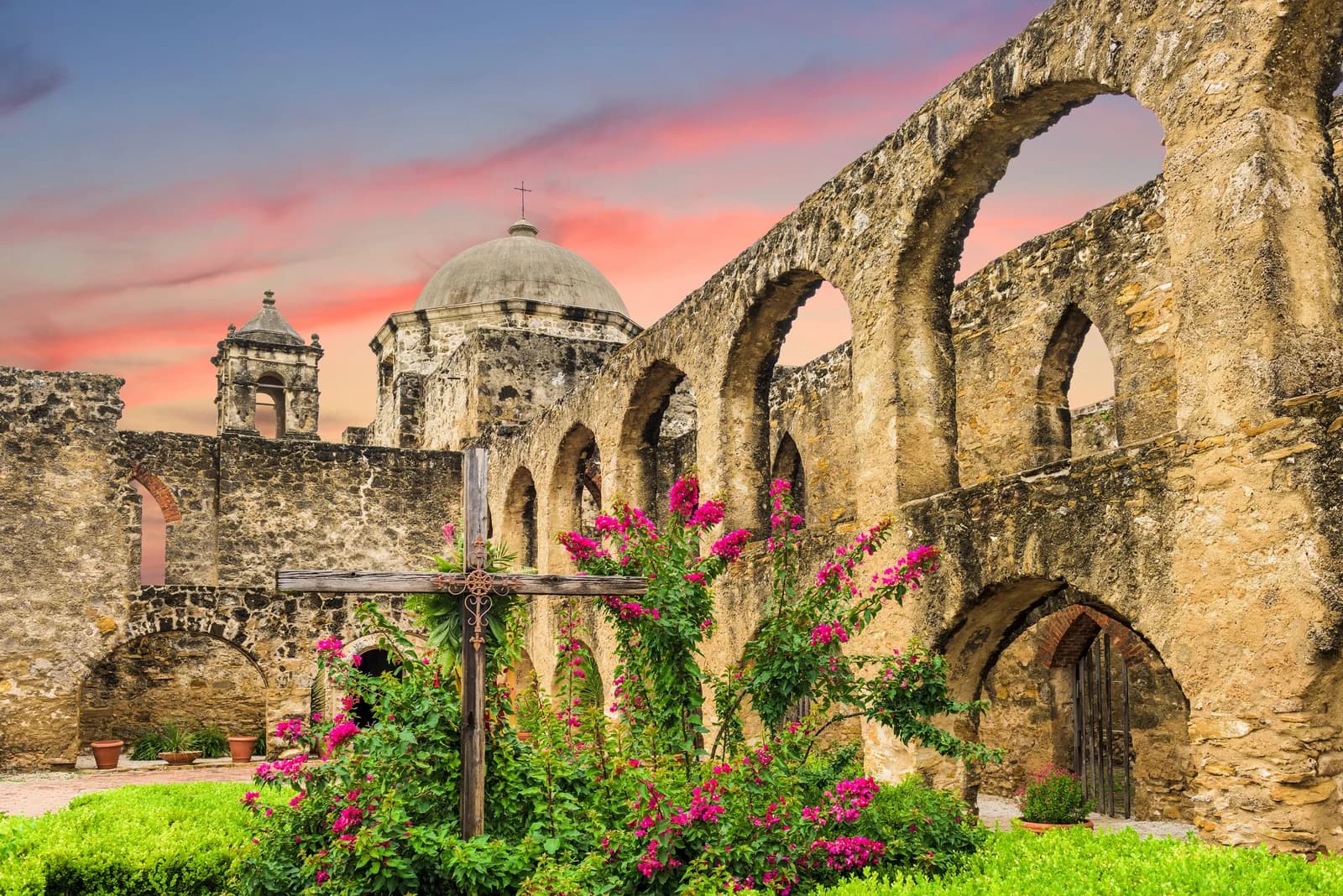
Mission Espada

Mission San Juan

Espada Aqueduct

San Antonio Missions National Historical Park
Places to eat or drink near San Antonio Museum of Art

Freetail Brewing Co.

Beethoven Maennerchor

Little Em's Oyster Bar