
Seminární zahrada
381 01 Český Krumlov-Český Krumlov 1, CzechiaOverview
Seminární zahrada sits on the east bank of the Vltava River in Český Krumlov, a small Baroque garden tucked between the water and the town's old stone walls. The garden is quiet on most days, which means you'll likely have the space mostly to yourself even during peak season. Benches face the river, and the paths wind through beds of flowering plants and shade trees that have grown here for centuries. It's the kind of place where locals come to sit rather than tourists come to tick a box.
Why this place matters
Seminární zahrada belongs to a layer of Český Krumlov that reveals itself only if you wander beyond the castle and the main square. The garden dates to the 18th century, when it served the seminary that once occupied the adjoining building. That building still stands, though it has changed uses many times. What matters now is that the garden remains genuinely old and genuinely quiet. In a town that can feel swamped with tour groups, especially along the riverside promenade, this garden offers something rare: a place where the rhythm of the town slows down.
Quick facts
- Location: East bank of the Vltava River, directly across from the castle
- Age: Established in the 18th century as part of a seminary complex
- Size: Roughly one hectare
- Entry: Free and open to the public
- Best for: Quiet riverside walks, photography, sitting and sketching
Getting there
If you're in Český Krumlov's old town, finding Seminární zahrada takes less than five minutes on foot. Walk to the riverside promenade on the east bank. The garden entrance is marked by a low stone gateway. You'll know you're close when you see the seminary building itself, a substantial structure of pale plaster and red tile roof, backing onto the garden. There is no separate entrance fee and no gate that locks it off from the public.
The layout and experience
The garden is narrow and long, following the contour of the riverbank. Paths run parallel to the water, and smaller paths branch off toward planted beds and seating areas. The layout feels organic rather than rigidly geometric. You move through zones of shade and sunlight as you follow the river's edge. The Vltava flows past constantly, loud enough that you can hear it but not so loud that conversation becomes difficult.
Stone benches are positioned at intervals, most of them facing the water. Some benches sit in full sun; others are sheltered under old trees. The planting changes with the seasons. In spring, flowering bulbs and blossoms appear in succession. Summer brings thick green canopy. Autumn colors the foliage. Winter strips the beds back to their bones, but the structure of the garden remains visible. The seminary building forms the western boundary, and its walls provide shelter from wind.
Main highlights
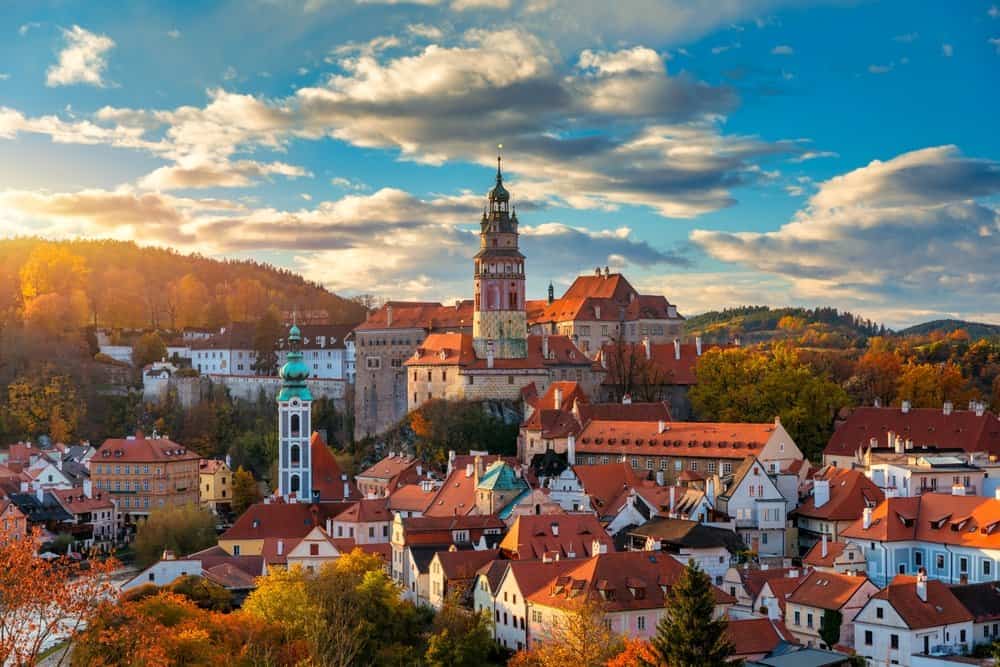
The river views are the garden's anchor. You stand at water level, watching the Vltava curve through the town. The castle rises on the far bank, visible through the trees. The perspective is intimate rather than grand. You're not looking down on the landscape from a terrace; you're inside it.
The old trees are another draw. Some are clearly very old, their trunks thick and their branches substantial. They shade the inner paths and create pockets of coolness on warm days. In summer, the green canopy is deep enough that you feel you've stepped out of the town entirely, even though you're only thirty meters from the main riverside walk.
The garden also offers one of the clearest views of the seminary building's architectural details. The pale facade, the arrangement of windows, the roofline, and the way the structure sits on the riverbank all become visible once you're inside the garden looking back at it. Photographers often find this angle useful.
History and background
The seminary that gave this garden its name operated here through much of the 18th and 19th centuries. The building was constructed to train priests for the Catholic Church in Bohemia. The garden was laid out as part of the seminary complex, providing a space for contemplation and light physical work. The seminary function ended long ago, but the building and garden have persisted through subsequent ownership changes. The garden itself has been open to the public for many decades, though it remains relatively unknown to casual visitors.
Best time to visit
Spring and early summer offer the garden at its most planted and colorful. The trees are in leaf, the beds are full, and the temperature is comfortable for lingering. Late afternoon brings a softer light and fewer people. If you arrive after 5pm on a weekday, you may well be alone.
Winter is also worth visiting if you're in Český Krumlov during that season. The bones of the garden show clearly, and the bare trees reveal views that are hidden when foliage is dense. Snow, if it falls, settles on the benches and the stone paths.
Midday in July and August, when tour groups are at their peak, tends to be the least pleasant time. Even then, this garden is less crowded than the main riverside promenade or the castle grounds.
Photography tips
The river views with the castle in the background are the obvious shots, but the light on the seminary building's facade is equally worth capturing, especially in late afternoon when the sun grazes the pale plaster. The old trees create strong shadows and dappled light patterns that photograph well on overcast days. If you want to shoot the garden as a whole, the best vantage point is from the riverbank, looking back into the space rather than from within it.
Facilities and preparation
Seminární zahrada has benches and that is largely the extent of the facilities. There is no café, no restrooms, no vendor. The paths are paved but can be uneven in places, especially where tree roots have shifted the stones. Wear comfortable shoes for walking on older, potentially slippery surfaces, particularly after rain. The garden is fully open air with no shelter except the trees themselves, so sun protection or a light rain jacket may be useful depending on the season.
Combining with nearby attractions
Český Krumlov is small enough that everything connects easily. From Seminární zahrada, you can walk to Český Krumlov Castle in five minutes, or to the main square in eight minutes. The garden works well as a break from the busier parts of town. A typical visit might be: wander the old town and castle grounds in the morning, rest in Seminární zahrada in the early afternoon, then explore other neighborhoods or nearby attractions in the late afternoon.
The Egon Schiele Art Centrum is a ten-minute walk away, and several small museums and galleries are scattered through the old town. The riverbank promenade extends in both directions from the garden, offering longer walks if you want to move beyond the town center.
Sample visit plan
Allow thirty minutes to an hour for Seminární zahrada on its own. That gives you time to walk the full length of the garden, sit for a bit, and photograph details that catch your eye. If you're using the garden as a rest stop between other activities, twenty minutes on a bench is sufficient. There is no fixed route; the garden is small enough that you can wander the paths in any order and end up having seen everything.
Practical tips
- Visit in late afternoon or early morning for the best light and fewest people
- The stone benches can be cold in cool weather; bring a light layer if you plan to sit for a while
- Water levels in the Vltava rise in spring; the riverbank may be closer to the paths than in summer
- The garden entrance is not always obviously marked; look for the low stone gateway on the east bank promenade
- There are no vendors inside the garden, so bring water if you plan to spend time here
- The seminary building itself is not open to the public, but the garden provides views of its exterior
FAQ
Is Seminární zahrada free to enter? Yes. There are no gates, tickets, or entry fees. The garden is open to the public.
Can you swim in the Vltava from the garden? Swimming is not permitted in this section of the river within the town. The water is moving and cold, and the embankment is steep.
How long does it take to see the entire garden? Most visitors spend thirty minutes to an hour. You can walk through it in ten minutes if you're moving quickly, but the point of coming here is to sit and linger.
Is the garden accessible with a stroller or wheelchair? The paths are paved, but they are uneven in places and follow the contour of the riverbank, which is sloped. Strollers and wheelchairs are possible but not ideal.
Closing thoughts
Seminární zahrada is not an essential sight in Český Krumlov, but it is an essential kind of experience. The town fills quickly with visitors, and the castle and main square can feel congested. This garden offers a counterpoint: a place where you can sit by the river, watch the light change, and listen to the water move past. It belongs to the Český Krumlov that reveals itself only if you slow down and look past the obvious attractions. If you have an afternoon in town, give this garden an hour of it.
Opening hours
Reviews
Sign in and mark this place visited to leave a review.
No reviews yet.
Free Trip Planner
Plan your Český Krumlov trip with our free planner
Build a day-by-day itinerary with AI suggestions, hand-picked places, and friends. Free forever — no credit card.
Things to see near Seminární zahrada



Places to eat or drink near Seminární zahrada

Penzion a restaurace Maštal

Masná 130 House﹠Café

Drunken Coffee

Kolektiv cafe & wine bar
More places in Český Krumlov

Egon Schiele Art Centrum

Český Krumlov Castle Tower

náměstí Svornosti
