
St. Nicholas Church
Closed now
St. Nicholas Church
Merkez Mahallesi, 07570 Demre (Kale)/Demre/Antalya, TürkiyeOverview
The red brick church rises from the center of Demre like a wound in time. Walk through the small town near Antalya's coast and you'll find it anchored in Merkez Mahallesi, the neighborhood that grew around it over centuries. St. Nicholas Church, built in the 6th century to honor the bishop who became the world's Santa Claus, sits partially below modern street level because the earth has risen around it. The basilica's distinctive red exterior and weathered stone interior carry the weight of 1,400 years. Visitors descend into the excavated ruins to touch walls that have survived earthquakes, invasions, and the sweep of empires.
Why this place matters
St. Nicholas of Myra was a real person, not a legend. He lived in the 4th century in what is now Demre, and the church marks the site of his tomb. For centuries, pilgrims traveled here to venerate him, and eventually his legend merged with winter gift-giving traditions across Europe and beyond. The physical church standing today was rebuilt in the 11th century after earlier structures were damaged, making it one of the oldest continuously recognized pilgrimage sites in the world.
The building itself matters archaeologically. It shows how Byzantine architecture adapted to coastal Anatolia, and excavations have revealed layers of settlement and construction spanning multiple centuries. The mosaics, stone carvings, and architectural details give insight into how a provincial town honored its most famous son.
Quick facts
- Founded in the 6th century, rebuilt in the 11th century
- Located in Demre, approximately 140 kilometers southwest of Antalya city center
- Built over the burial site of Saint Nicholas, the 4th-century bishop
- Partially excavated, requiring descent into the site to see the main basilica
- Active archaeological site with ongoing conservation work
- Open year-round; entry requires a paid ticket
Getting there
Demre sits on the Mediterranean coast, accessible by road from Antalya. If you're driving from Antalya, the journey takes roughly 2.5 to 3 hours heading west along the coast road. The town itself is small, and St. Nicholas Church is clearly signposted in the center. There is a dedicated parking area near the entrance.
Minibus service (dolmuş) connects Antalya to Demre, though schedules vary seasonally. Many visitors combine this stop with boat tours of the nearby Lycian coast, which depart from the harbor in Demre. If you're staying in the beach towns of Ölüdeniz or Fethiye to the west, Demre makes sense as a half-day detour on the way back toward Antalya.
The layout and experience
You enter through a modern gatehouse where tickets are checked. From there, a stone pathway and stairs lead down into the excavated site. The descent is gradual but noticeable, which explains why the church sits below street level. The main basilica comes into view as you approach the lower level.
The interior space is open to the sky in many areas. Rows of stone columns support what remains of the roof structure. The red brick walls are visible in patches where original material has been preserved or reconstructed. A modern protective covering shelters the most significant sections from weather damage.
The tomb of Saint Nicholas sits in the apse at the far end of the basilica. It's a simple stone sarcophagus, and pilgrims have visited it for over 1,600 years. The space around it shows wear from countless hands touching the stone. Byzantine mosaics and carved stone fragments are arranged in the nave and side areas, though many originals were removed to museums or damaged over time.
Walking the perimeter, you can see where different construction phases meet. Thick Byzantine stone walls stand next to later Ottoman-era repairs. The layers are visible, literally, in the stonework itself.
Main highlights
The sarcophagus of Saint Nicholas is the primary focus. Standing in front of it, you're looking at a burial site that pilgrims have honored continuously for more than a millennium. The stone shows the effects of this devotion.
The architectural fragments scattered throughout the site reward close attention. Look for carved stone pieces that show decorative detail, geometric patterns, and religious imagery. Some fragments are labeled with dates or descriptions of where they were found in the structure.
The view of the site from above, before you descend, provides context for the excavation. You can see how the modern town has grown around and above the ancient church, and how archaeological work has exposed layers that were buried under centuries of sediment and rebuilding.
The red brick exterior is visually striking and unusual for the region. This distinctive material and color scheme make the church recognizable from the approach road and help distinguish it from other Byzantine ruins in Anatolia.
History and background
Saint Nicholas lived in the 4th century and became the bishop of Myra, the ancient name for Demre. He gained a reputation for generosity and miraculous interventions, particularly on behalf of sailors and children. After his death, a cult of veneration grew around him, and this church was built over his tomb during the reign of Byzantine Emperor Justinian I in the 6th century.
The original church stood for about 500 years before being destroyed or severely damaged. It was rebuilt in the 11th century in a larger form, which is the structure visitors see today. The rebuilding occurred under Byzantine rule, and the new basilica reflected the continuing importance of the pilgrimage site.
In 1087, Italian merchants from Bari traveled to Demre and removed most of the saint's remains to their city. This theft, as locals viewed it, marked a shift in the pilgrimage center's gravity toward Europe. However, Demre remained significant as the location of his original tomb and the place of his life and ministry. Some remains stayed behind, and the church continued to attract visitors.
Under Ottoman rule, the church fell into disrepair. The site was eventually abandoned and buried under several meters of silt and earth brought by seasonal flooding from nearby rivers. The town of Demre contracted, and the church was lost to memory until systematic excavation began in the 20th century.
Tickets and entry
St. Nicholas Church requires a paid entrance ticket. The site is managed as a protected historical monument, and ticket revenue supports conservation and ongoing excavation work. Tickets are purchased at the gatehouse before descent.
The site is open daily, though hours may adjust seasonally. There are no separate timed-entry requirements, but it's wise to arrive in the morning during summer months when crowds are smaller and the sun is not directly overhead in the excavated areas.
A basic visit takes 45 minutes to an hour. Visitors with archaeological interest or those taking photographs may spend longer. No special equipment or fitness level is required, though the stairs and uneven stone surfaces demand careful footing, especially in wet conditions.
Best time to visit
Spring and fall offer the most comfortable conditions. Late March through May brings mild temperatures and wildflowers along the Demre coast. September through November repeats this pattern with slightly drier conditions.
Summer, from June through August, is hot. Temperatures regularly exceed 35 degrees Celsius, and the excavated site offers limited shade. The site is busier during these months as well, with tour groups arriving mid-morning. If you visit in summer, arrive by 8 or 9 am to see the church with fewer people and before the heat peaks.
Winter is mild by Northern European standards but can be wet. Occasional rain makes the stone surfaces slippery, though it also clears crowds. December sees pilgrims around December 6, the feast day of Saint Nicholas in some Christian traditions, though the influx is modest compared to other pilgrimage sites.
Photography tips
The red brick exterior photographs best in morning light, before harsh shadows develop. The color becomes more vivid as the sun climbs, but contrast and detail are strongest in the early hours.
Inside the excavated site, the stone columns and architectural fragments create strong compositional lines. The interplay of shadow and carved detail on the stones is worth capturing. Bring a polarizing filter if you have one, as it reduces glare from the light-colored stone.
The sarcophagus itself benefits from close detail shots as well as wider context shots showing it within the basilica. The wear patterns on the stone tell a story of centuries of pilgrimage.
Avoid shooting directly into the sky from the lower level, as the contrast between bright sky and shadowed stone can confuse your camera's meter. Expose for the stone and let the sky burn out, or use exposure blending if your camera allows.
Facilities and preparation
The site has basic facilities at the entrance. A small café or shop may be open during peak hours, but it's not guaranteed. Bring water, especially if visiting in warm months. The excavated site offers almost no shade, and the stone absorbs and radiates heat.
Wear sturdy walking shoes with good grip. The stone surfaces are uneven and can be slippery when wet. Loose stones and gaps in the floor are common, so watch your footing while descending and moving through the basilica.
The sun exposure is intense. Bring a hat and sunscreen. The stone floor can become quite hot in summer, and the lack of shade means you're exposed for the entire visit.
Modest dress is respectful at this pilgrimage site, though enforcement is minimal. Avoid sleeveless tops and very short shorts if possible.
How it compares to similar places
St. Nicholas Church is less crowded than major pilgrimage sites like the Church of Mary in Ephesus, which is roughly 200 kilometers to the north. It's also less heavily restored. Ephesus offers more extensive reconstruction and clearer visual context within a larger archaeological park. Demre gives you a rawer, less polished encounter with an ancient site.
Compared to other Byzantine churches in Anatolia like those in Pergamon or Troy, St. Nicholas is more intact as a single coherent structure. Many Byzantine sites are fragmentary or heavily ruined. Here, you can still read the basilica's plan and function.
The pilgrimage aspect sets it apart from purely archaeological sites. The devotional energy around Saint Nicholas, even among secular visitors, adds an emotional dimension that you don't find at sites visited purely for historical interest.
Combining with nearby attractions
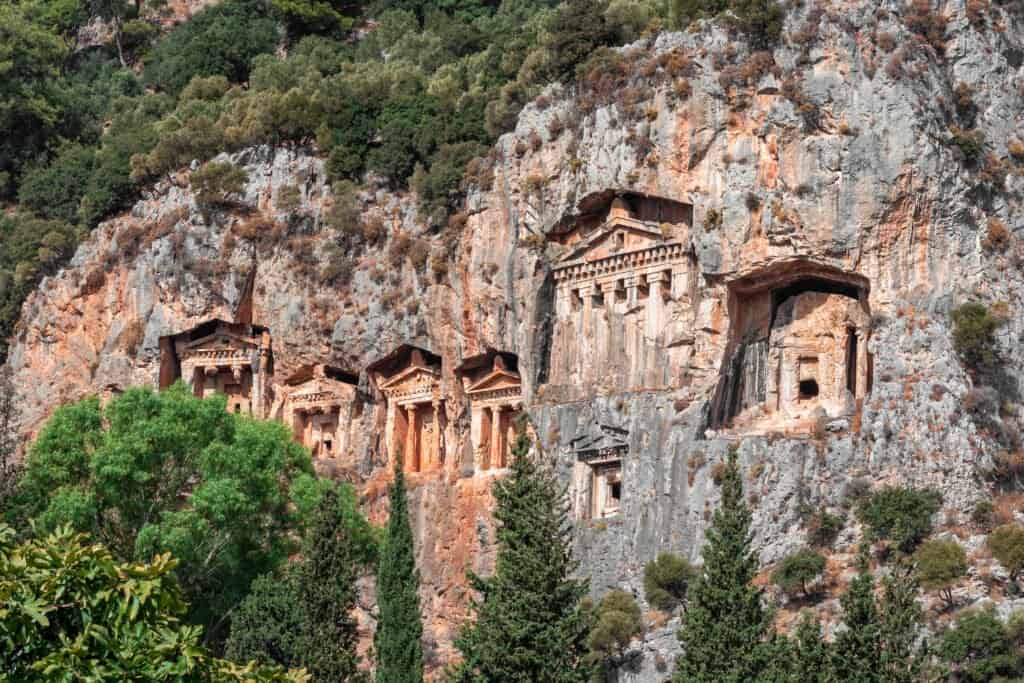
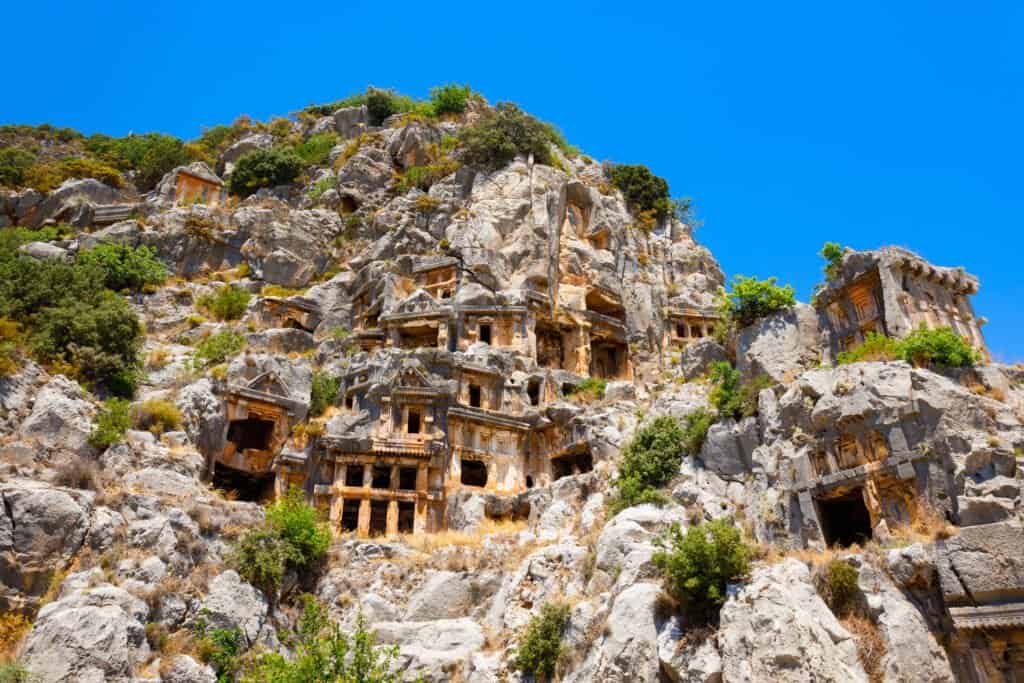
Demre is a natural hub for coastal exploration. The harbor, just a short walk from St. Nicholas Church, hosts boat tours that visit Lycian rock tombs and swimming spots along the Mediterranean. These tours typically last 4 to 6 hours and offer a different angle on the region's history and beauty.
The ancient city of Myra, the predecessor settlement to Demre, sits inland from the church. Its theater and necropolis are accessible by road, a short drive from the church. Combining both sites gives a fuller picture of the region's classical past.
Ölüdeniz, famous for its lagoon and paragliding, is roughly 40 kilometers west along the coast. It makes sense as part of a multi-day coastal itinerary. Fethiye, another major town with museums and markets, is further west by about 50 kilometers.
Sample visit plan
Arrive at St. Nicholas Church by 9 am. Spend 45 minutes to an hour exploring the basilica, the sarcophagus, and the surrounding archaeological fragments. Take photographs and sit quietly in the space if you wish.
Walk down to the harbor in Demre afterward. Have lunch at a waterfront restaurant with views of the Mediterranean. Browse the small market if it's a market day.
If you have a few more hours, take an afternoon boat tour from the harbor. These typically depart around 11 am or 2 pm depending on the operator and season. You'll see Lycian rock tombs carved into cliffs and visit swimming spots.
If staying overnight in Demre, the town is quiet in the evening. Dinner at a local restaurant and an early night is typical. The next day, you could visit the ancient theater at Myra before heading back toward Antalya or west toward Ölüdeniz.
Practical tips
- Bring more water than you think you'll need. The site has no vendors, and the heat intensifies thirst.
- Arrive early to avoid midday crowds and heat, particularly in summer.
- Wear good walking shoes with firm grip. The stone is uneven and can be slippery.
- Allow at least one hour for a meaningful visit, longer if you're interested in archaeological detail.
- The site is open year-round, but winter can bring occasional closures due to flooding or repairs.
- Combine your visit with a boat tour or lunch at the harbor to make a half-day experience.
- Respect the pilgrimage significance of the site even if you're visiting from a historical rather than devotional perspective.
FAQ
How long does it take to visit St. Nicholas Church? A typical visit lasts 45 minutes to an hour. If you're photographing extensively or reading all the information plaques, allow 90 minutes.
Is the site accessible for people with mobility issues? The descent into the excavated area involves stairs and uneven stone surfaces. Wheelchair access is limited. If you have mobility concerns, confirm current conditions at the entrance before purchasing a ticket.
Can you see the saint's remains? Most of Saint Nicholas's remains were taken to Bari, Italy in 1087. A small portion remained in Demre, though it is not on display. The sarcophagus where he was buried is visible and accessible.
Is St. Nicholas Church still an active place of worship? The site is primarily maintained as a historical monument and archaeological site. Religious services do not occur regularly, though pilgrims visit for personal devotion, especially around December 6.
What's the best time of day to visit? Early morning, between 8 and 10 am, offers the best light, smallest crowds, and coolest temperatures. Summer mornings are essential; afternoon visits in July and August are uncomfortably hot.
Opening hours
Reviews
Sign in and mark this place visited to leave a review.
No reviews yet.
Free Trip Planner
Plan your Demre trip with our free planner
Build a day-by-day itinerary with AI suggestions, hand-picked places, and friends. Free forever — no credit card.
Things to see near St. Nicholas Church

Kaş Hellenistic theatre
Lycian Rock-Cut Tombs of Myra
Myra Ancient City
