Talassemtane National Park
Chefchaouen Morocco Posted by Brandon B.Admin
Talassemtane National Park: Wild Morocco Above the Blue City
Most visitors to Chefchaouen spend their days photographing the medina's famously painted walls, but just a few kilometers from the old town, Talassemtane National Park offers something the blue city itself cannot: real wilderness. Established in 1989, the park stretches across roughly 58,950 hectares of the Rif Mountains, protecting one of the last significant stands of Moroccan fir forest on earth. If you've been wondering what the Rif actually looks like beyond the rooftop cafes, this is the answer.
The landscape here shifts constantly depending on where you walk. Limestone gorges, cedar and oak forests, open ridgelines with views toward the Mediterranean on clear days, and the Oued Laou river threading through the valleys below. It's the kind of terrain that rewards slow travel.
Why Talassemtane National Park Matters
The park's most ecologically significant feature is its population of Abies marocana, the Moroccan fir. This tree grows naturally in only a handful of places in the world, and Talassemtane holds one of the healthiest remaining groves. The park was designated a UNESCO Biosphere Reserve, a recognition tied directly to that botanical rarity. Beyond the trees, the area shelters Barbary macaques, various raptor species, and the endangered Barbary leopard, though your chances of seeing the leopard are essentially zero.
For Moroccan hikers and international trekkers alike, the park has become the most accessible mountain walking destination in the northern Rif. That proximity to Chefchaouen, roughly 3 to 5 kilometers from the medina depending on your trailhead, is a big part of its appeal.
Quick Facts
- Location: Rif Mountains, immediately northeast and south of Chefchaouen
- Established: 1989
- Total area: approximately 58,950 hectares
- UNESCO Biosphere Reserve status: yes
- Main access point: Chefchaouen, with trailheads reachable on foot or by short taxi
- Terrain: mountain forest, limestone gorge, river valley
- Notable species: Moroccan fir, Barbary macaque, various eagles and vultures
- Entry fee: generally free for most trails, though guided areas may carry a fee
Getting There
You don't need a car to reach the park, which is unusual for a protected area of this size. Several trails begin within walking distance of Chefchaouen's medina. The path toward the Ain Tissimane spring and the Moroccan fir forest is one of the most popular, and you can reach the trailhead on foot from the old town in under 30 minutes if you know the route. If you're less sure of the way, a petit taxi from the center costs very little and drops you at the edge of the trail network.
For the Akchour area, which sits further into the park and includes the waterfalls and God's Bridge natural arch, you'll need transport. Shared taxis from Chefchaouen head toward Akchour most mornings, and the journey takes roughly 45 minutes to an hour depending on road conditions. Ask around the main taxi area near Bab el Ain the evening before so you're not scrambling in the morning.
The Layout and Experience
The park isn't a single trail system with a central visitor hub. Think of it as a large territory with a few distinct zones, each with its own character.
The area closest to Chefchaouen, sometimes called the Talassemtane circuit, takes you through the Moroccan fir groves and along ridgelines with views back toward the blue city. This is where most day hikers from town end up, and the trails are reasonably well-marked. A loop through the fir forest and back takes most people around four to five hours at a comfortable pace.
The Akchour zone is the dramatic one. Here the Oued Farda river cuts through limestone gorges, creating a series of cascading waterfalls and eventually the natural rock bridge known as God's Bridge (Pont de Dieu locally). The walk from the small village of Akchour to the first waterfalls takes about an hour on a rocky riverside trail. Reaching God's Bridge requires another two hours or so of harder walking beyond that. Many visitors turn around at the waterfalls, which is a perfectly satisfying half-day in itself.
Main Highlights
The Moroccan Fir Forest
Walking through Abies marocana forest feels different from the cedar forests you might encounter elsewhere in Morocco. The trees are dense, the light comes in at steep angles, and the air carries a resinous smell that's hard to place at first. This is the most botanically rare experience the park offers, and it's right on the doorstep of town.
Akchour Waterfalls
The trail to the waterfalls follows the river closely, crossing it several times on basic bridges and stepping stones. In spring, after snowmelt, the falls are powerful and loud. By late summer the flow is gentler but the pools are clear and some visitors swim. The surrounding gorge walls are impressive year-round.
God's Bridge
This natural limestone arch spans the river canyon and is one of the more visually striking geological features in northern Morocco. The extra effort to reach it beyond the waterfalls is worth it if you have the time and fitness. Wear proper footwear because the trail gets genuinely rough in sections.
Wildlife Watching
Barbary macaques are fairly common in the forested areas and often visible near the trails, especially in the morning. Raptors, including short-toed snake eagles and griffon vultures, tend to appear over the ridgelines when thermals build in the late morning. Bring binoculars if birds are a priority.
Best Time to Visit
Spring, roughly March through May, is the most rewarding season. The waterfalls are at their fullest, wildflowers appear across the open slopes, and temperatures are comfortable for long walks. October and November are also excellent, with stable weather and fewer other hikers on the trails.
Summer brings heat at lower elevations and significant crowds on the Akchour trail on weekends, when Moroccan families from Tetouan and other northern cities come out in large numbers. If you're visiting in July or August, go early and head for the higher forest trails rather than the gorge if you want solitude. Winter is cold and occasionally snowy at altitude, but the park stays open and can be beautiful if you're prepared for it.
Photography Tips
The fir forest photographs well in the hour after sunrise, when mist sometimes settles between the trees. For the waterfalls, midday light is harsh and flat; late afternoon is better, or overcast days work well for capturing water movement without blown highlights. God's Bridge is best shot from below and slightly downstream, where you can frame the arch against the sky.
If you want a shot of Chefchaouen from above, the ridgeline trails near the park's lower boundary offer views back toward the medina that most visitors never find. It's worth the climb.
Facilities and Preparation
Facilities inside the park are minimal. There are small cafes and grill restaurants in the village of Akchour where you can eat grilled meat and tagine at budget prices, and these tend to do brisk business on weekends. Beyond Akchour, carry your own water and food.
- Wear proper hiking footwear, especially for the Akchour gorge trail
- Carry at least two liters of water per person for any hike over two hours
- A light layer is useful even in summer, as the forest can be cool
- Sun protection matters on open ridgeline sections
- The river crossings near Akchour can be awkward after heavy rain; ask locally before setting out
- A local guide is not required but is genuinely useful for navigating the fir forest trails, which are less marked than the Akchour route
Combining with Nearby Attractions
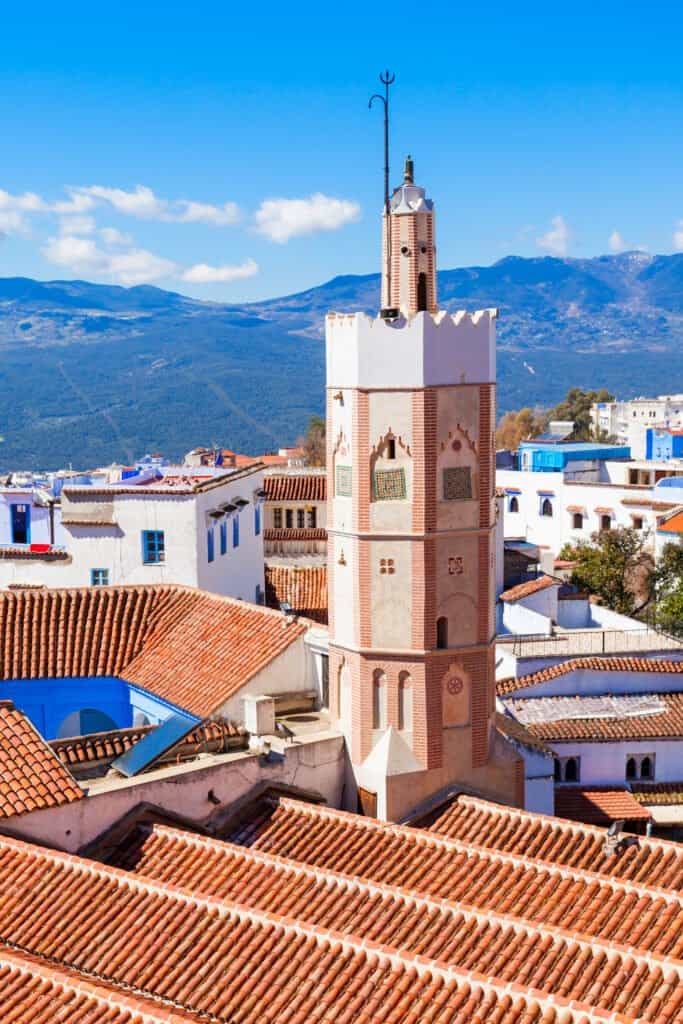
Chefchaouen's medina is the obvious pairing, and most people do the park as a half-day or full-day side trip from town. The Spanish Mosque, a short uphill walk from the medina, sits on a ridge that borders the park's lower edge and gives you a quick taste of the elevation before committing to a longer trail.
If you have more time in the region, the drive toward Tetouan passes through agricultural Rif countryside worth seeing, and the coastal town of Martil is about 90 minutes away if you want to balance mountain walking with a day by the Mediterranean.
Practical Tips
- Arrange shared taxis to Akchour the evening before if possible, as morning departures can fill quickly
- Guides can be arranged through guesthouses in Chefchaouen, often for a half-day or full-day rate
- Weekdays are significantly quieter than weekends, especially at Akchour
- The park has no formal entrance gate on most trails; just follow the path from town
- Moroccan fir groves are on the trail heading south from Chefchaouen; ask guesthouse staff for the current best starting point as routes shift slightly
- Litter is unfortunately common on the most-visited trails; pack out what you bring in
FAQ
Do I need a guide to hike in Talassemtane?
No, the Akchour waterfall trail is easy to follow independently. For the upper forest trails and Moroccan fir areas, a local guide helps considerably because signage is sparse and paths branch often.
Can I swim in the waterfalls?
Many people swim in the pools below the falls, particularly in summer. Conditions vary by season and water level, so use your judgment and ask other hikers on the day.
How fit do I need to be?
The Akchour waterfall walk is manageable for anyone comfortable with a two-hour hike on uneven ground. Reaching God's Bridge adds roughly another two hours each way and involves more scrambling. The ridge trails near Chefchaouen involve a steady climb but nothing technical.
Is the park suitable for children?
The lower section of the Akchour trail is popular with Moroccan families and works well for older children. The river crossings and rocky sections require care with young kids.
Reviews
Sign in and mark this place visited to leave a review.
No reviews yet.
Free Trip Planner
Plan your Chefchaouen trip with our free planner
Build a day-by-day itinerary with AI suggestions, hand-picked places, and friends. Free forever — no credit card.