
The Coptic Museum
No 4 Fakhry Abd el Nour street Abbassia, Cairo 11511 Egypt Posted by Brandon B.
The Coptic Museum: Cairo's Window into Christian Egypt
The Coptic Museum sits inside the ancient walled enclosure of Old Cairo, a neighborhood known in Arabic as Misr al-Qadima, and it holds the largest collection of Coptic Christian art and artifacts in the world. If you have any interest in the long stretch of Egyptian history between the pharaonic period and the Islamic conquest, this is the place that fills in the gap. Most visitors to Cairo rush to Giza or the Egyptian Museum on Tahrir Square, but the Coptic Museum rewards the ones who make the detour south along the Nile.
Founded in 1908, the museum occupies a compound that brushes up against the Babylon Fortress, a Roman-era structure whose towers you can still see from the garden. The building itself is part of the experience. Carved wooden ceilings, mashrabiya screens, and carved stucco panels salvaged from old Coptic houses were incorporated into the architecture, so the museum is essentially a work of decorative art around the objects it contains.
Why the Coptic Museum Matters
Coptic Christianity took root in Egypt in the first century CE, and the community that formed around it produced manuscripts, textiles, icons, and stonework that are unlike anything else in the Christian world. The Coptic style fused pharaonic visual language with Hellenistic influences and early Christian symbolism, creating something genuinely its own.
The museum also holds a direct connection to one of the most significant manuscript discoveries of the twentieth century. Parts of the Nag Hammadi Library, a collection of early Christian and Gnostic texts found in Upper Egypt in 1945, ended up here. That alone makes it a destination for anyone interested in early religious history.
Beyond the manuscripts, the collection spans roughly fifteen centuries of continuous cultural production. Limestone friezes, ivory carvings, bronze liturgical objects, and woven textiles fill the galleries in a sequence that traces how a community held onto its identity through Roman rule, Byzantine authority, and eventually the transition to an Arab-Islamic Egypt.
Quick Facts
- Location: Old Cairo (Misr al-Qadima), near the Hanging Church and Ben Ezra Synagogue
- Founded: 1908 by Marcus Simaika Pasha
- Collection size: over 16,000 objects across two main wings
- Nearest metro station: Mar Girgis (Line 1), roughly a 5-minute walk
- Ticket type: General admission, purchased at the entrance gate
- Photography: permitted in most areas, though some restrictions apply inside specific galleries
- Language: exhibit labels in Arabic and English throughout
Getting There
The easiest way to arrive is by metro. Mar Girgis station on Line 1 (the red line) drops you almost at the door of Old Cairo's walled compound. From the station, walk toward the ancient towers of the Babylon Fortress and you will see signs for the museum within a few minutes. The address lists Abbassia as the postal district, but the physical location is firmly in Old Cairo, so ignore that if you are navigating by map.
Taxis and ride-hailing apps also work well. Telling the driver "Misr al-Qadima" or "the Coptic Museum near Mar Girgis" tends to land you in the right spot. Traffic in central Cairo can be unpredictable, so the metro is often the more reliable option if you are coming from Downtown or Tahrir Square.
The Layout and Experience
The museum divides into two main wings: the Old Wing, which dates to the original 1908 construction, and the New Wing, added in 1947. The Old Wing is the one to linger in. Its rooms have that layered quality where the building itself is as interesting as what is on the walls. Look up at the ceilings, which feature carved and painted woodwork from demolished Coptic homes and churches. The architects intended this, and it shows.
The garden between the wings is worth a slow walk. Fragments of ancient stonework are arranged outside, and the Roman towers of the Babylon Fortress loom over the southern edge. On a clear morning, this courtyard is genuinely quiet, which is not something you can say about many Cairo attractions.
Gallery flow moves roughly chronologically, starting with pre-Christian Roman-era material and working through the full arc of Coptic artistic production. Textile collections are particularly strong, with preserved woven garments and tapestry fragments showing intricate geometric and figural designs. The manuscript room, where you can see examples of early Coptic script on papyrus and parchment, tends to be a slow-down moment for most visitors.
Main Highlights
The Nag Hammadi Manuscripts
Among the most intellectually significant objects in the collection, these fourth-century codices were part of a cache of texts buried in the Egyptian desert and unearthed in 1945. They include Gnostic gospels and early Christian writings that scholars had known only through second-hand references. Seeing them in person, fragile and brown on their papyrus leaves, is a different experience from reading about them.
The Textile Galleries
Coptic weavers were producing complex tapestry work from at least the third century CE, and the museum has an exceptional range of examples. Linen and wool pieces show everything from geometric repeating patterns to figurative scenes drawn from both classical mythology and Christian scripture. The colors have faded over the centuries but the precision of the weaving is still visible.
Carved Stonework and Friezes
Limestone panels carved with vines, birds, crosses, and human figures line several galleries. The cross-pollination between pharaonic and Christian imagery is especially clear here. The ankh, the ancient Egyptian symbol of life, appears repeatedly in forms that were adapted into early Christian iconography, and you can see both versions side by side.
Icons and Liturgical Objects
A dedicated section covers icons painted in the distinctive Coptic style, which looks quite different from Byzantine or Western European traditions. Bronze crosses, censers, and other liturgical items fill cases nearby. If you have visited Coptic churches in Cairo like the Hanging Church just outside the museum compound, these objects will give you context for what you saw there.
Best Time to Visit
Mornings on weekdays are the calmest. Weekend visits, especially Friday mornings, can see more local foot traffic as families combine the museum with visits to the nearby churches. The museum is indoors and air-conditioned, which makes it a genuinely good option during Cairo's hotter months, when outdoor sites become exhausting by mid-morning.
Avoid arriving right at opening if there are school group tours scheduled, as the galleries can become crowded and loud quickly. If you arrive after most groups have cleared, usually by mid-morning, you will often have stretches of the Old Wing almost to yourself.
Combining with Nearby Attractions
Old Cairo is compact enough to spend a full half-day without needing to travel anywhere. The Hanging Church (al-Moallaqa) is a few steps from the museum entrance, built above the Roman Babylon Fortress gatehouse. The Ben Ezra Synagogue, one of the oldest in Egypt, is a short walk away and is historically connected to the discovery of the Cairo Geniza documents. The Church of Saints Sergius and Bacchus (Abu Serga) is another five minutes on foot and is traditionally considered one of the oldest churches in Egypt.
If you want to continue into Islamic Cairo afterward, the Amr ibn al-As Mosque is nearby. It is considered the oldest mosque in Africa, which gives the whole neighborhood an unusual density of historically significant religious sites from three different traditions within a few hundred meters of each other.
Practical Tips
- Wear shoes you can walk in comfortably. The garden paths and some older gallery floors are uneven.
- Bring a light layer. The air conditioning in the New Wing can run cold even in summer.
- Allow at least two hours. One hour is not enough to do the collection justice.
- The museum shop near the exit stocks books on Coptic art and history, including academic titles that are hard to find elsewhere.
- Some gallery labels are small and positioned low. If you use reading glasses, bring them.
- Photography restrictions vary by room. Look for posted signs rather than assuming the same rules apply everywhere.
- Guided tours can be arranged on site depending on availability, and the context they provide is genuinely useful for a collection this specialized.
FAQ
Do I need to book tickets in advance?
General admission tickets are purchased at the entrance and advance booking is not typically required. On busy days you may wait briefly at the gate, but the museum rarely sells out in the way that blockbuster exhibitions do.
Is the Coptic Museum suitable for children?
It depends on the child. The artifacts are fascinating but the presentation is fairly traditional, with cases and labels rather than interactive displays. Children who are curious about history tend to respond well, particularly to the carved stonework and textile galleries. Very young children may find the pace slow.
How does this compare to the Egyptian Museum on Tahrir Square?
They cover different periods and have different atmospheres. The Egyptian Museum is larger, louder, and focused on pharaonic and ancient history. The Coptic Museum is quieter, more intimate, and covers roughly the first through fifteenth centuries CE. Ideally you visit both, but if your interest is in the Christian period specifically, the Coptic Museum is the right choice.
Are there food options nearby?
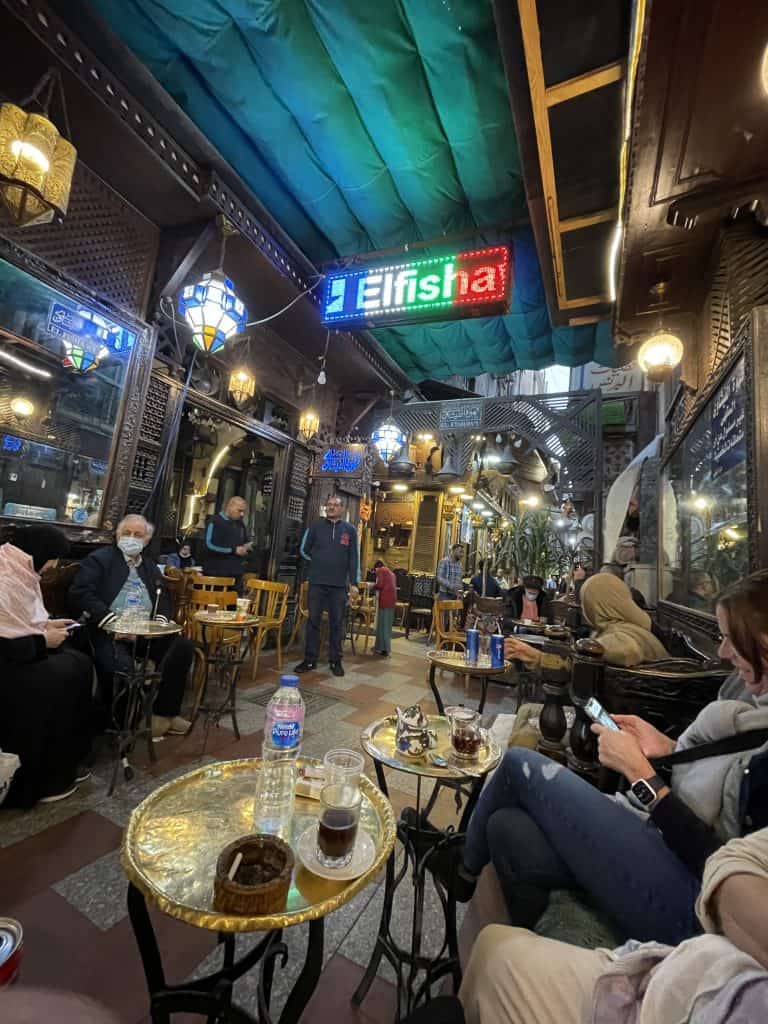
The museum itself has limited food facilities, but the streets around Mar Girgis station have small cafes and street food vendors. Old Cairo is not a major dining district, so if you want a proper meal, plan to head back toward Downtown or Zamalek afterward.
Opening hours
Reviews
Sign in and mark this place visited to leave a review.
No reviews yet.
Free Trip Planner
Plan your Cairo trip with our free planner
Build a day-by-day itinerary with AI suggestions, hand-picked places, and friends. Free forever — no credit card.
Things to see near The Coptic Museum


Places to eat or drink near The Coptic Museum



More places in Cairo

Le Pacha 1901

Cave Church

National Museum of Egyptian Civilization NEMC
