
When Is an Airline Responsible for an Airport Slip and Fall at Miami International Airport?
By
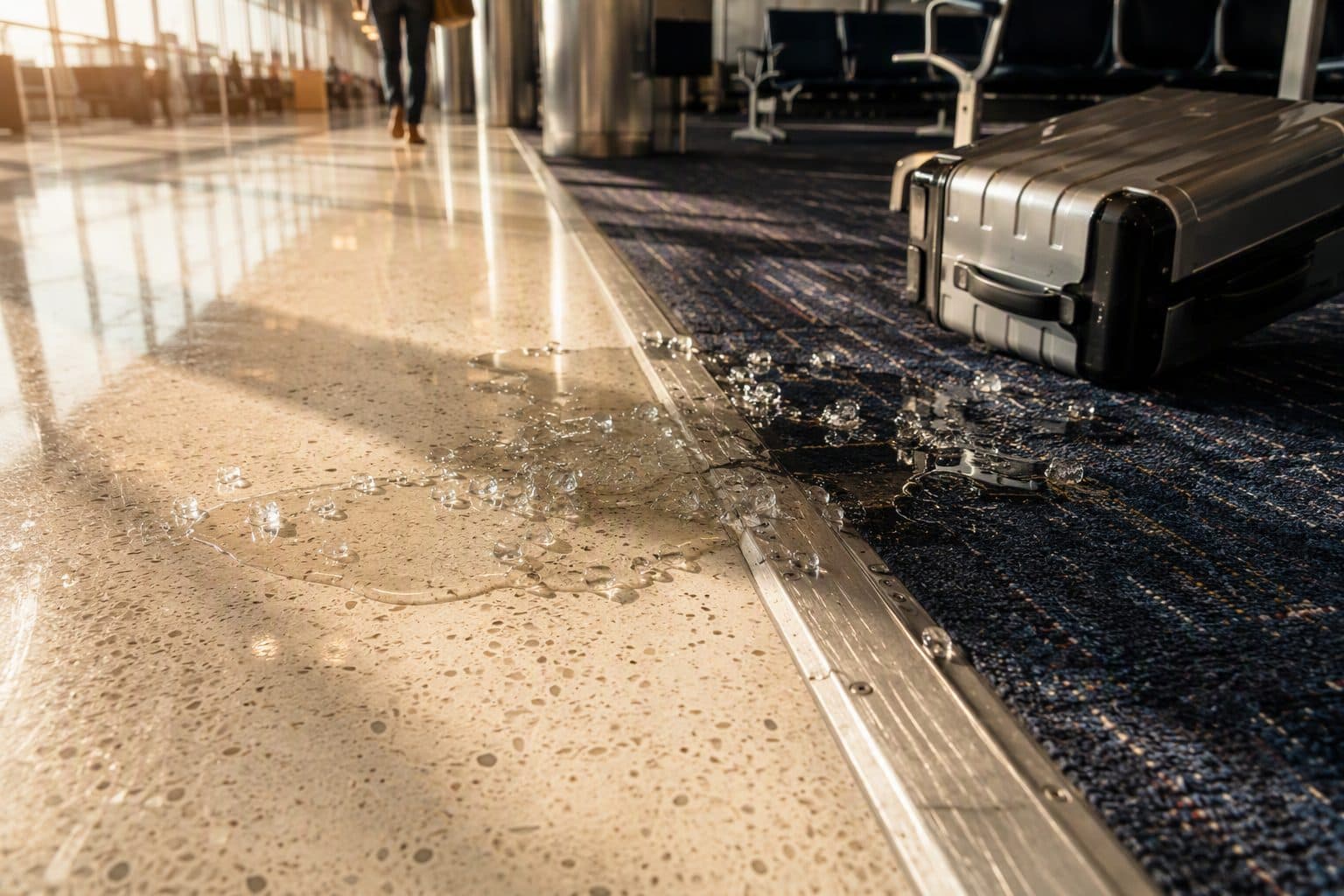
You're walking toward a gate in Concourse D, bag in one hand. The floor by the hold room is wet. The sign overhead carries an airline logo that tells you nothing about who last inspected that tile.
An airline can be responsible for a slip and fall at Miami International Airport when it controlled the area where you fell and knew, or should have known, about the hazard. If the county, a concessionaire, or a maintenance contractor controlled that area instead, liability may rest with one of them, and more than one party can share the fault.
Timing matters as much as identity. Florida shortened the filing window on negligence claims, and which window applies to you turns on when your claim accrued; a fall involving a public entity brings presuit paperwork on top of that. Read the current Florida Statutes as they stand in 2026 against your own incident date before you trust any deadline.
Start With Who Controlled the Floor
Responsibility usually starts with a narrow question, and it isn't who owns the airport. It's who controlled the exact patch of floor where you went down. Sometimes that's the tenant occupying the space. Often it's a company that agreed in writing to maintain the surface and never appears anywhere on the concourse.
Miami International Airport is owned by Miami-Dade County and operated by the Miami-Dade Aviation Department. The county doesn't clean every square foot of a terminal that leases space to numerous carriers and retail tenants, so whether an airline or the airport authority may be liable turns on contracts and conduct rather than the branding on the nearest sign.
The table below is an investigative framework, not a liability chart.
Accident location | Parties that may require investigation | Records that may identify control |
|---|---|---|
Common concourse or baggage area | Miami-Dade County or a contracted service provider | Inspection logs, cleaning contracts, airport reports |
Airline gate or hold room | Airline, county, or maintenance contractor | Lease, operating agreement, maintenance schedule |
Jet bridge | Airline, county, ground-service company, or equipment contractor | Operating agreement, repair history, service logs |
Airport restaurant or shop | Concessionaire, landlord, or cleaning provider | Concession agreement, employee reports, cleaning records |
Escalator or elevator | Facility operator and equipment-maintenance company | Inspection certificates, work orders, malfunction reports |
A lease can hand off maintenance duties in ways no traveler would guess from the concourse. The carrier whose name sits above the podium may owe nothing in the walkway ten feet away, while a contractor you never saw holds the inspection duty for that same tile. So the first question isn't which flight you booked. It's who had possession and control of that surface at that hour, because the answer raises a practical question: An airline at an airport can be held liable for the fall, or your claim may belong somewhere you couldn't see from the gate.
Who is responsible for a jet bridge fall?
The airline, Miami-Dade County, a ground-service provider, or an equipment contractor. Which one depends on who operated and maintained the bridge the day you fell. Rainwater tracked onto the bridge floor is an ordinary premises hazard. A sudden drop at the aircraft threshold isn't, and neither is torn flooring or a bridge that shifts when it shouldn't. Proving that kind of failure usually takes service logs and engineering analysis instead of eyewitness memory.
Why Notice Decides Most of These Claims
Control alone doesn't establish liability. When a fall involves a transitory foreign substance on the floor of a business establishment, Fla. Stat. § 768.0755 requires proof that the business had actual or constructive knowledge of the substance and should have acted on it.
Spills and tracked-in water
Actual knowledge is the straightforward version: an employee watched the coffee hit the floor, or somebody told them about it. Constructive knowledge is the harder half. The statute gives two routes to it. One is circumstantial evidence that the condition existed long enough that ordinary care would have caught it. The other is evidence that the condition happened regularly enough to be foreseeable.
That's why the look of a spill matters. Dirt tracked through a puddle suggests it had been sitting there. Dried edges and cart tracks running out of it do the same. A long gap in a cleaning log makes the argument in writing.
Defects that aren't spills
Cracked tile gets investigated differently from a fresh spill. So does a loose transition strip. An abrupt elevation change at a threshold or a damaged handrail raises the same questions about who created the condition and who was supposed to be inspecting it. Duration matters here too, and so does whether anyone bothered to post a warning.
Photograph the wear pattern around the defect, not only the defect itself. Scuffing and worn edges say something about how long that hazard has been part of the floor.
Escalators and elevators pull in another party: the vendor contracted to inspect and service the equipment, which may not be the company running the space around it. Whether the machine sits in a common area or inside airline-controlled space changes the analysis. A malfunction on its own doesn't prove negligence. Maintenance histories and prior fault codes support that argument. State inspection certificates help, and in a serious case an expert examination identifies what failed and who was being paid to keep it working.
The Evidence That Disappears First
Useful evidence has to do two jobs at once: fix the precise location and capture the hazard before someone mops it away. A third piece ties the fall to an injury a doctor wrote down. Surveillance video and cleaning records won't wait around for you, and some systems overwrite recordings within days.
Days, not months.
Work in this order.
Get help first. Ask airport staff or emergency personnel to evaluate anything serious, so a medical record exists close to the time of the fall.
Fix the location. Note the terminal and level, then the gate number and the nearest business. Add any fixed landmark you can see from where you landed. Photograph the hazard and the area around it if you can do that safely.
Report the fall. Ask which organization is taking the report, then ask for the report number or written instructions for getting a copy.
Collect witness contacts yourself. A direct phone number beats relying on staff to track someone down weeks later.
Keep the paper trail together. Keep the boarding pass and flight confirmation with your appointment records and receipts.
Ask for preservation in writing. Video and inspection records often need a written preservation request sent to whichever entity holds them. Work orders and cleaning logs, too.
An incident report proves you reported the fall. It isn't an admission of fault by whoever wrote it, and it won't tell you who controlled the floor. Neither will your medical records, which document the injury and its timing and stop there.
Your own itinerary is evidence most travelers forget they're carrying. It shows the scheduled gate and the connection window you were trying to make, along with your arrival time in Miami and the route you would have walked through the terminal. Timestamped screenshots and photos from the trip do similar work.
Comparative Fault and Florida's Filing Clock
Comparative fault in Florida airport falls
What you recover can shrink if the evidence puts part of the blame on you. Florida's modified comparative-negligence rule in Fla. Stat. § 768.81 generally bars recovery outright when a claimant is found more than 50 percent responsible. Expect the defense to argue you were looking at your phone or sprinting for a connection. Or that you walked straight past a visible warning cone.
None of that settles the question on its own. Photographs and surveillance footage push back. Witness accounts do too, along with the actual position of the sign you supposedly ignored.
What is the Florida airport injury filing deadline?
For negligence claims that accrued after March 24, 2023, Fla. Stat. § 95.11 generally allows two years rather than the four years that applied before. The right deadline depends on your accrual date and on who you are suing. Because Miami-Dade County operates the airport, a claim against the county can also fall under Fla. Stat. § 768.28, which sets written-notice procedures and sovereign-immunity limits for claims against the state and its subdivisions.
Confirm two things early: which entity has to receive written notice, and how soon it must be presented. Then check whether a waiting or denial period runs before you can file. Recovery caps apply as well, and the notice requirement doesn't always run parallel to the limitations period.
And the filing deadline isn't the clock that runs out first. The footage is.
Common Questions About Payouts and Claims
What is the highest payout for a slip and fall?
There is no universal ceiling. Value depends on the damages you can prove and on how fault gets allocated under the comparative-negligence rule above. Available insurance and assets set a practical limit, and sovereign-immunity restrictions can cap what a public defendant pays. A number reported in someone else's case does not predict the outcome of yours.
How hard is it to win a slip-and-fall case?
Hard enough that an injury by itself proves nothing. The evidence has to connect the dangerous condition to the party responsible for it, then show that the condition caused the harm. With a transitory substance you are back to notice, which is why how long the hazard sat there tends to decide the case.
How much of a $50,000 settlement will I get?
Less than $50,000, and there's no fixed fraction. A gross settlement is what the defense pays, not what reaches your account. Authorized attorney fees come out first. Case costs and unpaid medical balances follow, and enforceable liens get paid before you see a distribution. Rule 4-1.5 of the Rules Regulating the Florida Bar covers contingent fees and requires a written agreement stating how the fee is calculated, so your own agreement controls that math. Your settlement statement should show every figure used to reach the net.
Is it worth making a personal injury claim?
It's worth investigating when the fall caused losses you can measure and the evidence points at a party that was negligent. Severity matters. So does the notice question from earlier, because a claim that can't clear it rarely goes anywhere. Contested fault and the size of the recoverable damages change the arithmetic too, and a presuit procedure against a public entity can add months before anything moves.
Is it worth suing for a slip and fall?
Filing suit is a different decision from making a claim. It becomes reasonable when informal resolution stalls and the likely recovery justifies the cost and time involved. A minor injury with no evidence of notice is not the same proposition as a documented fracture involving a floor defect already listed in work orders. Plenty of claims resolve without a lawsuit.
Before You Leave the Terminal
Nobody at the gate is going to tell you who owns that tile. The answer sits in leases and service agreements you can't see from the concourse, which is why these cases turn on what you preserved in the first hour and who you asked to preserve the rest.
Label one folder with the date of the fall. Everything you gathered goes in there.